
Looking for the best multi-effects pedal? Well, you're in the right place. Not only do I regularly use a multi-FX on my pedalboard when gigging and recording, but I've also reviewed countless multi-effects pedals in mt time at MusicRadar.
As guitarists, we're absolutely spoiled for choice when it comes to effects pedals nowadays, and the definition of multi-effects has shifted hugely in the past ten years. When I first started playing my Zoom 606 would simply simulate a pedalboard, whereas nowadays modern multi-effects can perform amp and cab duties alongside scarily accurate recreations of the world's most famous stompboxes.
Personally, I still like to use a tube amp as part of my rig, and I use my multi-effects to cover all my time-based and modulation effects, without having to carry so many pedals. If you want your multi-effects to replace your entire rig, you can do that too, but I would recommend getting an FRFR speaker for monitoring if you're playing live.
Below you'll find my handpicked selection of the best multi-effects pedals money can buy, sorted by use case to make your choice a little easier. If you want to lean on my 20 years of multi-effects playing experience, then check out the FAQs section, which features loads of common questions answered by an expert.
Best overall

✅ Buy if you want a multi-effects all-rounder: With its huge amp selection and massive range of effects models, the Helix is our pick as the best overall multi-effects you can buy.
❌ Avoid if you like things simple: With so much choice and connectivity, this isn't one for those who suffer from option paralysis.
The Line 6 Helix stands as a flagship in the world of multi-effects pedals, merging immense versatility with professional-grade sound quality. Designed for the serious guitarist, this dual-DSP-powered unit brings together amp and effects modelling in a robust, stage-ready floor pedal that is as visually impressive as it is sonically powerful.
Build: The Helix’s construction is nothing short of solid, with a heavy-duty chassis built to withstand the rigours of the road. Its large footprint allows for a spacious, uncluttered control surface, making it easy to navigate during live performances. The intuitive layout ensures that even with its advanced capabilities, players can access essential functions quickly, whether on stage or in the studio.
Features: One of the defining features of the Helix is its staggering 1,024 preset capacity, organised into eight setlists, each containing 32 banks of four presets. This structure offers exceptional flexibility for organising sounds for different projects and performances. Every preset can hold up to four stereo signal paths, each comprised of eight blocks that can be filled with amps, cabs, or effects. If sound creation is your goal, you’ll find a bounty of options: 41 modelled amps, seven bass amps, 30 cabs, 16 microphones, 80 effects, and the ability to load custom speaker impulse responses.
Sound: While the factory presets showcase its capabilities, the real magic happens when you dive in and shape your own tones. The advanced signal routing and comprehensive input/output options mean you can replicate virtually any rig or studio setup. Whether you’re running direct to front of house, integrating with traditional amps, or recording, the Helix delivers pristine sound quality and creative freedom. For those seeking a more affordable alternative, the streamlined Helix LT offers many of the same features in a lighter package.

"Helix's efforts have an increased level of both accuracy of sound and playability, and will react to the nuances of your playing style - these are sounds that can stand side by side with Kemper or Fractal models."
Read more: Line 6 Helix review
Best amp models

✅ Buy if you want a pro-level multi-effects pedal: The amp models on the QC are simply unparalleled, making it a great choice for the player who wants a lot of choice and flexibility.
❌ Avoid if you're on a budget: This kind of tech doesn't come cheap, so avoid this if your budget is tight.
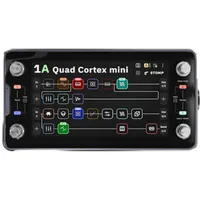
The Neural DSP Quad Cortex is quickly cementing its reputation as one of the most advanced and intuitive amp modellers and profilers on the market. Built with professional guitarists' needs in mind, this unit offers a blend of power, flexibility, and portability that makes it a standout choice for both stage and studio use.
Build: At the heart of the Quad Cortex lies a 2 GHz Quad-Core SHARC DSP engine, providing abundant processing power. Housed in a compact yet rugged enclosure, the device is designed to withstand the stress of touring while maintaining a sleek and modern aesthetic. The high-resolution touchscreen and the innovative hybrid footswitch/rotary controls offer a unique user experience, blending tactile control with quick, intuitive navigation. Its laptop-sized footprint ensures it fits easily into any pedalboard setup or gig bag, making it highly portable for travelling musicians.
Features: The Quad Cortex sets itself apart with an array of features tailored to the discerning player. It offers not only some of the most convincing amp and effect models available, but also the remarkable ability to capture and recreate your own amplifier and pedal tones with stunning accuracy. The unit comes loaded with a wide selection of built-in amps, cabinets, and effects, but the real star is its profiling system, which allows you to model your own gear and build a personalised digital rig. Editing and managing sounds is made effortless through the unit’s touchscreen interface, and the deep connectivity options make it easy to integrate with any studio or live environment.
Sound: In terms of sound quality, the Quad Cortex is nothing short of exceptional. The clarity, depth, and realism of the amp and effect models are impressive, so much so that in blind tests, many guitarists struggle to distinguish them from actual amplifiers and pedals. Whether you are chasing vintage tones or modern high-gain sounds, the Quad Cortex delivers with uncanny realism. Its ability to model your own gear means you are never limited by factory presets, offering endless creative possibilities to shape your signature sound.

"The quality of the sounds is exceptional. That processing power is really brought to bear on the signal path. Even the most complex rigs are rendered with superb fidelity, and with the promise that more is to come, it suddenly begins to look like money well spent."
Read more: Neural DSP Quad Cortex review
Best profiler

✅ Buy if you want a pro-level profiler: The Kemper allows you to make models of your own amps and effects, making it a powerful choice for taking your regular rig on the road minus the weight and transport costs.
❌ Avoid if you're not tech-savvy: Operating the Kemper will require some proper manual diving, so not one for those who like their pedals simple to use.
The Kemper Profiler Stage has established itself as a trailblazer in the world of digital guitar gear. Far beyond a typical multi-effects pedal, it is a comprehensive solution that can effectively replace an entire rig, offering guitarists limitless sonic possibilities in a single, streamlined unit.
Build: Designed with the gigging musician in mind, the Profiler Stage comes in a robust and road-ready pedalboard format. Its rugged construction ensures it can handle the bumps and knocks of life on tour, while the intuitive control layout allows for fast access to key features on stage. The clear display and sturdy footswitches make changing presets and adjusting parameters a breeze, even in challenging lighting conditions.
Features: What sets the Kemper Profiler Stage apart is its unique profiling technology, which lets you capture the sound and feel of any amplifier. Pre-loaded with an extensive library of legendary amp models and studio-grade effects, the Profiler Stage covers everything from vintage cleans to modern high-gain tones. The Rig Manager app offers seamless editing and organisation of your sounds, and the unit supports up to four expression pedals for real-time control. A built-in looper and tuner add further versatility, and the generous array of inputs and outputs ensures compatibility with virtually any setup, whether you are recording in the studio or playing live.
Sound: Every amp and effect has been meticulously profiled in professional studios, resulting in authentic tones that respond dynamically to your playing. The effects section is equally impressive, featuring a comprehensive selection of distortions, delays, choruses, and more. Whether you are looking to replicate specific classic rigs or build entirely new sounds from the ground up, the Kemper Profiler Stage provides an unmatched level of realism and creative flexibility.

"I love this Kemper’s tonal quality and the Stage offers the class-leading sounds I’d expect. Alongside the user-profiling capability and vast array of online profiles on offer, the Kemper Stage proves to be worth the investment for players who want access to a wealth of great and versatile guitar sounds."
Read more: Kemper Profiler Stage review
Best budget option

✅ Buy if you're on a tight budget: The Mooer GE200 is a fantastic option for players on a tight budget, giving you a lot of great sounds and functionality for relatively little.
❌ Avoid if you're regularly gigging: This isn't quite as rugged as some of the other units on this list, so probably not best for players who are regularly travelling with their multi-effects.
Mooer, hailing from China, has built a strong reputation for delivering exceptional value in the world of effects pedals. Initially known for producing affordable alternatives to established brands, Mooer has evolved into a respected name in its own right, particularly in the low-to-mid price range.
Build: The Mooer GE200 Multi-Effects Pedal exemplifies the brand’s commitment to quality and practicality. It boasts a compact and lightweight chassis that makes it ideal for gigging musicians who need portability without sacrificing durability. The sturdy metal enclosure and straightforward knob-and-button layout ensure that the GE200 can withstand regular use and travel, while still being intuitive for players new to digital multi-effects units.
Features: What sets the GE200 apart is its impressive array of features at a very attractive price point. The unit comes loaded with a wide selection of amp models, effects, and useful tools that you would expect on far more expensive units. With 70 onboard effects, the GE200 provides plenty of sonic variety, from lush reverbs and delays to convincing overdrives and modulations. One standout feature is the ability to load custom impulse responses, allowing players to fine-tune their speaker and cabinet sounds for greater realism and flexibility. The built-in drum machine and looper add further creative possibilities, making it a versatile all-in-one solution for practice, writing, and performance.
Sound: In terms of sound, the GE200 exceeds expectations for its price class. The amp and effect models are lively and dynamic, responding well to playing nuances. The ability to load your own impulse responses means you can tailor your tones to suit any musical style or preference. Whether you are using it directly to a PA, in the studio, or as part of a larger pedalboard setup, the Mooer GE200 proves itself to be a highly capable and rewarding tool for guitarists seeking great tone without breaking the bank.
Best for live performance

✅ Buy if you're regularly playing live: With its excellent amp selection and fantastic connectivity, the HX Stadium is perfect for taking out on the road.
❌ Avoid if you don't need a big board: This thing is massive and not for more casual gig setups.
If you’re looking for a powerhouse pedalboard that can handle anything the stage throws at you, the Line 6 Helix Stadium XL is our pick. This is the second Helix we’ve featured on our list, because, honestly, Line 6 just keeps getting it right for live players.
Build: Okay, we know that when you’re gigging a lot, your gear takes a beating. The Helix Stadium XL is built to handle the chaos of live shows. The chassis feels seriously robust. The footswitches are satisfyingly clicky, spaced out enough for stomping accuracy but close enough to keep your board compact. There’s a big, bright display that’s easy to read on a dark stage, plus those glowing LED rings around the switches make it a breeze to see what’s on.
Features: The Helix Stadium XL packs a ton of features that make it perfect for live use. You get more I/O options than you’ll probably ever need, from XLR outs, multiple sends/returns, MIDI, and USB; it’s all here. The snapshots feature is a game-changer for gigs: swap entire pedalboard setups instantly, with no audio gap. The built-in tuner is fast and accurate, and there’s an expression pedal input if you want to get wild with wah or volume effects. Plus, Line 6’s software editor lets you tweak your sounds before the show and load them up in seconds. It’s all about making your life easier when you’re on stage.
Sound: The Helix Stadium XL sounds killer straight out of the box. All the amps, cabs, and effects deliver pro-level quality. If you’re running direct to the PA, you’ll appreciate the punchy, clear tones and how well they sit in a mix. It’s super easy to dial in classic rock crunch, shimmering ambient textures, or brutal high-gain sounds. And since it’s made for live players, switching between patches is totally seamless. Whether you’re covering five genres in one set or just need your go-to sound every night, the Helix Stadium XL will keep you sounding your best, show after show.

“While the stock tones may not be quite enough to take the lead in the modeller race, the Helix Stadium XL is certainly the easiest to use and the most enjoyable. It’s also got some unique features you won’t find anywhere else, and has the potential to become an indispensable foundation for you and your band’s shows. In sheer muscle power, this is the standout candidate for me.”
Read our full Line 6 Helix Stadium XL review
Best for beginners

✅ Buy if you're a first-timer: With its low cost and superb selection of amps and effects, this is a great option for beginner guitar players who want their first multi-effects.
❌ Avoid if you don't like tweaking: To get the best out of it, you'll want to tweak the tones from the presets, so avoid if you want straight out-of-the-box usability.
The Blackstar ID:X Floor Two is a multi-effects pedalboard that aims to deliver professional-grade tones and flexibility at a highly accessible price. Designed for guitarists who want a powerful all-in-one solution for stage or studio, it combines robust build, intuitive features, and premium sound quality in a compact format. This buyer’s guide breaks down what makes the ID:X Floor Two stand out.
Build: The Blackstar ID:X Floor Two impresses straight out of the box with its all-metal construction and solid feel, weighing just over two kilos. As the review notes, “It feels meaty when first removing it from the box”, and the controls are classic Blackstar, capped with their signature plastic amp knobs and nine soft-touch buttons. The three metal footswitches are a touch on the flush side, but the input and output sockets at the back are reassuringly sturdy. The expression pedal treadle measures 16cm by 7.5cm, which is not quite full-sized, but does feel comfortable to us with a good amount of movement. The 30mm by 15mm OLED display is another highlight: clear and bright, with bold output that keeps you informed even in darker environments. Overall, the ID:X Floor Two is a compact, sturdy unit that inspires confidence in its build quality.
Features: This model is a mid-level entry in Blackstar’s Floor series, featuring an integrated expression pedal, tap tempo, and tuner. It offers a logical layout, with three main sections for amp choices, effects, and cab settings. The pedal operates in two modes: Preset mode with 99 patches and Manual mode for real-time tweaking. The Voice selector gives you access to 18 amp models, ranging from Blackstar originals to simulations of classic brands, plus acoustic and bass options. Effects are split across four categories – Pre FX, Mod, Delay, and Reverb – with over 35 effects in total, including popular overdrives and lush reverbs. Connectivity is comprehensive, with Amp output, Line Out/headphones, XLR, MIDI, and USB-C, making it versatile for studio or stage. The included Architect software allows for even deeper editing if you choose.
Sound: When it comes to sound, the ID:X Floor Two punches well and truly above its price tag. The amp models are focused and expertly crafted, catering to a broad range of players. From pristine cleans and classic crunch to full-tilt high gain, the units deliver very, very good tones that respond dynamically to your picking and guitar volume. Whether you are using a Tube Screamer or exploring spacious delays and reverbs, the overall sound quality is sure to please even demanding players. Blackstar has also supplied plenty of useful presets out of the box, so you can get playing right away without endless menu diving. In short, the ID:X Floor Two brings premium sounds and flexibility to a highly accessible package.

“The ID:X Floor is bursting with great sounds, and the good news is that you don’t have to delve too deep to find them. Menuphobes will love the hands-on feel of the main controls, which make perfect sense if you’re new to using modellers. The foot control limitations scupper its power slightly, but the Floor Three solves this for an extra £50. It’s the modelling unit for those who’d rather play than get bogged down in too many details.”
Read our full Blackstar ID:X Floor Two review
Best compact option

✅ Buy if you want to add to a pedalboard: Covering a huge range of drives, delays, reverbs, and modulation effects, the VP4 is a great choice if you just want to add more effects to your pedalboard for live playing.
❌ Avoid if you need more than four effects at once: Limited to four effects at the same time, if you're the experimental sort of player this might not provide enough for your needs.
The Fractal VP4 Virtual Pedalboard takes a different approach to multi-effects, focusing purely on delivering high-quality effects without the complication of amp modelling or impulse responses. This makes it an appealing choice for guitarists who already have their preferred amps and simply want a streamlined way to access a wide palette of effects on stage or in the studio.
Build: Housed in a rock-solid enclosure, the VP4 is built to handle the demands of gigging and regular use. Its compact footprint is ideal for players looking to conserve pedalboard space, and the layout is designed for quick access to essential controls. The always-on micro guitar tuner is a thoughtful addition, making it easy to stay in tune during rehearsals or recording sessions. The intuitive interface means you can get started right out of the box, with a minimal learning curve.
Features: The VP4 shines in its simplicity and efficiency. Instead of overwhelming users with amp models and deep menu-diving, it offers a robust selection of classic and modern effects that can be easily chained together. The onboard editing software provides further customisation for those who want to dig deeper. Features like the micro tuner, seamless preset switching, and a variety of input/output options make it a versatile addition to any setup. The pedal is especially well-suited for players who value immediate access to effects without distraction.
Sound: Moving on to sound, the VP4 delivers studio-grade delays, reverbs, and modulation effects that rival much more expensive standalone units. The quality of the drives is also impressive, offering authentic analogue-style response when used in front of your favourite amp. Classic tones are well-represented, and there are creative options like granular delays and sweeping filters for those looking to push sonic boundaries. The VP4 proves itself as a worthy contender for guitarists who want top-tier effects in a compact, gig-ready package.
"The range of high-quality effects crammed into the VP-4 means that it can be used to experiment, as well as cover specific pedals missing on a board. I found it worked best when run with a distortion pedal and pitch-shifter in front, but it could viably replace an entire board, drives and all."
Read more: Fractal Audio VP4 Virtual Pedalboard review
Best for bass

✅ Buy if you want a multi-effects pedal for bass: With a huge selection of some of the best bass amps in the world, this is a great option for bass players.
❌ Avoid if you need something just for live use: This pedal is an awesome studio tool, but connectivity isn't tailored to playing live.
IK Multimedia’s TONEX Bass Edition brings the acclaimed amp modelling ecosystem to bassists, promising a studio-ready rig in a portable box. With a focus on capturing iconic bass tones and user-friendly control, it aims to suit both stage and studio needs. Here’s how it stacks up for buyers considering their next digital bass solution.
Build: The Bass Edition of the TONEX Pedal is physically identical to the original, crafted from lightweight aluminium and designed for portability. “Overall, it’s very solidly put together, and feels portable enough that attaching it to a board isn’t going to weigh things down.” The classic metal footswitches are sturdy and quiet, and the five amp-style knobs are spaced for easy, mistake-free adjustment. The display is a simple segmented LED, which may feel understated compared to pricier competitors, but it helps keep the price accessible. At just 160g, it’s easy to slip into a gig bag, though a dedicated case would be a welcome accessory.
Features: TONEX Pedal Bass Edition comes loaded with 150 Tone Models, offering a wide spectrum of modern and vintage amp sounds. The included software suite provides deep editing, preset management, and the ability to create your own models. Connectivity is comprehensive, with stereo outs, USB, MIDI, and headphone jacks, though the lack of a balanced DI socket may require a DI box for live use. The pedal’s controls are intuitive for basic use, but advanced editing on the device takes some learning, while the software makes complex tweaking easy and fast.
Sound: When it comes to tone, the TONEX Bass Edition impresses with “an almost overwhelming choice of tones, and the good news is, they sound fantastic.” From pristine studio cleans to gritty, fuzz-laden drives, every major bass amp flavour is represented. The Mix control allows for seamless blending of clean and dirty signals, maintaining clarity and punch. While not a full multi-FX unit, the included effects cover the essentials, and the phase correlation between tones is a thoughtful touch. It excels for recording and practicing, and with the right external gear, can serve as a robust live tool.
“Overall, the TONEX Pedal Bass Edition dishes up over and above the number of traditional bass sounds you're likely to need. With a DI box and some time to learn the layout, it's a robust, reliable and ridiculously well-equipped powerhouse for the stage and studio.”
Read our full IK Multimedia TONEX Pedal Bass review
Also consider
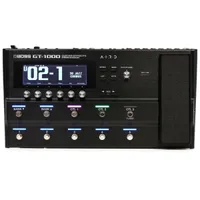
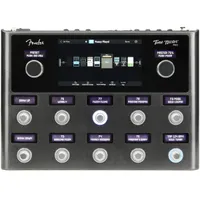
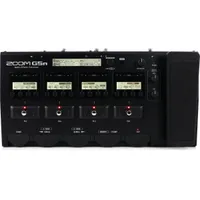
The multi-effects pedals listed above are the ones we reckon you should spend your cash on, but if you didn't find what you were looking for, we've reviewed loads more here.
How to choose

When it comes to picking the right multi-effects pedal, you've got loads of options to explore. Your budget will ultimately steer your choice, but you'll find everything from large "studio-in-a-box" setups to compact pedals that have just the essentials for your board. Here are a few things to think about.
First off, what do you actually want from a pedal? Are you on a quest for the ultimate overdrive or reverb to nail that perfect sound? Maybe you’re more of an explorer, keen to try out all sorts of effects from phasers to harmony features. If that’s you, look for a pedal that offers plenty of variety. Most multi-effects units cover the classics like delay and chorus but some also throw in quirky effects like pitch shifters and loopers. The trick is to choose one that matches your sound goals.
Next, think about how easy it is to use. You don’t want to wrestle with it like it’s a complicated puzzle! Some pedals come with straightforward layouts and easy-to-read screens, while others might require a manual just to figure out how to switch them on. If you prefer just plugging in and playing, go for one with clearly marked knobs and dedicated switches. But, if you love diving into settings and tweaking everything to perfection, a more complex pedal could be just what you need.
Keep in mind the quality of the effects too. Not every effect is a winner, and some budget-friendly options might throw in a few less-than-great presets. So, it’s worth checking out reviews and user opinions. Watching online demos can help you hear how the pedal sounds in action.
Size and portability matter as well. If you’re gigging regularly, you won’t want to lug around a giant pedalboard. Some multi-effects pedals are nice and compact, easily slipping into your gig bag, while others are more suitcase-sized. Think about how often you’ll be moving your gear around.
Connectivity is another key factor. Make sure the pedal has the inputs and outputs you need. Are you linking it up to an amp, a computer, or even running it through an audio interface for recordings? Some pedals come with handy extras like MIDI or USB connections, which can be a big help if you plan to integrate with your DAW.
Last but not least, set a budget! There are some great options out there at every price point, so decide what you can realistically spend before diving in. While it’s tempting to go for the priciest model, don’t ignore the hidden gems that offer fantastic value for money.
Glossary
- Digital Signal Processor (DSP): This is the chip inside the pedal that processes audio signals to create effects, enabling cool sound manipulations.
- Display: It’s a visual screen, usually LCD or LED, that shows info like settings, selected effects, and signal levels.
- Effects Chain: This refers to the order in which effects are connected and processed in the pedal. You can change this order to make different sounds.
- Expression: An expression pedal allows real-time control over effect settings such as wah or even volume.
- Footswitch: A switch you operate with your foot to turn effects on and off or change settings while performing.
- I/O (Input/Output): These are the connectors on the pedal for plugging in your guitar and sending the output to amplifiers or other devices, usually including ¼” jacks and sometimes MIDI or USB connections.
- Pedalboard: A flat platform where you can mount your pedals for easy access and tidy organisation during gigs.
- Presets: These are pre-set configurations for different effects, making it easy to switch between sounds quickly.
- Routing: This gives you the flexibility to decide how the signals flow through the effects chain, allowing for either serial or parallel processing.
- Sample Rate: This is the number of audio samples taken per second, affecting the quality of the digital audio processing in the pedal.
- Tap Tempo: A function that lets you set the tempo for effects like delay or modulation by tapping a footswitch in time with the beat you want.
- True Bypass: This feature allows the signal to skip the effect circuit when the pedal’s off, keeping the original tone of your guitar intact.
FAQs

What should I look for in a multi-effects pedal?
If there's one thing you've got when choosing the best multi-effects pedal for you, it's a wide selection. As with anything, your allocated budget will dictate which end of the spectrum you'll end up at, but there’s plenty of choice, from enormous 'studio-in-a-box' type units, to small form-factor pedals that pack a handful of essential effects onto your pedalboard. Here are some things to consider.
How many effects is too many?
We've all seen examples of someone firing up a multi-effects unit, blasting through the presets like a kid in a sweetshop, but it’s crucially important to consider the types of effects you'll actually use.
Be realistic with yourself, because it’s likely you’ll settle on a small handful of the best guitar effects. Would you be better served looking for a smaller, more capable unit to handle the effects you use the most? Or do you absolutely need the spaceship-looking behemoth full of wacky sounds?
The alternative theory is that, occasionally, you can stumble on something you've never used before and it can spark your creativity. This definitely happens, and is a happy side benefit of having so many effects at your beck and call. For a beginner, the sub-$200 range has plenty to get you excited.
If packing in as many effects as you can into a single box is your aim, you'll find plenty of options to choose from at all ends of the price scale. From budget options like the smaller Zoom pedals, through to entry-level versions of the pro models from the big names in effects like Boss and Line 6.
What do I get if I spend a bit more?
As you move up the range, you'll start to see extra features and functionality like loopers, hardened chassis models and extra connectivity. It's not uncommon now for multi-effects to link with apps on your smart device, where you can get in for deep editing of parameters and settings.
Also common nowadays is for a multi-effects unit to double up as an audio interface or amp modeller. These USB-enabled devices can be plugged into one of the best laptops for music production, allowing you to record songs into a digital audio workstation (DAW) like Ableton Live or Pro Tools.
As ever though, our advice is simple. Work out what you'll realistically want, need or use. Be clear on your budget. Don't be distracted by extra bells and whistles - unless that’s what you want.
Are multi-effects pedals worth it?
It all depends on what you value when it comes to guitar. There are many guitarists who prefer a traditional pedalboard layout. You can tweak each pedal individually without menu diving, reorder them at will, or replace them whenever you feel like something isn’t working.
However with a multi-effects unit, you’ve got less chance of failure due to bad patch cables or faulty pedalboard power supplies, less to carry around, and they’re usually cheaper when you take into account the cost of some individual pedals.
In terms of pure value for money, we’d argue that yes, multi-effects pedals are worth the investment. You get much more bang for your buck with a multi-effects pedal, at the expense of some ease of use.
Why trust us?

☑️ Established 2007
☑️ 2.9 million monthly users globally
☑️ 9,500+ reviews on-site
With more than 17 years of experience, MusicRadar is the premier music-making website in the world. Run by musicians for musicians, we offer expertly written gear round-ups and high-quality, authoritative reviews by an extensive team of highly experienced industry professionals.
Below you'll find more information on the expert authors of this guide.

Matt is a Junior Deals Writer here at MusicRadar. He regularly tests and reviews music gear with a focus on audio interfaces, studio headphones, studio monitors, and pretty much anything else home recording-related. Responsible for over 60 buying guides, a large part of his role is helping musicians find the best deals on gear. Matt worked in music retail for 5 years at Dawsons Music and Northwest Guitars and has written for various music sites including Guitar World, Guitar Player, Guitar.com, Ultimate Guitar, and Thomann’s t.blog.
A regularly gigging guitarist with over 20 years of experience playing live and producing bands, he's performed everything from jazz to djent, gigging all over the UK in more dingy venues than you can shake a drop-tuned guitar at. He's an alumnus of Spirit Studios, where he studied studio engineering and music production.

I'm a Senior Deals Writer at MusicRadar, and I'm responsible for writing and maintaining buyer's guides on the site - but that's not all I do. As part of my role, I also scour the internet for the best deals I can find on gear and get hands-on with the products for reviews. My gear reviews have been published in prominent publications, including Total Guitar, Guitarist, and Future Music magazine, as well as Guitar World.com. I've also had the privilege of interviewing everyone from Slash to Yungblud, as well as members of Sum 41, Foo Fighters, The Offspring, Feeder, Avenged Sevenfold, and many more.
I have a massive passion for anything that makes a sound, particularly guitars, pianos, and recording equipment. In a previous life, I worked in music retail, giving advice on all aspects of music creation and selling everything from digital pianos to electric guitars, entire PA systems, and ukuleles. I'm also a fully qualified sound engineer who holds a first-class Bachelor's degree in Creative Sound Production from the University of Abertay, and I have plenty of experience working in various venues around Scotland.
How do we test a multi-effects pedal?

Testing out a multi-effects pedal is a fairly straightforward procedure, and similar to testing a standalone stompbox. Although the quality of pedals is subjective - like many pieces of musical equipment - there is a set of criteria that every pedal should meet before we recommend it to anyone.
We'll first start with the build quality of the enclosure, controls and footswitch. Pedals are designed to be stood on, so we need to ensure that the enclosure and footswitch feel robust, solid and able to withstand being stamped on. We then check the quality of the dials, making sure that they have a smooth action with enough resistance to reduce accidental movement.
We also check to see how well spaced out and easy to use the footswitches are. We'll also check the expression pedal if there is one, and make note of its action and usability. Multi-effects pedals are here to make your lives easier, after all.
We then test the pedals sonically, and much like our amp testing procedures, we start with every dial in the middle '12 o'clock' position. We then tweak each dial towards a tone we would usually go for - and make sure that we experiment with the full range of sounds on offer. We'll then check any amp or effect emulations or presets. We'll cycle through those, while editing a few as we go to see how easy the process is (or isn't).
Read more about how we test music making gear and services at MusicRadar.
Related buyer's guides
MusicRadar's got your back Our team of expert musicians and producers spends hours testing products to help you choose the best music-making gear for you. Find out more about how we test.
- The best distortion pedals for every budget
- The best looper pedals you can buy right now
- The best guitar plugins to supercharge your guitar recordings
- Take a look at some of the best gifts for guitarists
- The best pedalboard power supplies
- On a tight budget? Here are the best cheap guitar pedals