MusicRadar Verdict
It's not that surprising that the Hazee Delay is Beetronics' first foray into digital effects. Rather than a pedal with mass-market appeal, it feels more like a DIY creator building something weird for themselves, excited at the new tools they've found. That may be a good thing – long gone (sadly) are the weird, 'try anything' days of the boutique pedal boom - but that the results should be niche as a result should come as no surprise.
Reasons to buy
- +
Cool aesthetics.
- +
Has some unique sounds.
Reasons to avoid
- -
Hard to dial in.
- -
No separate mix for modulation.
- -
Modulation before delay is only situationally useful.
MusicRadar's got your back Our team of expert musicians and producers spends hours testing products to help you choose the best music-making gear for you. Find out more about how we test.
What is it?
Beetronics is known for high-end fuzzes and distortions, but that has changed in recent years.
Following on from their Bee Bee Dee analogue delay pedal, it has developed the Hazee Delay. It's the company's first all-digital pedal, and the first entry in its new Pollinator line.
Specs

Price: $249 | £229 | €269
Type: Digital delay pedal
Made: USA
Controls: Time, Mix, Feedback, Mod, Mode, Footswitch
Features: 4 filtered delays, 4 tremolo delays
Connectivity: Input, Output, Power In
Bypass: Buffered
Power: 9V DC Centre-negative
Dimensions: 84 x 72 x 138 mm
Weight: 0.391 kg
Contact: Beetronics FX
Build quality

Build quality rating: ★★★★★
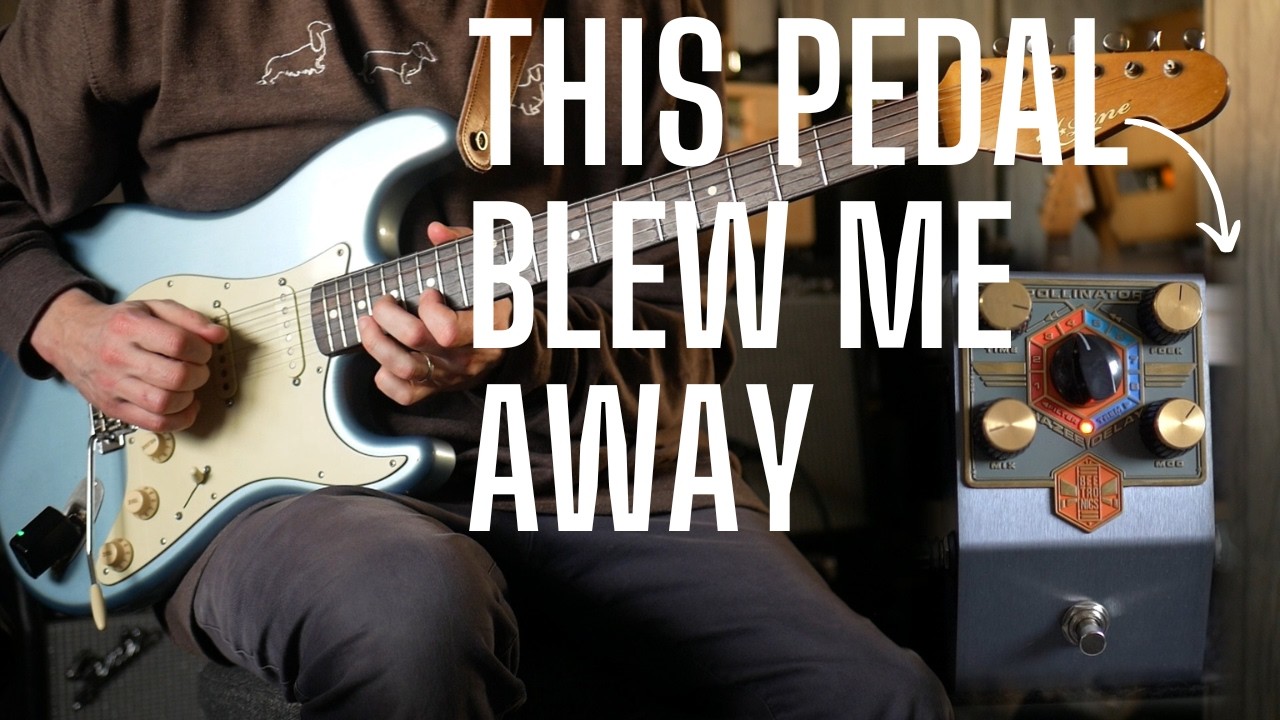
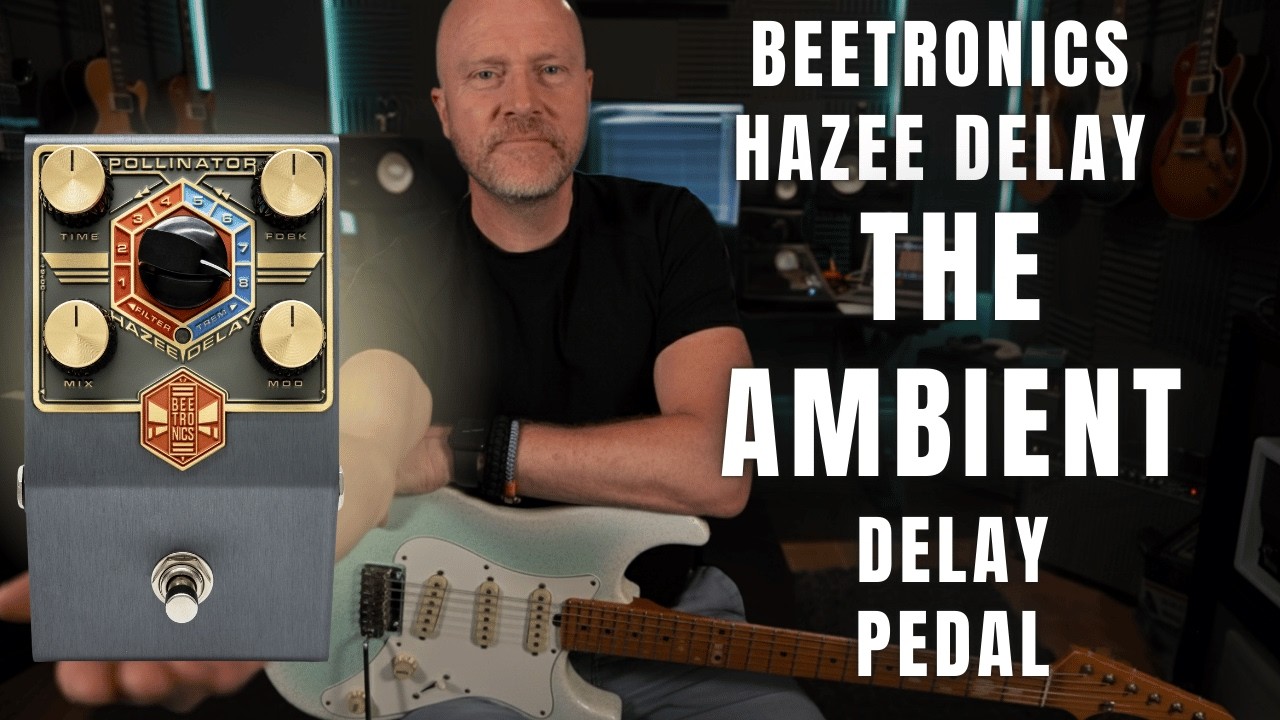
Like the rest of the Beetronics line-up, the Hazee Delay is housed inside a chunky and aesthetically pleasing enclosure. It's not small by any means, but it has a premium feel, with a tidy front plate on top of its brushed aluminium top.
At the core of the pedal is the Spin Semiconductor FV-1 chip. Though showing its age a little, it was at the heart of the 2010s boutique digital pedal explosion. Think pedals like the EQD Rainbow Machine, Afterneath, or Dr Scientist BitQuest.
In the grander scheme of what you can do with an FV-1, Beetronics is playing it pretty safe. The FV-1 has three controllable parameters per patch, so we can expect the Pollinator series will be the same pedal at its core, just with different sounds. Maybe some of these will be more out-there.
Usability

Usability rating: ★★★☆☆
If you like extremes, then you'll find more hits than misses, but otherwise you'll spend a fair bit of time hunting for sweet spots.
Though the Hazee has eight modes, there are only four controls on the front panel - time, mix, feedback and moo - sorry, 'mod'. Other than the typeface blurring its 'o's and 'd's, everything is clear and intuitive.
The pedal isn't the easiest to dial in. Depending on what you're going for, taming the modulation to a usable point can be tricky, particularly with a drive or fuzz in front. If you like extremes, then you'll find more hits than misses, but otherwise you'll spend a fair bit of time hunting for sweet spots.
My biggest issue with the pedal is that the modulation function uses the same mix control as the delay. This means that there's not much room for subtlety. Even when it sounds good in isolation, I find it hard to see the pedal fitting into a band mix outside of a solo.
Sounds

Sounds rating: ★★★☆☆
The Hazee Delay is a bit of an odd beast. On paper it sounds interesting, but in practice I find it to be a frustrating experience, even though the individual sounds are good.
As I mentioned, the modulation occurs on the signal before it is delayed, rather than operating over the delay line, which makes it hard to control, especially with gain or fuzz in front. The result isn't exactly 'out-there,' it's just 'uncontrollable.' The circuit is also mono, which means players with stereo pedalboards are out of luck.
But I have another issue with the Hazee Delay that is affected by interaction with it.

It's the predictability. With any eight-mode pedal, if the patches are too different from one another, there's brain load for the player to dial in each one, or switch between them. The result is that for some players it's likely to become a one-mode pedal. Which is unfortunate, since they've paid for all eight.
There's a reason that most pedals put modulation on the delay and reverb tails - it's because, 9 times out of 10, that sounds better
The end result of both of these issues is that I mainly stuck to modes 1, 3 and 5, since I could predict how they would sound and adjust them easily. Those modes are forward with filter, reverse with filter, and reverse octave up with trem.
I thought all of these sounded cool for lead passages and licks, but I'm not sure I would pick the Hazee over my trusty BOSS DD-6 and a standalone stereo modulation. There's a reason that most pedals put modulation on the delay and reverb tails - it's because, 9 times out of 10, that sounds better.
Verdict

The Hazee Delay is an interesting enough experimental digital delay unit. However, the experimental delay market is crowded, full of feature-rich stereo delays at a comparable price point.
Because its sound is so specific and niche, it's hard to see why a player would choose it over a flagship digital delay powerhouse, or alternatively, a separate delay and modulation pedal.
Because its sound is so specific and niche, it's hard to see why a player would choose it over a flagship digital delay powerhouse
MusicRadar verdict: It's not that surprising that the Hazee Delay is Beetronics' first foray into digital effects. Rather than a pedal with mass-market appeal, it feels more like a DIY creator building something weird for themselves, excited at the new tools they've found.
That may be a good thing – long gone (sadly) are the weird, 'try anything' days of the boutique pedal boom – but that the results should be niche as a result should come as no surprise.
Test |
Results |
Score |
|---|---|---|
Build quality |
No complaints here. |
★★★★★ |
Usability |
You have eight modes but 4 controls and modulation function uses the same mix control as the delay. |
★★★☆☆ |
Sounds |
With modulation difficult to dial in it makes it more of a niche proposition. |
★★★☆☆ |
Overall |
There's a charm in its experimentation, in being different, but you're looking for a workhorse digital delay with modulation this might not be the obvious pick. |
★★★½ |
Also try
Hands-on videos
Beetronics

The Studio Rats
John Nathan Cordy