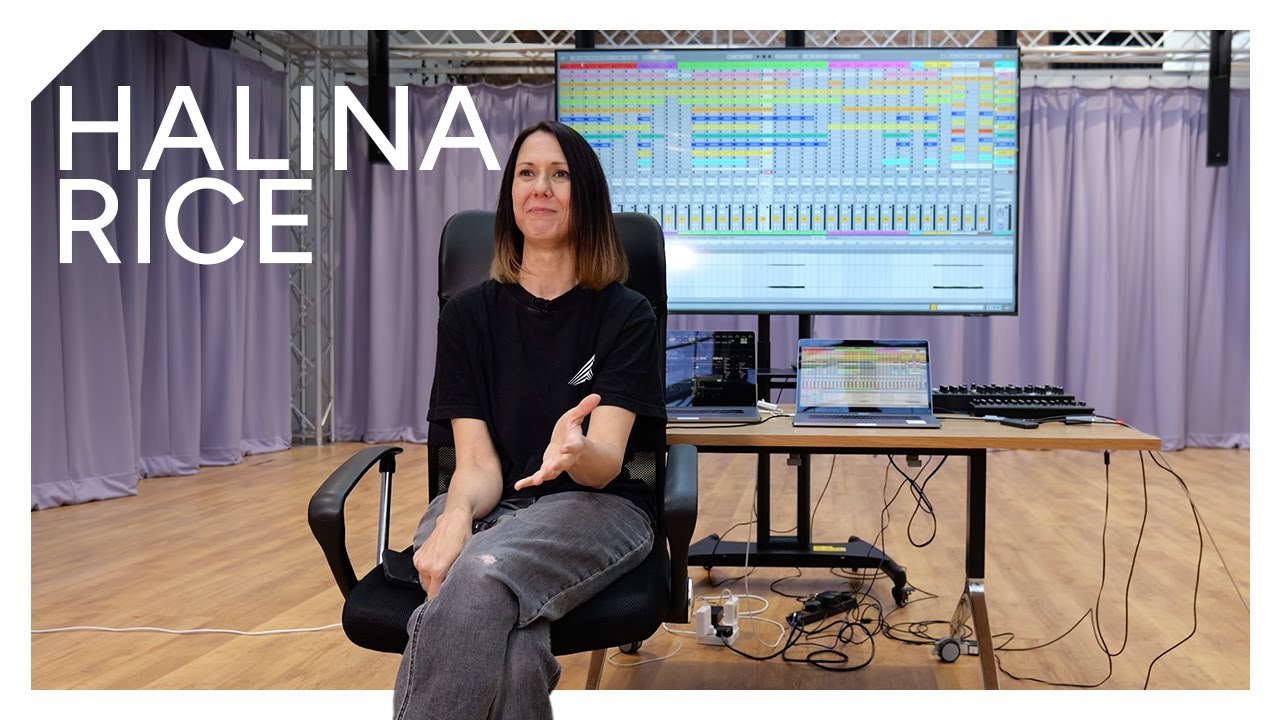
London-based electronic artist Halina Rice describes herself as an ‘immersive first’ musician.
“For me, my objective is always to create enveloping experiences for the audience,” she explains. “I personally love fantastic producers like Jon Hopkins and Rival Consoles, who also use elements of A/V in their work, but also art installations. I'm really inspired by people like Ryoji Ikeda, for instance, or United Visual Artists who, when you walk into their installations, you're somewhere else and you feel really taken out of yourself and in a different space.”
Rice’s music is impressive on its own. On recent album Unreality she combines vibrant hardware synth lines with precision-tooled electronic beats, elements of ambient drone and atmospheric flourishes.
It’s a record worth listening to in its own right, but the full Halina Rice experience goes beyond the realm of a standard stereo mix, incorporating elements of audio-visual creativity and immersive audio mixing.
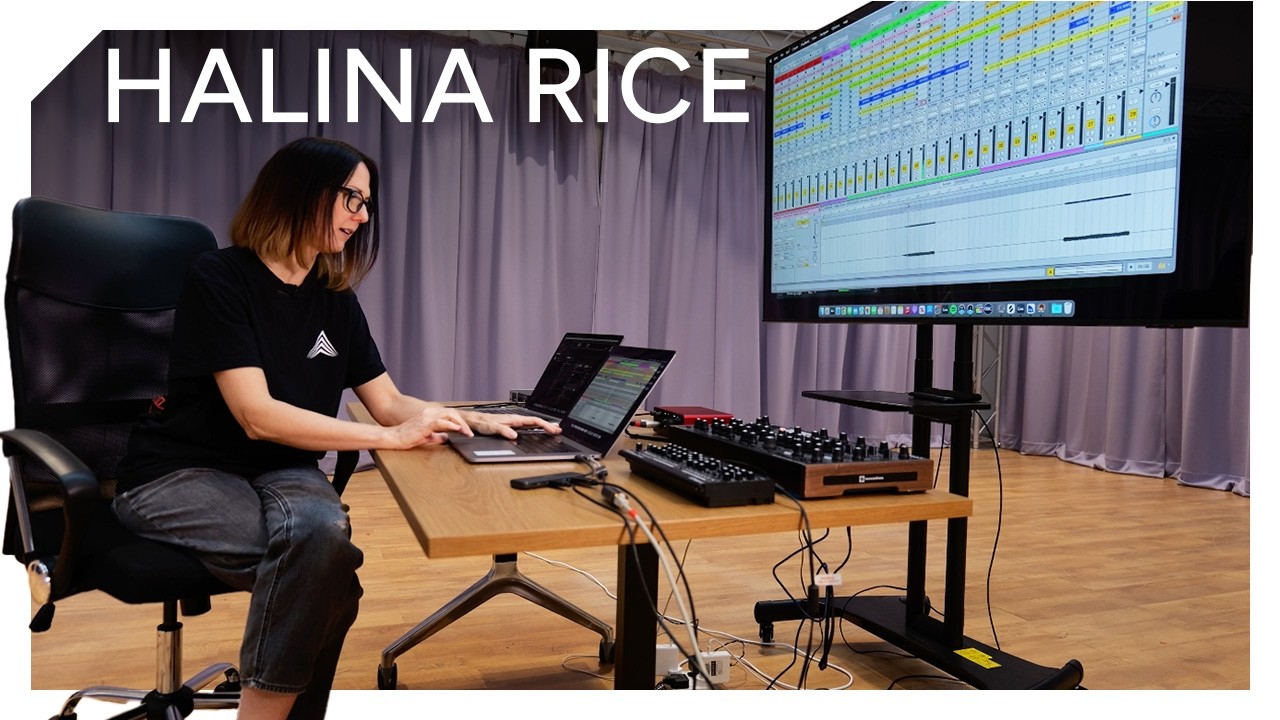
In the wake of the album’s release, we caught up with Rice in L-Acoustics’ R&D studio in North London – close to Rice’s own base – to chat about the making of album highlight Hypnosis, her favourite studio gear, and the creative process that takes an idea from DAW to immersive live performance.
“I was so excited by the fact that there was another dimension to play with."
Halina Rice’s career as a recording artist came a little later in life than some electronic musicians, although she’s been fascinated by the fundamentals of composition since an early age.
“When I was young, I played a few different instruments, mainly piano,” she explains. “I used to record things off the radio and listen and try to recreate them. I was always sort of trying to work out, how does a track work?
“My brother, who's a bit older than me, had every piece of electronic equipment you could think of. He was sort of mad about it. He had Prophet synthesizers, the Juno-60, he had a [Boss] Dr Rhythm drum machine, as well as an 808 and some other stuff.
“As a little girl I used to wander into his room and start messing around on the synths and sort of pressing buttons.”
Despite the early exposure to electronic music gear, Rice didn’t consider attempting to make tracks of her own until years later. She took a full time job away from the music industry, and despite occasionally dabbling in composing pieces for piano, she never considered music making as a viable career path.
“I thought, I'm not a young musician of the year, I'm not classically trained. I'm probably not good enough to do music,” she says. “I was working another full time job for many years, but always had a curiosity about wanting to learn more about music production.”
Eventually, curiosity led Rice to pick up some music production software and – after a period of being confused by the arcane knowledge and specialist terminology required – sign up for a three-month music production course.
“I got there and they had all these pictures of all the equipment that I used to use when I was a kid,” she recalls. “I was like, ‘Oh, right, so this stuff is a big deal in electronic music, is it? I felt an instant familiarity.”
That initial course with Point Blank music school turned into a full diploma, and then a debut EP release via the school’s associated record label.
“With that EP, I then pitched for sync music,” Rice explains. “I wrote to loads of people, most of whom I never heard from, because it's such a competitive industry. But I was so lucky that one person, Steve Spiro from Felt Music in central London, wrote back and said, ‘I really like this track on the EP. Can you write me 14 more that sound a bit like that?’”

When Rice returned with those 14 tracks, however, the results were rapidly deemed too impressive to use purely for sync, and instead formed the basis for her debut album, Redux, which was signed to Felt’s offshoot label Blurred Recordings.
“I thought, initially, maybe I'm too old to be a recording artist, but actually, that was just in my own head. So after the release of that album I started self-releasing tracks.”
From the start of her career, the interplay between visual and sound elements has played an important role in Halina Rice’s output. Although not a visual artist herself, Rice works closely with a number of artists – including current collaborator Freny Antony – to create visuals that pair with her music in live performance settings, with the aim of creating a more immersive experience.
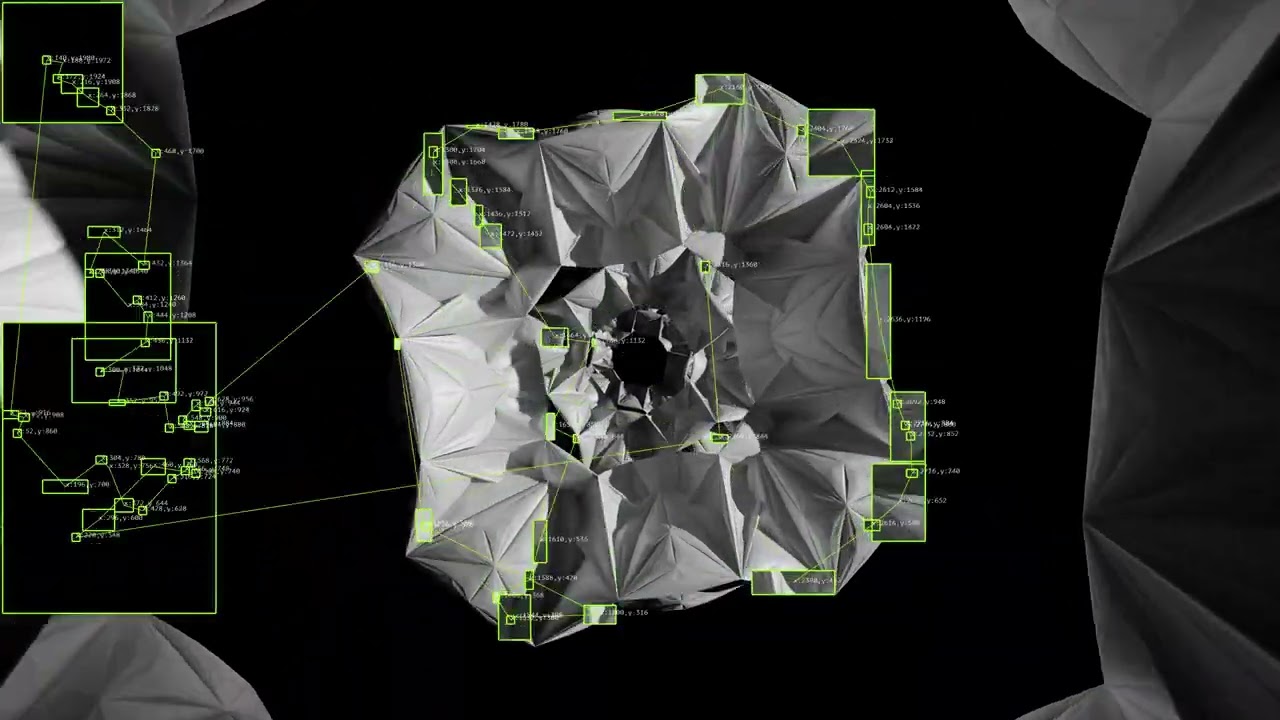
“For instance, with a track called Glitch, which is on my recent album, Unreality, a lot of the video is actually space, because the audio sort of descends into big and then it becomes small – it kind of expands and retracts again,” Rice explains.
“Freny will create stuff where the visuals come to life and then it goes into blackness again. I do the same with programming the lights as well. So the whole experience from the audio, the visuals and the lights is saying the same message out to the audience.”
Given her interest in creating immersive experiences, it’s perhaps not surprising that Rice is also exploring the creative potential of spatial audio.
Her introduction to the technology came from a chance encounter with L-Acoustics’ Guillaume Le Nost, when Rice was booked for a hackathon event at Abbey Road Studios.
“Guillaume suggested that I reprogram my set for spatial audio,” Rice explains. “I didn't really know anything about that, but with the support of their engineers, we reprogrammed my little half hour set. It was for a 12.1 system, so 12 speakers basically around the audience in Abbey Road Studio 2.
“I was so excited by the fact that there was another dimension to play with apart from visuals and audio.”
As Rice readily admits, leaning into the possibilities that come with A/V and spatial audio can make live performances a little high-maintenance.
“It's always a bit of a challenge,” she tells us. “I think you have to say to yourself, you're not just a music producer, you're also an event manager, to some degree. I always have really thorough production calls with the venues, however big or small, in the lead up to a live performance. First of all, you just have to understand what their capability is.”
As spatial audio and immersive visuals become more and more prevalent – and the tech required gets cheaper and more readily available – some of those challenges are diminishing a little.
“It's incredible that a lot of venues today are beginning to extend into having, for instance, LED screens,” Rice says. “I think there's a lot of inspiration for these big immersive events, and mid-size and small-size venues are beginning to emulate that.
“When I started, I almost inevitably had to hire either a projector and projector screen or an LED screen. Now, more and more I'm actually finding my production costs are actually going down a little bit because a lot of places have their own LED screens.”
In our video interview, Rice goes into more detail about the process of adapting her live shows for different listening environments, and discusses her favourite studio tools and techniques.
Keep up with the latest releases and live dates from Halina Rice.
