
Permission To Land, the debut album by The Darkness, was the surprise hit of the early 2000s. In the UK it went all the way to No.1. But the band’s second album was a flop – and lead guitarist and vocalist Justin Hawkins knows exactly why.
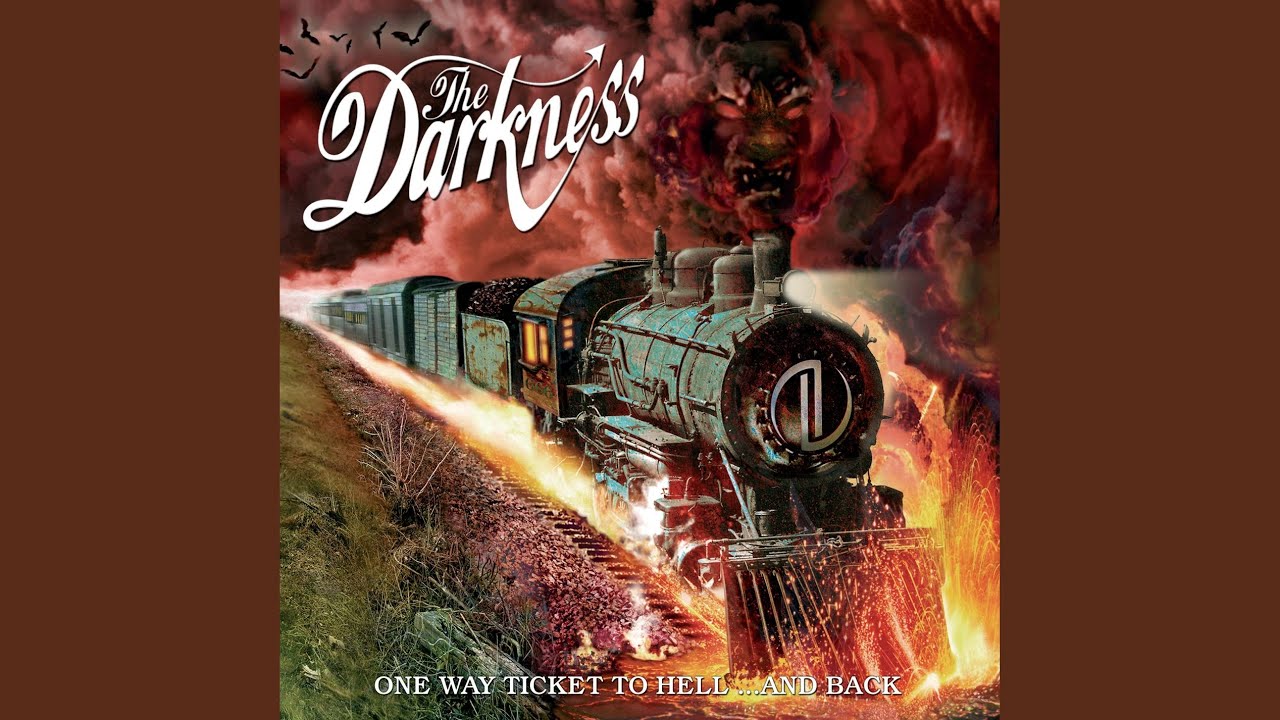
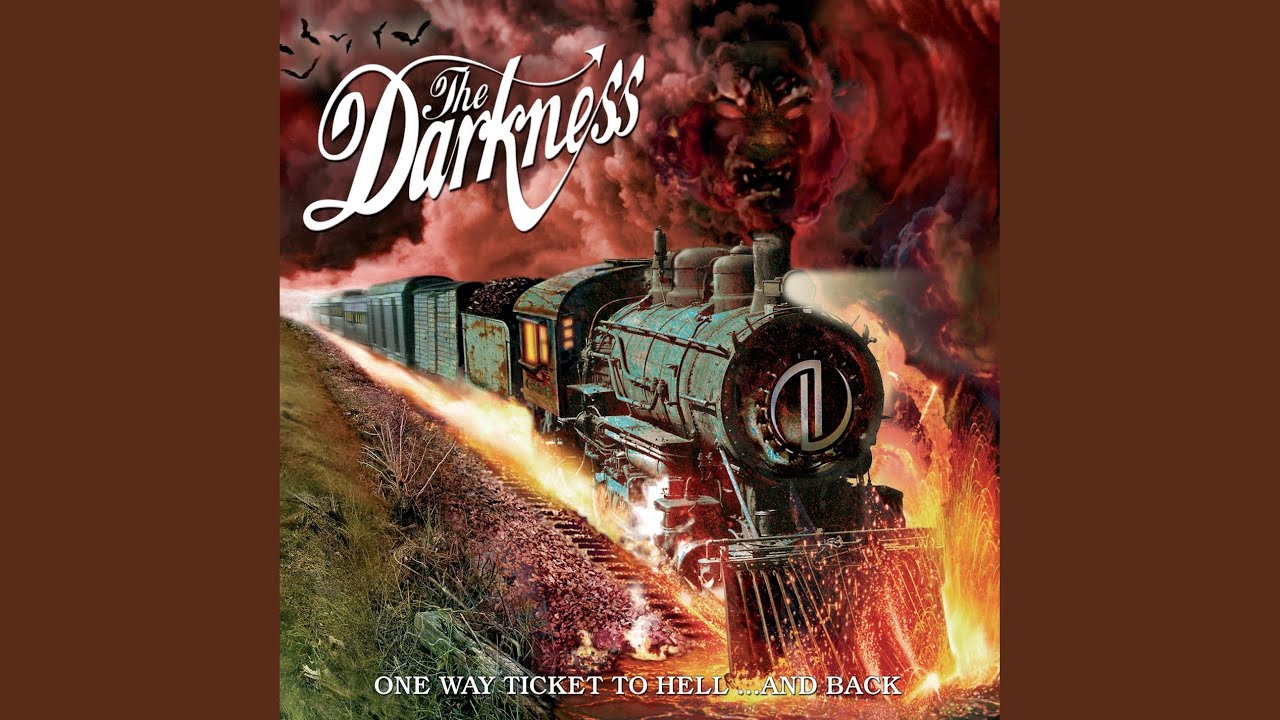
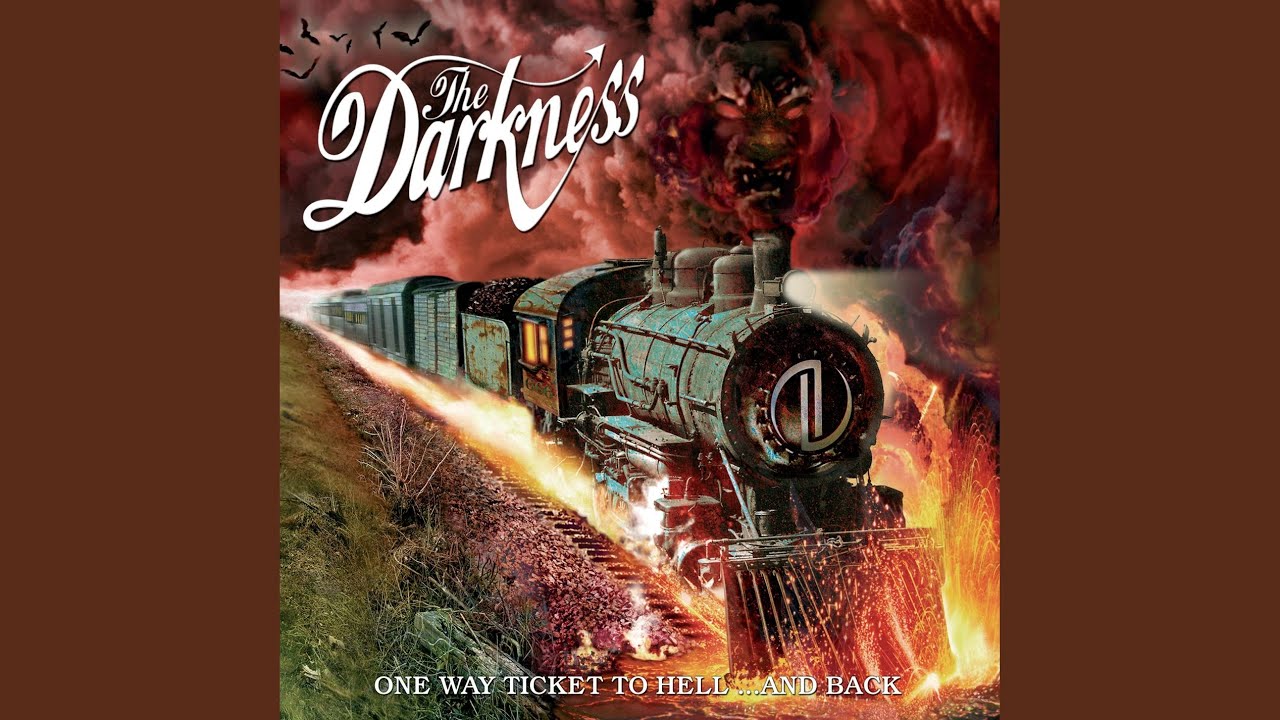
That second album was aptly named: One Way Ticket To Hell... And Back. And as Hawkins explains to MusicRadar: “We spent a lot of money and time on making the album, but we didn’t spend that long writing it. I don’t think the songs are as concise and road-honed as the debut, which we’d evolved in pubs.
“You don’t get a chance to do that on a second record. There’s always a time pressure to put something out. And you can’t do secret gigs when you’re the biggest band in the country. So that album was born in chaos and pressure.
“We were in the process of collapsing,” he shrugs. “But that album has become weirdly popular, especially in America – which is strange, because we didn’t tour it over there.
“A year after it came out, we weren’t touring anywhere. The band was done.”
The Darkness split in 2006. It was only after a lengthy break that Hawkins and his guitar-playing brother Dan reunited the band in 2011.
One Way Ticket To Hell... And Back is now reissued in 20th anniversary deluxe edition formats.
And while Hawkins admits it was a difficult album to make, there was also a lot of fun to be had during its creation – not least because they were working with the producer of Queen’s classic albums of the ’70s…
You made that album with Queen’s producer Roy Thomas Baker, who described you as “one of the world’s best keyboard players”. You also got to play the piano that Freddie Mercury played on his masterpiece.
“Some of the recording was done at Rockfield Studios in Wales, where Roy famously worked with Queen. They have that legendary Bösendorfer [piano] that Freddie played Bohemian Rhapsody on. We used it for the piano parts, as well as a Steinway in Whitfield Street.”
So what’s the Bösendorfer like to play?
“Oh, you can feel the history living inside – a bit like picking up an old guitar. Firstly, you don’t walk over to it unless you’ve got balls. And then as soon as you do, the first thing you play will be Bohemian Rhapsody. Immediately after that, you will start playing Seven Seas Of Rhye. Those are my go-to piano riffs!”
Roy also said he mic’d up a champagne bucket for you to sing into.
“It was an SM58 in a champagne bucket for the ‘aahs’ in Hazel Eyes. He wanted it to sound tinny, so he literally put the mic in a tin. That’s the way he would chase ideas.
"Roy would find real-time solutions to achieve whatever it was we were trying to do. It’s the same with the panpipe intro [on the album’s title track One Way Ticket]. I played it on a synthesizer and we all laughed at it. Then Roy went and contacted the greatest panpipe player in Peru. They had to build one with extra pipes to play it exactly how I’d written it.”
As well as the panpipes, that intro to the album also had the sound of people chopping up and snorting powder...
“Yeah! Some bigger lads came into the studio and bullied us into recording them doing that. We didn’t do that. We just wouldn’t. You can’t do stuff like that and then apply for visas!”
Was your attitude as professional as it should have been?
“Well, I remember taking my pinball machines with me to the sessions at Whitfield Street Studios in London. Why was I doing that? I should have been working. It says a lot. My priority was leisure.”
You and your brother Dan must have learned a lot from Roy.
“More than production techniques, to tell you the truth. One time we were in a restaurant and he asked for a steak. When they brought it he said, ‘I asked for it to be medium rare, not fucking cremated!’ He had this way of addressing people that was hilarious.
“And he knew how to groove on music. He influenced us in loads of ways as a person and a presence.”
You can hear the magnitude of the production, given how some of the songs had over 120 tracks each of guitars and vocals...
“We stacked the shit out of it! There was orchestras, brass sections, all sorts of stuff. Sometimes you wouldn’t really hear it. These brass sections recorded at Capitol Studios in LA would be barely audible buried at the back of the mix.”
In the song One Way Ticket, the main riff is E major open position, very similar to your huge hit I Believe In A Thing Called Love. Most rockers are afraid of E major, to be honest…
“I’ve noticed that. A lot of people detune a semitone, or drop the D, and then there’s all the AC/DC stuff in A. Maybe there’s something in there with E major that’s inherently uplifting in the same way that D minor is inherently sad.”
The song Knockers is so underrated. There’s some great slide guitar during the chorus.
“That’s another one with an E major feel. Dan’s doing the slidey stuff while I’m on lead guitar and piano.
“That was challenging live, finding a way to do both. There was a lot of synth stuff happening. I think I was using a keytar on that tour. And a sitar... all of the ’tars!”
You were mainly using Gibson Les Pauls through Mesa Boogie amps at this stage, right?
“It was probably Mesas. Dan would’ve been enjoying his Marshalls, as usual. We borrowed AC30s to try and get those Queen tones.
“I was fascinated with Ibanez at the time, so I used a Steve Vai signature with the tree-of-life inlay for dive bombs and anything like that.
“There were the usual white Les Pauls and a Danelectro electric sitar on One Way Ticket. I liked the idea of a song that started in the mountains of Peru or Bolivia and then went Eastern! It’s international, that’s for sure.
“I remember playing the Hazel Eyes solos on the Sea Shell Les Paul Standard that had been carved by Bruce Kunkel. We did a tour of the Gibson Custom Shop and I found it in a drawer. The guitar cost me a couple of grand but it’s a one-off that’s probably worth £50k. It has a lot of character and a particular sort of squeak to it.”
That One Way Ticket solo has a countrified C# Phrygian Dominant flavour to it.
“I’m more of a hybrid player these days, maybe that’s why we’ve started sounding more country. The first album was more plectrum-reliant, but from the second album I started doing more hybrid. You can hear it on that solo, which is full of Eastern promise but definitely struck in the Wild West manner. It makes ears prick up!”
Why do you prefer the sound and feel of hybrid picking?
“As well as resonating differently, the attack feels a bit later. The solos land in a slightly different place. It’s probably only a millisecond or two, but it brings a different groove to your playing. I love how it sounds looser and lazier.”
One of this album’s singles, Is It Just Me, has some wide interval tapping parts that are melodic and ambitious but without actually shredding...
“It’s tapping at a speed people can still sing along to, almost like a ‘20s clarinet part. I sometimes find that if my solos get too fast, they lose that ability for people to sing along, or as I like to call it, singalongability.”
Seemed Like A Good Idea At The Time is the big ballad on that album.
“The string arrangement is my favourite thing about it. Paul Buckmaster did that. We were dying to work with him, given all the stuff he’d done in the past with Elton John. He worked on Madman Across The Water, which is my favourite Elton album.
“He was a real pro who knew how to come at things from a different angle. He treated violas like electric guitar lines and got the instruments to speak to each other in interesting ways, never how you’d expect an orchestra to sound.”
Does that song show your more earnest side as a songwriter?
“There’s a bit of repetition in the refrains, which suggests that I mean it a bit more. I really believed in that song.”
