
Among Rage Against the Machine’s punchiest and most thrilling moments on record, the band’s 1996 single Bulls on Parade motored through a range of unpredictable arrangement choices.
It came in like a freight train, with its pulverising syncopated opening riff, before switching gears into the menacing hip-hop of its verse - bridged by a pace-setting wah-wah pedal motif (the almost comical-sounding ‘wah-wah-wicky-wah-wah’ bit).
But, it was its spotlight solo - a signature focus-pulling moment from guitarist Tom Morello - that was quite unlike anything that had been heard on a rock record prior.
The sound coming out of Morello's guitar was something that nobody had ever tried to emulate before. It was nigh-on indistinguishable from a DJ, scratching a vinyl record rhythmically.
Many didn't even realise that the sound they were in hearing was in fact, just one man and his electric guitar.
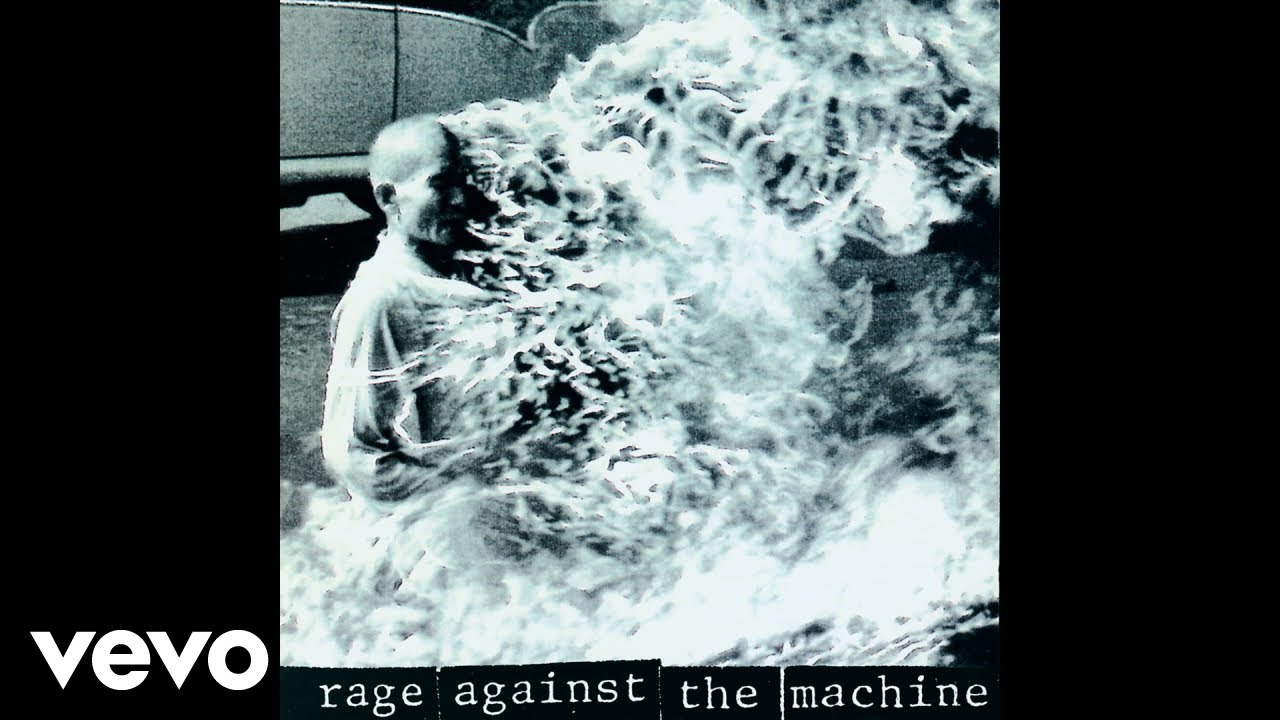
Rage's self-titled 1992 debut album had already struck a decisive deal between the distinct universes of hip-hop and metal, via the interplay of lyricist and rapper Zack de la Rocha’s incendiary bars with Morello’s towering, percussive riffs. Not to mention the sometimes-funky, sometimes-powerhouse rhythm section of Tim Commerford and Brad Wilk on bass and drums respectively.
In the days long-before nu-metal and rap-rock became ubiquitous, Rage were blazing entirely new ground, pulling in listeners from far across the factionalised genre aisles. Uniting them against bigger, common enemies.
On their 1996 follow-up, Evil Empire, this alliance of genres was locked in gear more firmly via some extraordinary sonic innovation, all of which was wrought from the traditional rock band instrument set-up of guitar, bass and drums.
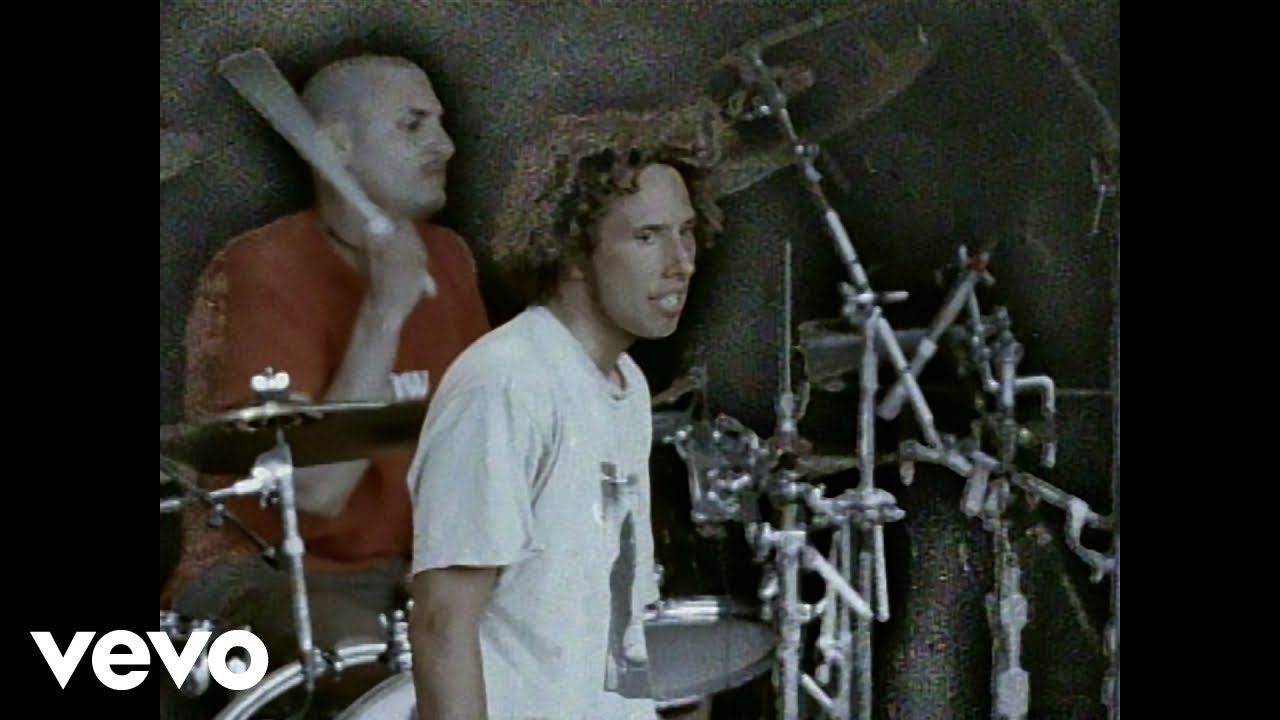
“Tipping over the apple carts of the powers that be was always at the forefront of everything Rage did,” Morello told us back in 2011. “At the same time, when we got down to the very serious business of making music, we were hellbent on making equally strong statements. To that end, I decided to rail against the accepted rules of ‘shred’ guitar, which in my opinion were making every six-stringer around sound the same. One night, I decided to be the DJ in Rage Against the Machine, but I was going to do it all on the guitar. Discovering how to ‘scratch’ on the guitar and how to work the toggle switch like two turntables was key.”
Keen on breaking free from the fixed rules of the game, Morello looked on the guitar as not just a riff-and-lead generator, but a far wider-reaching sonic tool than many of his more firmly rock-rooted contemporaries could possibly imagine.
But this audacious attitude was largely borne out of limitation.
Initially leaning on just a Gibson Explorer, Morello recognised the curious potential of the instrument’s toggle switch early.

“Everyone else had those really cool Eddie Van Halen guitars with only one knob,” Morello told our sister website, Guitar World. “So I thought, I might as well make use of these knobs, since I can’t afford a different guitar right now. That was when I stumbled on the toggle switch. I combined it with a wah-wah pedal, and all of a sudden there was a noise that I had never heard a guitar player make. It sounded more like a sort of synthesizer.”
There’s many examples of Morello’s expressive sounds on Rage's debut, Rippling, synth-like textures, the gargles of what sounds like a living creature, haunting, howling volume swells and octave-shifted, frequency-stretching tones were as common as the Jimmy Page-nodding, blues-adjacent riffs. All of which worked to back-up and accentuate Zack de la Rocha’s urgently delivered words.
With his custom-made partscaster (famously emblazoned with the legend, ‘Arm the Homeless’), and his drop D-tuned Fender Telecaster, Morello was keen to upturn the fixed idea of just what a guitarist’s role in a rock band was, whilst still being able to maximise the heaviness when required.
A good example of Tom's balance between innovative wizardry and mosh pit-inducing heft is Know Your Enemy.
“I found that by embracing limitations and going, ‘This is my gear, the only variable is going to be my imagination and creativity’, I was much more creative,” Morello told Ultimate Guitar. “Rather than buying some rack gear that is going to make me sound like X, Y, or Z, I’m just, like, ‘This is all I got, so what can I do?’ Well, I can rub the Allen wrench on the string or I can unplug the jack and use that as an instrument or I can use the toggle switch in unconventional ways.”
The focus-pulling moment that fully crystallised Morello as an inventive, sonically-curious guitarist’s guitarist, was that jaw-dropping Bulls on Parade scratch breakdown.
This arrangement was the culmination of that volume cut-off technique previously deployed across the debut, but harnessed here to meet a specific objective - to sound like a DJ.
To achieve it, Morello turned the rhythm pickup volume all the way down, and the treble pickup to its highest. Then, Morello rode the toggle switch - alternating between, effectively, an on-and-off state.
Performed rhythmically, Tom gradually caressed the bottom of the neck, rubbing all six strings in tandem.

His Dunlop Cry Baby wah-wah pedal was compressed fully, which added a higher-frequency edge to the base tone.
The result - outputted through Morello’s staple Marshall 50-watt 2205 and Peavey 4x12 cabinet - built on the essence of the gangster rap-leaning backdrop of the song's verse (which took influence from the iconic Geto Boys).
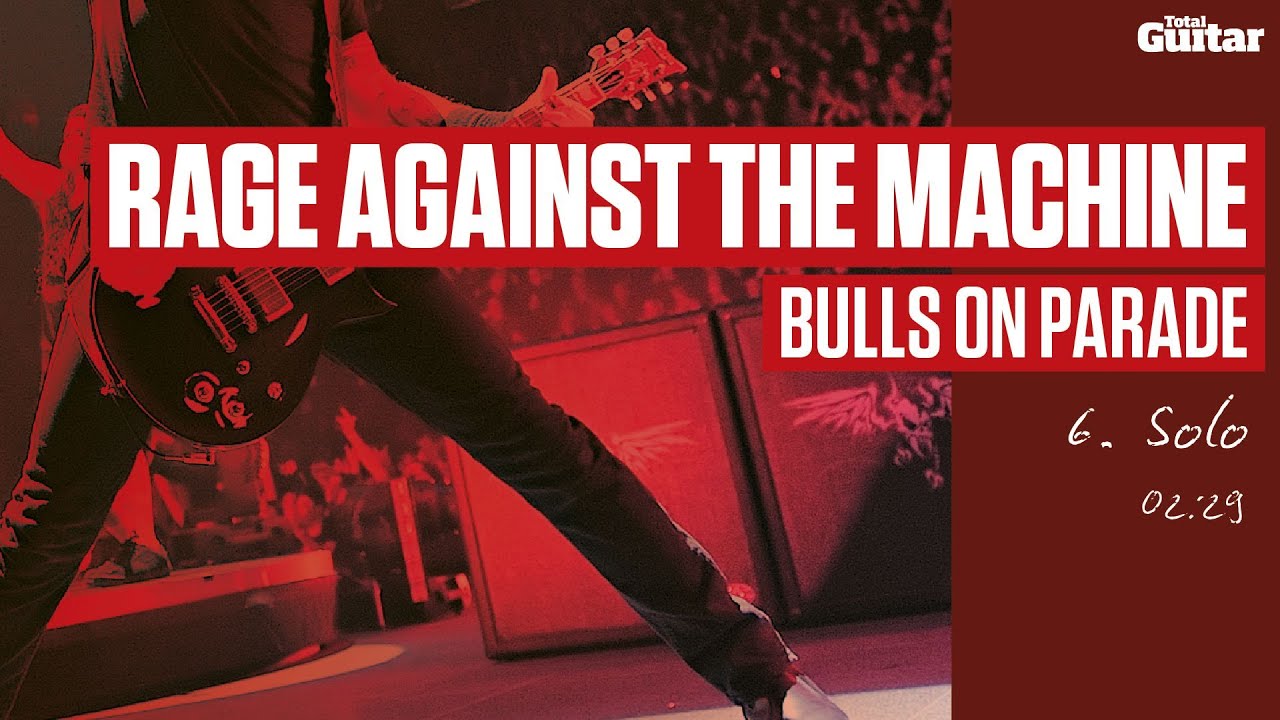
A fascinating audio/visual deconstruction of the riff from our (much missed!) sister magazine Total Guitar can be viewed below.
Lyrically, Bulls on Parade was a typically pointed diatribe, this time aimed at the US arms industry.
De la Rocha pointed to the nefarious methods - and dubious morality - used to maintain the profit margins of arms dealers and the military industrial complex. The undercurrent of threat was musically articulated by Morello's thorny backing riff which ran repetitively through the verse.
It was an arrangement that framed the track’s hypocrisy-spotlighting anger inside the aesthetics of a street-based revolution. It was a DIY revolt wherein the people - from metal-heads to gangster rappers - took on these imperceptible global powers together.
The song was recorded swiftly with the legendary AC/DC and Bruce Springsteen producer Brendan O’Brien. “We realised quickly that it was a most potent piece of music,” Tom told us back in 2011.
“We recorded cassette demos as we wrote and jammed, and Brendan didn’t want to lose any energy as we worked. Our method of working was pretty much ‘jam, roll the cassette tape, then cut the real track’. Not a lot of time for overthinking and over-tinkering.”

The legacy of Morello’s questing philosophy continues to serve as a reminder of the true flexibility of an instrument like the guitar - and just how attitude and risk-taking can turn limitations to a creative advantage.
And, the unique sounds Tom would continue to extract from his instrument in service of Rage Against the Machine, Audioslave, Prophets of Rage, with Bruce Springsteen or as The Nightwatchman, would go on to heavily influence subsequent generations of players. Just ask Muse’s Matt Bellamy…
As Morello told Total Guitar in 2021, “Once I had the blinders off and realised the parameters of rock and roll guitar playing were not just Chuck Berry to Eddie Van Halen, I started practicing sounds - whether that was DJ scratching or wild boars rutting at the zoo or the helicopters overhead.”
“Even if I couldn’t exactly mimic those sounds, practicing non-guitar noises led my playing in an entirely different direction. It felt like that lane was open. There was no-one else in it."
