


![Robben Ford [left] wears a dark suit jacket and v-neck t-shirt as he plays a blonde Telecaster onstage. Photographed in 1975, Joni Mitchell [right] plays her Martin dreadnought live onstage at Wembley Stadium.](https://cdn.mos.cms.futurecdn.net/VcVHS39qQMWdPw9okeyQx-1920-80.jpg.webp)
Robben Ford did not need lessons on how to play his electric guitar when saxophonist Tom Scott hired him as a member of the LA Express. But what a musical education he received in his time with the jazz-fusion legends.
The LA Express were a serious outfit. This gig would be the making of him. For a kid who grew up in the small-town of Ukiah, California, playing with George Harrison was a mind-blowing experience. “When I first met him, I was just… speechless, you know,” says Ford, joining MusicRadar on Zoom from Tuscany, sunlight flooding in through the window. “But when we started playing, he gave no direction. He liked the way I played. And I would just be myself.”
This was 1974. Ford was having quite the year. Just a few months earlier, Ford and the LA Express had been hired by Joni Mitchell as her backing band for the shows in support of Court And Spark, performances that would be immortalised on the live album Miles Of Aisles. The following year they were to record together.
“I had done the Court And Spark tour. The Miles Of Aisles record had come out and all that, so she’s back in the studio to do The Hissing Of Summer Lawns,” says Ford. “I played on four songs on that record.”
Mitchell was handling production once more. The Hissing Of Summer Lawns would build upon the lithe, jazz-inspired structure of Court And Spark, and Mitchell was keen on seeing just how far she could take it.
She would have known just how ambitious this recording would be – its opening track, In France They Kiss On Main Street, was emblematic of the endeavour, a composition that sounds as though it is being carried in the early summer breeze, with backing vocals from James Taylor, Graham Nash and David Crosby.
Ford, who plays electric on In France… recalls Mitchell making everyone feel calm, at ease in her presence, even if he would remain his usual self, a ball of energy. His face lights up at the memory.
“First of all, she was always the easiest person in the world to be around, to work for, never uptight or heated, or quick!” he says. “I’m like lightning in the studio. I’m, like, bouncing around, you know. [Ford’s girlfriend] Kelly used that term ‘You move like lightning!’ [Laughs] I am very energetic. I’ve calmed down a bit. But, in any case, she was just lovely.”

And she knew exactly what she wanted, and how to engineer a guitar tone that would work for the material. Ford is a player who has always made volume a coconspirator. That’s why he prefers Dumble tube amps, and to let them run wide open, untamed (he maintains you can’t tame them). This is part of his style.
But back in ’75, at A&M Studios (a legendary Hollywood location once owned by Charlie Chaplin), what Ford was getting from his setup just wasn’t right.
“I was doing guitar overdubs,” he says. “I was out there and they were behind the the glass in the control room. I’m out in the recording room with an amplifier and a guitar, and headphones, and playing, and it’s just not working for her. ‘Right,’ she says, ‘Come on in, Robben.’ You know, always nice. ‘Come on in, Robben.’”
Mitchell has an idea.
“So I go into the booth and she says, ‘Could you maybe just, like, plug directly into the console?’” says Ford. Professional etiquette demands that he voices his doubts about whether this will work for his tone.
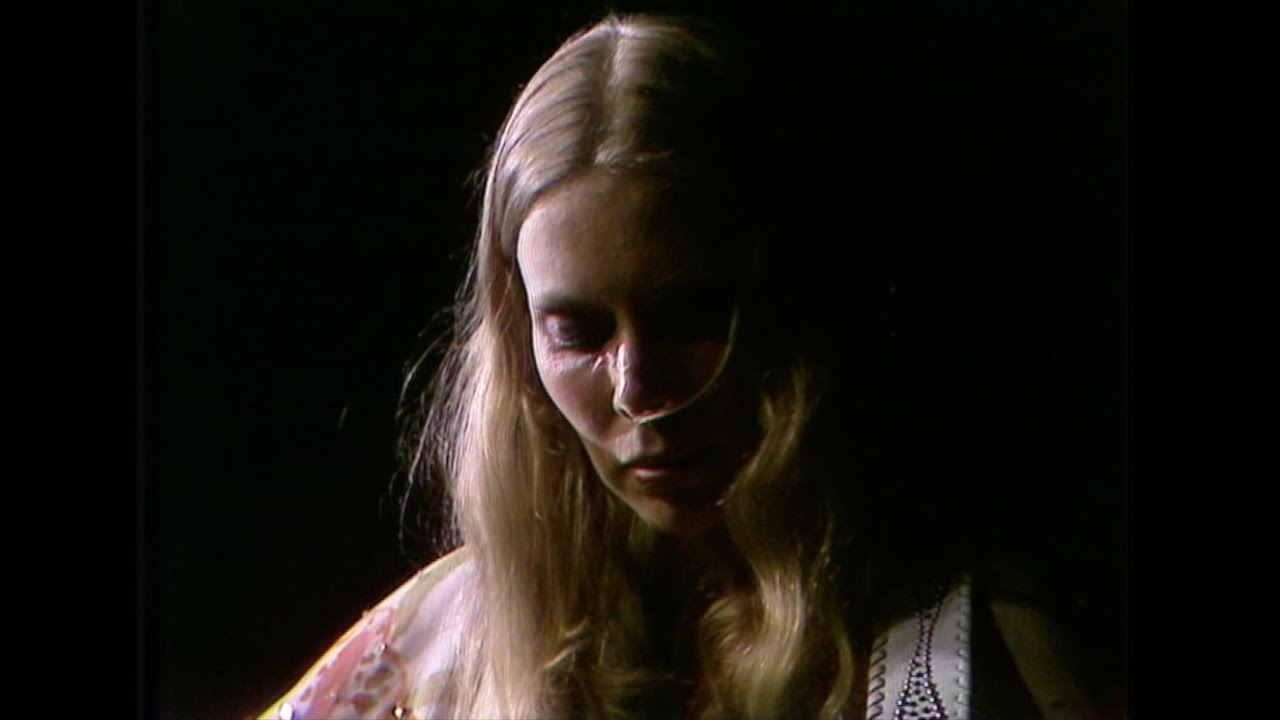
“I said, ‘Oh, Joan, that’s gonna sound terrible. Guitar into the—you need an amp, man! You need some tubes vibrating. You need some air! She goes, ‘Would you just try it?’ [Laughs] ‘Sure!’” he says. “I was plugged into a [Maestro FZ-1] Fuzz-Tone directly into the console. Never done that before, man, and I would never do it again – well, I might, having had that experience, because that’s the sound that you hear on In France They Kiss On Main Street. And it worked. And she loved it! She was really happy with it.”
A few years later, Mitchell repeated the trick. This time Ford was playing one of Mitchell’s acoustic guitars. It was a very different kind of session.
“It was the Don Juan’s Reckless Daughter album,” says Ford. “I recorded three or four tracks with her. They didn’t wind up on the record, and they weren’t meant as songs; they were actually just blues jams, like, literally, blues – 12 bars, go! And that was with Jaco Pastorius and John Guerin was on drums.”
Mitchell wasn’t feeling it. She had a proclivity for alternate tunings, guitar capos, giving her playing this elusive quality that would thwart players trying to get a bead on it, playing along with their ear to the speaker. Ford should have known what was coming next.
I was playing acoustic guitar. She says, ‘could you tune the guitar, like, way down?’
“They were playing this slow blues kind of thing, and she goes, ‘Robben?’ I was playing acoustic guitar. She says, ‘could you tune the guitar, like, way down?’” he says. Again, he protested. Again, Mitchell was right.
“I’m like, ‘Oh, Joan, no way!’ The strings are gonna be falling off,’” says Ford. “‘It’s gonna sound terrible.’ ‘But would you just try it?’ ‘Okay’ [Laughs] So, from E to C, that’s a long way. But, of course, it was on one of her guitars and it had heavy strings on it, so there was something there of substance, and it just created this incredibly deep, big, blues sounding mood. So that’s what it was like working with Joan. I mean it was wonderful working for her.”
By their very nature, sessions are “kind of a job”, but when you have Mitchell tracking vocals in the studio, everyone can caught up in the moment. The Hissing Of Summer Lawns opens with the playful cadence of In France The Kiss On Main Street, a coming-of-age tune, with a style – some call it jazz-pop, others avant-pop, but absolutely a paradigmatic shift from the kinds of things her peers in the ‘60s folk circuit were playing.
Ford recalls some other tracks being more difficult to put together. Harry’s House/Centerpiece was an altogether more intense studio experience.
“I played on Harry’s House, on The Hissing Of Summer Lawns record, and I’m just playing fills with a volume pedal, [hums a guitar violining] just things coming and going like this,” he says. “And, at a certain point, recording that song, especially towards the end, it became very intense in the studio, because Joan was singing, man!
“She was in a room of her own, but she’s singing the song, so we’re all in it. That’s a deep song. When I listened to it, it’s almost irritating, but that is the quality of the song. It’s painful.”
Robben Ford was speaking to MusicRadar in advance of his new studio album’s release. Two Shades Of Blue is available to preorder, out 27 March via Provogue. You can read more from Ford in coming weeks.
