
Listening to Vernon Reid manipulate the electric guitar and bend it to his will is a little like conversation with Vernon Reid, his quicksilver mind scooting from one idea to the next, from one musical reference to another, weaving a story together that tells you were he has come from, where he is going.
It’s a listless Friday afternoon and Reid says everyone in New York is “falling in love with their LLMs” and maxing out the local internet bandwidth, while we are here doing “regular business” on Zoom, talking music.
The Living Colour guitarist has a solo album, Hoodoo Telemetry, to discuss. But there are all kinds of things going on in the world. D’Angelo has not long passed. Reid posted a tribute to the neo-soul trailblazer and reveals he had actually collaborated with him on a track for the Set It Off soundtrack.
The pair first met at a launch party for Brown Sugar. A session invite came later. Sadly, the track didn’t get released, but Reid remembers it just fine. “We did a a blues thing, and I have a cassette of the session, just a rough mix of us playing, and it’s fabulous!” he beams.
D’Angelo’s virtuosic command of rhythm left an indelible impression.
“I was really struck by one feature of his music, that whole behind-the-beat thing,” he adds. “That’s very much like the the J Dilla kind of hip-hop behind-the-beat thing. There’s a whole thing that Dilla Time has affected, R&B, jazz – it’s amazing. But D’Angelo had that natively, this whole behind the beat – way behind the beat – feel very much like the music that came out of Memphis, very much like Al Green with the Hodges brothers [the Hi Rhythm Section]. It was very much that approach and I found it remarkable.”
D’Angelo, J Dilla, and Al Green, Teenie, Charles and Leroy... Reid pulls names out of the air and makes the connections; and that’s a little like how Hoodoo Telemetry plays out, connecting the dots between Reid’s musical preoccupations, all the things that have caught his ear.
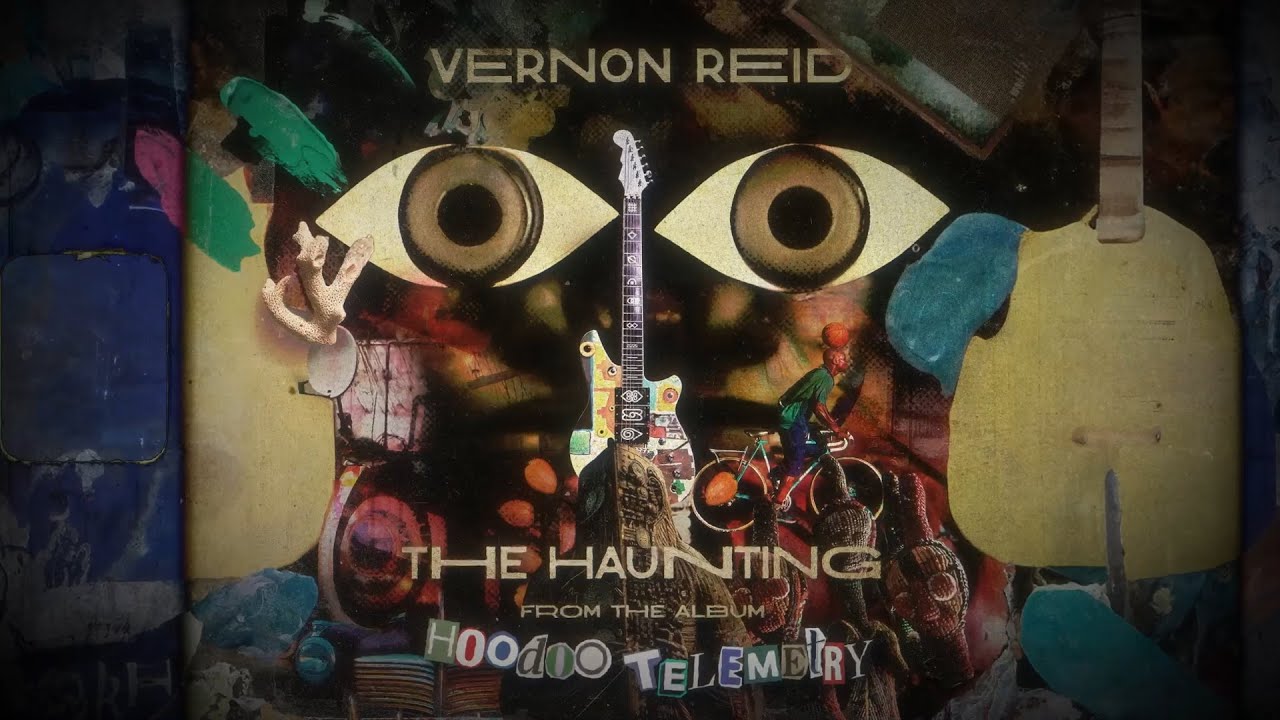
His feel for fusion holds electric, hi-wattage guitar in equilibrium with jazz changes, protean Zappa-esque freakouts, and hip-hop rhythms.
A track like Bronx Paradox places guitar and horn in swampy unison as they track a melody over BDP-esque production punctuated with auxiliary rhythms from SL-1200 record scratches.
“I got to tell you, one of my favorite moments on Hoodoo Telemetry is J.S. Williams Trumpet solo on Bronx Paradox,” says Reid. “It’s so good. There’s a little bit of Woody Shaw. He’s got some Lee Morgan in there. I love that. I love that!”
I got to tell you, one of my favorite moments on Hoodoo Telemetry is J.S. Williams Trumpet solo on Bronx Paradox... There’s a little bit of Woody Shaw. He’s got some Lee Morgan in there. I love that. I love that!
With Reid's his solo work, with Living Colour, you get the sense that he is the quintessential New York guitar player, that he has poured all the energy and art and life of the city into his style.
As he admits her – in a conversation that takes us from NYC’s influences, seminal epiphanies, to the sampler as a “nostalgia machine” – some of these tracks relate directly to his experiences growing up, and the people who made him the man and the player he is today.
How did New York City shape how you played the guitar?
“Well, all of this is is very interesting because, in a way, my playing life is very much tied to the life of the city, and to the discoveries in my youth that I made there, like hearing Band of Gypsys’s Machine Gun for the first time. Hearing Coltrane play My Favorite Things.”

How did you discover John Coltrane?
He played John Coltrane playing My Favorite Things and it was this unbelievable moment of revelation. It was seismic. It was a transformative moment
“The first Black male teacher I ever had – and he wasn’t even an official teacher at Brooklyn Tech, he taught the jazz workshop – used to do this brilliant thing where he took records, he would play the original version, and then he would play a cover version of the record.
“I remember when I was in Catholic grade school, I was taken on a school trip to see The Sound Of Music with Julie Andrews, and of course My Favourite Things is my favourite song from that movie. This is after school in the ‘70s, right? He played the Julie Anderson original – I knew it very well – and then he played Coltrane’s. This was the first time I heard Coltrane.
“He played John Coltrane playing My Favorite Things and it was this unbelievable moment of revelation. It was seismic. It was a transformative moment because I wasn’t exposed to this kind of music at all. But I instantly knew that Coltrane was playing to the lyric. When he’s playing the melody, ‘When the dog bites/When the bee stings/When I’m feeling Sad…’ I knew that that’s why he was playing the way he was playing.
“Subsequently, I’ve read interviews where he talked about how much he loved the lyrics of My Favorite Things – and that was the thing! It was not a vehicle for him to blow.”
And you could hear his love for the original track in his version…
“Like, the history of jazz is you take a Broadway tune or whatever, and you hype up the changes, you extend the harmonies, and then you blow over it, so it’s more a backdrop for improvisation. But he wasn’t treating it that way. He was very much tied to that [original]. So these things, these exposures [were huge].”
What else is in there from a New York POV?
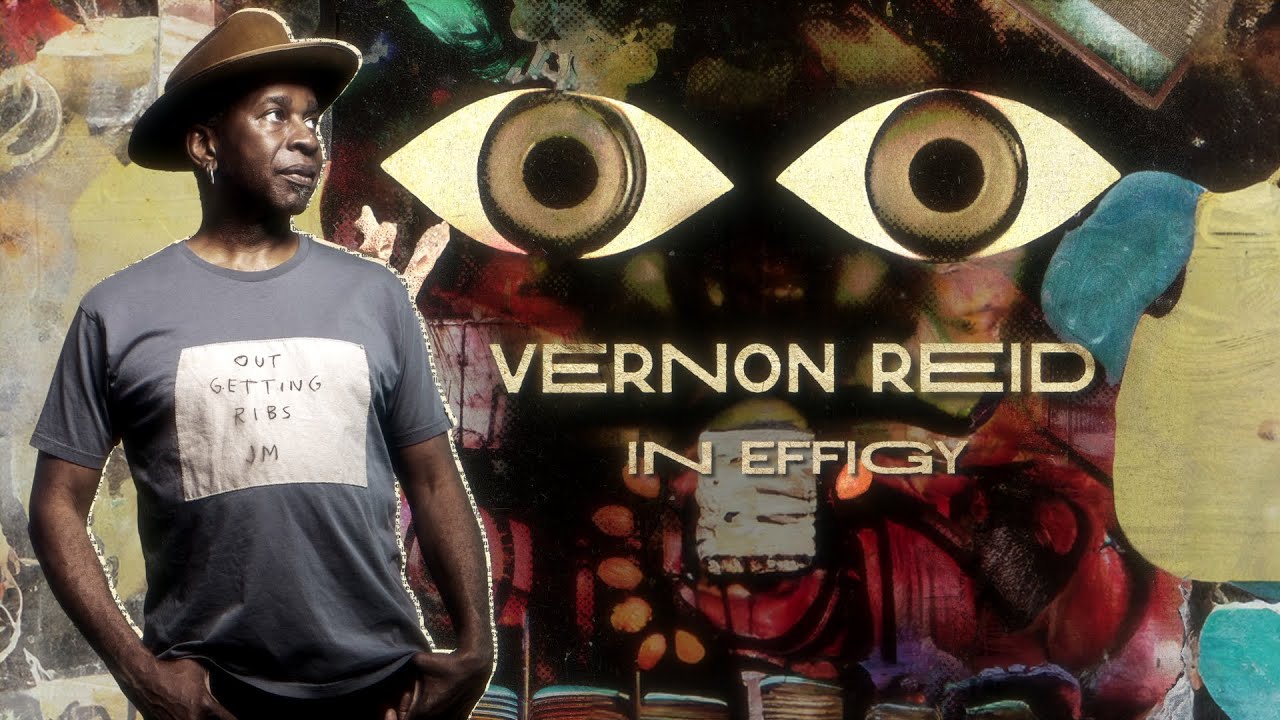
“On Hoodoo Telemetry, I have a song, a meditation on the last time I saw Arthur Rhames. It’s very much tied to growing up in Brooklyn. Arthur Rhames was a multi-instrumentalist, extraordinary guitarist, extraordinary saxophonist, extraordinary pianist. He was… I can’t even begin! He played at the highest level.
“I was totally into the Mahavishnu Orchestra when it came out, The Inner Mounting Flame. But he was a guy in my neighbourhood who played – I was even scared to say it at the time – but he played at the level of John McLaughlin!
“He was so extraordinary and he was always this kind of a poor, righteous teacher. At one point, he played with Rashied Ali, the great drummer who played with Coltrane. But he also was in Steve Arrington’s band, Hall of Fame.
“Steve Arrington’s Hall of Fame had a song Nobody Could Be You But You, which is to me, like, if you talk about a rare-groove type record, this is the pinnacle of self expression.”

“It was experimental. It was kind of prog R&B. He was like prog R&B before Prince comes in with I Wanna Be Your Lover. It is is extraordinary. And there’s a super-short guitar solo from Arthur Rhames, and it’s really very simplified, but his timing, you could tell in this guitar solo that it’s still Arthur Rhames playing, who could play like John McLaughlin – and even beyond that.
“Arthur Rhames died from complications of AIDS in ’89. So much of this is about time and place, and this record is really partly about all of these personages, all of these people who helped shape who I am.”

When we talk about a music scene, it’s not just the sounds that people are making that’s important, it’s the people themselves, their personalities.
“Your life is changed by people. Your life isn’t changed by theories. Ideas are important, but it’s people. I was like any other insecure teenager, and finding out that Arthur was gay, knocked homophobia completely out of my system. It knocked it out. And I’m incredibly, eternally grateful for this person.
“The other thing he taught me is that the universe is unfair, and the world is unfair. He should have been much more known than he was and that’s the craziness. There are probably 20 Hendrixes that just didn’t get heard.”
“Another friend of mine, another local guitarist who was a huge influence on me, André Lassalle; he was like the first guy who showed me how to properly play Hendrix stuff. But all our crew in Brooklyn revered Arthur.”
What were you listening to growing up?
“I’ve been incredibly lucky as a person who was born in the middle years of the 20th century. I was afforded an extraordinary window into the best music of the decade – and before that. I was exposed to all this incredible everything – James Brown, Al Green… And the thing that I am very appreciative of is that there were no boundaries placed around what I listened to. I was able to form my own opinions.

My mom loved the British Invasion. She was a fan of the Dave Clark Five. At the same time, I was exposed to all this incredible Motown music
“My parents were immigrant people from the Caribbean. I was born in London. The day after I was born, Notting Hill had the worst race riot in London’s history, right? That’s way before Notting Hill became a rom-com. [Laughs] It was it was a bad time, and my parents decided to take a chance on America, and I was raised there from the time I was like one-and-a-half. My framing of this is so much about my experience. I wasn’t told, ‘You shouldn’t listen to that.’
“I wasn’t told I shouldn’t listen to the Beatles. My mom loved the British Invasion. She was a fan of the Dave Clark Five. At the same time, I was exposed to all this incredible Motown music, Stevie Wonder, Marvin Gaye, the Jackson Five and all of that. Then I got introduced to like, Albert Ayler. [Laughs] The other side of the dial.”

Going back to Hoodoo Telemetry, are your solos improvised?
Dilla Time, interestingly enough, he exaggerated a feel that was present in the culture, in gospel music. It was present in blues. It’s right there if you listen to the timing of Howlin’ Wolf records
“Yeah, I’m an improvisor, but I will do some phrase construction. You have to make it fit inside of the piece. Rock is divided into almost kind of classical, kind of composed solo thing, but I come from the other side of that. I come more from Hendrix and listening to Coltrane and that kind of thing. That’s more of my speed – that’s who I am, actually.”
There is that sort of conceit to improvisation because, in a way, it is simply composition in real time.
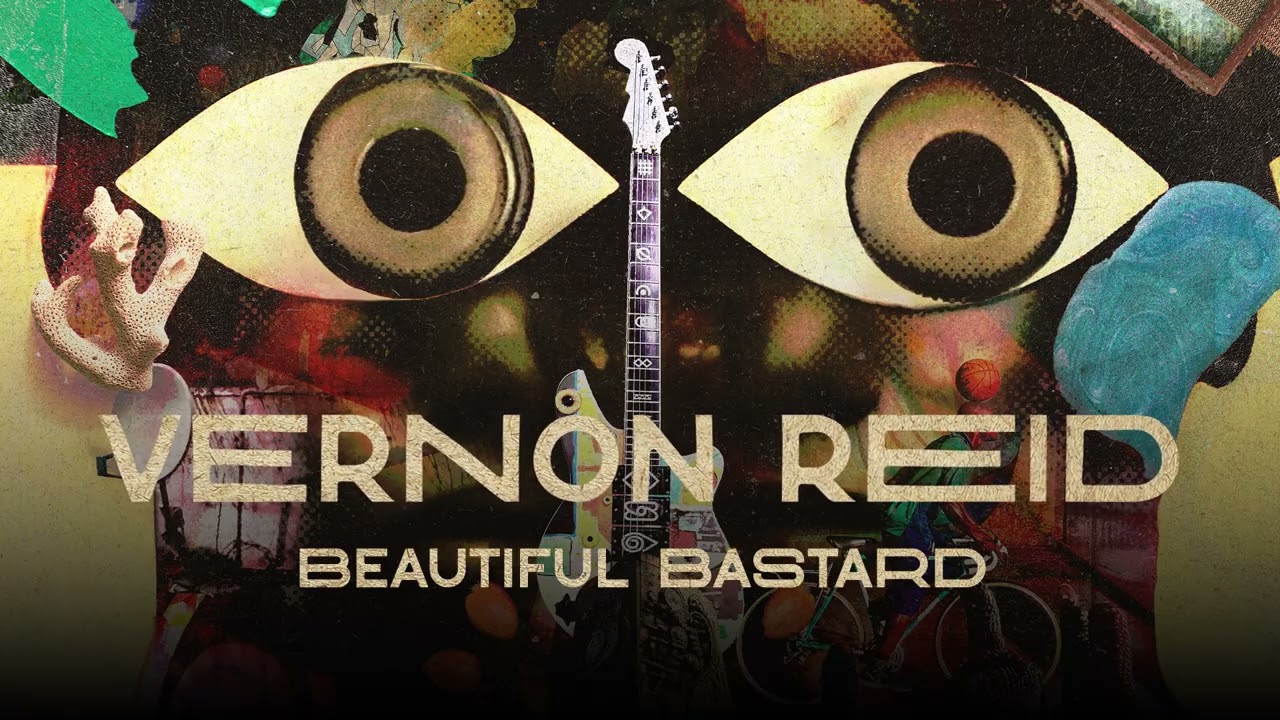
“On the album, like the last solo to Beautiful Bastard on Hoodoo Telemetry, it really is about the melody. It starts off really imitating the vocal melody and then veering away from it. That's why I have different approaches to different songs; like The Haunting, it’s very stripped down. I’m not trying to play something technically flashy or anything like that. I want to be in the vibe.
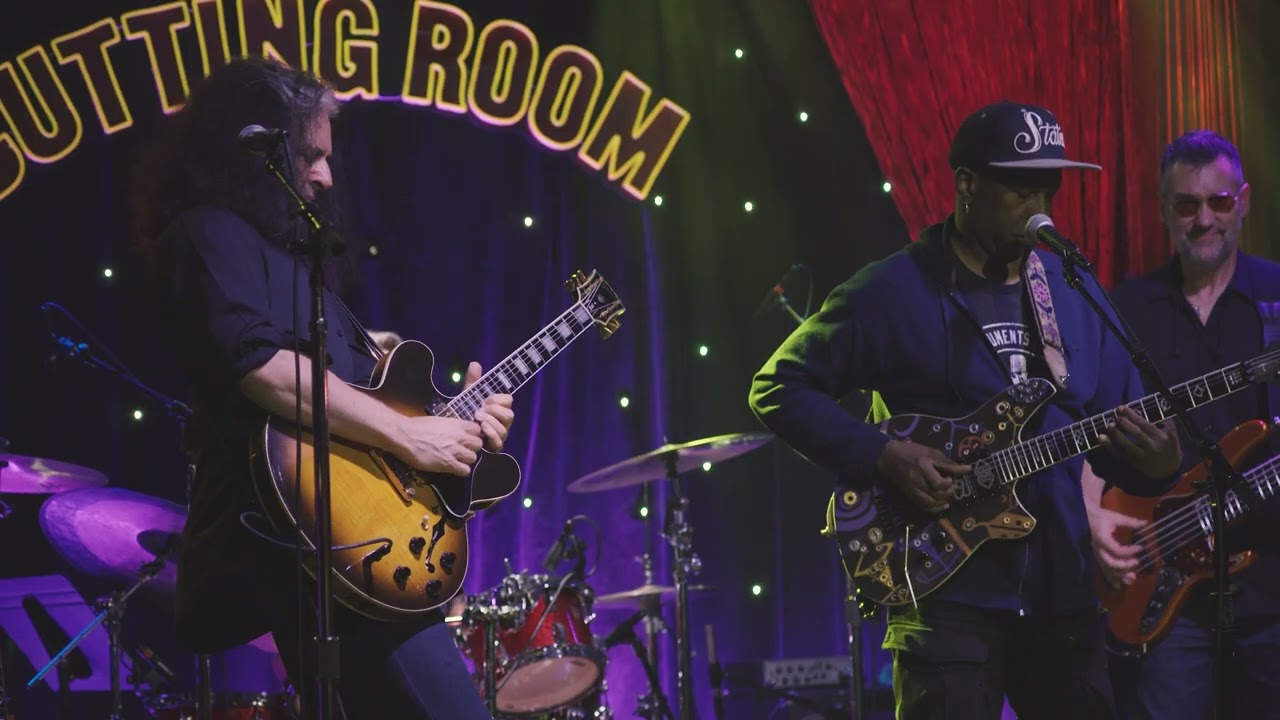
“I want to stay inside the vibe of the tune, and that’s the whole point of it. Whereas something like Or Knot, which is a nod to Ornette Coleman and that kind of music, is very different. Micah Gaugh, the saxophone player, and I play against each other. That’s very much a part of that tradition.”
What you were saying about D’Angelo and J Dilla, these guys have changed how popular music processes rhythm, how we think about it.
“Dilla Time, interestingly enough, he exaggerated a feel that was present in the culture, in gospel music. It was present in blues. It’s right there if you listen to the timing of Howlin’ Wolf records. The feel of Howlin’ Wolf records, it’s right there, and it’s different. It’s a little different than, say, George Clinton’s ‘on the 1’, you know?
“J Dilla took jazz samples and samples of these old records and he just nudged them with a little more swing to make that feel even more obvious or perceptible. You feel the behind. But he did that using samplers and he did that taking samples and even moving them slightly behind the beat – they’re already behind the beat, and then he nudges it a little even more back. It’s incredibly influential and very powerful.”
It’s a form of sorcery with time, testing how far rhythm can fall behind.
“Yeah, you feel it. It’s a feel. Thelonious Monk had it. They are the original sources, and it really came into this other space in the manipulation of the sampler. The samples are nostalgia machines.
“Like, I think of sampling, and I think of the use of mellotron in prog music, mellotron strings, or when you hear mellotron flutes – and mellotron flutes are even creepier, because when you hear mellotron flutes and woodwinds, I mean, you are being taken back to some pagan type of shit! [Laughs] Like, you’re being taken straight to the Wicker Man, bro! So that’s what’s cool about those mellotron flutes.
“But my point is, the feeling, our feelings of longing and nostalgia are encoded in these physical mediums – in tape – you know what I mean? And that was a very powerful in the music of Yes and King Crimson, the Beatles. It is very powerfully there.”

Sampling culture was great for discovering artists through hip-hop tracks.
“Oh yeah!”
Hearing Stevie Wonder’s voice as a young man takes you back to the ‘60s, and it is so loaded because it’s the Civil Rights Movement, it’s Motown, it’s the struggle for inclusion and freedom
But what you’re saying about nostalgia and longing, oftentimes, these samples are like a cheat code, they hot-wire our emotional responses, catching us off-guard.
“Exactly! Oh, man. I Feel For You, that track was revolutionary. That’s a Prince track, right? For Chaka Khan. I Feel For You, that snippet of Fingertips from little Stevie Wonder and you hear him say, ‘Oh, oh yeah...’ But he’s what? Ten, 12 years old or whatever.
“Hearing Stevie Wonder’s voice as a young man takes you back to the ‘60s, and it is so loaded because it’s the Civil Rights Movement, it’s Motown, it’s the struggle for inclusion and freedom; it’s all of these things and it’s wrapped up in this one snippet of audio.
“I was already grooving to this tune and when I heard that snippet of Fingertips I felt my feelings were being seized upon. It was a totally novel experience, and to get that novelty from sound, such an emotional reaction to sound, is incredibly powerful.
“Years later, when the [Akai] MPCs came out, you know, when the [E-mu] SP-1200s came out, the first digital samplers, they were 12-bit. They weren’t even 16-bit. They had a feel to them because the top-end is rolled off, ‘cos it’s not the higher sample rate. So it gives you an analogous feel to those earlier take instruments, the lo-res samplers and then we are brought back again. That manipulation, it was mysterious.”
That slight degradation from the technology not being quite there, the treble roll-off, it almost makes the sample behave like a memory, because our memories are a little lo-fi, a little degraded.
“Yes! Exactly, and I tell you, the older you get that top-end is rolling off! [Laughs]”
- Hoodoo Telemetry is out now via The Players Club/Mascot Label Group.
