
We're not far off being able to celebrate 50 years of Gary Numan's groundbreaking and genre-defining career, one that has seen him conquer the charts, find himself in the pop wilderness, and return with an electronic rock sound that has found him a completely new audience to go with his adoring legion of long-time Numanoids.
As well as redefining his sound, a huge part of Numan's comeback has been his ability to put on a show - a damn good one at that. And not only have these performances been instrumental in his comeback, but they are also vital for more practical reasons, as Gary explains.
"Live shows are extremely important. For one thing they reconnect you with fans and revitalise their enthusiasm and support – essential for any career to survive. They are also the primary way most artists generate any meaningful income these days, although it’s getting harder. Record sales are now too small to generate more than a fraction of what they used to. Even sync income seems to be declining these days so touring, despite its many challenges, is vital."
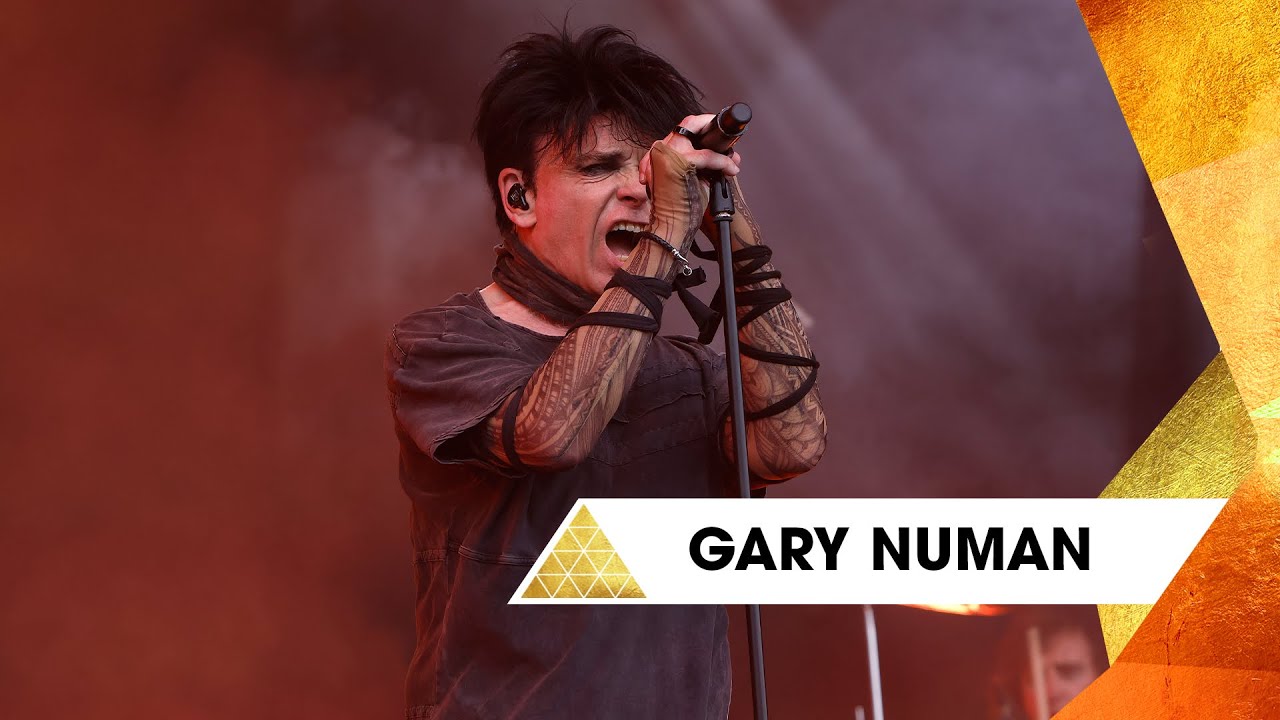
Along with major tours across the globe, 2025 saw Numan's first ever (believe it or not) Glastonbury appearance, with a blistering set on the Park Stage. Beyond Gary himself, the most vital role in this gig, and indeed every Numan performance since 2013, was played by tour manager and front of house engineer, Dave Dupuis. As well as single-handedly reinvigorating the tour logistics, he’s also created a setup that sounds incredible just about anywhere that Gary plays.
We were at the Glasto warm-up gig at a smaller venue in Frome, and Dave's expertise was clearly on display, with the live sound translating every detail and vast dynamic range of both Numan's old and new material.

"I run the shop basically as manager, tour manager, and front of house engineer,” says Dave on his multifaceted role within the Numan camp. “One of Gary's statistician fans told me I've done 515 shows with Gary in his 1153 show career. I started at the time of the Splinter record when everything started going back up for him. We have been a touring machine since which I definitely take some credit for – it's been a wild ride!"
Gary certainly agrees on how important Dave's role is: "No disrespect intended to any other tour manager or front of house, but Dave has transformed the way I feel about touring. He’s an incredible sound man and I no longer have any worries about how we sound, be that in a tiny club with shit gear to an arena. Whatever he has to work with he makes us sound great. That’s a huge worry totally lifted from my shoulders.”
"Beyond that he’s a fantastic tour manager,” Gary adds. “I don’t know how he’s able to keep on top of so many things. The pressure on him, 24 hours a day, is just unbelievable, and yet he’s the most fun, easy-going person. Plus he gets the job done, not just one job, actually, but hundreds as the tour progresses. I really do just turn up and sing. Dave organises everything necessary to make the shows happen, anywhere in the world. I honestly don’t think I would keep going if he quit. I can’t imagine touring without him.”
So, how did Dave get into touring in the first place?
"I was a band nerd/skateboarder but started playing guitar, and then recording my bands on a four-track,” he says. “I really enjoyed that process of documenting and recording and started a small studio. One of the bands I was working with in the early 2000s got signed and needed somebody to do their live sound.
"I was like, 'no way, that's not my thing,' but I did it. It was nice to get paid that day, not working in a studio slaving over a record for months. Live sound is like performing; I get to play the desk like an instrument. I'm supporting and reinforcing what's on stage, but when the elements are there that you can work with, it's really rewarding.
“I also really get off on the accomplishment of getting a tour done. We rehearse for weeks, so to see it happen after all we put in and for it to become successful, and have people react in a great way, is very rewarding too."
Dave met Gary at a Nick Cave after party while signed to Beggar's Banquet, Gary's old label, with his band Film School. “So I'm at this party in LA, and I look across the room and I'm like, 'that's fucking Gary Numan', so I went over and I was like, 'hey, I'm Dave and we're label mates!'
"We started talking and he needed someone for the dual role of tour managing and front of house. I said, 'sure, let's go' and there was a tour not long after. Then we did a massive US tour, and he was like, 'touring has never been this easy!' I said, 'yeah, if you just get the right people, we can have a good time!' I basically built a crew, and we started the adventure."

Dave then breaks down his role during a typical gig: "As a tour manager I advance all the shows extensively, so when I walk into the venue, I know where the bus is going to park, and hopefully we all have a game plan already. We load in, we set the stage, the in-house staff know to strike monitors, and I'll work with them on stage setup.
"My audio guys start building the stage – I have some great backline guys. Back in the tour manager role I make sure dressing rooms look good, check in with the band and Gary to make sure things are going well for them. I make sure Gary gets his lunch, which is always easy, because Gary only eats about five things on tour!
"Then I check the mic setup, go to front of house and get my desk together. I use the in-house desk most of the time, which is good. You know that, with this size of venue, it's going to be one of 10 desks these days. I've got a digital file for each one of them, so I'll load my scene onto whatever desk it might be, check the PA, check the outputs, and then we'll do a line check and make sure everything's coming through clean.
"We've also been doing meet and greets because touring is so expensive. It's been pretty intense for Gary and myself as at one point it was two hours long. I'm there kind of like a Disneyland tour guide when I let them in! Gary's so generous with his time. Everyone's like, 'this is the best meet and greet I've ever been to', because he actually spends time talking to each one.”
The VIP fans get to watch the soundcheck, which normally includes three tracks that Dave is familiar with (like the classic Metal) so he can set levels.
“I bring everything up in a certain way,” he explains, “but I can hear the room really well, because I know how it's all supposed to sound. I've already tuned the room around Gary's vocal mic. That's one massive key to the live sound success – tune the room around that vocal so that his voice is always there and clear. Then during soundcheck, I'm building the rest of the instrumentation around that."
The Numan live setup is very band-orientated – “he's the electronic pioneer, but there's always been a drummer hitting the hi-hats, which is the cool thing” – but some audio elements and a click for the band to play to come by way of Cymatic Audio drives.
"They are basically playback devices that play wave files but it's not that intense,” Dave explains. “The keyboard player and MD, David Brooks, was adamant about playing what's there – a lot of bands don't really want to do that. They like the security of it [a backup]. The drives also shoot out time code, which will come back to front of house to our lighting operator if we have video or any kind of sequence content that is projected.”
As Gary's vocal is so distinctive, Dave prefers to keep processing to a minimum. "For his vocal mic, it's typically just to keep it as open as possible, so I put on as little as I can. I keep his EQ curve basic – I'm a high-pass junkie so I can keep the mud out of every mix. I'll also dial out some of those really high frequencies, but I keep it open to let him sing, and he's a great singer.”
Does anything typically happen with tuning these days, as there are live tuners like Waves Tune where you can actually track the vocal to the music?
"No, I've never done that with a band, so I can't really speak about it, and I don't do that with Gary. In fact I don't carry much processing around. I used to carry racks of gear, but now you get the same desks – DiGiCo, Allen & Heath and some Midas ones – and the processing and the onboard effects are really good and capable of what you need to do in a live situation.”
There's also a surprising amount of flexibility in the setlist order, once again thanks to those drives.
"For years we had a laptop that was playing the tracks and the clicks,” says Dave, “but things happen with laptops so that's where we got the Cymatics in. We're also moving towards a new company called M-Live who make B.Beat devices with which David Brooks can delete or move things around, or change the list."
Talking of the setlist, it must be a chore choosing from a near 50-year back catalogue, but Gary does have some rules.
"I’m quite hard-headed about mixing old and new," he says. "If I’m going to spend a chunk of my year touring around the world, I want to be playing songs I enjoy and that tends to mean more recent stuff. Roughly 75% will be from the second half of the career, the rest from the early days, although I tend to rework those early songs into much heavier versions so they feel fresh and sit better alongside the newer stuff."
So how has touring changed for him since the early days back in 1980?
"Very little in many ways but some changes have been significant," he replies. "In-ear monitors have made a huge difference. Before they came along, monitoring was just a constant battle. The lighting now is vastly superior to what we had when I started, so shows are often amazing spectacles to watch. PAs are more compact and usually sound better than they used to. Gear is generally more reliable and the buses are a bit nicer. Essentially, though, it’s much the same in that you travel a lot, and dressing rooms vary from being a health hazard to amazing depending on the level you’re at. It’s hard to make decent money, costs are unbelievable, merch fees are a disgusting rip-off but it’s still one of the most incredibly exciting and demanding things you can do.
"The best part of it is being on stage and just losing yourself in the moment," Gary continues. "The noise, the volume, the chaos of it all, the fans going mad, the energy flowing to and from the stage. It’s living life to a ridiculous level; there's nothing else like it. I don’t see any bad side to that, but touring in general takes me away from my children. I hate that."
Dave has a slightly different view of the gigs, but there's a lot to enjoy from behind the desk.
"I go back to watching bands in the '90s,” he says, “and just being overwhelmed by a wall of sound and being overtaken by the experience. So my favourite part is making that happen, to make that sheet of energy go across an audience and be impactful and articulate and just fucking awesome. My least favourite part is when something happens and you don't know what the fuck it was, but luckily that doesn't happen very often at all. I think that we've stopped a track maybe three times out of 500 gigs!
“We work very hard to make sure that doesn't happen - we rehearse like fucking crazy. And I have a contingency plan for every eventuality, so even if things break, which they do, people won't notice because we're ready to throw in the fix. I pride myself on that.”

2025 saw Gary play Glastonbury for the first time which was an awesome experience for both Dave and Gary.
"I was pretty nervous for much of the day," Gary recalls, "but, as the stage got closer, the nerves backed off. By the time we walked on stage I was totally comfortable. I knew it was a huge opportunity, especially as our set was being televised, and I really didn’t want to mess up. But, during the show, I kept forgetting the cameras were there. I was so lost in the moment, giving it everything, reacting to the crowd in front of me. At one point I spun around and nearly crashed into a cameraman and I thought ‘fuck, I forgot about you’. It was a very special experience. Having Raven (my eldest daughter) join me on stage to play one of her songs was a real highlight of the year for me."
Plans for 2026 include, yes, more touring, and an '80s event, something that Gary has mostly resisted thus far.
"We're doing another North American tour soon which starts with an '80s cruise,” Dave says. “Gary hates it, he's been pushing back this '80s thing his entire life. But, yeah, it finally offered enough money, so we're gonna do it. It's gonna be fun – we're on the boat for a week!"
And then there's a new Numan album, but that's not pencilled in until spring 2027. "I’ve written a few things for it,” Gary reveals, “but my wife Gemma got really sick this year so I stopped writing while we were dealing with that. We’re not completely out of that yet, and I’m touring from late Feb to mid April, so I won’t start writing again until that tour is finished. To be honest I have a lot to do to meet that spring target.
"I will also continue to work on a novel I’ve been dabbling with for some time, and of course I'll be helping my children with their own musical and creative careers. Mostly, though, I need to see Gemma fully recovered."
