


Robben Ford’s head must have been spinning. Here he was, a blues guitar prodigy, barely in his twenties, and having signed up with the LA Express, the fusion band led by saxophonist Tom Scott, the gigs were coming in fast.
There was the tour with Joni Mitchell, playing the material from Court And Spark, their performances captured on tape and released as the Miles Of Aisles live album. Mitchell then called the band back to accompany her in the studio as she tracked The Hissing Of Summer Lawns. It was an education.
As Ford told MusicRadar, Joni Mitchell knew how to produce electric guitar sounds, and these were the kinds of collaborations that a young, talented musician would get into the business for. “She was always the easiest person in the world to be around, to work for, never uptight or heated,” he said.
Ford was not altogether a rookie. In 1971, he and his brothers had the Charles Ford Blues Band, named for their father, and in their early professional assignments they had backed legendary blues harp player Charlie Musselwhite.
Under Scott’s wing, however, Ford was seeing a completely different world, and they had just landed a gig to back George Harrison on his 1974 studio album, Dark Horse. Joni Mitchell and a Beatle in the same year.
Ford grew up in small-town California, in a place called Ukiah, a two-hour drive from San Francisco. It was the best part of a working day from Los Angeles, nigh-on 500 miles on the road. Here he was with a Beatle. Ford lets out a laugh at the memory.
“Well, in those days… I was 22! Twenty-two years old, you don’t know [anything],” he says, joining MusicRadar over Zoom. “And I’m from a small town, and had only in the last couple of years, I had spent two years with Jimmy Witherspoon, and that was in LA, and so being exposed to the city [laughs], all of that, really, I was very green.”

The sight of Harrison took a bit of getting used to. Playing music with him, less so.
“When I first met him I was just speechless,” says Ford. “But when we started playing, he gave no direction, he liked the way I played, and I would just be myself.”
The gig was well within Ford’s capabilities. If anything, he was playing within himself. Not that this was a bad thing. It was only when he went out on tour on the Dark Horse Tour that he could stretch out a bit as a player, playing White Album classic While My Guitar Gently Weeps.
“I really enjoyed playing that song; that was where George and I actually traded back and forth,” he told Guitar World, in 2025. “But my style and his were so different, as he was a very simple player, with long notes, and I was into playing a lot of notes.”
The chord patterns, too, were simple. Ford was building a vocabulary of more complex voicings. “Cowboy chords” and open voicings were mother’s milk to him. Ford was playing a Guild Starfire IV semi-hollow electric guitar. He wasn’t much one for effects, just the trusty Maestro FZ-1 Fuzz Tone and an MXR Phase 90. Mesa/Boogie provided his, and Harrison’s, backline.
“It wasn’t difficult to do,” he says, Harrison made him feel totally at ease. “There was nothing that made me feel uptight or insecure.”
Harrison would have had good reason to look on the Dark Horse era very differently. There was a lot to make him feel uptight and insecure. Harrison had marital trouble. His marriage with Pattie Boyd was coming apart.
There was also the ever-attendant pressure as the Beatle alumnus, that everything had to measure up to what he did with John, Paul and Ringo.
Paul McCartney speaks of similar pressures in Man On The Run, the 2025 documentary from director Morgan Neville that charts McCartney’s efforts to get Wings off the ground, to get his life back after the dissolution of the Fab Four. Even when he could outrun the shadow of the Beatles musically, the spectre of legal proceedings against their former manager, Allen Klein, were a different story.

Harrison was down but he was hardly out. After catching Joni Mitchell’s live in London, he liked what he saw of the LA Express and invited them to Friar Park to work with him on his record.
They would ultimately be in illustrious company. Ronnie Wood of the Rolling Stones and Harrison’s fellow Beatle alum Ringo Starr would play on the UK lead single, Ding Dong, Ding Dong, a psychedelic glam-rock stomper for New Year’s Eve that is worth checking out (and cranking loud) for the Phil Spector-inspired production alone. It is a 360º experience.
Its B-side, the instrumental Hari’s On Tour (Express), is also essential listening. On the Dark Horse tour, Harrison would open his shows with it. This was also a track where the LA Express, and the young Robben Ford, would earn their corn.
How do you even categorise this, all that slide guitar, the horns, the propulsive rhythm? Psych-country? Whatever it was, it wasn’t the Beatles, even if the album cover had something of that lysergic Sgt. Pepper’s quality.
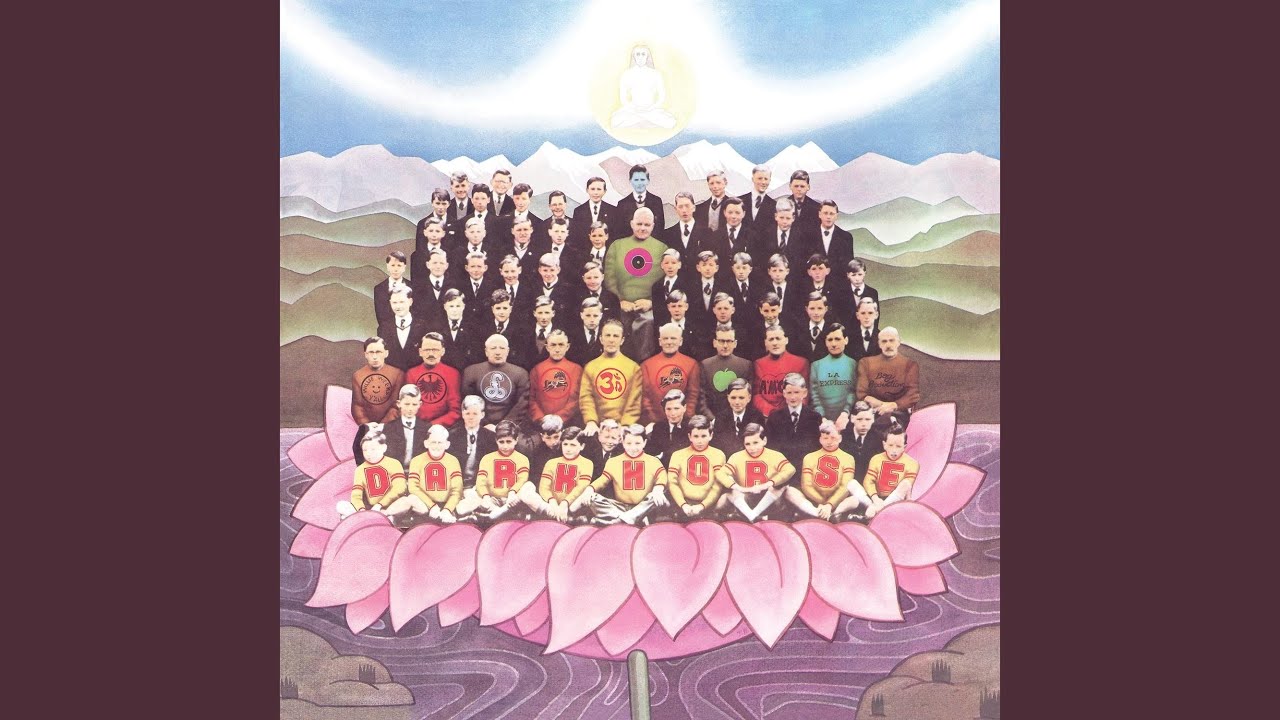
Ford also played on the woozy blues of Simply Shady, and joined Harrison on acoustic guitar for the title track, another song that’s deserving of reappraisal.
It was recorded live during rehearsals for the tour, and foreshadowed the criticism that would plague the tour. Harrison’s misfortunes were compounded by laryngitis.
You have to laugh at the “Dark Hoarse” takes that were published following the US tour (surely/hopefully Harrison would have once enough time had gone by), but on record Harrison’s fried voice takes on a Dylan-esque quality, almost overdriven in its attempt to find its place in the mix. It’s more Tom Waits than Taxman. Compare and contrast this with the early 1973 take included as a bonus track on later reissues.
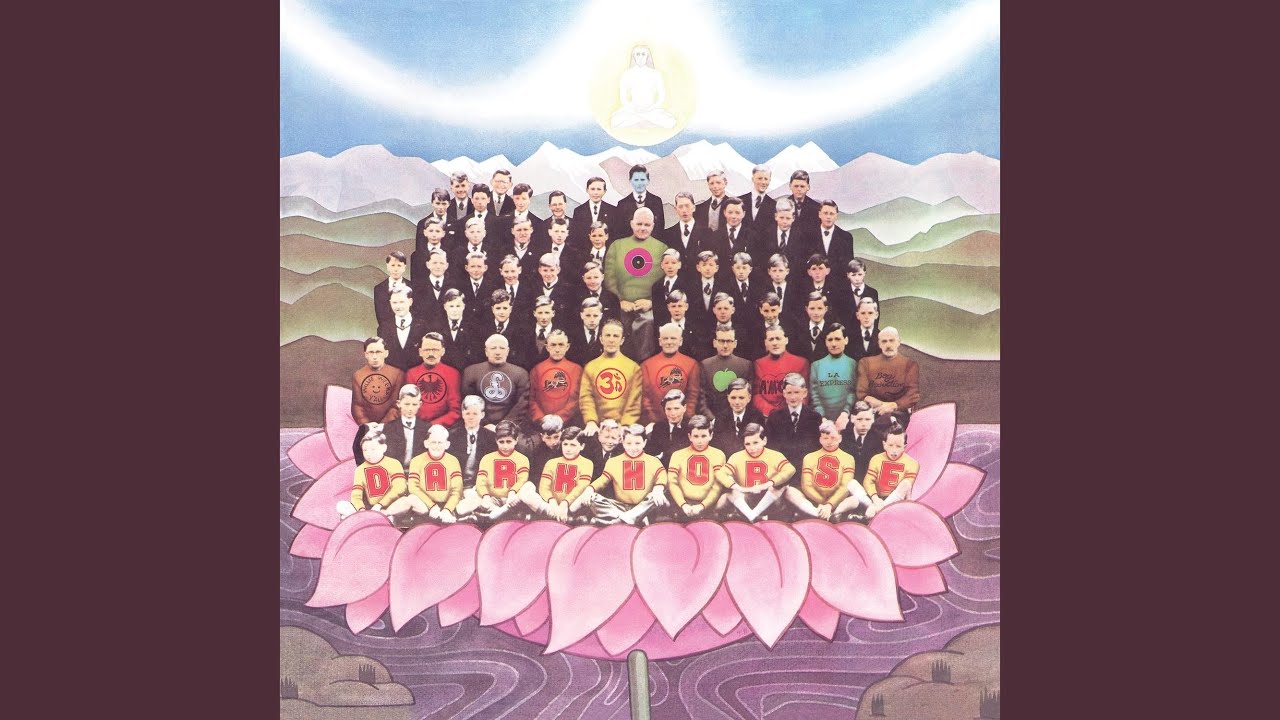
But so what if Dark Horse wasn’t quite as artistically confident as All Things Must Pass, Harrison’s 1971 debut solo masterpiece, or that it didn’t have the promethean magic of the Beatles?
What Dark Horse does have is a sound that’s ripe for rediscovery, some great guitar playing (chef’s kiss for the skronky slide on Māya Love), and the sound of a young guitarist who had officially arrived.
Robben Ford was speaking to MusicRadar in advance of his new studio album’s release. Two Shades Of Blue is available to preorder, out 27 March via Provogue.
