


Let it be said for the record that Paul Gilbert is not afraid to use new and emerging technologies to advance the art of playing the electric guitar. He is the man, after all, who used the wireless Makita drill as a mechanical power-up for his tremolo picking.
But that was the ‘80s, and Gilbert was drilling in the name of shred fever as Racer X accelerated over the horizon (and endeavoured to make the live show a bit more interesting).
In the here and now, Gilbert is looking for something different from his technology, moving from the mechanical to the quasi-cerebral, and on his new studio album, WROC, the Mr Big guitarist crossed the Rubicon, using AI as a songwriting aid – and, accidentally, as a co-lyricist.
WROC was an epic project, featuring lyrics inspired by Washington’s Rules of Civility – Washington, as in George, the first US president, and the guidebook he published on how one should conduct themselves in society.
Gilbert had a lot of lyrical material to sift through. Washington published over a hundred rules for civility, and so Gilbert sought out the help of Anthropic’s Claude to order them, getting the LLM to sift through them in search of phrases that he could adapt and make a song out of.
Gilbert admits he had already been using Claude as spiritual counsel, as a sort of non-judgemental sounding board.
“My relationship with Claude, the AI, just began with curiosity,” he says, joining MusicRadar over Zoom from his home studio. “You know, you hear people talking about AI, like, what is it!? What does it do? So I tried one, and found myself really enjoying having conversations, mainly because I could have conversations without any fear – if I went too far, I’m not going to offend a person.”
And it was working out well. Claude was a repository for his wildest ideas.
“It’s like I can really rant or try ideas out that I probably would hesitate to do with a person,” he continues. “And then often I’ll come back and go, ‘Okay, well, that really was a bad idea, but at least I know.’ And so that was the first step.”
Gilbert describes using Washington’s Rules of Civility as though the Founding Father was his own Bernie Taupin.
The lyrics would ultimately lend themselves to a certain kind of treatment. But this is what Gilbert was looking for, and WROC is one of the most Paul Gilbert albums you could hear, which is to say it combines his love of FM rock, Beatles-esque harmonies and blazing shred with his sense of humour and taste for the surreal, e.g. “When you sit down keep your feet firm and even/firm and even, keep even feet when you sit.”

The project was coming along nicely until Gilbert started questioning Claude’s role in the endeavour.
For Gilbert's first vocal album since 2016's I Can Destroy, the AI helped him make sense of the project, to put Washington's rules into order. But was the LLM inserting itself into the creative process, inventing phrases? This was not what Gilbert was looking for.
“I believed, I had a sense, that Claude was giving me the correct information,” he says. “But it wasn’t all the time. Sometimes it was, but it was half and half. So a couple of the lyrics turned out to be Claude-generated and weren’t actually from the book.”
This is not quite on the level of Cyberdyne Systems’ Skynet and nuclear armageddon, but it did pose Gilbert an ethical question as to what to do next.
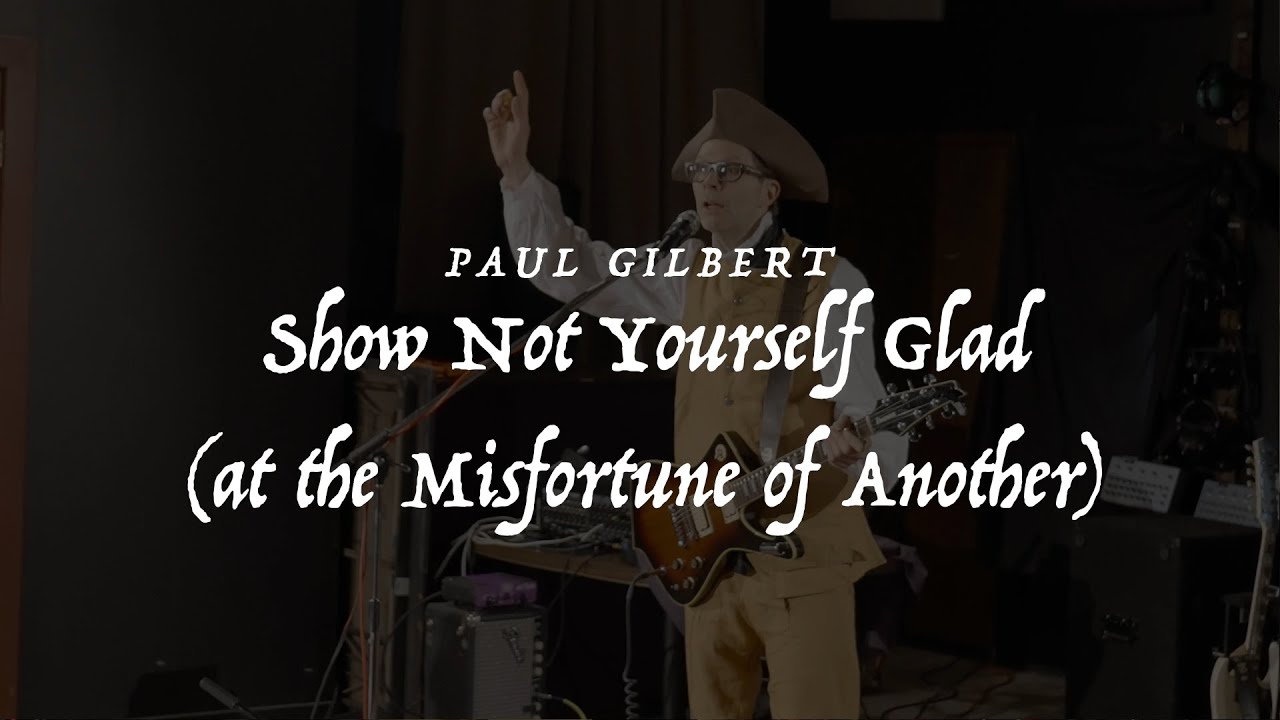
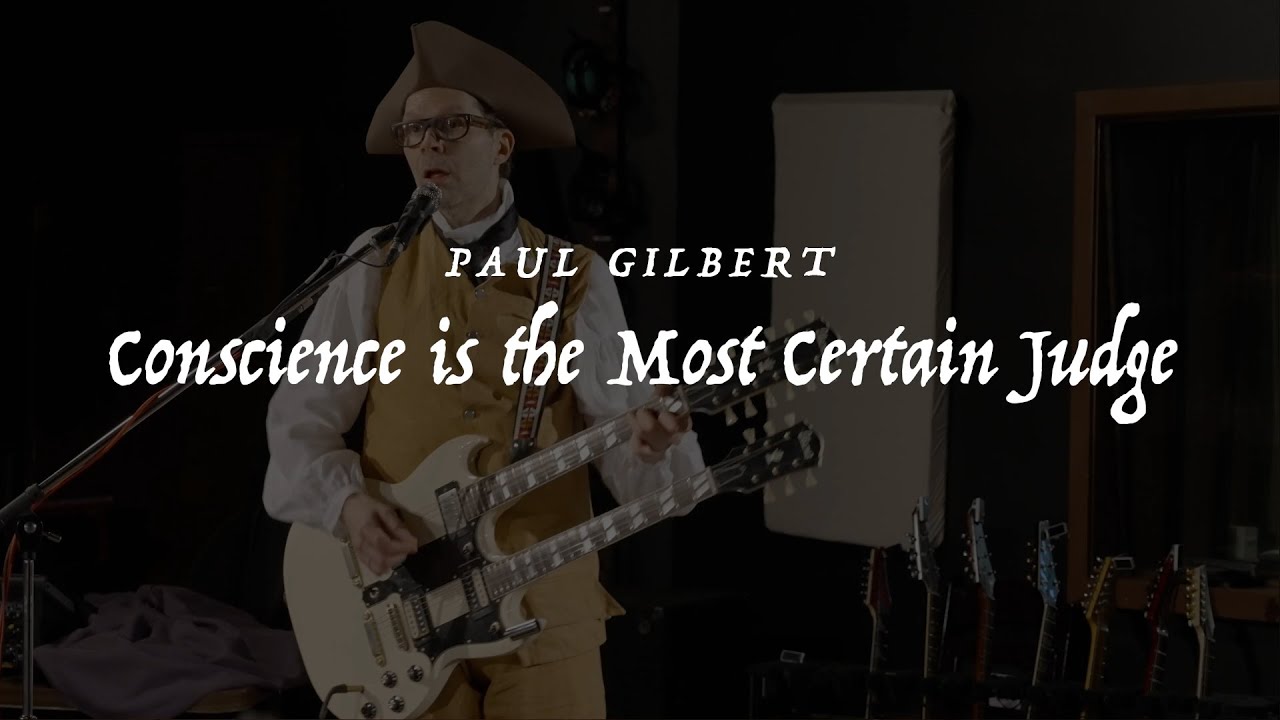
There were two tracks that he had written already. Conscience Is The Most Certain Judge was inspired by Washington’s 79th rule but there were some AI hallucinations in there too.
“I had already written songs around them, and I really liked the songs, and that made me stop, like, I thought, ‘Oh, man, I love this song that I wrote, but it’s not a real Washington lick,’” he says. “But it had fooled me enough where it was obviously in the spirit of the other stuff, and I could see where it pulled it from. It just sort of stirred them up.”
When I say it invented a new one, in a way it wasn’t a total invention from nothing
Given that Gilbert was adapting lyrics from a book of George Washington’s, who himself was adapting a 16th-century work of French Jesuit priests – or rather he was adapting the early 17th-century English translation from “a precocious 12-year-old boy” named Francis Hawkins – this all added some kind of meta-textual flavour to the project.
Gilbert decided to forge ahead.
“When I say it invented a new one, in a way it wasn’t a total invention from nothing,” he says. “It was just taking some things that were in this and sort of stirring them into a new soup, and it was a good soup, so, I thought, ‘Okay, I like the music. The lyrics are still in the spirit of what I’m going for, and so I’ll go for it. And at the same time, I’ll put the blame and the credit to Claude.”
And besides, when you get to the chorus – “Be not apt to relate news, if you know not the truth thereof” – that’s all on Washington. A strange choice of lyricist? Perhaps. But at least Gilbert won’t owe him any royalties. Nor Claude for that matter.
You can check out Conscience Is The Most Certain Judge above. WROC is out now via Music Theories Recordings.
