
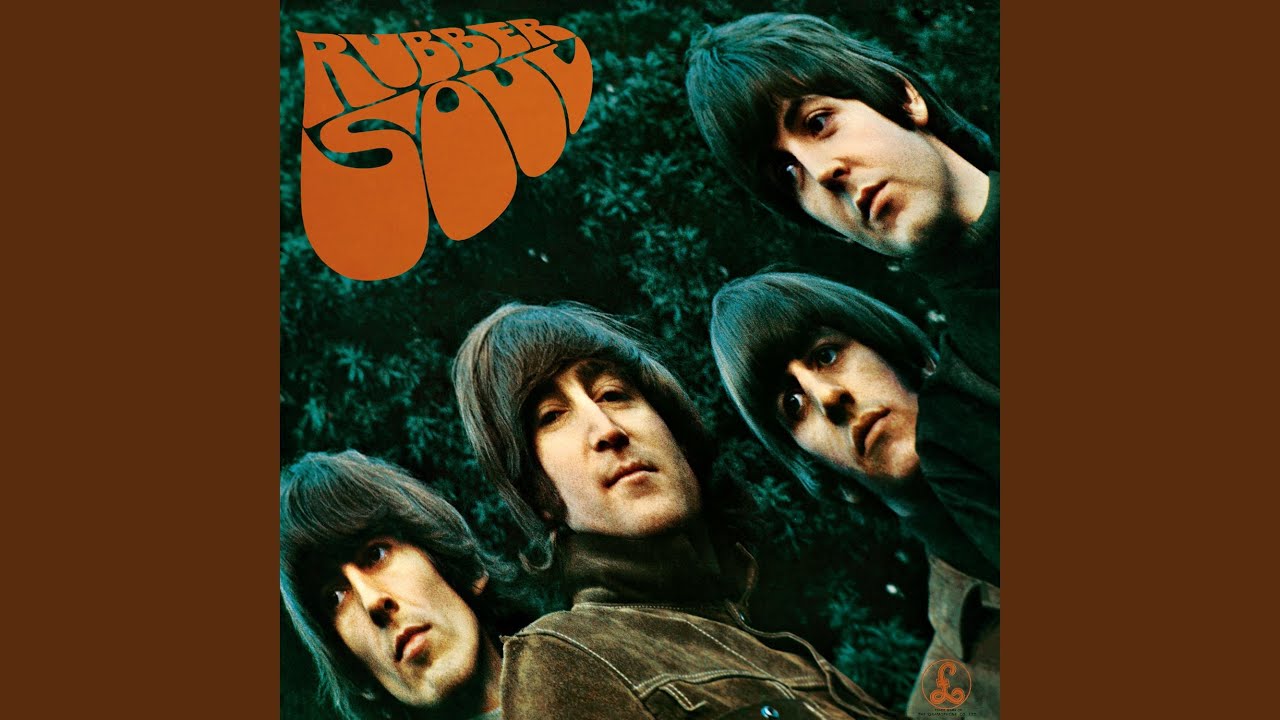
Anyone looking to pinpoint the moment when The Beatles turned from pop idols into mature artists will inevitably hone in on their landmark sixth studio album Rubber Soul.
Recorded over a four-week period, from 12 October to 11 November 1965, Rubber Soul is The Beatles’ first masterpiece, a hugely influential pre-psychedelia work that draws on folk, soul and pop.
Sonically the album signalled a major shift, as the band incorporated soul-style bass lines, fuzz bass effects, harmonium and sitar. But it also marked a transition in John Lennon and Paul McCartney’s songwriting, from pop singles to a more cohesive, mature, album-orientated style.
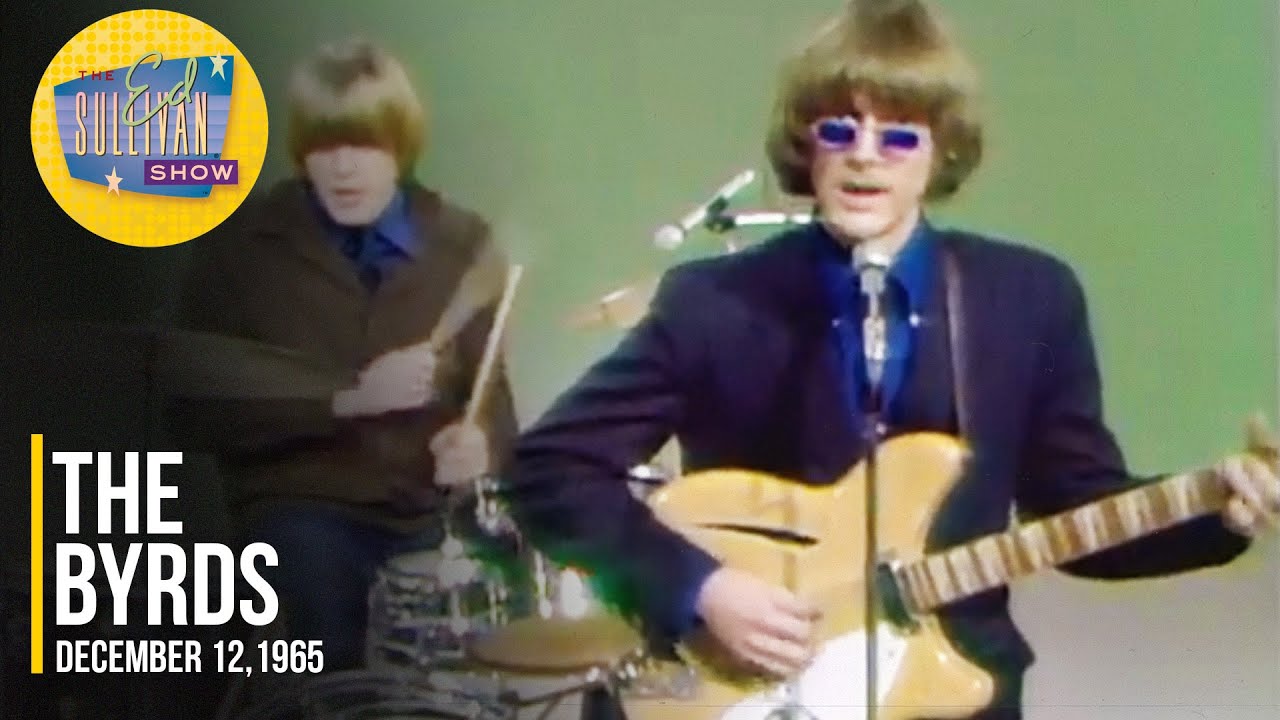
Much of this was due to the ongoing influence of Bob Dylan, the folk-rock jangle of The Byrds and soul artists on the Motown and Stax labels whose music The Beatles soaked up from radio stations across the US during the summer of 1965.
Then, of course, there is the influence of marijuana, which is omnipresent within the mellow tones of Rubber Soul.
By 1965, John Lennon in particular was demonstrating a lyrical maturity that was far more personal and introspective.
On Nowhere Man, Lennon perceives himself as someone with no direction in life, while Norwegian Wood is a veiled account of an extramarital affair.
But of all the songs on Rubber Soul, the most personal and poignant for Lennon is In My Life, a nostalgia-fuelled reflection on his childhood years in post-war Liverpool.
In My Life evokes a wistful nostalgia for the people and places that Lennon had known. It ponders the past, present and future as well as the inevitability of death, offering hope for a new love that will ultimately surpass them all.
In My Life is one of two Beatles songs – the other being Eleanor Rigby – where there is a debate over which Beatle was the primary writer. The lyrics are certainly Lennon’s, but he and McCartney had differing recollections about who actually wrote the melody.
In a 1980 interview with author David Sheff – published in the 2020 book All We Are Saying – Lennon described the song as his “first real major piece of work”, adding that McCartney’s “contribution melodically was the harmony and the middle-eight”.
But in the 1976 Paul Gambaccini-authored book Paul McCartney In His Own Words, McCartney said, “I liked In My Life. Those were words that John wrote and I wrote the tune to it. That was a great one.”
In Barry Miles’ 1997 book Many Years From Now, McCartney shed more light on the song. McCartney recalled visiting Lennon’s house, Kenwood, and Lennon showing him the lyrics.
“I recall writing the whole melody,” said McCartney. “And it actually does sound very like me, if you analyse it. I was obviously working to lyrics. The melody’s structure is very me.
“So my recollection is saying to John, ‘Just go and have a cup of tea or something. Let me be with this for ten minutes on my own and I’ll do it’.”
McCartney recalled that he tried to keep it melodic but a bit bluesy, with minor chords and little harmonies. “And then my recollection is going back up into the room and saying, ‘Got it, great! Good tune, I think. What d’you think?’ John said, ‘Nice,’ and we continued working with it from then, using that melody and filling out the rest of the verses.
“So it was John’s original inspiration, I think my melody, I think my guitar riff. I don’t want to be categorical about this, but that’s my recollection.”
In his 2025 book John And Paul: A Love Story In Songs, author Ian Leslie notes that he tends to believe McCartney’s account as his language is “painstakingly diplomatic” and his story is “so detailed”.
Lennon’s memory is detailed too, notes Leslie, but only when he talks about writing the lyrics, “and though he was happy to take credit for the melody, he never made direct claim to it”.
The tune does sound more typical of McCartney, continues Leslie, although the chord changes are ones Lennon frequently used. Ultimately though, concludes Leslie, “In a sense they were so far inside each other’s musical mind that it doesn’t matter”.
There is no debate over who conceived the idea for the song and wrote the lyrics, though. It was Lennon. His original idea was to write about the bus journey from his Aunt Mimi’s house into the centre of Liverpool.
He first had the idea for the song in 1964, when broadcaster and author Kenneth Allsop asked him why his songs were less revealing and challenging than his books. The question set Lennon thinking and he decided to take a nostalgic look at specific places and memories from his past.
The first draft of the lyrics referenced landmarks from Lennon’s youth, such as the No. 5 bus, Penny Lane, the “tramsheds with no trams” and the Docker’s Umbrella, an elevated railway which closed in 1956 but still provided shelter from the rain for dock workers walking beneath it.
However, for Lennon, this first draft was far too literal.
“In My Life started out as a bus journey from my house… to town, mentioning every place I could remember,” Lennon told David Sheff in 1980. “And it was ridiculous… it was the most boring sort of ‘What I did on my holidays bus trip’ song and it wasn’t working at all.”
Lennon scrapped the first draft, reworked the words and replaced the literal references with a broader meditation on his past. But a few lines from the first draft made it into the revised version.

Structurally, In My Life is imbued with melodic nuances that only The Beatles could create.
The song opens with the iconic guitar intro, a six-note melodic motif played with hybrid picking by George Harrison on his Epiphone Casino, while Lennon strums lightly on rhythm guitar.
This motif is played in A major over A and A7 chords.
Recording of the song took place on 18 October 1965 in Studio Two at EMI Studios, Abbey Road. The Beatles recorded three takes of the main track of the song (drums, bass and guitars) with Take Three being selected as the best.
Lennon’s voice was double-tracked, which in the days before automatic double tracking (ADT) meant he simply duplicated the lead vocal take for a thicker, fuller sound.
From the very first line – “There are places I’ll remember” – McCartney and Harrison contribute harmonies for the lyrics, dropping down to soft ‘ooohs” for the second line, “All my life, though some have changed”, switching back to full harmonies for the “Some forever, not for better” third line and then returning to low-in-the-mix ‘ooohs’ on the fourth line, “Some have gone and some remain”.
It’s a simple but hugely effective arrangement, adding dynamics, light and shade, and elevating the raw intimacy of the second and fourth lines of the verses.
On the bridge that follows there are stops on the first and third lines, which again add contrast. This is reinforced by the presence of tambourine, added by producer George Martin, on the first and third lines of the bridge.
As ever with The Beatles, the chord progressions are deft and inspired, with sevenths and minors being used to real emotional effect.
This is evident at the start of the second and fourth lines of the verses, with the shift from D to D minor introducing a sense of melancholy and longing into the song.
But what really elevates In My Life is its simple purity.
Lennon’s words here are so bare and direct, yet they are imbued with honesty and feeling. By removing the specific visual references of his first draft, the 25-year-old Lennon created a song that is immediately relatable to all. As Ian Leslie put it in his 2025 book John & Paul: A Love Story In Songs, “He succeeded in creating a universal song that is also deeply personal.”
When they laid down the primary sessions, The Beatles left the middle eight blank. Overdubs were then added on 22 October and these included the solo on the middle eight, played by producer George Martin. Lennon told producer George Martin that he wanted something Baroque-sounding and Martin didn’t disappoint.
“In My Life is one of my favourite songs because it is so much John,” says George Martin in Anthology. “A super track and such a simple song.
“There’s a bit where John couldn’t decide what to do in the middle, and while they were having their tea break I put down a Baroque piano solo which John didn’t hear until he came back. He liked it.”
Martin said that his solo was too intricate for him to do live, so he recorded it half-speed and then sped it up, which made the piano sound like a harpsichord.
“I did it with what I call a ‘wound-up’ piano,” he told BBC Radio 2’s Sounds Of The Sixties, “which was at double speed – partly because you get a harpsichord sound by shortening the attack of everything, but also because I couldn’t play it at real speed anyway.
“So I played it on piano at exactly half normal speed, and down an octave. When you bring the tape back to normal speed again, it sounds pretty brilliant. It’s a means of tricking everybody into thinking you can do something really well.”
Rubber Soul was released on 3 December 1965, and In My Life was singled out as one of the album’s standout tracks.
Over six decades on, it is widely regarded as one of The Beatles’ greatest songs. In 2000, MOJO magazine named it the best song – by any artist – of all time.
On 21 November 2025, an alternative version of the song – the first take from the session – was released on Anthology 4 of The Beatles Anthology Collection.
![The Beatles - The Beatles - In My Life (Take 1) [Anthology 2025] - YouTube](https://img.youtube.com/vi/iL1kUOomzoE/maxresdefault.jpg)
Complete with preliminary chatter, this alternative take offers an intriguing glimpse into the creation of the song.
On In My Life, John Lennon’s childhood reminiscences and observations demonstrated a maturity beyond his years and the emotional weight of those lyrics still resonates strongly today.
“It was unique in its musical and lyrical sensibilities, and expanded the horizons of both,” wrote Bruce Eder of AllMusic in a retrospective review of In My Life. “The song altered the public sensibility not only of what constituted acceptable songwriting in which a rock ’n’ roll composer could engage, but also the range of emotions that rock ’n’ roll musicians were allowed to express.”
