


In late 1978, a four-piece power pop band called The Knack came hurtling out of Los Angeles with a mission to meld the excitement of The Beatles with the emerging New Wave pop sound.
Their debut album Get The Knack shot to No.1 in the US, Canada and Australia and sold over one million copies in less than two months.
Side one of their album was rammed with catchy tracks. Side two wasn’t. But one song on side two was an undeniable hit – their debut single, My Sharona.
My Sharona exemplified the fizz and thrill of the short, sharp ’60s pop single through a post-punk prism. Yes, it was retro and broke little new ground creatively, but as a powerful, infectiously catchy earworm of some four-and-a-half decades standing it still has the ability to enthral and excite.
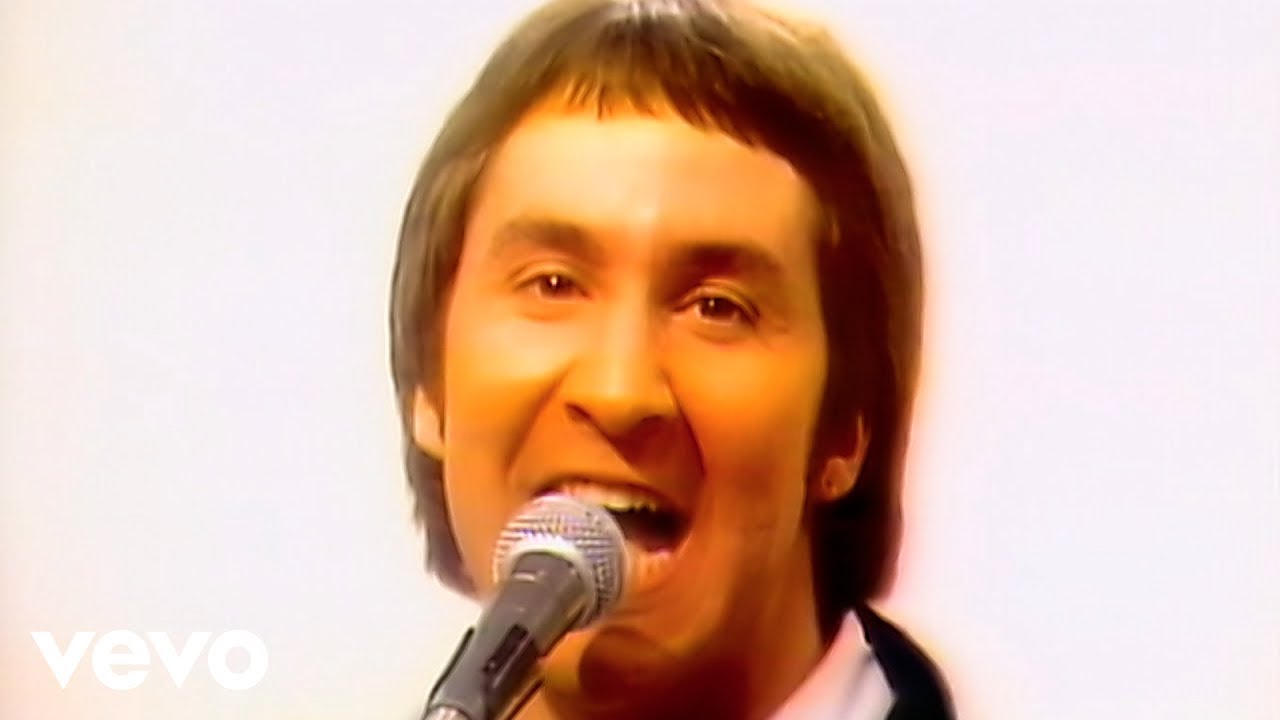
The Knack formed in early 1978 when lead vocalist and guitarist Doug Fieger moved from his native Detroit to Los Angeles with the aim of starting a new band.
Soon after arriving in LA, Fieger met Berton Averre (lead guitar, backing vocals and keyboards) and the two started a songwriting partnership. Drummer Bruce Gary and bassist Prescott Niles completed the line-up of the band, and they played their first show in June 1978.
The Knack were a formidable live act and soon created a buzz, playing club gigs on the Sunset Strip and in and around West Hollywood.
“We were kind of a local sensation,” said Berton Averre in a podcast by Zachary Crockett on the Freakzone website in February 2023. “We had a string of really big names getting up and jamming with us, because we played really well for a band.”
These big names included Tom Petty and Ray Manzarek as well as another seriously high profile artist.
“Springsteen got up and jammed with us,” said Averre. “And the record companies that were there – the next morning, our manager is fielding calls from all of them, talking potential record deals.”
A bidding war began, with 13 labels pursuing the band. Given their enthusiasm for The Beatles, it was fitting that they eventually signed with Capitol Records, The Beatles’ former US label, who signed The Knack for a two album deal, with an advance of $500,000.
My Sharona would seal the band’s success.
The song was inspired by 17-yr-old Sharona Alperin, who Fieger met in a clothing store. He was instantly infatuated.
“It was like getting hit in the head with a baseball bat,” Fieger wrote in the liner notes for the 2002 digital remaster of My Sharona. “I fell in love with her instantly. And when that happened, it sparked something and I started writing a lot of songs feverishly in a short amount of time.”
Fieger and Averre had already decided they needed a fast-paced final song in their live set, to encourage audiences to shout for an encore.
“I was a huge fan of Elvis Costello’s,” recalled Averre “and the drum breakdown in Pump It Up was so… just feral and exciting.

"I picked up a guitar and I started playing the riff that we know as the My Sharona riff… And I thought, ‘This is pretty good. I like this’.
“So we went back to Doug’s apartment. He, just off the top of his head, came up with the kind of stuttering, the ‘M–m–m–my Sharona.’ He was channelling Roger Daltrey in My Generation. And we cranked it out, you know, I’d say maybe an hour. Best hour ever.”
The song’s lyrics would be viewed as scandalous by some, due to their sexually suggestive content and the references to Fieger’s preference for younger women.
In an interview with the Washington Post, Fieger countered such criticism. “Sharona was 17,” Fieger said. “I was 25 when I wrote the song. But the song was written from the perspective of a 14-year-old boy.” But some lyrics in the song arguably contradict this viewpoint.
Instrumentally, My Sharona is rammed with echoes of the ’60s. In addition to The Who’s My Generation, the song’s main melodic hook was likened to an inversion of the riff from Gimme Some Lovin’ by the Spencer Davis Group.
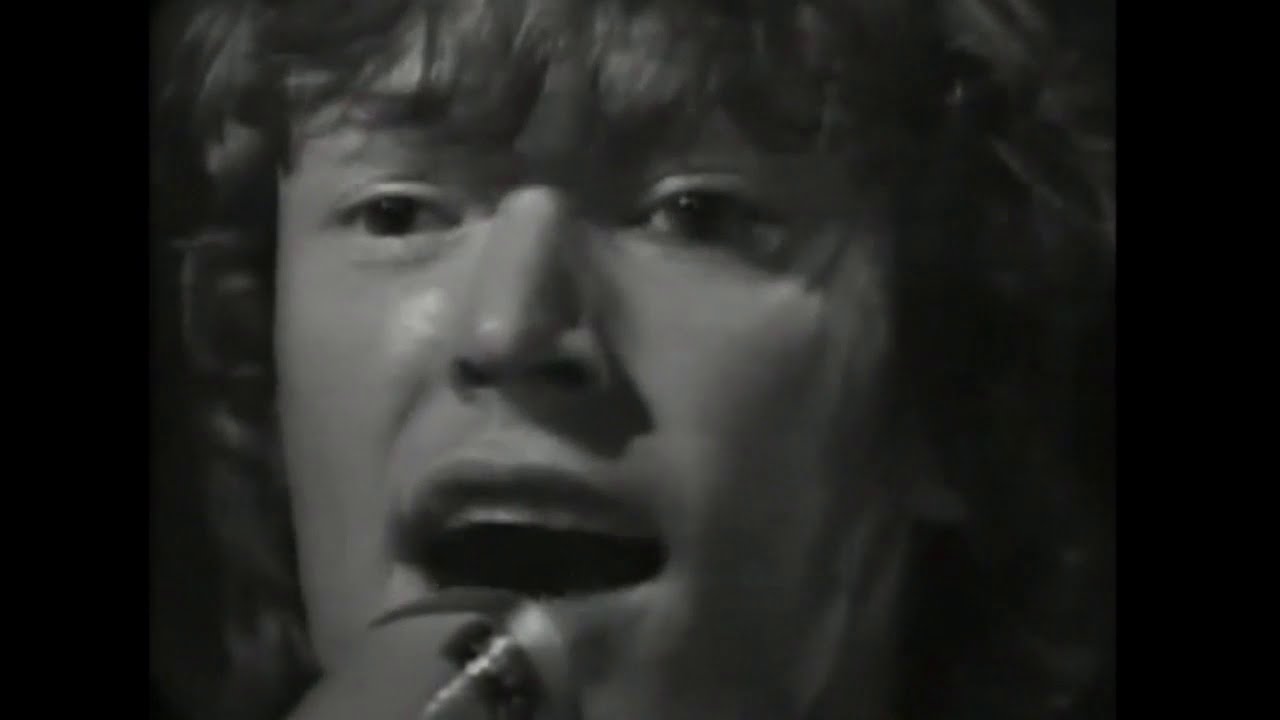
Drummer Bruce Gary didn’t really like the song when he first heard it.
“I was a bit dubious of it,” he confessed. But he came up with the jagged beat for the song, using just tom-tom and snare to create a surf stomp. He also incorporated a flam, which helped create a fuller sound.
The studio chosen for the recording of My Sharona and the album on which it appears was MCA Whitney in Glendale, Los Angeles.
The producer was Michael Chapman, a major force in the British pop industry in the 1970s. Chapman was enthused about My Sharona, as David Tickle, the engineer on the album, told Sound On Sound magazine in August 2006.
“Chapman was all over My Sharona," said Tickle, “He thought it was great. However, the structure of the cassette demo wasn't very good, and that's what Mike specialised in, coming up with the right parts where there weren't any… he basically worked out most of those structures so that they had some emotional impact.”
My Sharona was recorded in just one take. “Everything had been worked out in pre-production and it was polished,” recalled Tickle, “The band was very, very tight. That was a part of their trademark.”
One of the defining elements of My Sharona is the kit, and from the outset, Chapman insisted on getting a seriously hefty drum sound. “Tomorrow, I want the biggest drum sound ever recorded,” he told Tickle.
“I was so nervous I could barely sleep,” Tickle recalled. “I kept thinking, ‘How am I going to do this? This is it!’ Anyway, I started dreaming and I thought, ‘Oh yes, use this microphone over here and the room mics out here to the left and the right’, and then I started to see the EQ on the console and thought, ‘Huh, let’s put these room mics through the [Universal Audio] 1176.’ There I was, using the compressors in my dream.”
The following morning he miked the kit just as he had envisaged in his dream.
“Within a couple of hours we had the sound we wanted,” he said. “The whole thing was there, with Neumann FET 47s on the kick and tom-toms, and [Neumann] KM 84s on the cymbals. It was a great, thick-sounding maple Gretsch kit. You have to remember, back then people weren’t using room mics. Drummers were placed inside shag-carpet booths.”
True to their Beatles’ roots, the rest of the band were equipped with Vox amps and committed to attaining a crisp ’60s sound. When it came to the vocals, Fieger insisted that his lead vocal was recorded completely dry.
“There were no effects on anything,” said Tickle. “That's what they wanted. To get the voice thicker we would double Doug's vocal.”
But when it came to mixing they did use an EMT reverb. “It was a very, very short reverb,” said Tickle, “you could barely hear it, but it was just enough to lift the voice and the snare.”
The band’s determination to not use any effects in the mix were at odds with what Chapman wanted. But the tension between Chapman and Fieger was a healthy tension, says Tickle. “It helped… the sound to turn out the way it did.”
My Sharona was released on 18 June 1979 and became Capitol Records’ fastest gold status debut single since The Beatles’ I Want To Hold Your Hand in 1964.
It was a commercial and critical triumph. The New York Times retrospectively called it “an emblem of the new wave era”.
But the band’s ascent also heralded a backlash. Capitol’s packaging included an album cover that bore a strong resemblance to Meet The Beatles!, the Fab Four’s first US album on Capitol Records. This led to The Knack being accused of being Beatles’ rip-offs. Fieger reportedly responded that they had no intention of trying to replicate The Beatles, but were providing a ’60s-style experience for fans who were too young to have lived through it.
But their detractors were having none of it. They argued that The Knack were simply providing substandard memories for those who didn’t know any better. And so it went on.
Despite such criticisms, My Sharona does seem to have had a significant impact and influence. During the making of Michael Jackson’s 1982 album Thriller, producer Quincy Jones reportedly suggested that Jackson should write a rock ’n’ roll-inspired song along the lines of My Sharona. Jackson took the advice and duly wrote Beat It.
The Knack released two more albums and toured intensively, but diminishing chart success, internal squabbles and mounting criticism prompted Fieger to quit the band on 31 December, 1981. The rest of the band carried on with a new vocalist but by mid-1982 they had split up.
My Sharona has continued to be a classic song across the decades and received some notoriety in 2005 when it was reportedly discovered to be on the iPod playlist of US president George W. Bush. It has also been widely synced. In 1994, Quentin Tarantino planned to use the song in Pulp Fiction, before realising it had already been used the same year in the romcom Reality Bites.
Doug Fieger was obsessed with Sharona Alperin but it took a year before she agreed to date him. “I always say that he was my groupie, I wasn’t his,” Alperin told National Public Radio (NPR).
She recalled the moment when she heard the song for the first time. “One day, on my lunch break from the clothing store, I went to their rehearsal. And Bert and Doug were saying, ‘Should we play it? All right, let’s play it for her.’ I’m driving back to the store, thinking, ‘Did I just hear a song with my name in it?!’ It’s a feeling I’ll never forget.”
Fieger and Alperin dated for four years and were briefly engaged. They then parted ways but remained friends. Alperin, now a real estate agent in Los Angeles, even visited Fieger several times while he was dying of lung cancer in 2010.
The song that took Doug Fieger and Berton Averre one hour to write would go on to yield substantial financial rewards. In a 2023 podcast on the Freakonomics website, Zachary Crocket asked Berton Averre how much the song had earned him over the years.
“Well, let me put it this way: it’s easily over $100,000 a year, and less than, I’d say, $300,000,” replied Averre. “I still make a very good living off of that one song. I do not have the wolf at the door – probably never will.”
