


At around 9:30pm on the evening of Friday 4 April 2025, Neil Finn strode out on stage at the Spark Arena in Auckland, New Zealand, to join English singer-songwriter Dua Lipa, her two backing singers and her five-piece band. It was Lipa’s second night at the venue and just as she and the band had done at every show on their nine-month Radical Optimism tour, they played a cover of a song by a local artist from the city they were performing in.
At some shows on the tour, the artist who had written and recorded the song would make a surprise appearance, which was precisely how Neil Finn – wearing a blue utilitarian shirt and sporting a rather fetching Fender Jaguar – came to join Lipa on stage that night.
The song that Dua Lipa had chosen was Don’t Dream It’s Over, the majestic and melancholic 1986 hit ballad written by Finn for his band Crowded House.
The performance that evening was a rare moment of stripped-back intimacy amid the mammoth stage show as Finn, Lipa and the band performed in a close formation on the set’s smaller ‘B-stage’.
It was a joyous moment. The band played with real feel and taste, while Lipa’s powerful voice lent itself seamlessly to the song. Finn was impressed, as he told ABC News Australia after the show,
“I just think she’s great and it was such a great thing to get up with her,” he said. “She’s so gracious and the band were fantastic – they played [Don’t Dream It’s Over] really well.”

If one moment encapsulates the enduring emotional power of Don’t Dream It’s Over, then this was it. It’s a song that traverses genres and generations. It is also a masterpiece of the songwriting craft which, 40 years since its release, resonates as strongly as ever.
By the time Neil Finn wrote Don’t Dream It’s Over he already had a decade’s experience playing alongside his older brother Tim in the band Split Enz. Neil wrote many of the band’s hits such as I Got You (1980), One Step Ahead (1980), History Never Repeats (1981) and Message To My Girl (1984).
When Split Enz folded in 1984, Finn formed The Mullanes with Split Enz drummer Paul Hester, guitarist Craig Hooper and bassist Nick Seymour. Just before they began recording their eponymous debut album in Los Angeles, Hooper left and Finn renamed the band Crowded House, a name inspired by the small, rented Hollywood Hills house the band shared while recording the album.
Crowded House signed to Capitol Records and their debut album was released in August 1986. Capitol did not initially see massive potential in the band and gave them low-key promotion. But when Don’t Dream It’s Over was released as the second single in October 1986, everything changed.
The song reached No.1 in Canada and New Zealand, No.2 in the Billboard Hot 100, No.8 in Australia and made the top ten in five other countries.
Don’t Dream It’s Over transformed the band’s fortunes. Capitol Records threw the full weight of their promotional machine behind the band. Awards flooded in, including Best New Artist at the 1987 MTV Video Music Awards.
Don’t Dream It’s Over became the band’s signature song and remains Finn’s biggest hit.
Its creation was a relatively quick process.
Finn told Bill Kopp of Spin magazine in May 2024: “Don’t Dream It’s Over was pretty much written in a day. I did a demo of it the same day I wrote it."
Finn wrote the song on his brother Tim’s piano and admitted that he was feeling a little bit antisocial that day.
“I wasn’t having a great day," Finn said. "Paul Hester was living there at the time and he invited a few people over, but I just wasn’t in the mood to socialise.
“I just remember going to the piano. I don’t know whether I was writing about them obliquely: ‘They come to build a wall between us’. That seems like a harsh commentary on a bunch of visitors!
“But songs are often like that; you get a line that pops out for a seemingly innocent reason. And it takes on greater significance in the context of the song because of what’s around it.”
Later that day, Finn went home and demoed the new song on a four-track recorder. “It became a guitar song,” he told BBC Sounds Song Exploder in June 2024. “I had a delay, a Roland Space Echo in my room, so I just put everything through it,” he laughs, “including the guitar…I created a little snare track by tapping a matchbox with my finger.”
Melancholy and reflection pervade Don’t Dream It’s Over and this is part of what makes the song so compelling.
“I was contemplating the end of things,” Finn told Spin magazine’s Bill Kopp, “relationships and the challenges that you face. It’s an exhortation to myself – and to anyone who’s going through that – to not think it’s the end, to keep on pushing, keep on believing. It’s a song of hope, I think.”
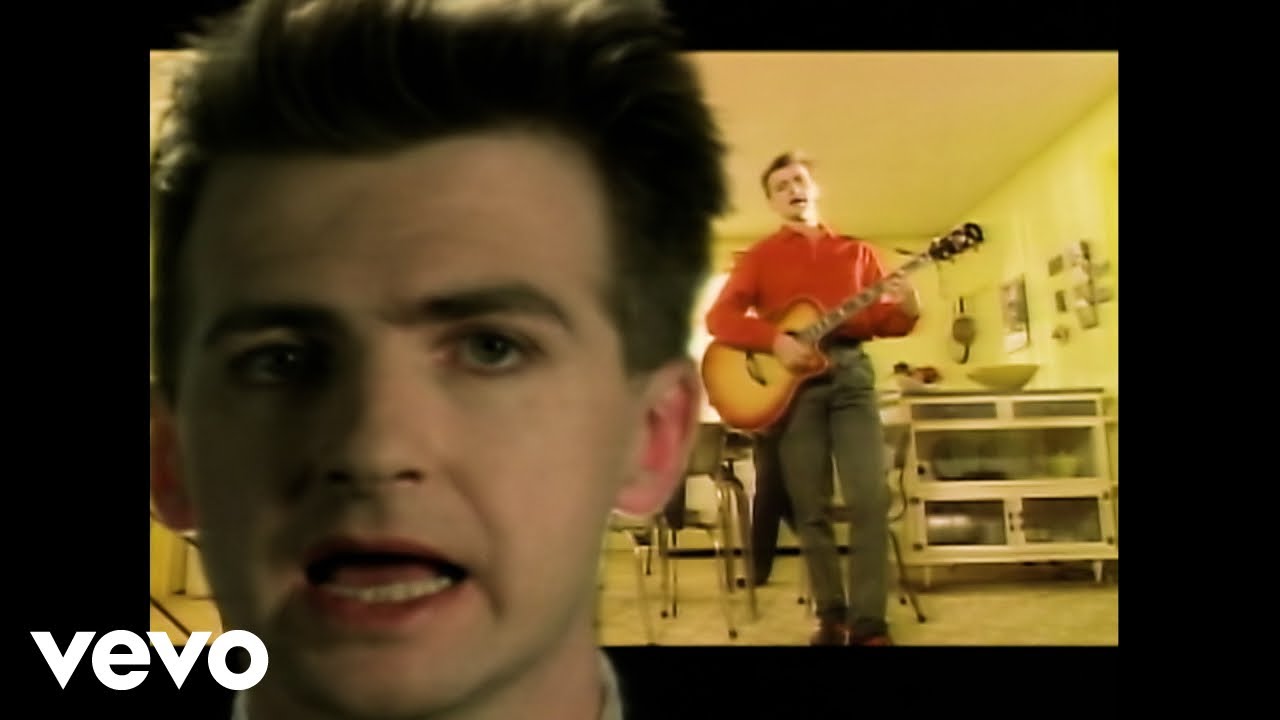
Lyrically, the song can feel obtuse, but that is part of its charm and depth. “There is freedom within, there is freedom without/Try to catch the deluge in a paper cup/There's a battle ahead, many battles are lost/But you'll never see the end of the road while you're travelling with me”.
Much has been made of Crowded House’s similarity to The Beatles. The lyrics on Don’t Dream It’s Over even reference a paper cup, the same object used by John Lennon in the lyrics to Across The Universe.
But in some ways, the Beatles’ comparison here almost belittles Neil Finn’s achievement. Don’t Dream It’s Over is a song that exists in its own space, a wonderfully constructed composition that is both poignant, enigmatic, uplifting, and just a little bit maudlin.
As Andrew Ford and Anni Heino wrote in their 2019 book The Song Remains The Same: “It was the song you danced to at the end of the night, pressed close to the intriguing person you’d just met while wondering what might happen next. The palpable sincerity in Neil Finn’s voice and the expansive melodic line of the song’s chorus encouraged hope.”
Structurally the song is fairly straightforward and opens with Finn’s iconic intro, an inflection of the opening Ebsus2 guitar chord. It then progresses to Ebsus2-Csus2-Ab-Gmaj on the verse before shifting up to Ab-Bb-Eb-Cm on the “Hey now, hey now, don’t dream it’s over” chorus.
For all its merits, the song failed to click when Neil Finn first brought it to the band in the studio. “The day I did it, I knew I had something quite special,” Finn told Uncut magazine. “Then the next day we played it with the band and it sounded like a bag of shit!”
It took the intervention of Mitchell Froom – producer on the first three Crowded House albums – for the song to start to gel.
“It was only when Mitchell suggested the bassline, which Nick [Seymour] elaborated on, that it really found its groove,” Finn told Bill Kopp of Spin magazine.
Finn recalled that Froom made some quite profound suggestions on the song. “Like an R&B bassline might be better than a rock or pop approach, or a Hammond organ could sound nice. These were not textures I was used to. He filled in quite a few areas that we weren't covering…"
Bassist Nick Seymour’s natural melodicism and his impeccable feel and groove are pivotal to the song. Seymour makes every note count while leaving space to weave his wonderfully fluid lines.
One of the most distinctive elements of the song is the Hammond organ, which kicks in at 1:45 and adds poignancy to the song. This is followed at 2:09 by a guitar solo from Finn, at which point the whole band really opens up.
There’s a crisp sheen to Finn’s guitar sound on the track. While he is known for using a Gretsch Double Jet, he reportedly used a 1973 Gibson Les Paul Deluxe Goldtop and a Fender ‘57 Deluxe amp on Don’t Dream it Over, with a Black box distortion and a small plate reverb.
But it’s Finn’s vocal performance that really drives this song home, with its strong, soulful timbre and emotional depth. It’s a beautiful judged performance that exudes vulnerability and strength.
Don’t Dream It’s Over was released as a single on 20 October 1986 and it’s a song that has gone on to have a long and illustrious legacy.
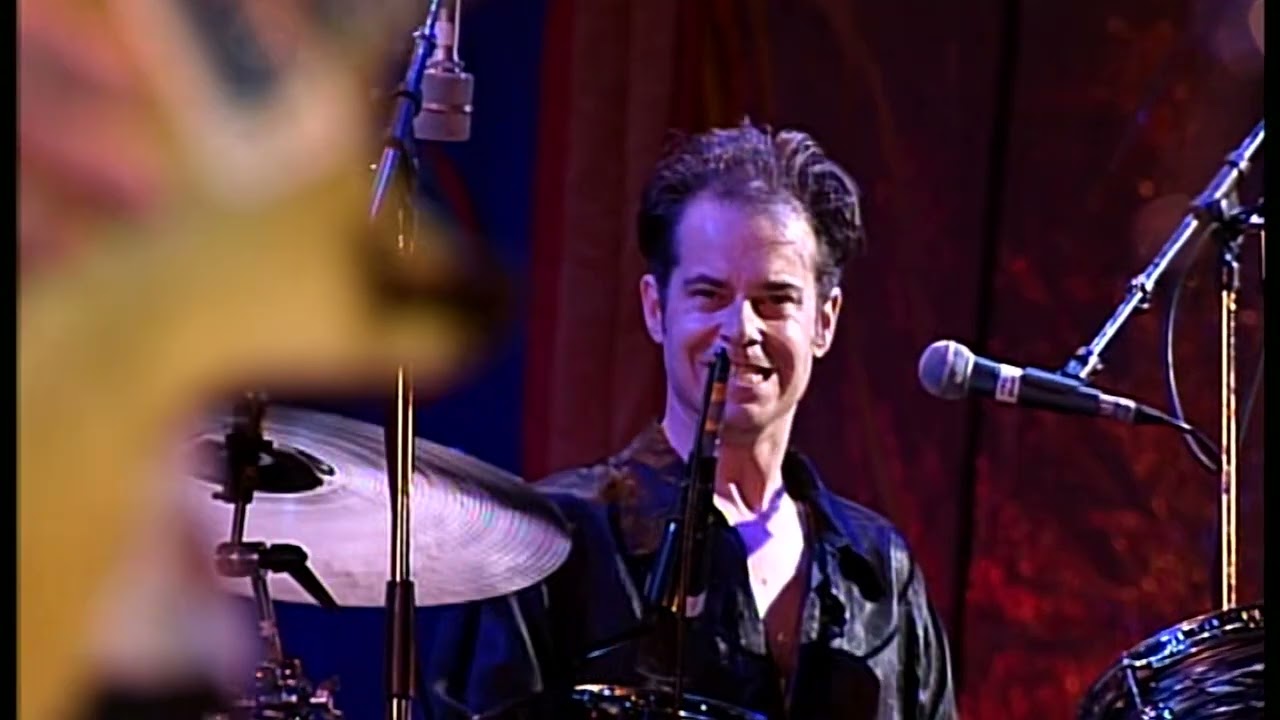
One of the finest live performances of the song took place ten years later on the steps of the Sydney Opera House on 24 November 1996, when Crowded House played their Farewell To The World concert, then intended as the last show the band would ever play, although they would reform on a number of occasions.
“Thanks for having us Sydney and everyone else who’s watching us, looking on,” said Neil Finn from the stage in what was clearly an emotional moment for the band and their fans. “It’s been a blast.”
Then, in 2018, the song was directly responsible for Neil Finn being invited to go out on tour with Fleetwood Mac.
“I’ve always, right from the beginning, loved his songwriting,” Mick Fleetwood told The Guardian. “Especially one song that drove me over the wall – Don’t Dream It’s Over – years and years ago.”
Over the years, the song has been covered numerous times, including the 1991 version by Paul Young. It has also been widely synced. Its inclusion on the soundtrack of the 2024 Netflix true-crime series Monsters: The Lyle and Erik Menendez Story prompted a streaming surge for the song which returned it to the charts.
Don’t Dream It’s Over remains one of those most precious things – a song that continues to provoke a profound emotional connection across successive generations.
“Don’t Dream It’s Over comes out at some really important occasions,” Neil Finn told Bill Kopp of Spin magazine in May 2024. “Most recently, U2 were motivated to play it to honour [late Russian dissident] Alexei Navalny and his wife, which I thought was just incredible.”
40 years since he wrote the song, its legacy remains a source of continued pride for Finn.
“I couldn’t be more thrilled with the life it’s had,” Finn told Spin magazine. “Don’t Dream It’s Over is just unstoppable…. The lyrics still resonate all these years later. I’m very blessed that I really still like – and enjoy singing – the song that has become the most significant one for us.”
