
With its silky Clapton-esque guitar lines, laidback groove and soulful vocals, Slow Dancing In A Burning Room is one of John Mayer’s signature songs and biggest hits.
Unlike a lot of famous songs, however, this one was never released as a single – but that wasn’t enough to stop it from going platinum in the United States, silver in the UK and gold in Denmark.
“Slow Dancing is like the biggest song in the set and it wasn’t a single – it wasn’t anywhere close to being a single,” the American singer-songwriter revealed back in 2013.
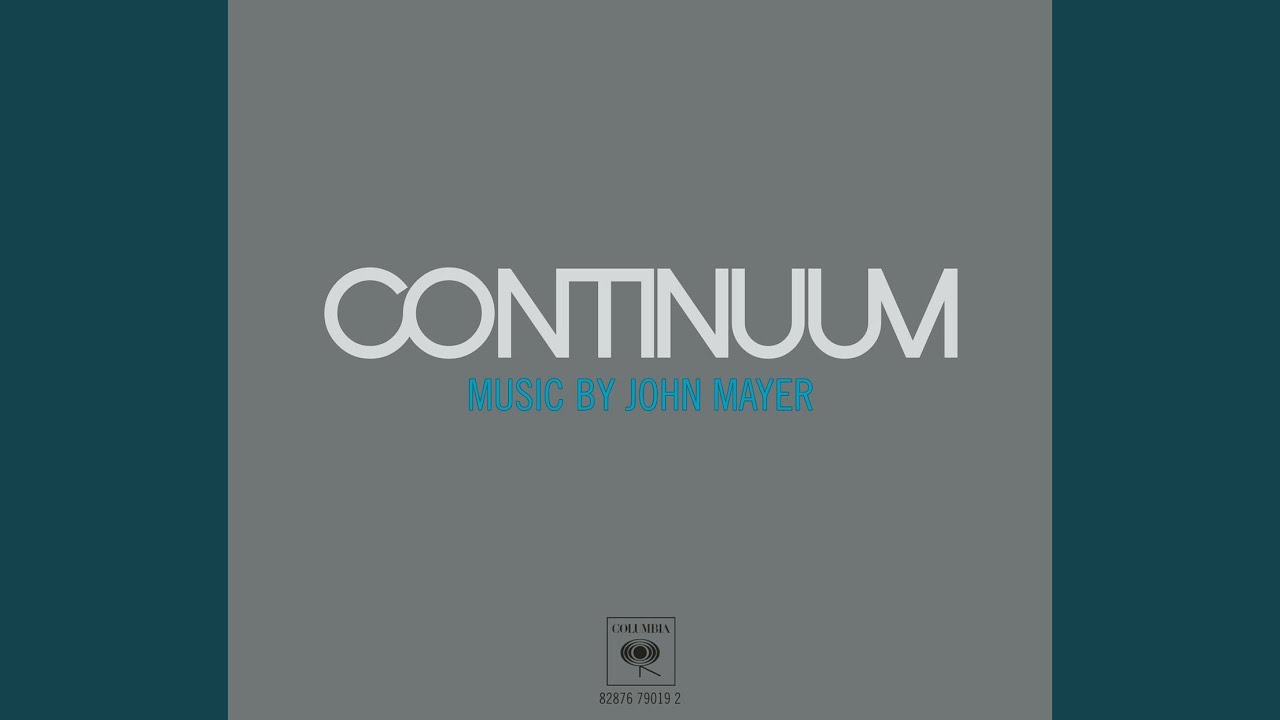
Slow Dancing In A Burning Room is a highlight from Mayer’s 2006 album Continuum, which marked a turning point in his career – as he moved away from the contemporary pop sound he started out with and incorporated more of his blues and soul influences.
Lyrically, the song describes a romantic involvement that’s coming to an end. The burning room symbolises the relationship’s doomed fate, while the slow dancing suggests how there’s still a lot of love and affection on both sides.
“This is a song about when you realise that the relationship is coming to an end and one person wants to admit it faster than the other person wants to,” Mayer told a crowd in 2008, while playing a private acoustic show in The Bahamas.
He added: “But you always both know what’s going on… there’s always one person who is a little more vocal about it.”
Stylistically, the song mixes elements of minor blues with country and R&B – which partly explains why it ended up resonating with so many people.
Mayer once noted how songs like Slow Dancing In A Burning Room would never have existed if it were not for Pearl Jam singer Eddie Vedder. This was revealed in a photo he posted of them together in 2016.
“Without this man Eddie Vedder and Pearl Jam I wouldn’t be a singer,” he admitted in the caption. “Or a songwriter. I wouldn’t have tried to be as interesting with vocal melodies as he is.”
In the same caption Mayer also acknowledged the influence of Pearl Jam’s guitarist Mike McCready and the song Yellow Ledbetter, which was originally released in 1992 as a b-side to the band’s hit single Jeremy.
Mayer stated: “Without Mike McCready and Yellow Ledbetter there is no Slow Dancing In A Burning Room.”

The song’s opening guitar riff is built around the first position of C# Minor pentatonic on the ninth fret, with some double stops thrown in. The chord movement goes from C#min to A and then E, so it can be considered a 1-6-3 progression. The parent scale of C#min is E, so that would be its relative major.
The chorus sections move through shapes for Badd11, C#min and A – with the last chord substituted for a F#min11 on the second round.
There is also an overdubbed guitar strumming the Badd11 chord the whole way through, with the pinky used to hammer onto the 10th fret of the G-string and create movement on the backbeats.
The first solo arrives at roughly 2:20 and showcases Mayer at his most tasteful, using some subtle and some not-so-subtle bends to add to the story.
“I think if you took the song away, the songwriting is what makes the guitar playing the guitar playing,” he told American radio station SiriusXM in 2017.
He added: “The fact that I’m done singing ‘I’m slow dancing in a burning room’ and people know the arrangement and I’m about to go into a solo is what gives the solo its power.”
In 2012, Mayer’s longtime engineer Chad Franscoviak confirmed the specifics of the gear heard on Slow Dancing In A Burning Room to Sweetwater.
The bulk of the recording was done with Mayer’s original 1964 Fender Stratocaster going into a vintage Fender Deluxe Reverb, closed-mic’d with a Shure SM57 and an AKG C451 condenser, with an AKG C24 used as the room mic.
The main electric overdubs were done with a pair of Two-Rock amps mic’d the same way.
The lead guitars were done through a Dumble Steel String Singer and a Marshall, each close-mic’d with a Neumann U67, an SM57, and a Yamaha NS10 speaker that had been reversed into a microphone.
There were also two sets of room mics for the leads: a pair of Neumann SM 69s and two Coles 4038 ribbon mics.
All of the guitars were recorded at The Village studio in LA between 2005 and early 2006.
Franscoviak added: “It sounds like we recorded the solo in the auditorium on the second floor, using Studio D as the control room. Also, we recorded the pedal steel-sounding parts through an old Pioneer stereo. There were a few other guitar ODs. The main chorus chords were recorded through a Marshall Bluesbreaker. The rest were Deluxes and Two-Rocks. Minor flourish stuff.”
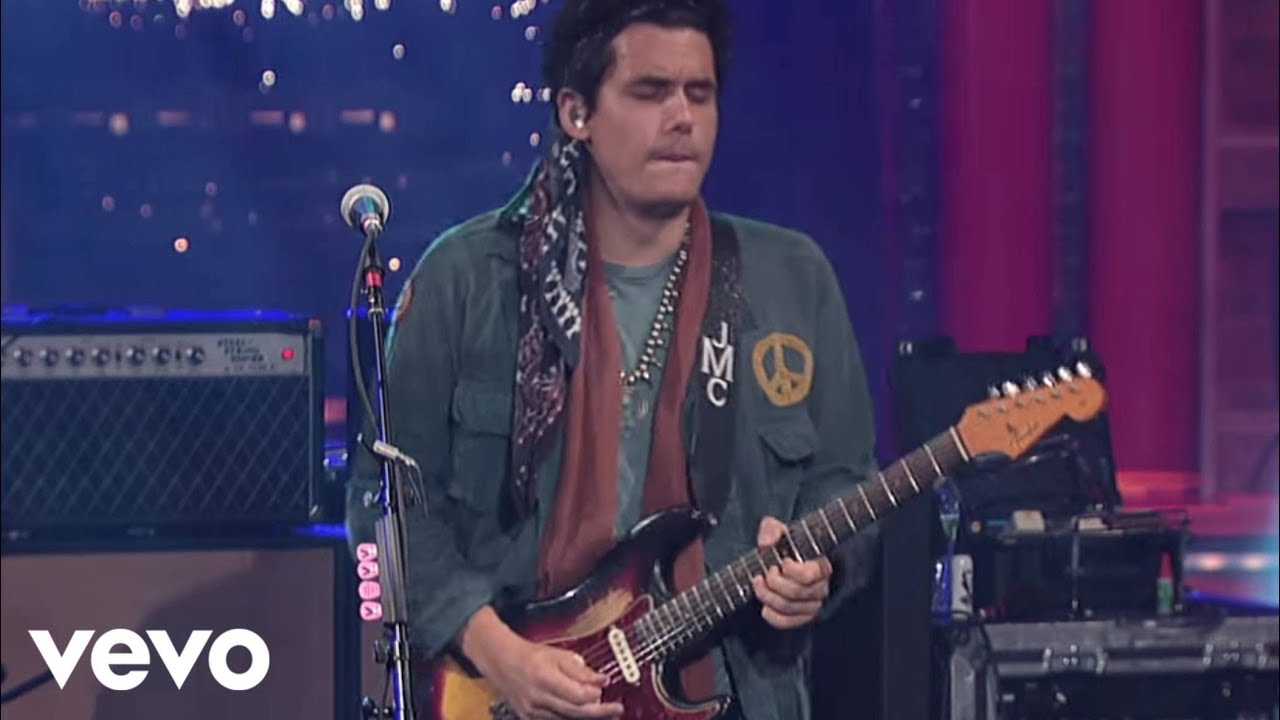
With countless cover versions to be found on Instagram, YouTube and TikTok, Slow Dancing In A Burning Room is firmly established as a modern blues masterpiece.
It’s the track that encapsulates Mayer’s approach to guitar and one that inspired him to continue in that direction.
“Slow Dancing In A Burning Room is my guitar style,” he once revealed, adding: “I just have to compose a song to do it.”
