


James Hetfield will always remember the first time he saw Cliff Burton on stage. It was in 1982, and Burton was bassist for the band Trauma. In the audience at the famous Los Angeles club the Whisky A Go Go, Hetfield watched with his Metallica bandmate Lars Ulrich.
Speaking to MOJO magazine in 2008, Hetfield recalled snapshots of Burton's performance that night in '82:
“Lars and I seeing him headbanging at the Whisky A Go Go and saying, ‘My God, we gotta get this guy! Let’s get that guitar player… oh shit, he’s playing bass! Wow, we need him!’
“Bass solo, take one! Wah wah wah! Fucking hair flying, this skinny dude, with big bell bottoms, and playing a wah solo.
“It’s like, ‘Holy shit! This is very unique. He can’t be in Trauma, he’s gotta be with us!’”
By the end of 1982, Burton had been installed as the new bassist in Metallica, completing the early line-up that featured Ulrich on drums, Hetfield on rhythm guitar and vocals, and Dave Mustaine on lead guitar.
Indeed, the band were so impressed with Burton that they relocated at his request from LA to the small town of El Cerrito in the San Francisco Bay Area.
By 1983, Mustaine had been fired and replaced by Kirk Hammett ahead of the recording of the band’s debut album Kill ’Em All.
Hetfield said of Burton’s role within the group: “He was a pretty strong personality, and he was also a guy who would give Lars a hard time – he wouldn’t let Lars get away with shit, and the other two guys let Lars get away with a lot of shit. So I felt like Cliff was my ally in the battle.”
Burton’s bass solo – incorporating wah, distortion and tapping – was included on the Kill ’Em All album with the title (Anesthesia) – Pulling Teeth.
![[Anesthesia] --Pulling Teeth (Remastered) - YouTube](https://img.youtube.com/vi/CJz515hVS_c/maxresdefault.jpg)
His influence in the band’s music increased with the following album Ride The Lightning, on which he co-wrote six of the eight tracks including the classics Creeping Death, For Whom The Bell Tolls and Fade To Black.
On the third album, Master Of Puppets, Burton co-wrote the atmospheric instrumental Orion, the fast-paced finale Damage, Inc. and the title track that stands as arguably the definitive Metallica song.
Hetfield said in acknowledgement: “I prefer Ride The Lightning. That felt to me like the giant that Metallica has produced.
“I feel that Master Of Puppets, there’s a lot of great songs on there. Master Of Puppets being the end of Cliff Burton’s time with Metallica, his time on the Earth, it makes sense that from then on things changed for sure after that.”
It was during the Master Of Puppets tour that Cliff Burton died on 27 September 1986 when the band’s tour bus crashed in Sweden. He was just 24 years old.
As Hetfield told MOJO, it could easily have been him that died and not Burton.
“The truth of the story was that we were in a tour bus with all the glass on the sides,” he said. “This was before the buses with the steel sides came along. They just put bunks in next to the glass.
“We were in Sweden in winter time, and I wasn’t able to sleep – it was freezing in the bunks. So I would sleep in the very back of the bus. It was a little warmer back there.
“So I was on the same side as Cliff, on the same level, up on the top with Cliff. And yeah, it’s quite possible that it could be a different story there. It’s not the only time, I’m sure, that I could have gone to the other side….”
In the wake of this tragedy, Metallica eventually completed the Master Of Puppets tour with Burton’s replacement Jason Newsted.
On the band’s first album without Burton – … And Justice For All, released in 1988 – there was a song created in his memory, To Live Is To Die, with a riff written by him and a spoken word part in which Hetfield recited a poem that was also composed by Burton.
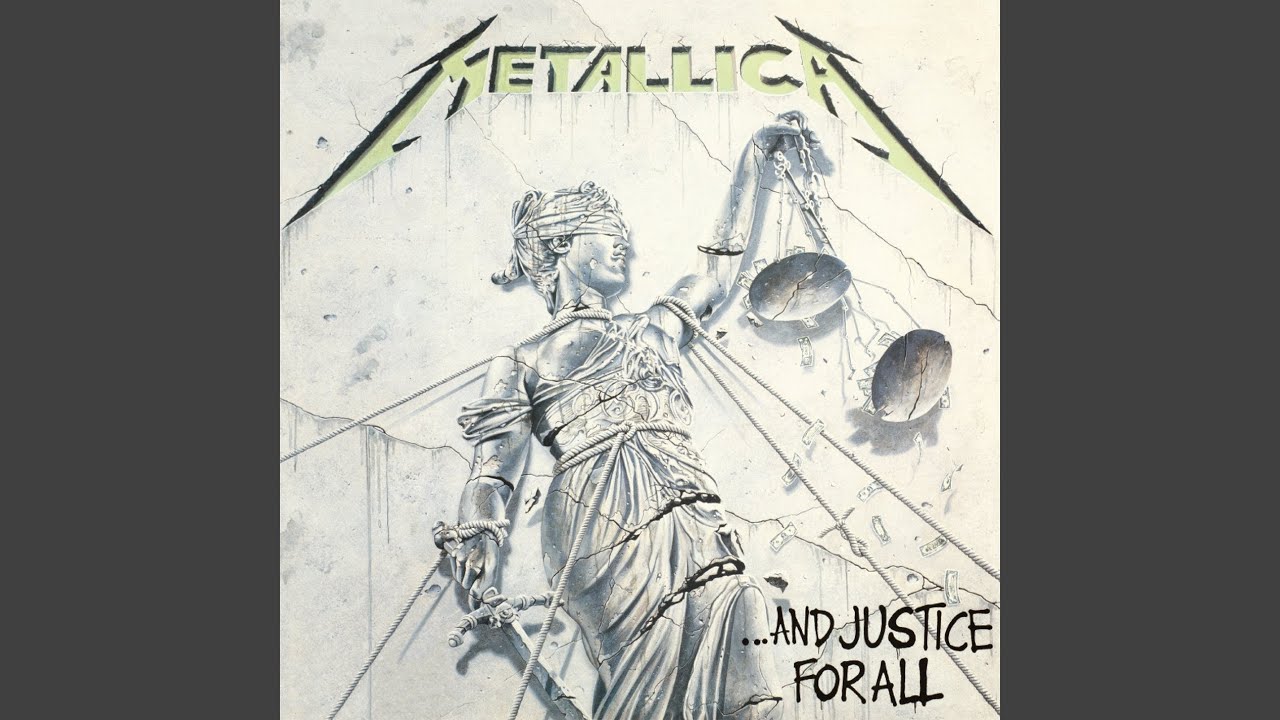
Hetfield recalled: “Obviously in the song To Live Is To Die, that’s Cliff. It’s kind of an homage to Cliff, without going over the top, or exploiting that, I guess is the word. I think it was us realising how grateful were to have that time with him.”
But as Hetfield admitted, it was only much later that he really came to terms with Burton’s death.
“I didn’t deal with it until I had therapy,” he said. “The mission was, ‘Let’s get over this grief by going on tour, just play it out, get it out on stage.’ Management’s idea. And we were so raw at that point, it’s like, ‘OK.’
“It might not have been the right move. I wasn’t able to grieve. It might sound silly, but I hadn’t learned to do that.
“All through my childhood there were no funerals for family members, no talk of death, no talk of illness. The religion we were in, there were no funerals. Just, ‘OK, the soul has moved on.’
“There was no place to grieve, to cry, to let this stuff out, get together and talk and work through all that stuff, which is very necessary, especially if you’re very attached to someone.
“But through therapy I was able to do a lot of grief work – for my parents and with Cliff.”
