


Heavy metal has had undergone its own enlightenment over the years, an evolution in technicality, how it is engineered, a progressive expansion, the intellectualisation of a movement that all began with the peal of a church bell and a distorted tritone.
But when you get down to it, heavy metal is really all about loud electric guitars making gnarly sounds, and sometimes we do well to remind ourselves of that – that metal is less about the superego, more about the id, and the animalism in our human condition yet to be fully housetrained even after millennia of civilisation.
Josh Middleton has. The frontman/guitarist of UK metal stalwarts Sylosis describes the animating impulse behind their face-ripping new album, The New Flesh, as the band’s collective regression to their teenaged selves, to the kinds of base pleasures that first got them into this stuff in the first place.
“When you first start jamming as kids, and you are in a practice room, you can crank your amp up at a really loud volume that you’ve never done before, you just feel energised, or the first time you go and see a live show and you’re in the mosh-pit, we are trying to regress and think about those feelings and then put that into a song.” he says, joining MusicRadar over Zoom from somewhere deep in the bowels of the Szene Wien, in Austria. “Like, how it it is gonna feel live and what’s gonna slap you in the face.”
Like, say, the hyper-trophied hardcore riff beatdown of Erased, or the thrash metal maximalism of All Glory, No Valour, a track that Middleton says was one of many written with a live audience in mind?
“I think we’re definitely – deliberately and really genuinely – reverting back to being kids discovering extreme metal, which was the first sub-genre I really got into,” he says. “I’ve got to credit Slipknot for that because they referenced Morbid Angel and Cannibal Corpse in interviews. I went out and bought all those records.”
Think Max Cavalera-era Sepultura, Deicide, all of that great work Scott Burns did out of Morrisound Studios, in Tampa, Florida, as turned the Sunshine State into ground zero for US death metal.
As a kid, I just loved super-heavy music. I wasn’t into really melodic riffing. I was into death metal, catchy riffing – like a lot of Deicide stuff you can hum
These were the records that established the genre’s grammar and form, and, to a certain extent, popularising it, at least in so far that a young teenager growing up in southeast England would listen to the kind of sick shit Deicide drummer and principal writer Steve Asheim would come up with and get all inspired to do something similar.
“As a kid, I just loved super-heavy music. I wasn’t into really melodic riffing. I was into death metal, catchy riffing – like a lot of Deicide stuff you can hum,” says Middleton, humming out the riff to When Satan Rules His World to prove the point.
Middleton wanted The New Flesh to usurp its predecessors, to dial up the intensity – no quarter – because once upon a time that’s what all metal fans, certainly those obsessed with anything in or near to the underground wanted, from their favourite bands.
![A portrait of UK metal stalwarts Sylosis, pictured under an array of laser beams [L-R] Bassist Ben Thomas; guitarist Conor Marshall; frontman/guitarist Josh Middleton; drummer Ali Richardson.](https://cdn.mos.cms.futurecdn.net/nkLNacZH6VpmZGAMHQ62Ke-1200-80.jpg.webp)
“I always looked at Slipknot getting heavier when Iowa came out, or Pantera just getting less melodic and heavier and heavier, and, as a fan, just being like, ‘This is so cool!’” he explains. “So that was always the reference point for me, what would excite me as a kid? I want my favourite bands heavy. I liked them because they’re heavy. ‘And they’re even heavier now!?’ That was the goal.”
I cut off a lot of the band’s earlier influences to appeal more to an elitist, traditional metal crowd, I guess. Whereas now I just don’t care
That’s not to say Middleton is ruling out Sylosis taking a more progressive turn, more explicitly melodic as on fan-favourite Edge Of The Earth.
“There’s a lot of melody on there, and I definitely want to maintain that and keep doing that,” he says. “We might even do an Edge Of The Earth Part 2.” But The New Flesh is not that. If anything, it’s a prequel.
As Middleton explains here, it is what Sylosis would have made when they first started out, only they were “too crap” to do it then.
We touched on this with All Glory, No Valour but how does thinking about the Sylosis live show shape the writing?
“I have been guilty of writing – I mean, I still do, and everyone does this – just writing songs in front of the computer, which is quite a sterile environment. I have to really dig deep to mentally think about how it is going to come across live.
“A lot of writing happens in the shower. I’m imagining how would I want a song to sound or if one of my favourite bands was to release a new song, as a fan, what would surprise me or how would I want it to sound? And I imagine songs without a guitar, and then I try and bring it to life later on.”
And this was something that was missing a little bit from your earlier material?
“I still love it, and I’m not knocking the music – but just in the live environment there weren’t enough moments where the crowd got involved or it just felt heavy and fun, and I was just sort of grounded to the spot, doing vocals.
If it doesn't sound like Edge Of The Earth and there’s a bit more groove, or it’s a bit different, people are quick to go, ‘Oh, they’ve gone metalcore!’
“It’s quite technical. I was like, ‘I just want to just play some of this really heavy and just fun, and feels energetic, and as much as all the metal stuff I grew up listening to, when I was a kid, I was still into Dillinger Escape Plan or Hatebreed, and stuff that was more exciting live. Those were the sort of issues that I had back then, but now I just feel a bit more free to write however I want and not worry.”
There is a freedom in writing like that.
“When I grew up as a teenager listening to death metal, I also liked Deftones and Slipknot, but all my friends that like death metal were very elitist about that kind of stuff. So I was very mindful back in the day of like the elitism within metal, so I cut off a lot of the band’s earlier influences to appeal more to an elitist, traditional metal crowd, I guess. Whereas now I just don’t care.”
There are so many rules and regulations in metal.
“I feel like the elitism is way less prevalent now, and it’s not that big of a deal like I thought it used to be. I mean, for us now, I mean, it’s a mild frustration, but I’m too old to care. If anyone, when they hear our new stuff, and if it doesn't sound like Edge Of The Earth and there’s a bit more groove, or it’s a bit different, people are quick to go, ‘Oh, they’ve gone metalcore!’ But I can literally point to every influence that we had when we were 16-year-olds, when we started, like, ‘No, it’s that!’ And I could be like, ‘No, I can show you why I’ve actually ripped off! [Laughs]”
Other art-forms reference/rip-off their peers and influences and get praised for it all the time – why shouldn’t should be the same for music? Beneath The Surface has the flash of a solo that’s got a bit of a Chuck Schuldiner vibe.
“Yeah! And Erased, the second single, it’s got clean-sung chorus, and I’m sure for some people that that might be a shock to them… I can just say, ‘Just go listen to this Faith No More song, because that’s what I was thinking.’ There are loads of Angel Dust influences on that song.
“There’s a weird chord progression after the second chorus, and some strings, and I am just a huge fan of Mike Patton and Faith No More in general – which is what I was listening to as a 15-year-old kid in the early 2000s.”
Was there one song you did write in the shower?
“It would be moments, sections of songs or intros, like the Beneath The Surface intro, [hums riff], then going into a fast beat; that’s the sort of stuff where I don’t even need the notes. I used to play drums and have an understanding of drums where I can think more as a rhythmical entity sometimes, and then add riffs on top.”
There’s definitely a more noticeable groove on this one.
“We got into metal through the nu-metal era, so groovy metal was our entry point. You look at all the stuff we listened to then, like early Machine Head, Pantera, Slipknot, but also Obituary, one of the first death metal bands that I heard.
“I bought one of those Drilling The Vein Road Runner VHS tapes and it had I Don’t Care by Obituary on it, and I can pinpoint so much Obituary influence on the record. Just the fact that it opens up with like a sample of rain. I grew up listening to Cause Of Death, and Find The Arise has that rain sample. So there’s tons more groove like you say.”
Is all this – the groove, this focus on how it will be to perform for others – all bout being more human? The album title might suggest that.
Once you start playing to a click and you’re working in Pro Tools and drum editing is at your disposal, it is gonna start sucking the groove out
“Loads of people are applying different meanings to it. The song was written first. The lyrics were about something quite specific, and it was our drummer Ali [Richardson] who was like, ‘That should be the name of the album.’ He was just like, ‘Oh, you know, it solidifies the new lineup [Ben Thomas joins on bass guitar with Conor Marshall moving to guitar] and moving forward and all this stuff.’ So I was just like, ‘Yeah, let’s go with it.’ But to your point about the album title, trying to retain some human element is key.
“In terms of the human element, a lot of modern metal is super overproduced. As the guy that produced and mixed it, I wanted it to sound modern and heavy, and hold up against everything else that’s out there, but I think we’re all good enough at our instruments that we can get that level of tightness by playing it in – and you can tell that it’s played, not chopped up and edited.”
Do you think that 21st-century metal got away from thinking about the pocket and the fundamentals of rhythm.
“I think most modern records after the year 2000 or early 2000s, everything would have been done to a click. Once you start playing to a click and you’re working in Pro Tools and drum editing is at your disposal, it is gonna start sucking the groove out to a degree. Those drummers that maybe have a really good natural groove end up getting just edited to the grid, and it’s just a pitfall of modern production.”
Talking about Obituary, there’s no drummer with a more human sense of groove in death metal than Donald Tardy. Sepultura were a big influence on you and there’s another, Iggor Cavalera could groove at speed.
“Yeah! And also, I think for me, going back to the nu-metal era, my entry point was Korn and stuff, and all those Ross Robinson produced records. Even if he was doing Slipknot or Glassjaw, which wasn’t metal, or At The Drive-in, they all had that intensity to them. A lot of it was coming through in the vocal performances, and that’s what I try to do with the vocals.
“It’s really common these days for people to double-track their vocals and sync everything up perfectly, and I don’t do that because I want it to feel spontaneous. I don’t want to emit emotion and then try and replicate it perfectly again as a double-track. So a lot of that inspiration vocally comes from that Ross Robinson era of really intense music.
“I mean, Glassjaw, not a band that specifically influenced Sylosis, but I remember a Kerrang! CD where they had a song called Pretty Lush on it, and there’s a vocal gap where the singer just goes [choking noise]. And he just, like, doesn’t even say anything! He just sounds so pissed off. And as a kid, I just remember thinking, ‘That is so heavy,’ even though it’s not a metal band.”
![A portrait of UK metal stalwarts Sylosis, pictured under an array of laser beams [L-R] Bassist Ben Thomas; guitarist Conor Marshall; frontman/guitarist Josh Middleton; drummer Ali Richardson.](https://cdn.mos.cms.futurecdn.net/BsHZyt4bndaUAm6QhQ29Ue-1200-80.jpg.webp)
You produced The New Flesh alongside long-time Sylosis collaborator and former Stampin’ Ground guitarist Scott Atkins. What do you look for from him?
I still do most of the producing, and most of the guitar tones and stuff this time around was me. He mainly tracked the drums. But we get him involved when we get all the demos, and we send them all to him and he will give us honest feedback. He’ll just be like, ‘I go to this gig with my mate Dave, who’s not in a band, doesn’t play guitar. What’s he going to latch onto?
“Me and Ben are huge fans of Stamping Ground. Officer Down was on Rock Sound CD when I was a kid, and Carved From Empty Words is hugely important to me, especially the fact that they didn’t downtune it. It was so heavy.
“Scott understands where we come from, any references we may have. He knows all the death metal stuff – Death, Obituary, whatever – loves thrash. He’s like an encyclopaedia of thrash, all the really underground stuff, but he was essentially in a hardcore band, and so he can reference anything.”
Are you still on real tube amps, pushing air when tracking this?
“It’s a real amp, but it’s an impulse response, a simulated speaker. It’s my cab and it is how it would sound. I moved house since doing the last record and I don’t have a home studio, so I just couldn’t make noise at home, and tracking guitars is loud.”
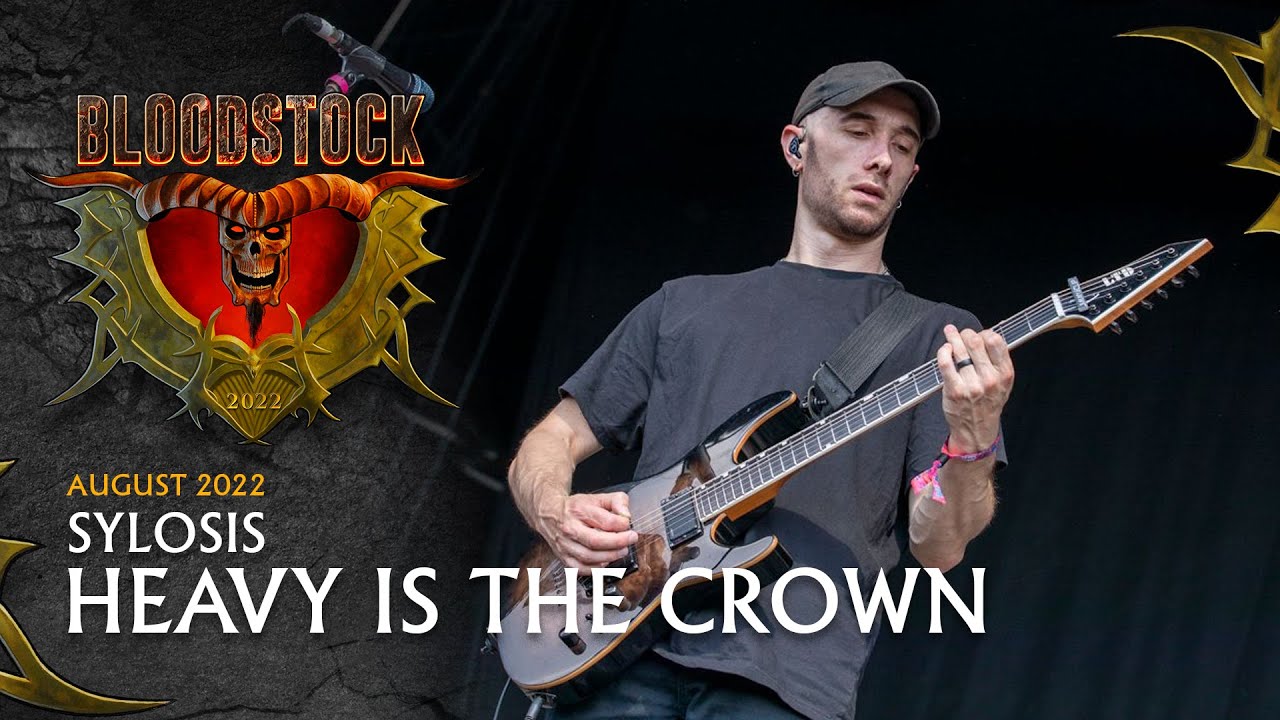
What did you use on the record?
“My signature guitar, which is an ESP/LTD JM-1, which has a single Fishman Fluence Modern pickup in it. Alder body, bolt-on neck, roasted maple neck, into a Maxon 808 into a 6505 – ‘real’ amp with barely any mids [Laughs] and then into an impulse response of my cab, a Mesa/Boogie over-sized slanted cab with an [Shure] SM57 and Sennheiser [MD] 421 on the cab.
“The cab is, to me, responsible for so much of the sound. It’s just a really good speaker. It’s from the year 2000. Quite nerdy info, but it was my friend Nolly, who I actually bought the cab off. He was into looking at serial numbers and stuff, and we were really obsessed with all these old Andy Sneap productions from back in the day, and he spoke to Andy Sneap, and this cab is one serial number way from Andy Sneap’s, so it has the sound of all the stuff I grew up listening to.
“And the speakers are so important when it comes to like a good tone, because you can have a great amp, but if the speaker sucks, it won’t sound good, whereas you can have an okay amp and an amazing speaker, and you’ll get a better sound. That was it for guitars.”
Before you go, who is the most underrated guitarist in extreme metal? And not to lead the witness but I’d imagine you’d might say someone like Pat O’Brien from Cannibal Corpse.
“Huge fan! Yeah. Pat O’Brien, Jack Owen, those were the guys. I got into Cannibal on Bloodthirst, and I have Custom Shop guitars that reference Pat O’Brien’s diamond inlays, all black, so he was a big one for me. Love him. But I am going to say Joe Haley from Psycroptic. He’s insane. [Listen to] A Fool’s Errand, off Divine Council, their last record.”
- The New Flesh is out now via Nuclear Blast.
