
Every now and again, we come across songs that stand out from the vast majority in that style or genre, remaining significant anomalies as the era passes and the context changes.
If we look closely at these outliers, however, we typically find that the production style or sound palette still retains some signifiers of the artist's established genre.
However, the chord progressions and melodic elements used, while not unique or groundbreaking, are often uncommon to the genre or niche. This allows artists and producers to use, what we call ‘crossover songwriting’ techniques' to subvert the listener's expectations. The results speak for themselves.
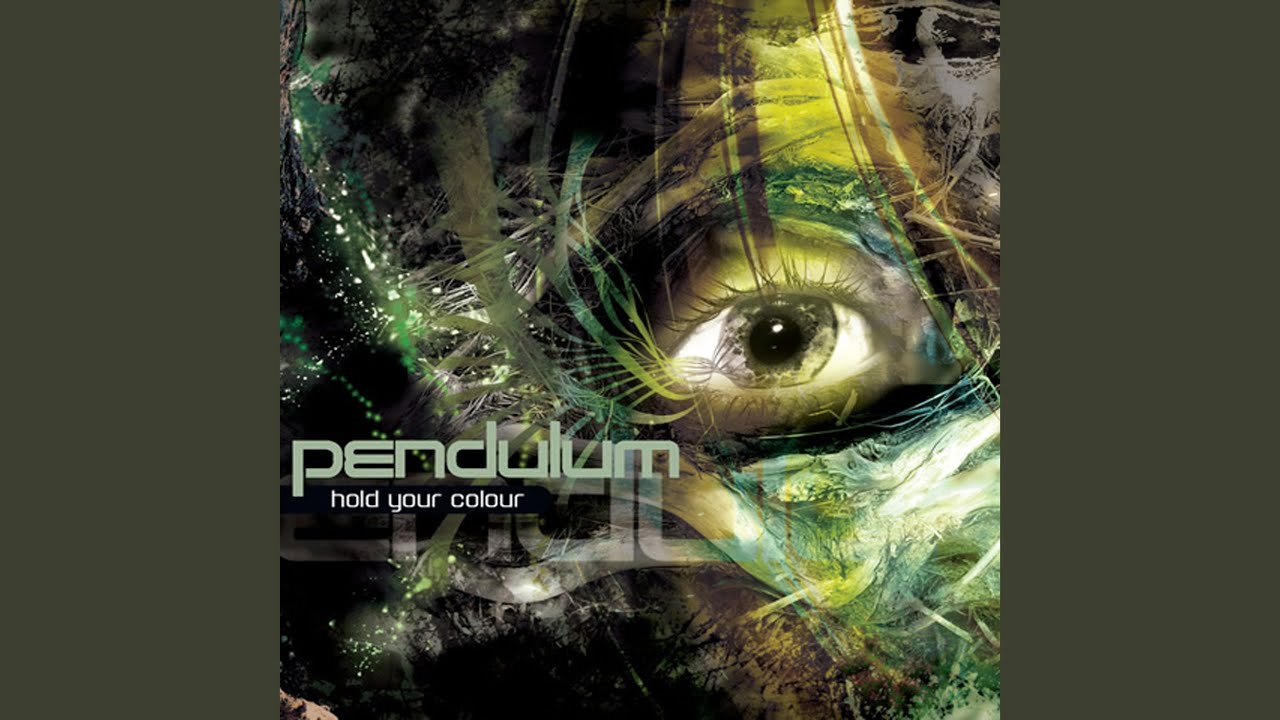
In order to better understand what makes a song stand out from the rest, we'll highlight a few examples. The first is Pendulum's Hold Your Colour, an example of a drum and bass song that uses melodic and harmonic elements that could easily fit into genres like alternative or metal.
Example #1 - Hold Your Colour by Pendulum
Rather than relying exclusively on synthesizers or samples, Hold Your Colour sets itself apart from other DnB tracks right from the intro with the inclusion of guitarist Andrew Goddard and bassist Jon Stockman of Karnivool. In addition, the style of the vocals and lyrics step outside the realm of what we usually expect in a typical electronic music track.
That being said, the key to the song's unique emotional depth lies in its harmonic ambiguity through the use of modal interchange.
In practice, this means that the main progression doesn't reside in a singular key moving from Bb to G to Gm to C to D (also interpreted as G → Bb → Gm → C → D).
At first, the movement between Bb and Gm is typical of G minor (aeolian mode), while the non-diatonic shift from C major to D major has a uplifting character in this context. However, it's the G major to G minor switch that creates a noticable colour change and releases the accumulated tension.
From the intro section, the atmospheric guitar riff (with delay) creates a rhythmic foundation for the vocals, tracing the chord movement from Bb to G/Gm, while the single line of guitar underneath contextualises the composition around G.
Up until the build-up section (around 0:56), we haven't yet firmly established the song's genre. However, this is immediately revealed by the energy of the drum pattern, while the distorted guitars emphasise that non-diatonic shift we mentioned, giving this section an epic, almost triumphant feel.

The true magic of Hold Your Colour lies in the way the transitions wash away harmonic tension, which awakens new energy for the ears of the listener and for dance floors alike.
In the first clear ‘DnB' section (around 1:29), we are presented with a deconstruction, as the arrangement gets stripped back and the distinctive dotted-note LFO synth introduces metric dissonance through syncopation.
What's interesting here is that the energy doesn't drop. Instead, we are freed by the sudden lack of harmonic layers, almost as if we've been unburdened.
As it happens, this is a false state of security because just as a new melody is implied, the song enters a reprise that reintroduces the vocals and guitars from the intro section. This unexpected change feels like being submerged underwater - a thematic concept that runs throughout Pendulum's body of work.
While many high-energy EDM tracks explode into obvious melodic hooks, we are presented with subtlety and understated harmonic duality. Why it's so effective is that it becomes like a Trojan horse. We were never expecting this level of musical depth within a DnB song, and simultaneously can't get enough of it.

Example #2 - Enjoy the Silence by Depeche Mode
Historically, when making some of the most iconic songs in popular music history, the songwriting and music production processes were sometimes completely separated, like opposing hemispheres.
A perfect example of this is Depeche Mode's immortal anthem Enjoy the Silence.
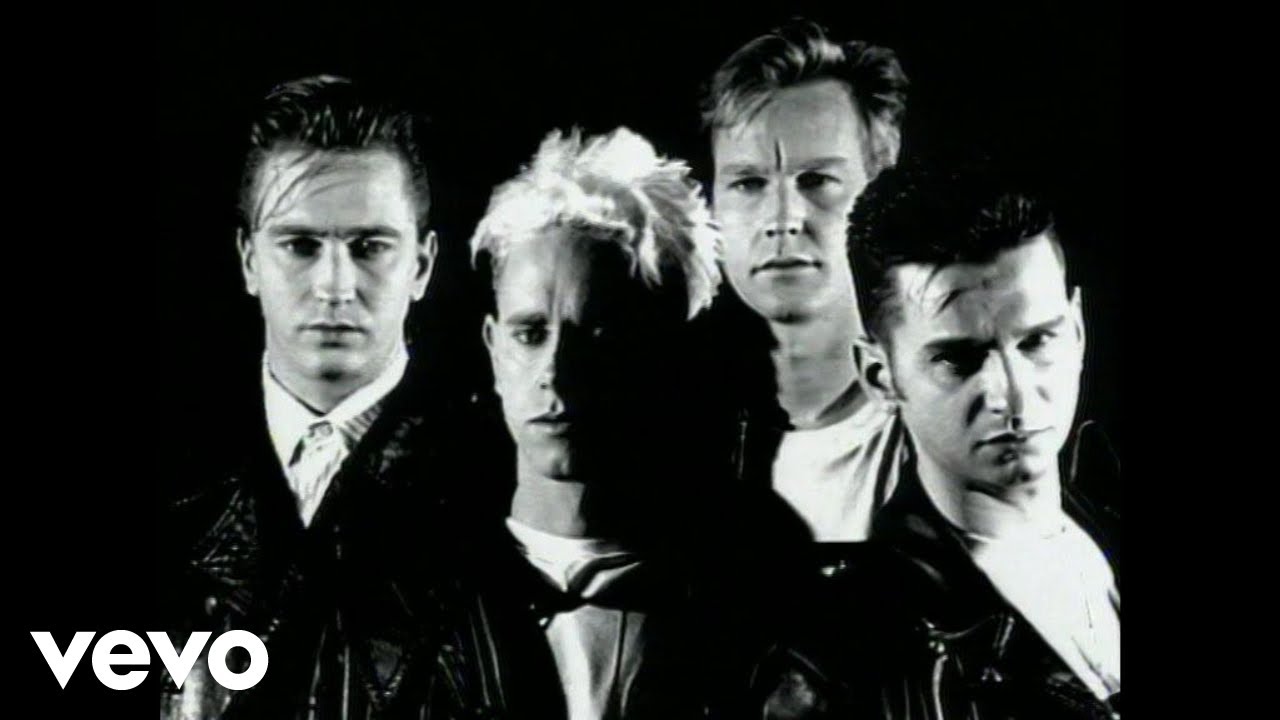
Believe it or not, the song began as a rather moody and poetic love ballad, with a combination of mysterious chords and powerful lyrics written by Martin Gore.
This initial demo was presented to the band in 1989 during the Violator sessions where keyboardist and arranger Alan Wilder and producer Mark ‘Flood’ Ellis were inspired to take the song in a new direction.
Wilder envisioned Enjoy The Silence as an uptempo four-on-the-floor track with a pulsating bass line which would later come from Flood's Roland System 700 synthesizer.
Although Gore was completely against the idea at first, Flood's careful creative coaxing gradually won him over and he began to align with Wilder's vision. In the recording process, one of Gore's key contributions was the scintillating guitar line that plays before each verse.
This was again a point of contention, because Gore felt that using guitars moved away from Depeche Mode’s established identity as a synth-pop band, particularly after the recording of the (now classic) Personal Jesus, which was uncharacteristically built on a guitar riff.

However, after some badgering, Flood managed to convince Gore to pick up his guitar once more, and the first thing he played was that perfect minimalistic guitar riff we hear on the record.
More than anything, this tale demonstrates the power and importance of collaboration, because this melody is so intrinsic to the song's identity and serves as a natural bridge between the tropes of a synth-pop song to the more wider-appeal anthem it became.
The sonic choices made in the production phase are an essential part in the transformation of Enjoy The Silence, drawing from Wilder's orchestration training and Flood's gear knowledge.
At the core of this process is a selection of starkly contrasting analogue and digital instruments.
The call and response between the guitar and choral stabs is a foundational relationship that gives the composition a much larger scale.
Meanwhile, the way the guitar and ARP 2600 pad from the chorus are cleverly mirrored by digital samples from the E-mu Emulator II in the bridge section (around 1:59) seemingly alludes to a journey taking place.
Then, after the final chorus repetition (around 3:24), Wilder creates a symphonic motif with the digital choir voices, which is then harmonised before the horns come in for the final fanfare (around 3:44).
Although some of these instruments might sound a bit basic by today's standards, they were certainly bold choices back in 1990.
However, it's the song's melodic voicing and arrangement that take it out of the synth-pop genre, allowing Enjoy The Silence to break ground into new territory.
This was further exemplified through the subsequent reinterpretation by Linkin Park's Mike Shinoda in 2004, taking things into a darker and heavier direction with his nu-metal and heavier industrial-inspired version.
Example #3 - Walk This Way by Aerosmith and Run-DMC
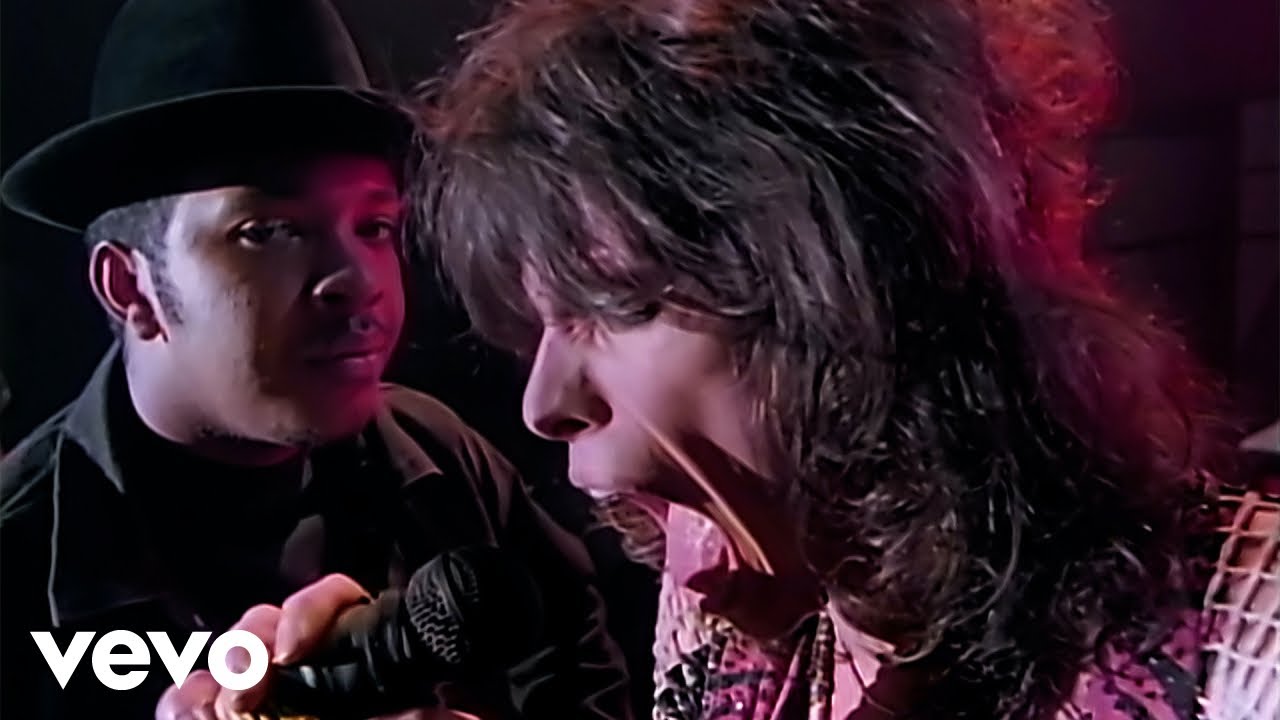
Another way to create a song that crosses over into new markets is to take an existing song and recontextualize it through the lens of another artist. Although it may have been done before, one of the most significant cultural moments occured when Rick Rubin had the idea to turn Aerosmith's Walk This Way into a fully-fledged collaboration record with Run-DMC in the mid-1980s.
The song still divides opinion today, but at the time it brought rap to a far wider audience, as it got played on rock and pop-orientated radio stations that would never typically give this new style of music the time of day.
From early on in his involvement in New York's hip-hop scene, Rubin saw definitive parallels between the movement and punk. Whether it was the immediacy of the creative process or the DIY spirit, he identified closely with the street art form that would soon become the global phenomenon that continues to shape culture to this day.
At this moment in time, the DJ was central to hip-hop from a creative standpoint, finding ways to select existing songs and isolate sections without vocals that allowed MCs to rap over them.
One of the ways to do this was to use two copies of the same record with a pair of turntables and a mixer, and rhythmically cue up sections and sample stabs from the song in a new arrangement created through performance.
As you can probably guess, one of the records that DJs used in this way was Walk This Way. If you listen to the original version of the song, you immediately hear why, because it starts off with a perfect drum break, followed by that famous guitar lick.
This means that Rubin's inspiration for the Run-DMC collaboration would have come from hearing this song in this new context and seeing the crowd's reaction.
He also felt a sense of duty because, for many years, the raw street sound of hip-hop was not reflected in the records being released. Instead, the majority of early rap records were copy-cats of The Sugarhill Gang - using disco and R&B style instrumentals as backing tracks.

To say that Aerosmith's trajectory was dipping in the mid-1980s would be an understatement, but Steven Tyler and Joe Perry showed up at the studio on their label's request and laid down vocals and guitars over the programmed drum beat with scratching.
Run and D had just finished working on their new album, Raising Hell, and it was difficult to convince them to now create what was essentially a cover song.
Nevertheless, they took Rubin's advice and learned the words and ended up creating the first multi-platinum rap record ever released.
“Everybody flipped out. Me and Run were so puzzled, because the reaction was overwhelming,” said DMC (aka Darryl McDaniels) as quoted in this article from our sister site, Louder. “We didn’t think it was going to be a big hit, but people were loving it.”
Naturally, the newfound success of the rap-laden version of Walk This Way breathed new life into Aerosmith's career, which eventually led to the band signing a further deal with Columbia Records in 1991.
Rather than attempting to make a hit record, Rubin saw producing Walk This Way as an 'experimental exercise'. The idea was to showcase the fact that rap was musically progressive in an exciting way, and this creative outlook stood him in good stead, fuelling a diverse music production career.
In subsequent years, Rubin furthered his genre-enmeshing with the likes of The Beastie Boys, Slayer, Red Hot Chili Peppers, Rage Against the Machine, Johnny Cash, and a huge number of other artists.

So what can we learn from these feats of breaking out of conventional songwriting tropes and reaching new audiences? A key lesson is that collaboration is key and fortune favours the brave.
In the initial creative phase, it's easy for artists to become protective and sentimental when it comes to preserving the integrity of their concepts and ideas. It's also important to note that an artist might not always be the one with the most expansive vision when it comes to their own songs, so creative relationships are essential.
Today, we have advanced stem splitting and pitch shifting tools that allow us to quickly re-imagine any song in any style of music we can imagine, so there’s more scope to easily diversify what we do.
When we move away from viewing a song as a finite entity, it opens up the possibilities to explore it even further as an artist and perhaps reach new audiences in the process.
As so much of the media we consume on a daily basis revolves around trends, it makes sense to use this to our advantage. However, rather than simply following in the footsteps of our favourite artists and bands, crossover songwriting gives us the power to diversify our creative output, which avoids stagnation and enables growth.
So, to put it in an even more straightforward way, if you’re a synth fanatic, all it takes is for you to pick up a guitar (and vice-versa), and you are presented with a completely fresh way of expressing your idea.