


Roland Orzabal and Curt Smith had a lot in common. They were both the middle child of three sons, both grew up in a depressed part of the city of Bath in the late 1970s, and both were raised by single mothers. They were also heavily influenced by artists such as Peter Gabriel (particularly his third album) and David Bowie.
Mad World was the duo’s first hit in the guise of Tears for Fears, climbing to the dizzy heights of number three in the UK chart in 1982. Its origins were a fusion of lived experience and emotions, with a sound similar to a song that was then lighting up the airwaves.
“We were living above a pizza place on Barton Street, near the Theatre Royal in Bath,” The song's writer, Roland Orzabal told Songwriting Magazine. “I was looking out of the window and seeing these people go on their merry way to work and the whole rat race thing. Being an adolescent who’d never had any real responsibility other than at school, I was critical of [all that] so I wrote Mad World. A song came on the radio, it was Girls On Film by Duran Duran, and it had this rhythm that I stole - not that theirs was original!”
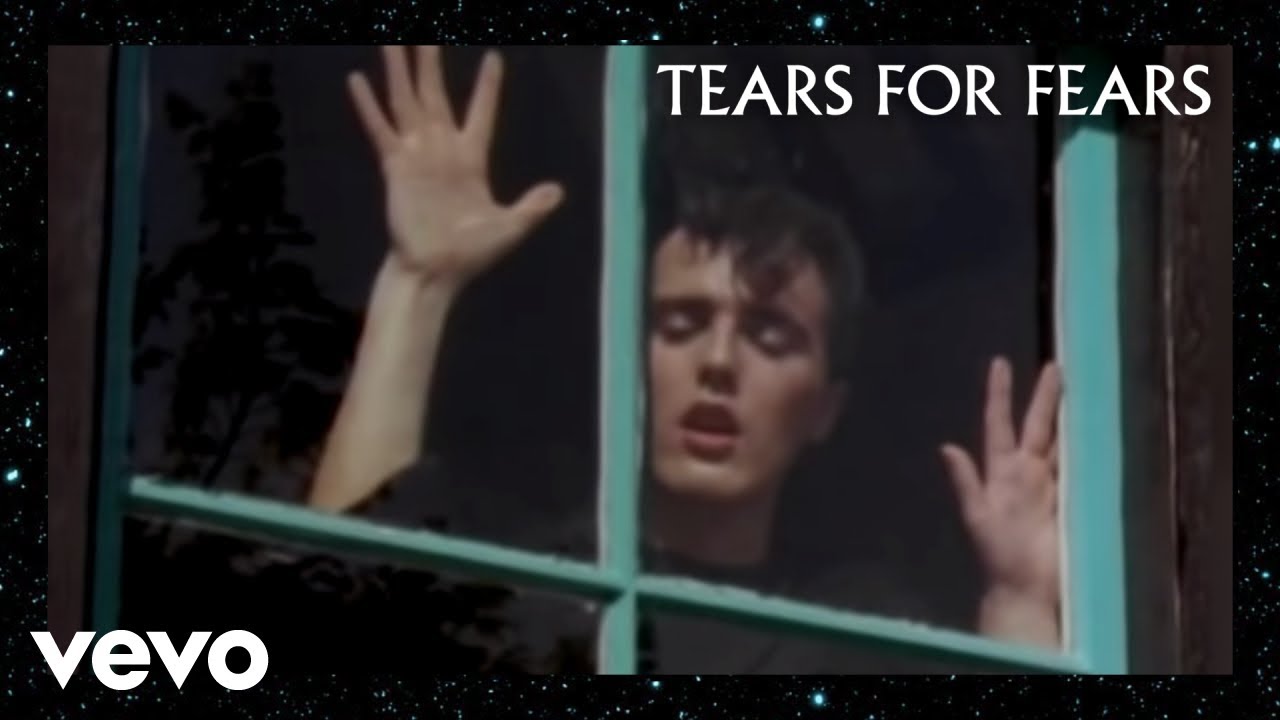
Orzabal’s detached observation of the ‘rat race’ was imparted by the song’s opening lines.
All around me are familiar faces
Worn-out places, worn-out faces
Bright and early for their daily races
Going nowhere, going nowhere
Beyond his skepticism of the ‘rat race’, Mad World was also quite a personal piece for Roland. As he told The Guardian, “I had suffered from depression in my childhood. My dad had been in the second world war, had electric shock treatment, suffered from anxiety and was abusive to my mum. I kept a lid on my feelings at school but, when I was 18, dropped out of everything and couldn't even be bothered to get out of bed. I poured all this into the song.”
This autobiographical element is starkly evident in the song’s second verse:
Went to school and I was very nervous
No one knew me, no one knew me
Hello, teacher, tell me what's my lesson
Look right through me, look right through me
Initially, Roland and Curt had been members of a five-piece mod power-pop/ska band called Graduate. But, a brief two week tour of Germany was enough to inform the soon-to-be TFF duo that the touring life of motorways, vans and lugging gear, was not for them.
With artists such as Gary Numan, Depeche Mode and OMD influencing the charts, the focus was shifting away from guitars to electronic technology, and Orzabal and Smith split away from the band, delving headfirst into a strange new world of synthesizers and drum machines, even though the guitar was at the heart of the original writing and demo phase for Mad World.

“When I wrote Mad World it sounded pretty bad, to be honest with you," Roland said to Songwriting Magazine. "I couldn’t sing it very well, because my voice is designed for acrobatics and drama, enunciation and doing crazy things, and shooting up into falsetto. So I wasn’t sure about the song at all.”
Ultimately, it was Curt who ended up taking the song’s lead vocal. “Mad World was easy for me to sing because I could relate to Roland's lyrics. We were both the middle of three sons and had been brought up by single mothers with absent fathers,” Curt told The Guardian.
A chance meeting with keyboard player Ian Stanley proved pivotal. Also residing in Bath, Stanley met the duo, and offered them the opportunity to use his home studio equipment, then consisting of a fairly state of the art Roland Jupiter-4 and CR-78 CompuRhythm drum machine, an MXR pitch transposer and, most importantly, a multi-track tape machine.
The pair’s love of Peter Gabriel prompted them toward some immediate experimentation, which Stanley was a little sceptical about at first. They tried recording drum parts in reverberant rooms. Varying tape speed further augmented their results.
The opening of Mad World centred around a basic percussive groove, which sounded completely unlike anything else. According to Roland Orzabal, they recorded it via the CR-78 at much faster tape speed; slowing the tape down to create a completely different sound. Throw some acoustic drums into the mix and the arrangement had a distinctive rhythmic bedrock.
One of the common traits of early synthpop centred around simplicity. In some instances, minimal arrangements were dictated by the equipment available. This as an aesthetic that is integral to unpicking Mad World.
After the initial intro, we hear our first hint of the chordal structure of the verse, initially supplied by a single note on a synth. With a note/chord occupying each bar, we hear the notes F#, A, E and B, all in octaves and played in a low register over the first 8 bars of the verse.

The sequence is then repeated, but with the addition of a further singular note, much higher in register. This starts to give us a hint of the background harmony, although we have already received many clues from the lead vocal part.
F# minor is followed by A major, E major and B major, which we hear in a further two cycles, making another eight bars.
In total, we hear the sequence four times, adding up to a full 16 bars. The synth part is sustained against the punctuating rhythms, continuing from the introduction section.
As we move to the pre-chorus bridge and chorus sections, the harmony becomes more static, but uplifting too, thanks to the use of just two chords. F# minor is followed by chord IV - B major.
This is particularly pertinent, as the major tonality of chord IV provides an element of brightness, contrasting the slightly depressed nature of the vocals (by Roland Orzabal’s own admission!)
The use of these two chords, one bar at a time, continues throughout the chorus section. Following its sense of simplicity, the chorus continues to adopt minimal sensibilities, with the continued repetition of the phrase ‘mad world’.
If we analyze this further, the chordal movement rises from F#m to B, whereas the vocal line falls from the note A to an F#. We have the downward vocal of ‘mad world’, juxtaposed with the optimism of a raise in the harmony, to a major chord IV. It’s gorgeous stuff.
As the arrangement develops in terms of instrumentation, a piano part plays in the chorus, in intervals of a 6th. This figure moves downward in pitch, before resting on the chord of B, before also introducing an added 4th to the harmony, much like a sus4 chord.
The resulting chord, which consists of the notes F#, D# and E, over a B in the bass, implies a further feeling of optimism within its heavily repeated pattern.
By the time we reach the third verse, we hear a slightly different arrangement. In the first instance, it is entirely instrumental, with lots of curious synth sounds making brief entries in various locations of the stereo spectrum, in a verse form which is only eight bars in length, rather than the previous 16 bars. This hastens the return to the bridge and chorus before we reach the end of the song.
A couple of decades on, and Mad World received an admirable makeover and rearrangement from Michael Andrews and Gary Jules, released in 2003. In a much slower and far more pianistic form, the song was used in the sci-fi/horror masterpiece Donnie Darko.
Seizing an unnerved, post-9/11 zeitgeist, this version of Mad World oddly became the UK Christmas number one in 2003, fighting off cheerier competition from the likes of The Darkness. With its success, more people were made aware of the oft-forgotten brilliance of this early Tears for Fears hit.
“That was probably the proudest moment of my career,” Roland recalled in an interview with The Guardian on the success of the 2003 cover. “I was in my 40s and had forgotten how I felt when I wrote all those Tears for Fears songs. I thought: 'Thank God for the 19-year-old Roland Orzabal. Thank God he got depressed.'

