


“A very naïve, happy type of pop song,” said The Cure’s dependably sarcastic guitarist and vocalist Robert Smith of the band’s 1992 hit Friday I’m In Love. “Quite excellent actually because it’s so absurd,” he added. “So out of character – very optimistic and really out there in happy land.”
But for all his dry wit, Smith also told Spin magazine how it was a welcome change for him as a songwriter to create something feel-good and in a major key.
“It’s nice to get that counterbalance,” he said. “People think we’re supposed to be leaders of some sort of ‘gloom movement’. I could sit and write gloomy songs all day long, but I just don’t see the point.”
Friday I’m In Love featured on the band’s ninth studio album Wish – produced by David M. Allen and recorded at The Manor in the village of Shipton-On-Cherwell, Oxfordshire, a studio which had been established by Virgin Records founder Richard Branson.
The estate was initially purchased as the label’s own recording studio, though also welcomed outside artists. Famous records made there included works by Black Sabbath, Rush and Van Morrison.
Robert Smith, however, was nonplussed about the facility’s extensive and storied history.
“This place symbolised for me everything wrong with music in the mid-’70s,” he told Spin in 1992. “It’s like, ‘Oh no, you’re going to The Manor and you’re gonna get hexed and end up there for like a year’s time!’
“But,” he added, “when you get here you realise that it was the mentality of the people who recorded here that gave it that reputation. We visited around 12 or 13 residential studios around the country. This wasn’t the best studio but it had the best atmosphere. That shows our intentions from the start.”
The basic concept for Friday I’m In Love came to Smith by chance.
“I remember driving home one Friday afternoon to have the weekend off,” he told Guitar World. “And I started to think of this really great chord sequence. I was about 20 minutes away from the studio. So I turned around, went back to the studio and everyone was still there. We actually recorded it that Friday night.
“From then on it was always just called Friday. Then, when I came to do the words for it, I thought, why don’t I do a song about that Friday feeling? It’s a thing you have at school, and lots of people work at jobs they don’t really enjoy. So that Friday afternoon feeling is something you look forward to.”
The song’s opening line – “I don’t care if Monday’s blue” – is a reference to 1983 New Order hit Blue Monday.
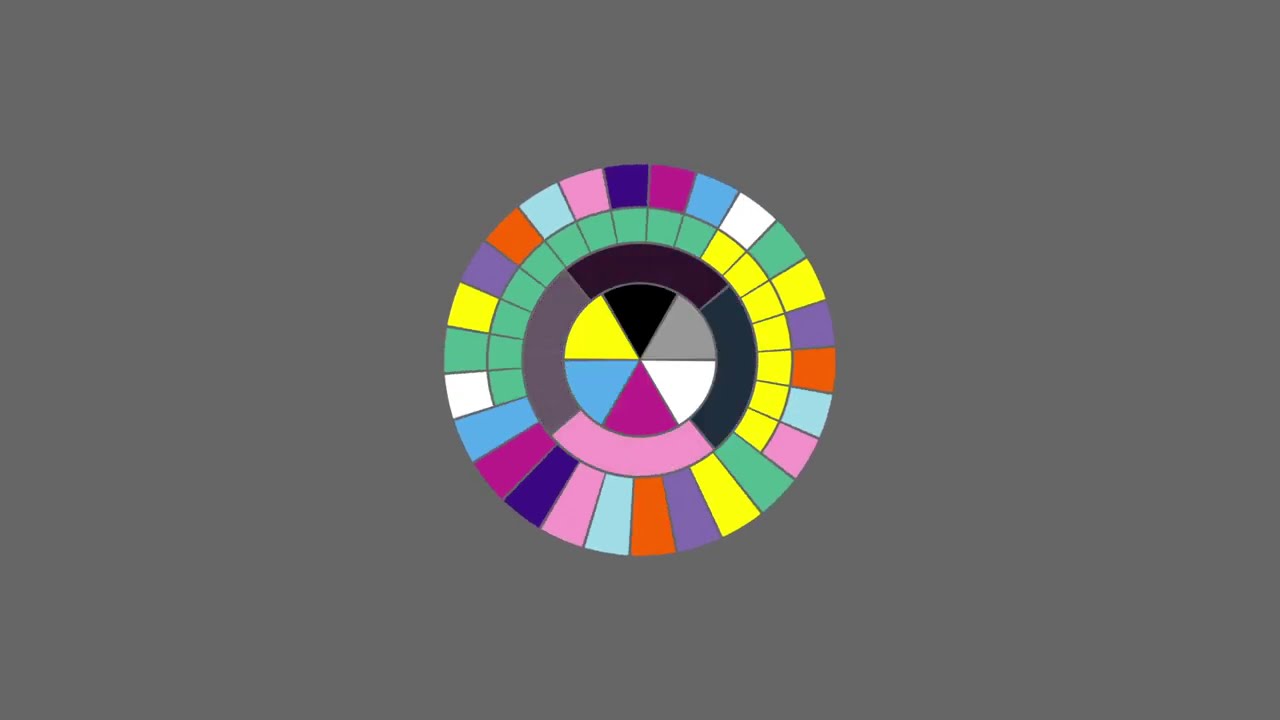
Smith then goes on to list the days of the working week in its three verse sections, cynically opining how he’d rather “stay in bed” or “watch walls instead”.
When the bridge section arrives two minutes in, Smith then reveals the deeper meaning behind the song – written about a love interest who is “dressed up to the eyes” and “such a gorgeous sight”. He goes on to declare how he can “never get enough, enough of this stuff”.
The song was originally recorded in the key of D though Smith accidentally sped up the music by a quarter-tone, which gave the tune a slightly sharper and brighter sound.
In 1992 he told Guitar Player magazine how he’d been “playing with the vari-speed [pitch control] and forgot to turn it off”, which effectively “made the whole feel change”.
He revealed: “The fact that it’s the only song on Wish that’s not in concert pitch really lifts it out and makes it sound different. After working on the record for months, hearing something a quarter tone off makes your brain take a step backwards.”
Smith originally thought the chord progression was so strong, he must have stolen it from somewhere.
“It’s a really good chord progression,” he said. “I couldn't believe no-one else had used it and I asked so many people at the time – I was getting drug paranoia anyway – ‘I must have stolen this from somewhere, I can’t possibly have come up with this.’
“I asked everyone I knew. Everyone. I’d phone people up and sing it and go, ‘Have you heard this before? What's it called?’ They’d go, ‘No, no, I’ve never heard it.’
He admitted: “Friday I'm In Love is not a work of genius. It was almost a calculated song.
“On the same album there were songs which I’d slaved over and I thought at the time were infinitely better, but Friday is probably the song off the Wish album that’s the song.”
The movements are diatonic to the key of D Major, with the verse sections going from D/G/D/A/Bmin/G/D/A and the choruses consisting of G/A/Bmin/G/D/A.
These chords are strummed in full on acoustic guitar, with a clean electric guitar playing arpeggios using the same shapes on the higher strings.
Smith also recorded the lead section a minute and a half in, using similar ideas a whole octave up around the 12th fret.
In an interview with Guitar World, Smith confirmed that the gear used for the recordings included co-guitarist Porl Thompson’s Gibson ES-335 and a Gibson Chet Atkins semi-acoustic.
The main effects most likely came from two Boss pedals – the CH-1 Super Chorus and the DD-3 Digital Delay.
The Peavey Musician Mark III was Smith’s main workhorse amp for the 1980s, so it’s highly probable that this was used for the electric guitars.
Friday I’m In Love ended up becoming a huge hit for the band, helping them reach new audiences.
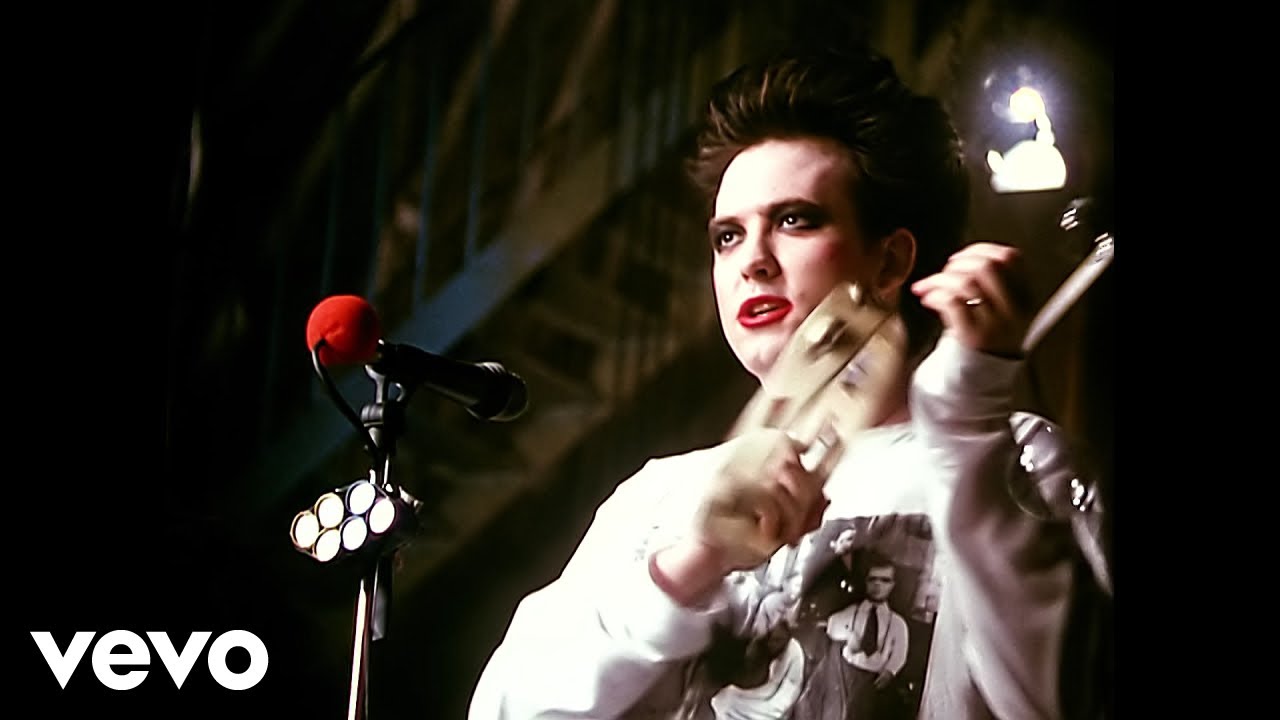
Smith said to Musikexpress: “The people who like Friday I’m In Love aren’t actually fans of The Cure. They’re not the ones who buy my records.”
He told NME: “It’s always been paradoxical that it’s pushed down people’s throats that we’re a goth band. Because, to the general public, we’re not. To taxi drivers, I’m the bloke that sings Friday I’m In Love.
“The pop hits have allowed us to be successful. That was always our intention, I suppose, to draw people in and then smother them.
“There is a small part of what we do that is quite dark in contemporary music terms. It is quite desolate, there is no hope and I love that side of what we do. But I also realise that if that’s all we did then we’d be fucking awful!”
