
For most of the history of recorded music, the accepted wisdom has been that cleaner recordings equal better quality.
Think expensive, high-end studios with lavish budgets and the latest technology. If your song wasn’t recorded downtown with the best desk and outboard gear, you had no chance of making it onto the charts. Now, of course, we live in a different world. Thanks to streaming, the leveling of the music industry and the rise of affordable recording equipment, home-recorded songs have as much chance of becoming a hit as something crafted in a top studio. And, for many people, the bedroom track is actually the one they prefer.
Given that you can rack up millions of streams with a song recorded on a cheap mic, a Focusrite 2i2 and a decent laptop, why even bother with Neves, Neumanns, SSLs and all the other expensive outboard? Does sound quality even matter anymore? As with most things, the answer is a little more nuanced than just yes or no.
Listeners seeking out alternatives to commercial records is not a new phenomenon – far from it. “The questioning of ‘good sound from expensive studios’ began back in the 1980s with home recordings on four-track cassettes, not just with TikTok and digital recording,” says Cem Oral, a mastering engineer with clients that include the Wu-Tang Clan and the Pet Shop Boys.
Robyn Hitchcock and other artists of the era used the four-track to record music the way that they wanted to. “I couldn’t get my quiff together, nor did I really want the digital patina sprinkled over my songs that seemed obligatory for 1980s pop music,” the former Soft Boys frontman says in a Facebook post. “So I clung to the homemade and the low-budget when it came to recording.”
This trend continued into the ‘90s, with deliberately lo-fi albums from artists like Flying Saucer Attack and Low – and of course, dance music has always been done on the cheap, with samplers and Mackie mixers providing the grit and character for early rave records.
The difference is, while these records may have been more ‘authentic’ to the musicians who made them, they were never meant to be hits. Nowadays, however, questionable mixes, hissy masters and lo-fi production go hand-in-hand with popularity.
So where does this authenticity come from? Is it just a matter of dropping a copy of u-he’s Satin tape emulator on the master bus and cranking up the hiss dial? As Cem notes, “I don't believe that home recordings generally sound more authentic. In my opinion, however, authenticity is very desirable, and I am actually pleased that more and more musicians are attaching importance to it.”
One musician with strong opinions on authenticity in music is Corben Lamb, a keyboardist for hip-hop group OMA that also produces the band’s material. The important consideration for Lamb is artistic intention.
“As long as there's intention behind what is being done,” he says, “then that can be quality. If you pull something off YouTube and put some drums underneath it, that does have a sound quality that might not typically be what you would think of as ‘high quality’. If someone does that with intention, or to match the emotion that they're going for, I wouldn't say that was ‘high quality’, but in terms of a piece of art, there's quality there.”
"Just adding a lo-fi filter to your music does not make it authentic. Authentic music comes from finding your own way of dealing with sound and music"
Ingmar Koch, who records under the name Dr Walker and designs musical instruments and effects as Liquid Sky D-vices, has a similar opinion: “Just adding a lo-fi filter to your music does not make it authentic. Authentic music comes from finding your own way of dealing with sound, music, art and life. You can make very clean, digital music and be completely authentic. And you can make lo-fi music that is still nothing more than lo-fi elevator music.”
When asked if sound quality matters, Cem counters: “Define quality. Asking a mastering engineer with more than 30 years of experience that is a good one! And a very tricky one as well. Of course, I love good sound. But if one person loves harsh noise, the next person might get heart palpitations from (hearing just) a single wrong note. It's a very individual matter.”
For video game composer and YouTuber Venus Theory, who’s often working to satisfy a client, authenticity may mean something very different, but it’s still of paramount importance. “Generally as the composer,” he says, “most of what I'm selling is an aesthetic more than the music itself. I can do a lot of things musically. It could be guitars, it could be cellos, it could be big synths, it could just be drums, it could be weird field recordings I process to make cool sounds. But it's more about trying to serve the game as best you can.”
As we mentioned, being authentic isn’t just about a producing a cruddy recording – although it could be if that’s the sound that reflects your musical vision. What it really comes down to is sounding like yourself.
“For me,” says Venus Theory, “the biggest thing is sonic interest. I'm not exactly concerned with getting the most pristine recordings. I certainly have the ability to record things very nicely, but I've often found that there's a difference between a recording and a performance. And that line is delineated generally by something having a bit of character to it.”
This element of character is often what will differentiate you from another artist who may be using the same plugins as you. “Everybody's got Spitfire, everybody's got Kontakt, everybody's got the Berlin Symphonic Orchestra,” continues Venus Theory.
"The biggest thing is sonic interest. I'm not exactly concerned with getting the most pristine recordings"
“I don't know if you're familiar with Omnisphere at all, but there's this patch called Light Bulb Piano in it. It's one of the reasons I avoided buying Omnisphere because every time I watch a documentary, somewhere in that documentary will be the Omnisphere Light Bulb Piano patch, because it sounds very interesting and it sounds like a sound you would hear in a documentary. But it becomes a joke after a certain point.”
One way that many modern producers create sonic interest is by applying unconventional processing across the entire track on the master bus. You hear this in genres like Brazilian phonk, rage rap and even some more adventurous strains of modern pop, with distortion liberally plastered across the entire mix. For some older producers, this can be surprising, even shocking. But for others, it’s exciting – and it’s just what the song needs.
Take for example OMA’s 99 One Hundred, as recorded in the back of a limousine for synthesizer company Telepathic Instruments. The song features some heavy processing on the mix bus, including Effect Rack from Soundtoys.
“I am a big fan of [putting] a lot of stuff on my busses,” explains Corben. “On Effect Rack from Soundtoys, there’s a preset called Devil Pipe. It's like slap and a really heavy distortion. I put that on the mix bus. If you try that out on a mix bus, and you turn the mix pretty far down, like five percent, it’s almost like you put it on a stove, like it's just heating something up. It sounds nuts. I love that. It sounds like something.”
Some artists go even further than that. Canadian producer Loukeman often places a pitch-shifter on his master bus – not because he wants the track to be transposed, but to take advantage of the artefacts produced by pitch-shifting algorithms in an attempt to take his sound in interesting new directions.
“I love pitch-shifting plugins,” he says. “The worse they are, the better. I find when you pitch-shift things around, there’s a crazy phase-shift, everything gets wide and washed-out in a really nice way. On my song Idrk, the whole track is pitch-shifted - there’s a pitch-shifter on the master. I like how it glues everything together and fucks everything up.”
"There’s a pitch-shifter on the master. I like how it glues everything together and fucks everything up"
Another way that Corben gets his signature sound is by running drums out of the box and into a consumer-grade Akai reel-to-reel recorder – “I don't actually run it through the tape because then you get all of the time modulation. I dial the preamps in so that it's just about peaking and run it back out” – or into a Watkins Copicat tape delay to saturate snares.
“Every piece of gear to me has a character,” he says, “whether it's a really nice thing or a really old thing. And sometimes the older things have more character, especially if it's broken. The individuality of a piece of equipment is cool. That is high sound quality to me because it's using something specific with intention.”
Venus Theory has a similar philosophy. “I've got a couple of $30 tube preamps that are broken and shitty, but they sound cool. Run a drum machine into it and it just explodes and annihilates the room. But it's not because it's a good preamp at all. It's very much the opposite. But by doing that the result sounds more interesting, which then makes it sound more quality.”
While distorted and cheap can sound exciting, clean and expensive can also sound dull, as Corben discovered when tracking in a high-class studio. “I've definitely been part of recording sessions where you're in a nice place and you're using nice gear. It is expensive, but it just doesn't feel high quality. It falls into that uncanny valley of, ‘okay, we tried this in an expensive, incorrect way, but it just sounds lifeless’. All the gear, no ideas.”
Similarly, knowing the rules for recording perfect takes doesn’t guarantee perfect results. “I've definitely worked with engineers who, in my opinion, know a lot more about the rules than they do about the feeling of what they're trying to do,” he says. “I felt boxed in by them saying we have to do it like this. I've never done it like that, and it hasn't caused me a problem so far.”
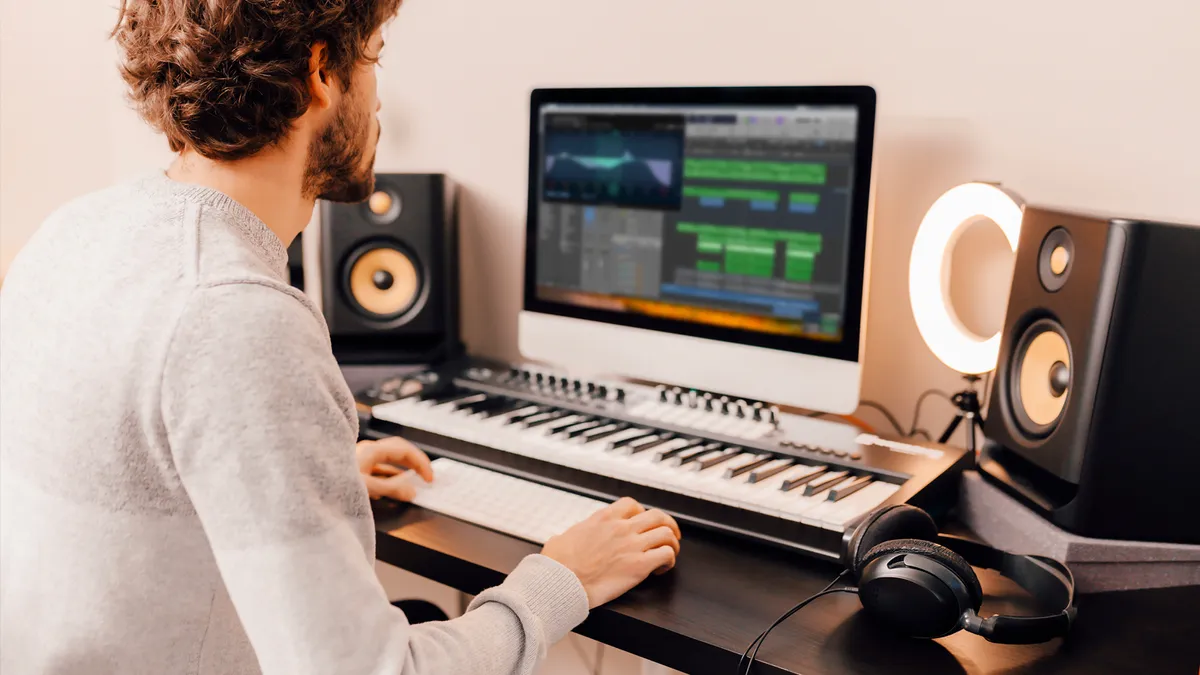
Better to record the music that you want, in the way that you want. When researching this story, a musician colleague mentioned that his teenage daughters prefer the rougher, older songs from singer Beabadoobee, recorded before she started working with Rick Rubin in professional studios.
Corben responds immediately to this anecdote. “When she was at home making that stuff in her bedroom, it comes across to the listener that she made every single one of those decisions,” he says.
“It's a pure expression of what she was thinking. She didn't settle on that drum sound until she really liked it. But you go into a studio and someone else does the mics, then all of a sudden you are settling for something that someone else has done. It’s less representative of one person, or one small group of people in a band scenario. The big studio stuff [can feel] less personal.”
Ingmar sums it up like this: “Of course, sound quality is important to me. But for me, sound quality is not the question of how to sound like Sting and the Vienna Symphonic Orchestra. For me, sound quality means one thing first of all: does it sound interesting? The cleaner and more polished techno, breaks, hip-hop or acid become, the more bored I personally get. The music market is already on the floor anyway. Why waste your time trying to sound mainstream?”
Ultimately, the quality of your music isn’t going to be decided by whether it was recorded in an eye-wateringly expensive studio, but by how effectively it expresses your creativity, your personality and your artistic intentions, whatever they may be. And sometimes, the best way to do that is with a $50 mic and a copy of GarageBand.
“Sound quality is ultimately pretty important if you want to have a sense of authority with what you're selling,” stresses Venus Theory. “It doesn't need to be the cleanest recording ever, but if it hits and if it feels good and fills a room and, in the compositional world, if it really complements what you're seeing directly, then that's the name of the game.”
