
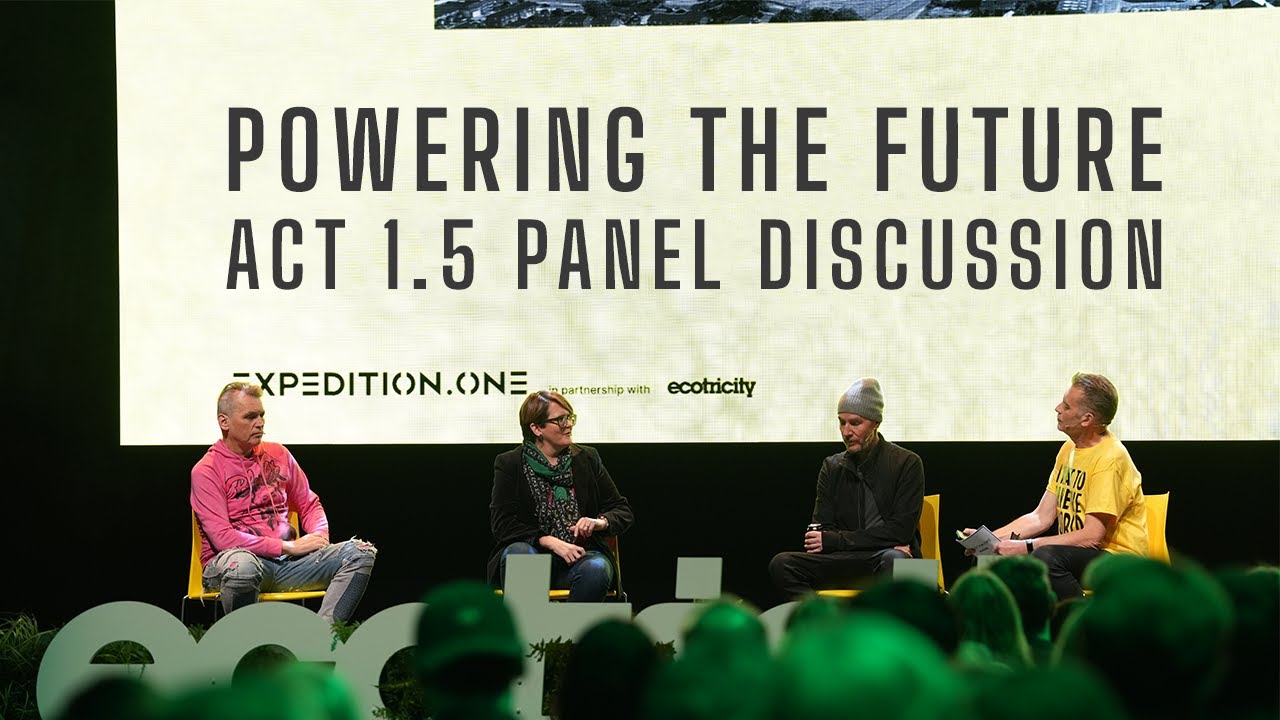
British icons Massive Attack are as revered as much for their music as for their commitment to the environment. Their Act 1.5 Climate Action Accelerator event in Bristol, UK in 2024 made headlines for its sustainable ambitions.
Among the Adam Curtis-produced messaging and green infrastructure, collaborators Horace Andy, Liz Fraser and Young Fathers performed with the band on classics ranging from Teardrop to Unfinished Sympathy.
Taking inspiration from Massive Attack, the city has since unveiled a new initiative aimed at decarbonising major music events across 2026.
“The event was hugely significant because it showed what can be done when the right expertise, willingness and resources come together,” says Claire O’Neill, CEO of A Greener Future. This not-for-profit company helps organisations, events, festivals and venues go green and played an important role in supporting Massive Attack’s mission.
“The sponsor Ecotricity, the headliner of course, the promoter, management, production team; everyone was on board with the cause to create a super low carbon and greener event at scale without compromise. It was the first time that a main stage of that scale had been powered by a battery without diesel backup, not to mention the entire site.”

The gig proved to be a huge success story, breaking the world record for producing the lowest ever carbon emissions, the Tyndall Centre for Climate Change post-event research revealed.
Attended by more than 32,000 fans, it slashed energy-related greenhouse gas emissions by 98 percent, sold 100 percent vegan food, avoided single-use plastic, and was completely powered by batteries.
With audience travel accounting for almost 80 percent of a live event’s emissions, ticket priority was given to those in the immediate area, electric shuttle buses utilised and rail travel incentivised.
Bristol’s recently unveiled low-carbon scheme aims to build on what the band have started by decarbonising more than 20 major events across 2026 using a similar logistical template.
“The recycling rate was 89 percent, and no general audience car parks were provided along with incentives for public transport,” says Claire on Act 1.5. “The collective effort and clear objective was remarkable and deservedly attracted a lot of media, industry and artist attention.”

In recent years, growing numbers of high-profile bands and artists have started to explore ways to enhance their sustainable live activities.
Coldplay’s Music Of the Spheres tour saw a 59 percent reduction in carbon dioxide emissions compared with their previous world tour due to reducing air travel and a commitment to planting a tree for every ticket sold.
Elsewhere, the 1975 played the first carbon-removed arena events at London’s O2 in 2024 while Radiohead, like Massive Attack, have long been green champions, commissioning sustainability agency Best Foot Forward to calculate the carbon footprint of two previous US tours and create a roadmap for future events.
According to stats discussed in UK Parliament, festivals generate 25,800 tonnes of waste, 22,876 tonnes of CO2 and use 185 million litres of water annually, underlining the need for action.
Jamal Chalabi is Massive Attack’s Tour Manager, Head of a Greener Tour and a key player in discussions surrounding live event industry sustainability.
“I’ve been a touring and production manager for over 30 years now and climate change is an issue I’ve long been aware of,” says Jamal. “As a global production manager, you see and experience it every time you travel the world - from turbulent flights to extreme heat to lightning strikes at outdoor events.”

According to Jamal, the live music community used the unwanted pause of Covid to hit reset on a variety of issues around welfare, equality, diversity and inclusion and sustainability. As restrictions eased, he worked with Bring Me the Horizon and Yungblud on their live gigs to implement sustainable best practice.
“The big thing for us as a group of tour and production managers coming together after Covid was to make sustainability seem financially viable,” he says. “As long as everyone got on board and followed the green code, then we thought it would make sense and work financially. On the Bring Me the Horizon tour after Covid restrictions eased, we reduced our carbon footprint trajectory by 38 percent by simply ticking a few boxes and following transport, power, food and waste.”
Conversations surrounding going green have certainly grown louder in recent years, thanks in part to the work of artists like Massive Attack and switched on industry professionals such as Jamal.
At the same time, technological advancements have also come in which make embracing sustainability easier for artists and their production teams.
“Since 2019, the landscape professionalised, and ‘Sustainable Event Manager’ became very much a normal job option, unlike in 2005 when sustainable event management wasn't really a thing yet,” Claire O’Neill explains. “The options now available to events have hugely professionalised too and the suppliers and support services to do things better are there, be that energy, waste management, electric buses, vegan food as standard.”
Taking its name from the Paris Agreement's 1.5°C climate target, Jamal was entrusted by Massive Attack to lead their landmark 2024 event off the back of his work with other touring artists. To start off with, Jamal collaborated with Power Logistics, a company that provided a power plan, to realise what the energy requirements for the show would be. One of the main pillars of their approach was to avoid using any diesel generators which festivals have traditionally relied on.
“We didn’t want to burn any fossil fuels at the festival so we had the pleasure of getting Grid Faeries involved and it was their battery that powered the main stage,” says Jamal.
“All of our power was sourced from Ecotricity who supply 100 percent green electricity, generated by wind and solar power. We then worked with Volta Trucks to move batteries around the site, using these vehicles like energy tankers. We had one charging a truck and battery and then another moving around the site and dumping charge into batteries.”

It was the power plan that allowed Jamal to get a more accurate picture of what energy was required and where in a bid to streamline their requirements.
“The biggest issue is that many production teams come into a festival and give you their power requirements by the size of the plug socket,” he says. “A production might want to ensure there is 1000-amp power capacity on stage but only draw on 250 amps, so there is huge overcompensation. We wanted to counter this by getting a more accurate picture of what we needed - this gave us a better idea of what our battery needs and charge capacity was.”
Initially, Jamal recalls some of the power experts within the production crew being concerned by the reliance on the batteries. This was one of the first occasions that they had been used for an event of this scale.
“A lot of the power guys came on site and were initially really nervous about our approach,” Jamal explains. “However, once we had everything in place, it became apparent how much easier this process was compared to relying on generators. We could very easily monitor the charging status of the batteries, where charge was in terms of the electric trucks, how much power we had - having the data in front of you is key.”
Zenobe is an electric vehicle fleet and battery storage specialist that initially started working in motorsport gaining experience around replacing diesel generators at events with greener solutions. The company worked across various projects before lending their expertise to Massive Attack’s Bristol show.
Zenobe’s team was responsible for sourcing five different types of battery - seven of their own 100kW/150kWh Powerskid, three AMPD Enertainer L 449kWh batteries from Select Plant Hire, two AMPD Enertainer M 172kWh batteries from Select Plant Hire, five Voltstack 5kWh, one 20kW/80kWh EGEN and a 100kWh EGEN, all from Green Voltage. The batteries were put together as ‘farms’ to power different areas of the site while electric trucks would take them to and from the charging site.

“The charging location was at the Ecotricity site about 40 minutes away from the festival,” says Robert Long, Head of Portable Power at Zenobe. “It would have been more efficient to have a charging location that was closer to the event - if you could drive round the corner, you could streamline the logistics.”
“In terms of other learnings, we could have used a smaller battery to power the main stage and the batteries themselves were mobile but not strictly designed to be moved. So for future events, lighter batteries that are quicker to plug and unplug could be utilised. But now we have the experience of putting this together, we can implement these efficiencies to make events like this even more sustainable.”
Now the dust has settled on 1.5, it's clear Massive Attack are spearheading a generation of switched-on headliners attuned to the needs of the environment. Act 1.5 demonstrated that it is entirely possible to run a huge outdoor event entirely from batteries without any diesel generator backup.
According to the Tyndall centre’s post event report, emissions associated with onsite electricity were at least 81 percent lower than the counterfactual show running on diesel generators.
Massive Attack’s event has already seen a significant impact on the live event sector. AEG Present’s LIDO Festival, held in London’s Victoria Park in the summer of 2025, took many of the learnings from Massive Attack on the Downs, as well as A Greener Future's work with them and LS Events over the years on BST Hyde Park and All Points East, to create London's greenest gig of this scale.
The main stage was run on a Grid Faeries battery, this time connected to the grid with green energy from Ecotricity. In 2025, Communion One hosted Idles on Queens Square in Bristol with Impression One and Greener Power ensuring that the site was run on 100 percent battery and grid.

“One of the hardest aspects of sustainability is convincing others to invest in it,” says Jamal on the challenges of working in this field. “We are all aware of what is happening with climate and we know what we need to do - it’s getting everyone facing the same way, that is the challenge.”
“One of the most exciting things with the Downs event was my 'Team of Rivals'; seeing the power companies who would usually work in competition with each other start learning from each other and collaborating. It was great to witness and for me that’s the most exciting thing, to see how we can work together to make a difference.”
Another important element in the success of the Downs event was including sustainability ambitions from the beginning of the event production plans.
“By implementing sustainable best practice from day one, you unfold sustainability with everything else,” Jamal says. “What I would love to see in the future is for events and festivals to avoid running generators overnight at a festival. We have to leave lights and amps on to keep them warm and it’s hugely inefficient to run them like this as well as highly polluting.”
While bands are leading the charge, other organisations are working tirelessly to make a positive impact on the climate. Music Declares Emergency is a group of artists, music industry professionals and organisations that have declared a climate and ecological emergency and called for an immediate governmental response to protect life on Earth. Earth/Percent invites artists and the music industry at large to donate a small percentage of their income to support organisations addressing the climate crisis.
Claire at A Greener Future is busy with a CO2 analysis of Massive Attack’s latest tour while A Greener Future is also digitising its certification and analysis tools for events.
“An exciting legacy project from Massive Attack on the Downs is now underway with Act 1.5, WECA, Bristol City Council and Grid Faeries x Ecotricity, which includes the Battery Hub project with 20 events which was announced in November, and the ongoing electrification plans to connect key Bristol event sites to grid,” Claire says on future endeavours for her and the industry.
“What the Massive Attack show has done is demonstrated what is possible at scale,” she continues. “Other artists now want and expect the same standards, and this is something we're experiencing in the appetite from promoters to replicate and build upon what was done there.”
