
Depending on how much broad-brush history you absorb as fact, Kraftwerk invented dance music, whilst the Beatles redefined what pop could be. Kraftwerk gave us the synthesizer and the Beatles brought psychedelia to the masses, Kraftwerk essentially invented synth-pop, and the Beatles popularised the very notion of artists actually writing their own songs.
While the truth is - as with most things in history - a tad more nuanced than that, one thing you can't deny is both bands' indelible influence on pop culture, music, technology, and songwriting.
So - and for no other reason than we don't think anyone has seriously analysed this before - we’re going to ponder which band has truly been the most influential… and which act will continue to cast the longest shadow in years to come?
Yes, it's time to weigh up the impact that both four-piece outfits have made over a series of categories and definitively answer the question you have always wanted an answer to: which of these two has been the most important to the evolution of popular music?

The Music
On the face of it, The Beatles will easily triumph in any debate about music.
The original Fab Four had not only countless hits, but, through their LPs, widened the language of pop by exploring a plethora of genres. Across their career, they took in the teenage-angled pop of their early period (She Loves You, I Want to Hold Your Hand etc), to the more trailblazing, technologically innovative likes of Strawberry Fields Forever and those all-encompassing humanist anthems like Hey Jude and Let it Be. People are going to be singing those in centuries to come, without a doubt.
The Beatles re-established just what a rock 'n' roll band was, and took the record-buying public with them. Those classic albums, from Rubber Soul, Revolver and Sgt Pepper, to The White Album and Abbey Road, became eclectic and vibrant documents of the 1960s.
![The Beatles - The Beatles - Strawberry Fields Forever (Official Music Video) [2015 Mix] - YouTube](https://img.youtube.com/vi/HtUH9z_Oey8/maxresdefault.jpg)
Lennon and McCartney penned songs about everything from love to freedom, peace to spirituality, contentious social issues and various allusions to drugs and the counter-culture.
“Because they had such a flair for arrangement, such ears for the telling junction, their records were full of neat, thrilling transitions that became hooks in themselves,” wrote author David Hepworth in an article entitled ‘The Beatles Were Underrated’ in The Word in 2008. “The listener would ricochet from one hook to another like a metal ball in on of Bally’s machines”
Kraftwerk, on the other hand, tended to focus on modes of transport and, well, computers.
Oh, and just about the only type of music that the Beatles never dabbled in was (the as yet uninvented, to be fair) synth-pop.
Although the Beatles were one of the top five early users of a Moog synth, but it's not like they ever made a Don't You Want Me with it is it?
So just in terms of the sheer variety, The Beatles win the most important category in our made-up fight, but will that buy them any time in the longevity stakes?
We'll focus more on that later, but here's a crumb of comfort for Kraftwerk fans who believe that the Düsseldorf four will be remembered for longer: ask Beatles fans what kind of music they made and the reply will be 'well, what kind of music didn't they make?'.
Unfortunately, that clever come back is not going to buy them time in the history books. The youth of today's attention economy-oriented brains may hurry to reach a snap decision about what kind of band the Beatles actually were - and let’s face it, the early stuff is very of its time - whereas much of Kraftwerk’s post-Autobahn material still could pass for a modern release by dent of its innovative use of synths and drum machines.
It all still sounds pretty damn cool, which you can't really say for Maxwell's Silver Hammer.
Which is a neat way of me trying to pretend that Kraftwerk have snatched this opening category… when of course they haven't.
John, Paul, George and Ringo win this round by their sheer girth of music and hits.
Focussed, clean, pop and electronic, Kraftwerk might well be, but in terms of the quantity of exceptional, era-defining material, the Beatles triumph in this round without much fuss.
Score: The Beatles: 5 Kraftwerk: 2
The Hits
Ok, this is another sure-fire win for The Beatles, right? I mean just check these stats out…
Pretty much every one of The Beatles' dozen albums hit number one in the UK and US. They also all hit Platinum status at least, with the White Album reaching this top sales target an incredible 24 times.
And don't even go there if you want to add compilation and box set stats. With these, the Beatles shifted an incredible 600 million long players, with some estimates indicating as many as a billion.
The singles are just as impressive: 18 UK number ones, 20 US number ones and worldwide sales reaching – according to top estimates – reaching over 2 billion. Meanwhile in Düsseldorf…
Yes, Kraftwerk are not going to compete here on any level so get ready for a bit of a trouncing.
Of their 11 official album releases, only Autobahn went top five on both sides of the Atlantic, and The Man-Machine was the only other UK top 10 album hit.
Singles wise it's just as disappointing, with Autobahn (the single edit) being a top 30 hit in the US and reaching number 11 in the UK, The Model being the band's only other UK hit single.
The Model was an important release, though, a bewitching hit that took four years to reach the top of the charts.
Although the song was recorded in 1978, it could easily be a hit from 2078. It set the charts ablaze, got synth nerds dancing at weddings, and became a synth-pop classic, but with total Kraftwerk sales of less than a couple of million overall, it's pretty clear who wins on the hit list here.
But who said record sales were an indicator of influence and are that important in the grand scheme of things? Well, quite a lot of people actually.
And by now you're probably thinking that this feature is going to result in a bit of a shoe-in for the Beatles, but don't worry if you are a tech head, because just like in that famous tortoise/hare tale, the Liverpudlians might have started off fast, but the Germans are just entering the slip-road of the Autobahn (or M62 out of Liverpool) and they're about to appear in your rear-view mirror.
Score: The Beatles: 5, Kraftwerk: 0.
The Image
The Beatles’ evolution from besuited mop tops to colourfully clad psych-pop troubadours happened incredibly quickly, before settling into the bearded, long-haired 70’s-beckoning looks they sported at end of the decade (as seen in Get Back).
Even if you just see this as just 'growing their hair a bit and wearing sheepskin jackets', it was incredibly startling at the (much more conservatively cultured) time. The Beatles' rapid aesthetic evolution is a world apart from how little Kraftwerk have changed their image over the last half century.
In fact, if anything, Kraftwerk can be seen to have taken the opposite path to The Beatles.
Ralf Hütter and Florian Schneider started out in cool leather jackets playing psychedelic flute rock to the 'happening' kids of Germany before settling into their ‘Man Machine’ image and pretty much staying there for five decades.

As soon as they donned those red shirts, and stole the top half of some robots, they never turned back.
“The image of the robot is very important to us,” Florian Schneider said (quoted in Uwe Schütte in his excellent book, Kraftwerk: Future Music from Germany). “It’s stimulating to people’s imaginations. The robots may be an image, a projection, a reflection, a mirror of what happens - I think people understand that.”
While The Beatles swapped suits and facial hair as easily as genres over their seven years of high-profile activity, Kraftwerk might as well have been (and often were) showroom dummies. But this was all part of the plan.
“Kraftwerk are the man-machine,” wrote author Uwe Schütte. “The notion of connecting, perhaps even hybridising, the human and the technological represents the central artistic tenet of their oeuvre from Autobahn onwards.”

Just as with the music, perhaps it's this stark and singular Kraftwerk vision - four figures on stage looking like they're basically writing WhatsApp messages to each other - that will remain the most enduring image out of both bands. It's consistent, you know exactly who is on stage (even if you don't know or care who the individual members are).
Kraftwerk win this round, as their iconic image was an integral facet of their artwork, whereas for the Beatles it was less fundamental. (the moustachioed Sgt Pepper period aside, we might add).
Score: Kraftwerk (for consistency): 5, the Beatles: 4
Technology
As the makers of shimmering, futuristic and very smooth synthesizer music, you would initially assume Kraftwerk were the big technology innovators when it came to producing music.
However, where the Düsseldorfers had Kling Klang as their iconic studio - a mysterious den of DIY machines and cutting-edge electronics (and flutes) - the Beatles were the original purveyors of the notion of 'studio as an instrument' in the form of EMI/Abbey Road Studios.
The Beatles also had incredibly willing and experimental helpers in the form of producer George Martin and engineers like Geoff Emerick, Alan Parsons, Ken Scott and Ken Townsend.
With these more technically-minded assistants standing ready and able to help them achieve their ideas, the Beatles' music would flourish as Martin's studio philosophy took hold - basically, everything goes.
He would tell his son Giles that, “with the Beatles you push things. Your job is to do new things, not to be safe.”

This led to the band not only enjoying some of the first big multi-track recording sessions, but becoming famous for, among other things (inhale…) double-tracking, harnessing guitar feedback, utilising backwards music, tape-looping and proto-sampling, very early synth use and the exploration of studio effects including (probably) flanging.
Kraftwerk, on the other hand, rarely talked technology.
In a long lost 1981 interview, we got glimpses of the band's live rig, which was essentially Kling Klang on the road, including Sequential Prophet and Korg PS synths plus the band's famed vocoders.
But, exceptionally clean recordings aside, the band never really endorsed brands, nor particular recording methods, preferring to leave all that for future geeks like us to analyse.
As such, their use of technology became more famous for the often-customised mystique that surrounded it rather than anything cutting-edge.

So, while the Beatles pushed things forward and birthed many studio techniques, we're still going to award this category to Kraftwerk who were more into actually building their own gear, as the recent Florian Schneider auction revealed.
With tracks like Autobahn and The Model, they introduced the synthesizer and drum machine to a completely new audience, lighting the fuse for the technology-led synthpop of the '80s and dance music in the '90s.
They showed that with technology, you didn't need particular musical knowledge or skills to make music, one of the most important lessons in music making history, so they pretty much have to win, although with Abbey Road as their HQ, the Beatles are not far behind.
Score: Kraftwerk: 5, The Beatles: 4
Longevity
Here's where it gets very interesting, as the length of time a band is in existence, the more impact it has, right?
However, the Beatles were around in their original line-up for a reasonably short time, just seven years if you count from the release of their debut LP Please Please Me in March 1963.
Kraftwerk began as the Beatles ended in 1970 and are still with us. In terms of years together, then, Kraftwerk have the big advantage: an incredible 56 years versus just seven years for the Beatles.
However, when you consider the output then the Beatles have the winning hand with a dozen near- (and arguably genuinely) perfect albums released in their short tenure.
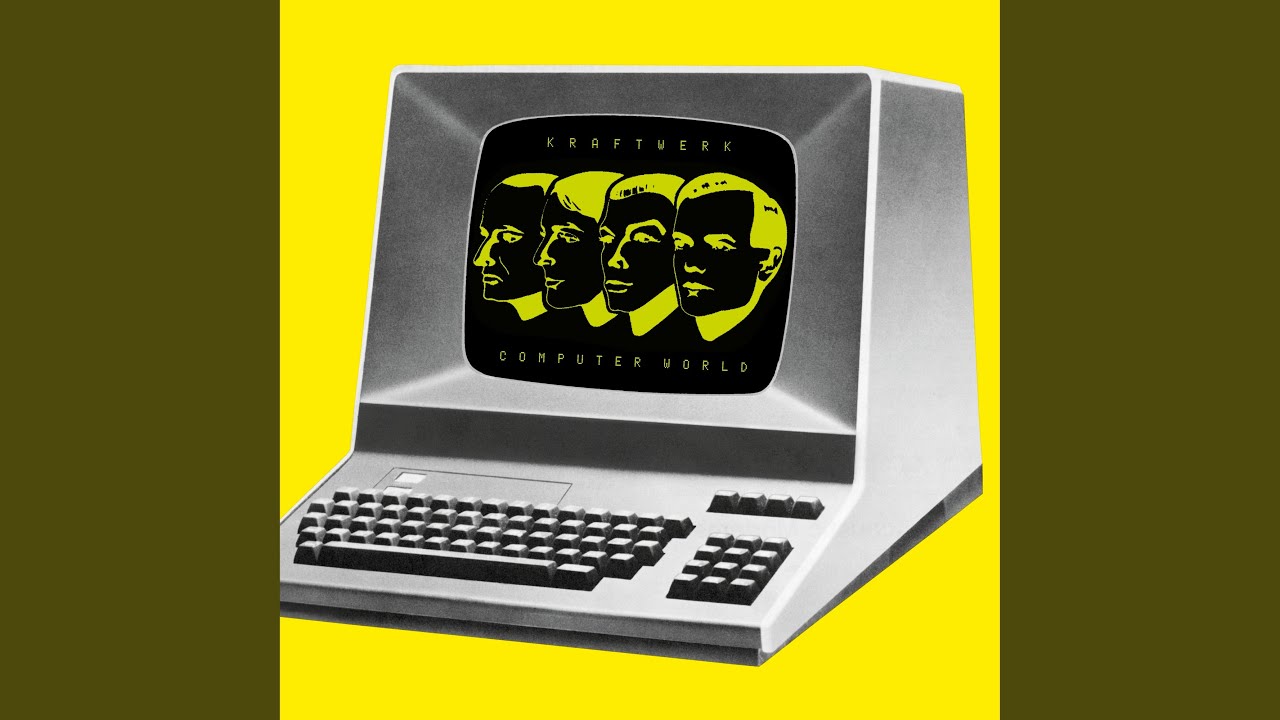
Kraftwerk also have around a dozen albums, but really only half of these are considered as the band's classic releases, from fourth album Autobahn to ninth release, Electric Cafe, although many would agree that 1981's Computer World was Kraftwerk's last truly great release.
So, yes, the Beatles might have made more music over a shorter period of time, but Kraftwerk has an ace up their sleeve, and it could end up being the winner in terms of this debate.
The band has always promoted its 'Man Machine' philosophy, where it's almost the machines making the music, bridging the gap between human and mechanoid.
On stage today, you'll get an immersive sonic and visual experience, but it's not like the band will be doing any crazy running around on stage, or Wakeman-style keyboard solos. If anything, the band still look like four robots on stage, even to the point that they often put actual showroom dummy style 'robots' on stage as replacements.
The trump card (if you'll excuse the expression) is that because of this machine philosophy, and putting the music before the personalities, pretty much anyone could be onstage as Kraftwerk to press play.
In fact, only one of the original line-up is currently there, in the shape of founder member Ralf Hütter. So, in theory then, the band could continue to play with other members pretty much forever. No avatars required.

Whether this is the case, of course, remains to be seen, but the option is there, and maybe our children's children could end up watching 'the same' Kraftwerk in decades to come.
And this is the crux of the debate really, what impact the bands have made to keep their names alive in musical history.
And for this I'll give you two final points. The Beatles gave us a vast number of wannabe acts, they influenced not just one generation of musicians, but every successive generation since, from The Beach Boys to Oasis, from David Bowie to Taylor Swift.
But beyond the influence on individual acts, Kraftwerk’s output could be said to have directly spawned an array of genres and subgenres.
It is almost writ in musical law how the founding fathers of electronica shaped Chicago, New York and Detroit, and how four white, emotionless German men inadvertently influenced an entire generation of American black producers into firing up techno, house and some of the base ingredients of hip hop.
Ibiza, Frankfurt, Berlin, London, Manchester, Sheffield and so many other European cities adopted and twisted these transatlantic results into dance music - and let's not forget the more industrial strains of electronic music - and forging it into the smooth multi-layered and the many-headed dance music machine of 2026.
In terms of sheer volume of influence, then, while the Beatles redefined what a pop artist could be - stretching the remit to include psychedelia, uncompromising experimentalism (Revolution #9 anyone?) and even early heavy metal (Helter Skelter take a bow) Kraftwerk’s rapid genre-spawning might have just left the most footprints on music’s history. But it’s a tight call.
Score: Kraftwerk: 5, The Beatles: 4
Conclusion
So where does that leave us? Well obviously this is a slightly tongue-in-cheek, black-and-white version of events, asking 'which' when 'both' will do - one of those annoying binary arguments where someone says something like 'why are we exploring space when there's so much trouble on Earth' when surely the best answer is to 'do both'.
But that would be a weak conclusion, so rather than me just saying Kraftwerk because I personally like them best (and have some of their gear to shift) I fittingly, asked AI and it (annoyingly) came up with quite a good response.
“The Beatles changed what music could be. Kraftwerk changed what music could be made of. The Beatles gave us stars. Kraftwerk gave us systems. And systems have a way of sticking around.”
I told you it was good (and so sorely tempting to claim as my own) and while you could argue that it took songwriting geniuses to do the former while someone would have eventually done the latter, it's a neat phrase which, in the grand tradition of these types of features, allows me to finish off by sitting squarely on the fence.
Yes, ok, it's The Beatles isn't it.

