
Electronic duo Bicep’s latest creative chapter pushes far beyond the boundaries of their two celebrated album releases, the self-titled Bicep and Isles, released in 2021.
Launched in 2025, CHROMA is a multidisciplinary project that merges a record label and hybrid DJ/live audiovisual show with a striking visual language crafted alongside designer David Rudnick. Now collated into an 11-track LP, CHROMA 000, it finds the duo exploring darker, more underground club sounds that mirror their shifting musical tastes.
In parallel, Bicep ventured into documentary-driven art this year with TAKKUUK, an immersive installation created with visual artist Zak Norman and filmmaker Charlie Miller. Centred on the voices and experiences of artists affected by the global climate crisis, TAKKUUK blends field recordings from Greenland with indigenous vocal collaborators to form an evocative and resonant soundtrack.
Both of these projects find Bicep moving out of their comfort zone to produce some of their most exploratory and ambitious music to date. We caught up with Andrew Ferguson and Matthew McBriar to find out more.
How do you think the cultural shift of moving from Belfast to London shaped the early direction of Bicep?
Andrew Ferguson: “We didn't actually move directly from Belfast to London. I moved to Manchester for university first, but that was 15 years ago when it was a very different time musically. London’s obviously a much bigger place and way more culturally diverse than Belfast, but being small had its positives and there was a depth to the niches that were popular there.”
“In our world, that was definitely hard techno and the rockier side of things. I remember going to Shine and you’d sometimes have 3,000 people watching the likes of Green Velvet, Richie Hawtin or Laurent Garnier, then I’d go to Sankeys Soap in Manchester to see Ricardo Villalobos and there’d only be 80 people. So dance music was massive in Northern Ireland even before the explosion of minimal and techno.”
Matthew McBriar: “We’ve always lived in Hackney, which is this huge melting pot of cultures. In 2010, Burial was at his peak alongside a lot of the UK dubstep scene and it was amazing to experience clubs like Plastic People and hear minimal, stripped-down sounds with dreamier melodies. There was more happy music back then and you didn’t feel that sense of anger – I suppose Bicep’s always had that happy/sad combination of the Belfast and London scenes.”
Did mainstream success come quicker than you anticipated?
AF: “Success in terms of awards and mainstream recognition actually happened about 12 years into us doing this full time. It's funny, but we got nominated for Best Newcomer at the Brit Awards when we'd already been making music for 10 years!”
MM: “We’d been touring a long time, but hadn't approached making an album, so it was amazing that those first two releases connected in the way that they did. I think timing is really important in music – I don't know how we would have connected post-pandemic because the world has changed so much since then.”
AF: “That's basically why projects like CHROMA and TAKKUUK came about. After touring and doing the album cycle for nearly five years, we were looking for something slightly different that wasn’t fixated on deadlines. Even the crew that we work with on the visuals and most of the lighting guys at Zeal were happy to spend a year off busking to help us find our own way through.”
After touring and doing the album cycle for nearly five years, we were looking for something slightly different
“It was nice to have the freedom not to think about album campaigns, but then it was never really our intention to just churn out albums – we always want to work on music when it feels fresh or we've got an interesting idea to add to the millions of tracks that are coming out every day. With CHROMA, we just want to mix stuff and play it out that week – that instant element you sometimes lose when you curate an album or a live show and everything’s planned out. Matt and I would work in the studio on a Friday and have something ready to play out the next day.”
Was the idea for CHROMA’s hybrid audiovisual experience a result of your livestreaming during the pandemic?
AF: “Rather than the livestreams, that would have come from live touring and understanding what’s involved in that. Like I said, we wanted to create something that was more immediate and off-the-cuff, to almost create a sense of chaotic harmony. Over time, the visual element just became interconnected to how we think about music and perform live, and we love the idea of everyone working together to achieve something greater than just Matt and I playing together.”
“CHROMA was a bit like making an album in reverse because we didn't have any tracks when we started the project. We made two or three and then over the course of 18 months built more and added them into the set. Then we started editing the tracks we liked to make them sound more in keeping with the show, so it’s one of those projects that started from nothing and just developed.”

CHROMA pushes the Bicep sound into heavier, more underground club territory. Was it a case of the environment leading the musical direction for the first time?
MM: “We've always made that sort of music or played music similar to CHROMA in our DJ sets, so it was more about scratching an itch, spreading our wings and releasing music from our hard drives that have always been full of these sorts of things. Because we've released stuff that we hadn't had the chance to, it's freed us up for when we work on our next album.”
AF: “Knowing that you've got an outlet for stuff like that takes a little bit of the pressure off. Previously, our albums had a very narrow band of interest, whereby something that was 145 BPM was less likely to make it. Now we know in the back of our heads that we can work on a techno track and it might see the light of day.”
When you started writing tracks for the CHROMA live show, did you approach them differently in terms of your typical Bicep workflow?
MM: “Most of our Bicep tunes are rarely made in less than a year because we keep coming back to them and adding layers. We've always tried to get a feeling of duality into the tracks with multiple flavours, but with the CHROMA stuff we just want to flip the process and create something a little more instant and linear. We found that the Bicep album tracks were really hard to DJ and had to change them a lot to make them work in a live show, which usually means simplifying and making them a lot heavier.”
“They come from a time and a place and tell a story within a song, but when you’re in a club you’re looking for a feeling – one that has fewer elements, is less of a journey and is harder hitting with bigger drums and noises that punch through. We wanted to enjoy another side of production that’s equally valid.”
AF: “It's how we used to work before we made albums, so it was a good opportunity to make these punchy sounds with the only intention to make them sound hypnotic in a club with a massive drop. CHROMA’s based on quite simple ideas that we try to execute quickly. When you’ve been into music and producing for a while, you can overwork stuff. Everything was recorded wet, so we had lots of synths with six pedals on them and didn't try to manicure everything this time.”

In keeping with a more simplistic approach, did you allow certain things to slide in post-production too?
AF: “It was much rougher. With the Bicep album tracks, we’d do 100 versions and go round and round and round, but with CHROMA there was no real processing and we rarely used any kind of effects once the tracks were in the box. Obviously, we need to use compression, but we didn't buy a bunch of phasers or reverbs this time, we just used some analogue outboard and trusted our ears.”
“We’ve actually switched our monitoring setup to a full ATC system and that’s really changed how we hear sounds. You can definitely hear more space in the tracks and that’s helped us to instantly know when something is wrong compared to our previous monitor setups.”
We spoke to Brian Eno a few months ago and he claimed that he hates detailed speakers because they force you to be over-analytical. Do you subscribe to that?
MM: “I feel like Brian Eno’s version of detail is probably more extreme than ours. You still need to listen at a relatively decent level, but we were working on some pretty bad speakers before.”
AF: “At the moment, we’ve got a big ATC sub, but it's about the vibe rather than the actual detail itself and you can tell when a tune’s well mixed. We went to Funky Junk and tried a lot of speakers to find something that had feeling and was not overly colourful, but a lot of it’s down to taste. If you can find a pair of speakers you like, it makes a massive difference.”

You’ve said that CHROMA is meant to be an evolving world. Is that evolution based on the fact that you’re learning while the project is unfolding?
MM: “We wanted to just announce it, get on stage and learn as we go, but it's been nice to get one large LP under our belt and, knowing everything we've learned, it might be good to do more CHROMA shows and make it even more of a hybrid.
“Truthfully, when people come to see us perform our albums there's a lot of music that they want to hear and I wouldn't say it's safe, but you know what you're going to get when you buy a ticket. It's curated and rehearsed, so CHROMA is a chance for people to come and see us play a bit more loose and hot.”
“It's funny, but even when we explain the show people never seem to understand exactly what it's meant to be. Maybe that's just the nature of the way the world’s gone, but some of the shows were completely electric… we started rattling out 150 BPM techno and discovered that some people love to hear a different side to us.”
Could you give some insight into what you're using on stage?
MM: “Our live shows are normally a full analogue synthesizer setup, but it's been completely different for CHROMA. Essentially, we use one of the Erica Synths Ninja Tune Zen Delay pedals un-synced, which allows us to go off-grid, ride the delay and drive the feedback. We also use the Pioneer DJS1000 drum pad, pack it full of samples and loads of drum bits, and have four CDJs and a big Pioneer mixer that allows us to run six different channels.”
AF: “We have loops going on one channel with textures, atmospheres and pads, and they’ll all be mixed on-the-fly, but that came from the necessity of trying to keep ourselves entertained and fully engaged. It's a four-armed DJ setup that’s actually really tricky to set up and play properly with just one person. I remember when I was playing around with it alone the tracks wouldn’t work with two hands - I was trying to do everything and ended up messing up the mixes.”
With modern DAWs, people just click sync and everything's bang on, but when everything's digitised, it loses that magic
“It's quite easy these days to sync everything until it sounds perfect, but we love the idea of taking stuff off-grid, taking a kick out and building tension off the delays so when it kicks back in, it all snaps back into time. We like the chaos that can add and were finding it quite hard to achieve when we were rehearsing like a band and trying to perform the songs perfectly.”
MM: “With modern DAWs, people just click sync and everything's bang on, but I think the human ear is drawn to live brushstrokes. When everything's digitised - across all art – it loses that magic. While everything doesn’t need to sound completely raw, I think there needs to be a balance.”
AF: “A lot of people are fixated on adding in randomness, but if you can find restrictions based on the limitations of old hardware and discover how it works in a track, it's really fun to rely on your ear rather than a sync dial.”
The other project you’ve been working on recently is TAKKUUK. So many musicians express concern around climate change, but few visit the Arctic region to gather material for an audiovisual installation...
MM: “We were contacted by the charity In Place of War who have done work all across the world, primarily in war zones, using music to connect both sides of the divide and give the people involved other options to use their creativity in music. They'd done a project in South America and a couple of others that were climate-related and we were contacted by a festival called Arctic Science and a couple of conservationists that are in Greenland itself.”
AF: “They’d seen a link between what they were seeing with climate change in Colombia and what was happening in Greenland and asked if we’d like to come out and see it for ourselves. It was basically an exploratory mission to go over and speak to the locals – a sort of fact-finding mission with nobody actually knowing what the goal was, but it just progressed and progressed.”
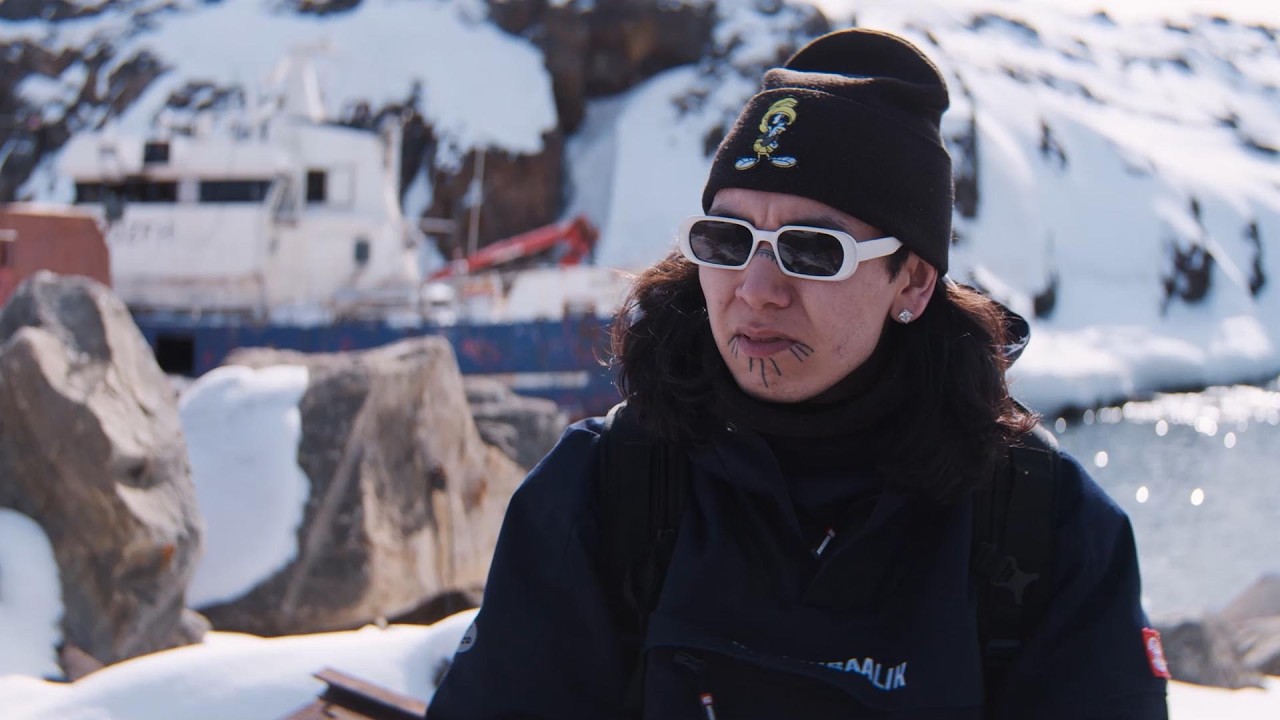
MM: “We originally thought the project was going to be about music, but didn't know whether it would be a single piece or have multiple artists working on it. We did a lot of demos and sent them out, and Matthew Dear helped engineer them with some artists that we picked to work with, but the music that came back was so unbelievably diverse that it felt criminal to just pick one or two or try and blend it all together.”
“At that point, it became clear that we’d work on each song individually, but we still didn't know that it would become an album until we got on a call with the artists and it became clear that sharing their stories should interlink with the music. For us, it became much less about being an artist project and more of a chance to use our platform to help shed light on their cultural struggles, how their livelihoods are being affected by global warming and the way the world is changing.”
“With an artist project you’re the driver and in full control, but TAKKUUK was very much about us following, listening, reacting and trying to help, which was really humbling and nice to be part of. From an audio perspective, we were really trying to incorporate much of the feeling from that part of the world, and we think that the final film and exhibition is so different to anything we’ve worked on before.”

Collecting field recordings became a central part of the project. How did you approach that?
MM: “We employed loads of techniques to try and get the entire sound of the album to be very much from that region, using loads of binaural recordings that were taken from Greenland and sampling lots of artist voices to create our own multi-sampled instruments.”
AF: “The vocals and drum sounds were pretty much all ambisonic recordings from when I went out there. We were recording everything from the sound of dog sleds to the ice cracking on the Russell Glacier. Like Matt said, when we got back we turned a lot of those drones into actual synths and loved the idea of finding a place for found sounds that were inextricably linked to the project. When you use field recordings on an album or song, I think you need to have a strong concept behind it rather than just chucking them in for the sake of it.”
Was making binaural recordings in that environment completely different to how you imagined?
AF: “We used an ambisonic Zoom recorder, but there's no wrong thing to record because we didn't actually know what would end up on the record. We just tried to record as much as we could and envisaged coming back with all these amazing textural squishes and stuff, but recording in high fidelity is actually quite hard. The Zoom itself had four mics, which creates space, so we just tried to find points where movement was exaggerated rather than trying to record a fixed, perfectly recorded sound.”

“You can actually hear the Russell Glacier, so we’d record from the middle of the ice to get the wind coming from one side and the sound of people’s shoes scraping on it. Everything's moving around you, including the microphones, so we’d end up getting different textures. Even on the back of the dog sled, we’d try to capture the noise of the dogs plus the chains and the movement of the wind – the goal was to try and put the listener in a specific place.”
The title track really stands out, with its breathing sounds creating a sense of urgency and panic. How was that achieved?
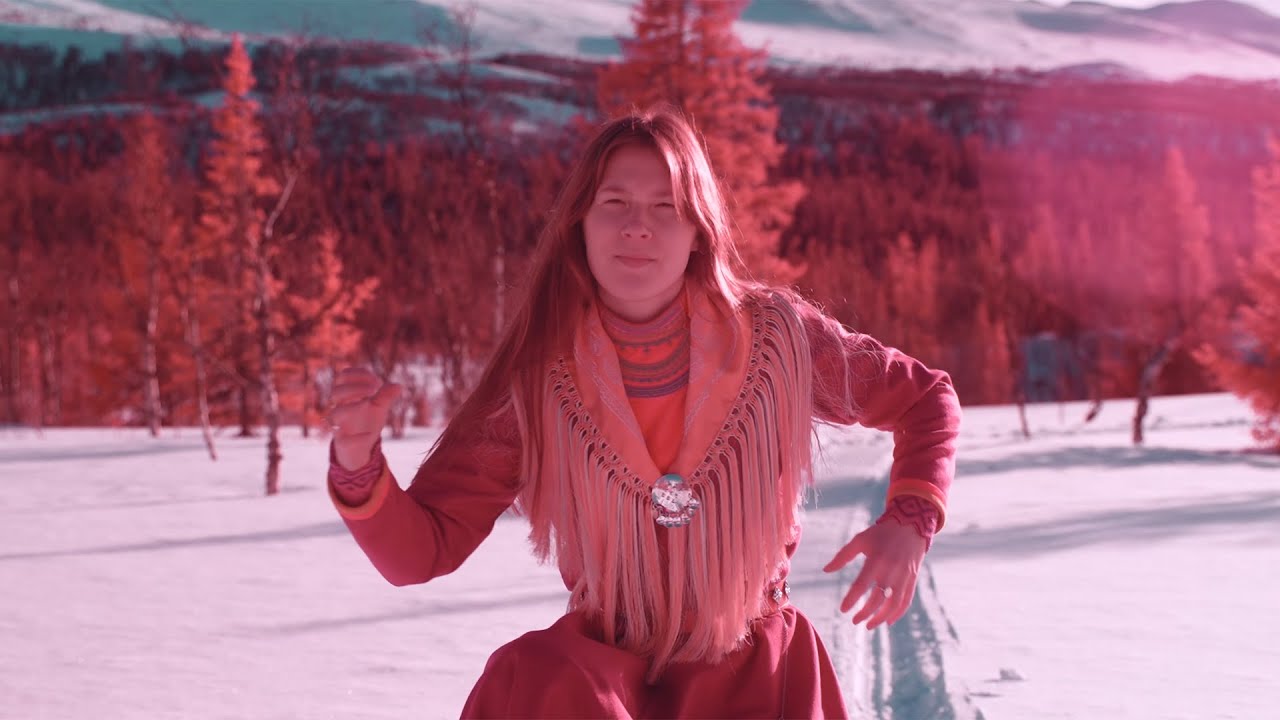
AF: “They're actually singers doing a kind of face-off with each other to create all these crazy voices. The funny thing about that recording was that they'd never actually heard themselves before, because it's a sort of a meditation and they’d only performed it live. The practice was banned in Greenland by the Danish colonisers, so it’s quite a taboo thing over there – it was great to get that included as part of the whole project.”
How have you been presenting TAKKUUK?
AF: “It's flexible in terms of it being an audiovisual immersive installation, but it was originally built for the [London venue] Outernet, which is multi-screen. The original idea was for it to work across four screens at once with them interacting between a textual and documentary-style that’s constantly moving around.
“The first showing in Manchester was the one-screen version, but the idea is for it to be as immersive as possible. It’s also been mixed in Dolby Atmos, so every screen you look at will have a different sound palette, but not in a gimmicky way. That whole aspect was an eye-opener in terms of what you can push with Dolby sound.”
Is your studio still predominantly hardware-based?
AF: “We moved to a new studio and re-soundproofed it, but it’s still entirely analogue with racks of synths. We’ve also started recording on reel-to-reel, so there’s lots of outboard, a big Trident desk and a cool little station for tweaking and practising live effects. We’ve added a vocal booth too, so we can set up for the next round of vocalists and learn to record properly.”
So software is very much just a sequencing tool?
MM: “We’re actually just familiarising ourselves with Spectrasonics’ Omnisphere, which is pretty cool to mess about with. It’s definitely something we’ll use because it’s nice to have these huge-sounding ever-evolving pads. We can’t really do that stuff ourselves and we've always been interested in multi-sampling and mapping single noises.”
With software, it’s really hard to be in the moment and explore at the same time, but if you get two SH-101s going you can create madness very quickly
AF: “Omnisphere’s basically like a Wavestation on crack – you press one button and sixteen things happen at once. People have spent years creating some of its sounds, so we'll probably use it a wee bit now. In terms of the core stuff, it’s still analogue. With software, it’s really hard to be in the moment and explore at the same time, whereas if you get two SH-101s going you can create madness very quickly.”
MM: “The thing about analogue is that every time you set it up, it’s tweaked slightly differently so you're gonna get a different sound. You only have to chuck one guitar pedal into the chain and you've just got a completely new synth. I know you can do that with software, but it goes back to the idea of creating brushstrokes rather than everything sounding digital, and I like that there's a sort of baked-in imperfection to it all. We never use presets – we like stuff that has lots of dials we can mess about with to quickly play and build different waveforms.”
AF: “We're trying to spend more time off-screen, recording stuff live and looking less at what's actually happening. Recording feelings, bouncing stuff to audio very quickly and worrying about it later. We’re also constantly changing tempos from 64 to 164, because that definitely changes our frame of mind and how we approach music.”
Click the links for more info on Bicep’s latest CHROMA 000 and TAKKUUK releases.