
It was always a challenge for George Harrison to assert himself as a songwriter within The Beatles – such was the dominance of John Lennon and Paul McCartney.
One only has to view Peter Jackson’s acclaimed 2021 documentary Get Back to observe the conversational nuances and subtle persistence that George had to employ in his bid to get his songs heard.
One song that Harrison presented to the band was Isn’t It A Pity, a majestic and melancholic reflection on broken relationships and lack of universal empathy, which was rejected for inclusion on Beatles’ releases on three separate occasions.
According to Beatles biographer Mark Lewisohn, Harrison first brought Isn’t It A Pity to the band in 1966 during the Revolver sessions.
Beatles engineer Geoff Emerick recalled the song then being put forward for inclusion on Sgt. Pepper’s Lonely Hearts Club Band in 1967 and rejected.
One year later, Harrison presented the song again, hoping to record it for the 1968 double album The Beatles, also known as ‘The White Album’.
A taped conversation captures Harrison telling Lennon that the latter had vetoed Isn’t It A Pity three years earlier, with Harrison adding that he had considered offering the song to Frank Sinatra.
The Beatles never did record Isn’t It A Pity. Neither did Frank. The first chance the public had to hear it was on All Things Must Pass, Harrison’s stunning, sprawling triple solo album, which he co-produced with Phil Spector and which was released in November 1970.
Ultimately, The Beatles’ loss was Harrison’s gain. Isn’t It A Pity is one of his finest compositions, described by writer Simon Leng as the emotional and musical centrepiece of All Things Must Pass. It is also a song inspired by humanitarian love and praised for its poignancy, sophistication and emotional depth.

In some ways, it’s easy to see why The Beatles might not have been drawn to Isn’t It A Pity back in 1966. There’s a mantra-type feel to its enigmatic, descending chord structure, which builds yet doesn’t progress in a traditionally structural sense.
Its power lies in its sweeping, melodic intensity – the ascending chord structure of G-Em6-Cmaj7-G-Ddim-C-G set against the descending strings and the directness of its lyrics.
“Isn't it a pity?/Now isn't it a shame/How we break each other's hearts/And cause each other pain”
In his 1980 autobiography I Me Mine, Harrison explained that Isn't It a Pity is about “whenever a relationship hits a down point” and how "we all tend to break each other's hearts, taking and not giving back". He went on to explain: “It was a chance to realise that if I felt somebody had let me down, then there's a good chance I was letting someone else down.”
Two versions of the song would be released.
Version one closes the first side of the All Things Must Pass album and is the longer rendition, clocking in at a 7:11 running time.
This is an epic, Spector-influenced performance and features an array of musicians, including Klaus Voormann on bass, Billy Preston on keyboards, as well as multiple percussionists.
Ringo Starr and session keyboardist Bobby Whitlock played on both versions of the song, while classical composer, pianist and arranger John Barham provided the orchestral and choral arrangements on version one and the woodwind arrangements on version two.
Harrison’s newly adopted slide guitar technique is a real highlight of Isn’t This A Pity and the All Things Must Pass album. In one of his deep dives into Harrison’s solo work, Beatles historian Bruce Spizer noted that the opening slide solo on Isn’t It A Pity has a near-identical melody to the one Harrison vocalised when playing the song to the other Beatles during the Get Back sessions on 26 January 1969.
Version one of It’s A Pity begins small and slowly builds. This version reflects Harrison and Barham’s desire to incorporate orchestration into the rock sound of All Things Must Pass. Barham stayed at Harrison’s home Friar Park while he created the scores for Isn’t It A Pity and other tracks on the album, drawing on melodies that Harrison sang to him or played on piano and guitar.
Much of the lush grandeur in It’s A Pity comes from the orchestration and elements that are gradually added, such as the tambourine that enters the mix at 0:47 against acoustic guitar, piano and strings. At 1:10 of version one, the rhythm section kicks in.
Harrison’s vocal is beautifully understated and matter-of-fact, as though he is non-judgementally delivering up the words for the listener to interpret as they wish.
There’s a calm, wistful timbre to his voice and a seemingly effortless delivery to his mid-to-high tenor range. “Some things take so long/But how do I explain/When not too many people/Can see we're all the same?”
At 1:40, piano makes its presence felt in the mix as Spector soaks the vocals in reverb. Then, at 2:07, high strings rise in a beautiful ascending melody before Harrison’s slide guitar solo comes in at 2:21.
From 2:38 onwards, the cyclical chord structure continues for the remaining four and a half minutes, complete with brass, timpani, more slide guitar soloing and even a Hey Jude-style “Na-na-na-na” chorus.
Harrison’s slide guitar features Indian raga cadences and both strings and slide guitar complement each other. As Ian Inglis puts it in his 2010 book The Words And Music Of George Harrison, the effect of Harrison’s “elaborate patterns” on slide guitar is to “counterbalance the underlying atmosphere of pessimism with shafts of beauty”.
Harrison played multiple guitars on the recording, and in line with Phil Spector’s Wall Of Sound aesthetic, three members of the Beatles-affiliated band Badfinger played rhythm guitar.
It’s a technique Spector repeated with the keyboards. Billy Preston told his biographer Mark Bibowsky that he had reservations about Spector's preference for having several keyboard players playing the same chords in different octaves, to strengthen the sound. “But with George's stuff it was perfect,” Preston said.
In direct contrast to his own experience in The Beatles, Harrison was happy to allow the musicians the freedom to express themselves in their playing. According to Badfinger guitarist Joey Molland, Harrison was unassuming and patient throughout the sessions.
Molland recalled: “He’d come over to us, bring the guitar over and say, 'Okay, this is Isn't It A Pity.’ He'd go through the song with us once or twice, and show us the changes; you know George used all those diminished chords.”
Version one of the song was recorded on Wednesday 3 June 1970, and was one of 19 takes that Harrison and the musicians laid down. But he was not totally satisfied with the results, and a new arrangement was worked out during this session.
A further 30 takes were later recorded, at a slightly slower tempo and with organ and piano more prominent in the mix. The final take, 4:48 in length, was the one chosen as the best, and that became version two on All Things Must Pass.
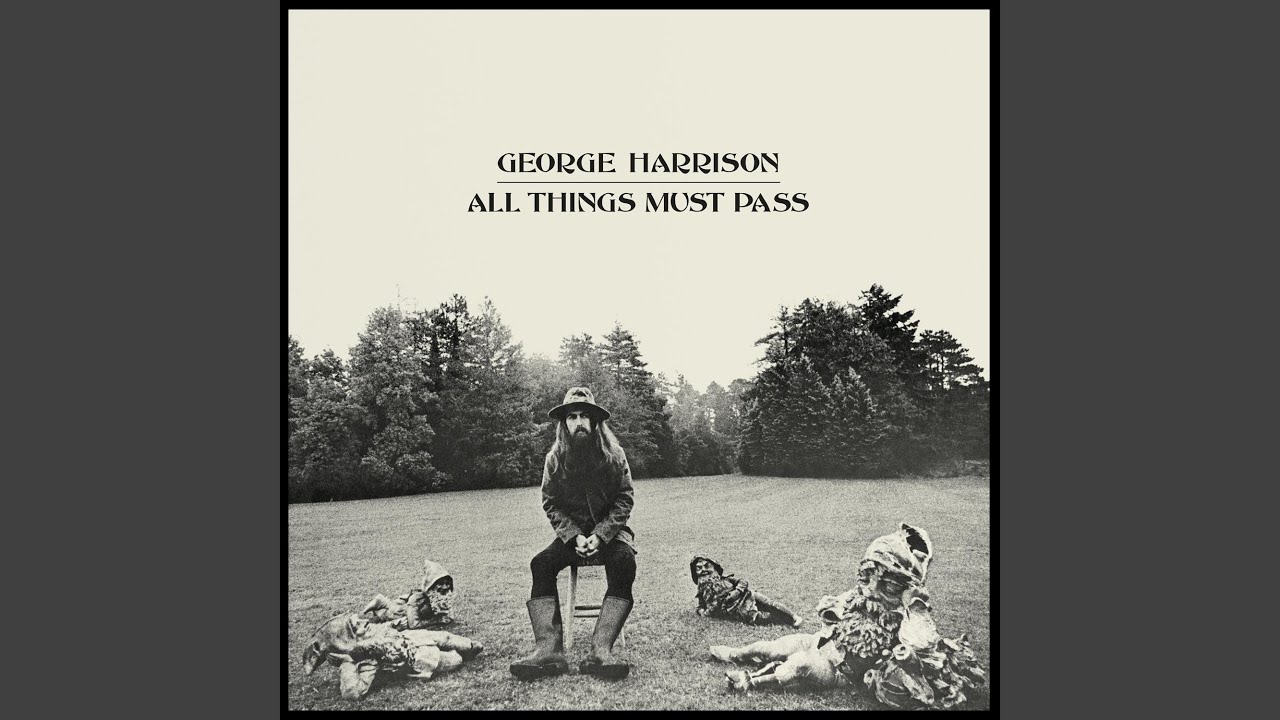
In his last recorded audio interview to coincide with the 30th anniversary reissue of All Things Must Pass, on 15 February 2001, Harrison said the second version came about by complete chance “weeks later” after one of the backing musicians began playing the song during a session.
Version two is a noticeably slower, more stripped-down and intimate performance. It also features a much leaner line-up of musicians, including Eric Clapton on guitar, Bobby Whitlock on keyboards and Carl Radle on bass, three of the four musicians who would make up Derek and the Dominos and who would later that year record Layla and Assorted Other Love Songs.
Similar string and guitar parts appear in the solo section, which begins at 2:22 after a strident tom build-up from Ringo. But the solo slide and orchestral cadences are far less grandiose than version one.
In some ways, this second version is more akin to the raw, natural sound of The Band, who had been a huge inspiration for Harrison.
This version has a gentle groove and masses of space within the mix. It’s almost a yearning, reflective reprise of version one – beautiful, moving and mournful – like hearing a long-lost demo that contains the raw essence of what the writer always intended.
Version one of Isn’t It A Pity was released as a double A-side with My Sweet Lord, on 23 November in the US. It was a phenomenal success, with both sides reaching No.1 on the Billboard Hot 100 for four weeks, starting on 26 December 1970.
The single and the album stunned the music industry, elevating Harrison above Lennon and McCartney in the period immediately following The Beatles’ break-up.
The strength of Isn’t It A Pity was reflected by the calibre of the artists that subsequently covered it.
In 1972, Nina Simone released an 11-minute version, a powerful, deeply spiritual performance, which has been described as more profound and soul-stirring than the original.
Graham Nash, Jonathan Wilson, Annie Lennox, Cowboy Junkies and Galaxie 500 have all covered the song.
But one of the most affecting performances of Isn’t It A Pity took place at the Concert For George in 2002, staged in the year after Harrison's death, when Eric Clapton and Billy Preston performed along with a large band that included Harrison’s son Dhani and Jeff Lynne of ELO.
It’s a deeply stirring and soulful performance, with a stunning vocal and organ solo from Preston in particular that made it the high point of the whole event.

A decade earlier, in December 1991, George Harrison undertook his final tour, playing 12 concerts with his friend Eric Clapton and his band in Japan. Keyboard player Chuck Leavell recalled the impact that Isn’t It A Pity would have on the audience each night.
“The lyrics are just a great comment, anyway,” Leavell told writer Elliot J Huntley, “but in performance the song had a wonderful way of building throughout its course, culminating in the crescendo at the end. At this point I always looked out at the audience to see their faces and could see how visibly moved they were by that song in particular.”
On its release, Isn’t It A Pity was widely acclaimed by critics. In an astute review the NME’s Alan Smith noted that the song "catches the mood of aching tolerance of pain, which Harrison can do so well.”
Isn’t It A Pity, concluded Smith, “will stand out from the album with the passing of the years.”
