


The Rolling Stones began 1968 in a state of some disarray. Their recently-released album – Their Satanic Majesties Request had been a critical flop, widely regarded as a misguided attempt to adopt the trappings of psychedelia.
The previous year had been a turbulent one, overshadowed by the Redland drug busts and the threat of prison that hung over the three highest profile members of the group - Jagger, Richards and Brian Jones. And in the midst of this turmoil, just when they needed a steady hand on the tiller, manager Andrew Loog Oldham had gone missing and would later quit.
So when the band reconvened at Olympic Studios in March to start recording the follow-up, there was much riding on it. After self-producing on Their Satanic Majesties the two lead Stones felt they needed an outside producer. “They wanted an American,” remembers Glyn Johns in his 2014 memoir Sound Man.
“A few weeks earlier, I had met Jimmy Miller, who was working with Traffic in the next studio to me at Olympic. He seemed like a really nice guy and was doing a great job, so I told Mick that we did not have to import anyone as there was an extremely accomplished guy in London.” Miller got the job.
Miller was just what the Stones needed at this juncture. “He had such a wonderful ability to sense where a band was at, get into their heads, get their confidence, and then fire them up in the studio and get great performances out of them,” says engineer Eddie Kramer, who worked with Miller on the Beggars Banquet sessions.
“He was an extremely impressive individual. He could help them with song structures and be very involved on that level, or be a fly on the wall when he needed to be.”
Most of the sessions at Olympic began with the Stones sitting in a circle with acoustic guitars and Charlie on a pillow drum – this was the chosen methodology of Glyn Johns. But Miller soon had to throw on one of a producer’s many hats – that of diplomat – in his dealings with the elephant in the room at Olympic: Brian Jones.
Essentially, the Stones were a man down. Their former leader, who had originally christened the band, was not the asset he once was. Speaking to Rolling Stone in 2002, Miller described Jones as “sort of in and out” of the Beggars Banquet sessions.
"He'd show up occasionally when he was in the mood to play, and he could never really be relied on. . . When he would show up at a session - let's say he had just bought a sitar that day, he'd feel like playing it, so he'd look in his calendar to see if the Stones were in. Now he may have missed the previous four sessions.
"We'd be doing, let's say, a blues thing. He'd walk in with a sitar, which was totally irrelevant to what we were doing, and want to play it.”
“I used to try to accommodate him. I would isolate him, put him in a booth and not record him onto any track that we really needed. And the others, particularly Mick and Keith, would often say to me, 'Just tell him to piss off and get the hell out of here'."
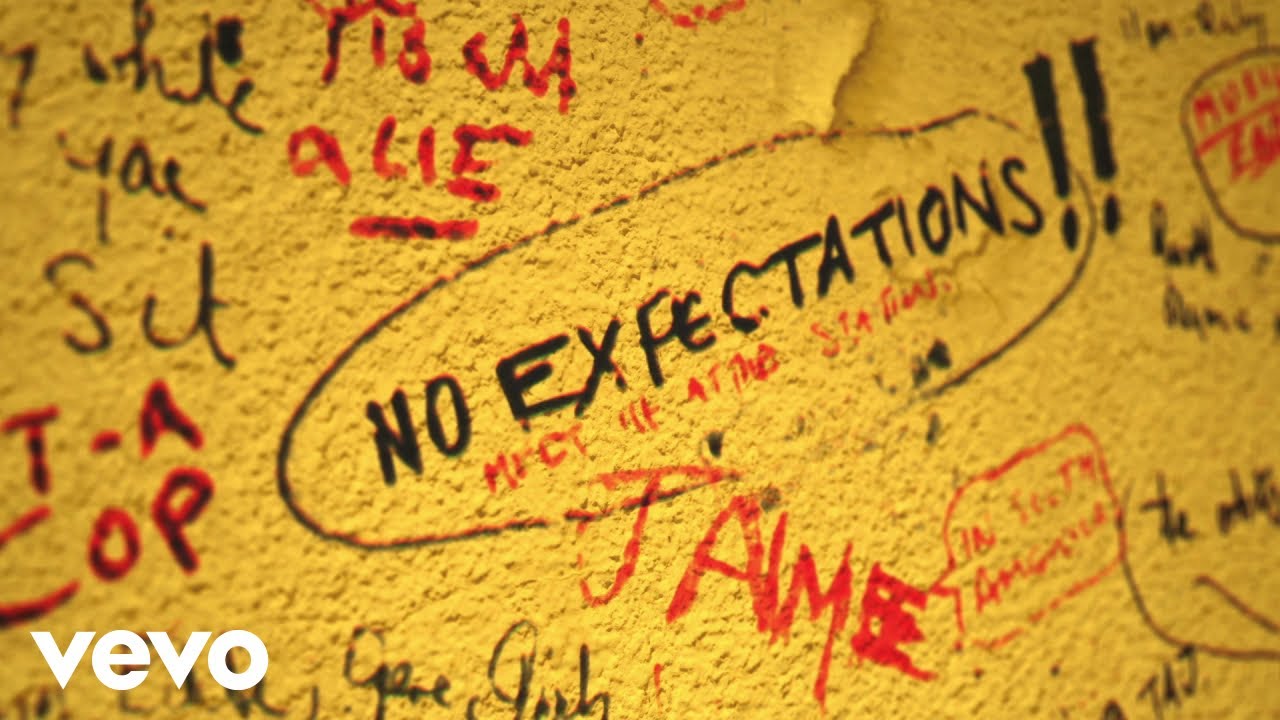
Miller did coax some exquisite slide guitar playing out of Jones for No Expectations, one of several tracks on the album that use country and blues, or in this case, an amalgam of the two. What’s often overlooked about Beggars Banquet is how many of the tracks on this rock classic were driven by acoustic guitars – Salt Of The Earth, the Appalachian folk-influenced Factory Girl (featuring Charlie Watts on tabla) and the blues cover Prodigal Son.
And also Street Fighting Man. Partly this was down to a trick that Keith Richards had stumbled upon using a tape player. “I realised that I could use a cassette machine, basically as a pick up,” he told the Netflix Under The Influence series. “And play an acoustic guitar though it and slam it through so loud that it was totally overloaded. You have an electric guitar but with the feel of an acoustic.”
Street Fighting Man would come to be seen as the Stones’ take on the various uprisings of 1968, with Jagger’s lyrics inspired by what he saw when he attended an Anti-War demo that ended in a riot in Grosvenor Square that March.
It was an important track for the Stones and was seen as the band unequivocally allying themselves with the new left. But Jagger’s lyrics are more an expression of the frustration at innate English (small c) conservatism. In a contemporary interview with Barry Miles for International Times, Jagger said of Britain: “This country's so weird...It always does things slightly differently, always more moderately, and always very boringly, most of it, the changes are so suppressed. The people suppress them."

Barry Miles later told the Independent in 2008: "He was there because he felt angry and rebellious but he had no way of formulating this, of giving it any kind of structure, and in a sense he was looking for anything to rebel against.
"I don't think he had a carefully worked-out policy against Vietnam; I mean, he had a moral outrage against the war and that was about it."
Whatever, it covered the Stones with a patina of radical chic, to add to the diabolical shapes thrown by the album’s most famous track.
In some ways, Sympathy For The Devil overshadows the rest of the album, so ingrained has it become with the Stones' legend. It draws its influence from a trip Jagger made to Brazil in early 1968 although, according to an interview the singer gave to Rolling Stone in 1995, it was Keith who suggested the samba rhythm.
Charlie Watts later recalls in the 2003 book According To The Rolling Stones: “It was one of those sort of songs where we tried everything. The first time I ever heard the song was when Mick was playing it... and it was fantastic. We had a go at loads of different ways of playing it.”
The subject matter was literally a gift from Marianne Faithful. The manuscript of Mikhail Bulgakov’s satirical novel The Master and Margarita, in which the devil visits the Soviet Union, had been smuggled out of Moscow in 1967.
Faithful gave an English translation to her boyfriend and it became the basis of his lyric in which he takes on the persona of “a man of wealth and taste” who pops up throughout history to create death and mayhem.
The piece de resistance, of course, are the ‘woo woo’ backing vocals, which were a complete accident. This came about when Anita Pallenberg overheard Miller ask ‘Who? Who?’ whilst Jagger sang. Pallenberg suggested it be kept in as a backing vocal chant and another sinister layer was applied to the song.
![The Rolling Stones - Sympathy For The Devil (Official Video) [4K] - YouTube](https://img.youtube.com/vi/Jwtyn-L-2gQ/maxresdefault.jpg)
Capturing all this was Jean-Luc Godard, then in town filming what was to become One Plus One or Sympathy For The Devil, an esoteric attempt to join the dots between the Stones and the global uprisings of 1968.
At one point, Godard fixed tissue paper to the hot lights in the studio, with a predictable outcome. “I think we have a fire,” said Glyn Johns calmly, before Miller gathered up the masters, left with the band and Sympathy For The Devil’s legend swelled a little more.
The album was in the can by the end of July and the band threw a party the following month at London’s Vesuvio club, which Jagger and Richards part-owned. Beggars Banquet was played in full and was deemed to be a success by those present. But the event was upstaged by Paul McCartney who thrust a disc into the hands of DJ Tony Sanchez: the acetate of Hey Jude. “It was the first time anyone had heard it and we were all just blown away,” remembers Marianne Faithful. Sanchez recalled that: “When it was over, Mick looked peeved”.
Beggars Banquet should have been released in early autumn but was held up by its sleeve – the original cover of a grubby graffiti-ed toilet was deemed to be in poor taste by Decca and an alternative white sleeve replaced it. When it did eventually hit the shops on December 6, it was garlanded with praise. The Chicago Sun-Times said that: "The Stones have unleashed their rawest, rudest, most arrogant, most savage record yet. And it's beautiful." Whilst Time described the Stones as "England's most subversive roisterers since Fagin's gang in Oliver Twist.”
The album brought the Stones into line with what was happening in music and culture. With the psychedelic dream over, blues rock – which the Stones had virtually invented, after all - was now the common currency in both US and UK pop/rock.
With its perceived musical authenticity and nods to radical politics, Beggars Banquet drew approving nods from across counterculture. It sounded both proletarian and cool; the original ‘return to form’ of critical cliche.
And it set the Stones up for world domination, a golden era by the end of which they undisputedly were the ‘greatest rock n’ roll band in the world’. Beggars Banquet was the turning point, as Keith Richards – then, as now, the heart of the band – once neatly summarised: “It helped take the Stones to a different level. This is where we had to pull out our good stuff. And we did.”
