
LA can get hot, even in the depths of winter. Following a somewhat surreally warm January stroll high up into the Hollywood hills, two sweaty (and NAMM-fatigued!) members of the MusicRadar team finally arrive at the impressive home of Blue May; the man who exec-produced Lily Allen’s intoxicating pop-cultural phenomenon West End Girl last year.
Nestled beneath the Hollywood sign, we’re graciously invited into May’s home only to be immediately greeted by Moobi - Blue’s beautiful and extremely friendly pitbull. Moobi would keep an eye on us all morning, choosing opportune moments to venture over for periodic head-rubs.
It’s obvious from the outset that May’s home is largely a place of work - a veritable idea factory where inspiration-developing gear is always within arm's reach.
Last year, we had our first video conversation with May wherein he talked us through the making of West End Girl specifically. Today we’re absconding from our stated reason for visiting California (NAMM), to hang out with Blue in his Hollywood home, and also to find a little more out about his own journey.
How did a man born in Wales and raised in London end up perched atop Hollywood, fielding production requests from some of the biggest figures in music?

“It was such an instantaneous moment in my life,” responds Blue when asked how he discovered music. “I was obsessed with guitar - I was playing guitar from like the age of ten. I was relentlessly practicing. My dad played guitar and my mum had a great taste in music.”
It was when May was hanging out around at a friend’s house, that his ears were opened to the idea that music could exist beyond the traditional band format, It was triggered by said friend’s dad playing a pair of recently-released CDs: Eminem’s Marshall Mathers LP and Dr Dre’s 2001.
“I was like ‘where’s the sound coming from? because I’m not hearing a band in the room’”, recalls Blue. “It was the first time I really got connected with the idea of a producer.”
Feeling a new calling, May begged his mum to buy him a computer so he could begin to delve into music production. “It took like six months. I got a PC and that was the obsession after that.”
May’s fixation deepened as he started to get to grips with how music technology worked - spending his nights absorbed in gear forums and figuring out how to produce music himself. Eventually, May enrolled at the hallowed BRIT School in London.
“I went to the BRIT School and one of my best friends was a guy called Jodi Milliner. We were in a band together. His mum lived across the road from the school and his bedroom was on top of the house. He wanted to do production as well, so we hatched a plan to build a studio. So, we built a little studio in his bedroom.”
Meanwhile, Blue’s brother had also been making music, crafting garage tracks using a Yamaha SY99. Before long, Blue and his brother were collaborating.
“We started making garage really because that’s what was popping off at the time. At [the BRIT School] we were lucky that there were a handful of us who were great musicians for our age, and we’d play in rooms all day together. At that time, we were really into neo-soul, stuff like D’Angelo.
“So, by day I was there playing with musicians, and by night I would go and make garage,” remembers Blue. “I’d pull in rappers from the BRIT School.”

At the age of 15, Blue, his brother and a group of friends formed a small garage music collective. Initially a passion-led project, everything changed once one of the group’s songs started to get regular airplay, much to the young Blue’s surprise. “I don’t know how the record even got out, we didn’t press it,” Blue remembers. “Someone just pressed their own dub of it.”
Then came a phone call. “There was an A&R guy who called me and said ‘we’re hearing your tune in the clubs!’ and I was just like - a 15 year-old kid.”
Suddenly, Blue May was on the radar of the movers and shakers.
Reflecting on this formative DIY background, Blue theorises that his now-deep knowledge of music theory was forged from a basic misunderstanding - he believed every element on his favourite records was played by musicians.
“I think that’s one of the funny [aspects] of how I learned my production, because we were musicians, we were listening to all this music that we loved. All the J Dilla stuff, A Tribe Called Quest. We thought everything we listened to was played by musicians, but a lot of that music was actually samples.”
“It was actually brilliant that we didn’t realise it was samples,” Blue continues. ”Me and Jodi learned how to make that sound. That’s been a big part of my production - although I do use samples, I also think from the point of view of understanding chords, melodies and textures, there’s a certain texture that comes from sampling. I understand now of course that you can sample as well as play stuff - but we learned really early how to make stuff sound like it had been sampled. That’s really how I got into production.”
With his ever-expanding skillset and BRIT School credentials, May then began to work as a jobbing producer.

“I worked with a band called Wolf Gang, developing them before they were signed to Atlantic, so I was doing indie records. In my early twenties I had a studio in Camden. The music that was popping off [at that time] was like Florence and the Machine and all this indie stuff. I eventually ended up in big studios, with an engineer of my own. I worked at a place called Fish Factory, making records. I had an engineer called Tom Stanley who helped me run the boards. I didn’t really know how to run big studio stuff at that point, so I learned from him. It was sort of in reverse; you’d normally be the tea boy and you’d work your way up, but I was like there as ‘the producer’ but learning from my engineer.”
Blue continued to expand his craft, working frequently at Madonna and Björk producer Nellee Hooper’s studio. It was there he learned to navigate himself around an SSL mixing console.
“By the time I was 26 I understood how everything worked. Antonio [Feola] who ran Fish Factory would sometimes call me up and offer me some engineering work, even though I’d been a producer. He was the one that encouraged me to use tape, he’d force me onto a 16-track Studer. The first session I engineered for him was a 22-piece band. So all these experiences were my training ground. Then I built an SSL studio [aka ‘XXVII’] in my late twenties.”
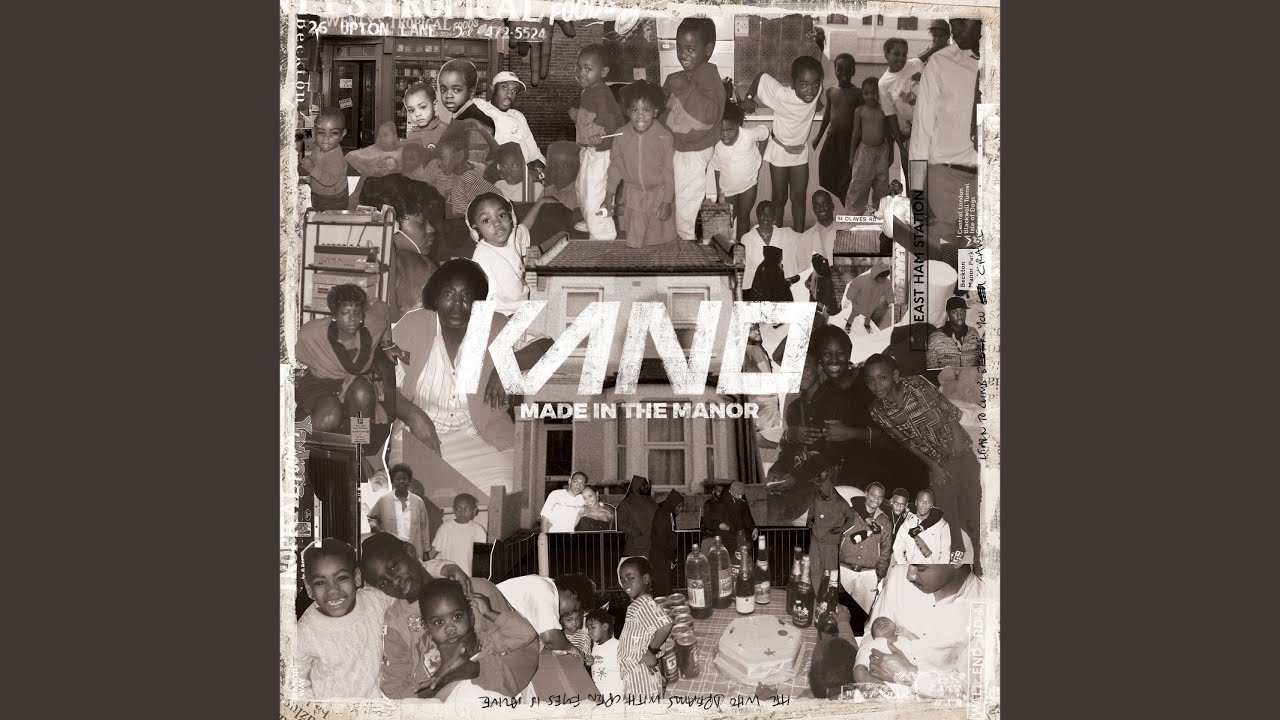
Over the next few years, Blue’s profile continued to rise. Working with rapper and songwriter Kano, the pair crafted 2016’s Made in the Manor - a record which garnered a MOBO Award for Best Album.
May would continue to work with Kano on 2019 follow-up, Hoodies All Summer, and produced a huge variety of records, including Joy Crookes’ Skin and Juniper, Suki Waterhouse’s Milk Teeth and Memoir of a Sparklemuffin and Jorja Smith’s What If My Heart Beats Faster?
Despite several Mercury Prize nominations - and a trio of noms at this year's Brit Awards for West End Girl - May doesn't put much stock in the value of awards.
“My biggest fear is to become pleased and blunted [in relation to awards] That feeling that ‘I’m amazing’. It’s not helpful. I need to push up against something. If I don’t feel like I’m fighting something then my music’s going to suck. I love being in communication with people - other producers that I didn’t know before, but I feel like I’m in my fortress - I’m doing my thing over here.”
Blue is very conscious of the brittle psychology that can make or break a session, and he believes that nurturing it has been key to his success to date.
“You can just get into a dynamic where everyone is just patting each other on the back. Or you start patting yourself on the back. That’s really important to me. That’s why I have such a weird reaction to things like [award nominations]”.
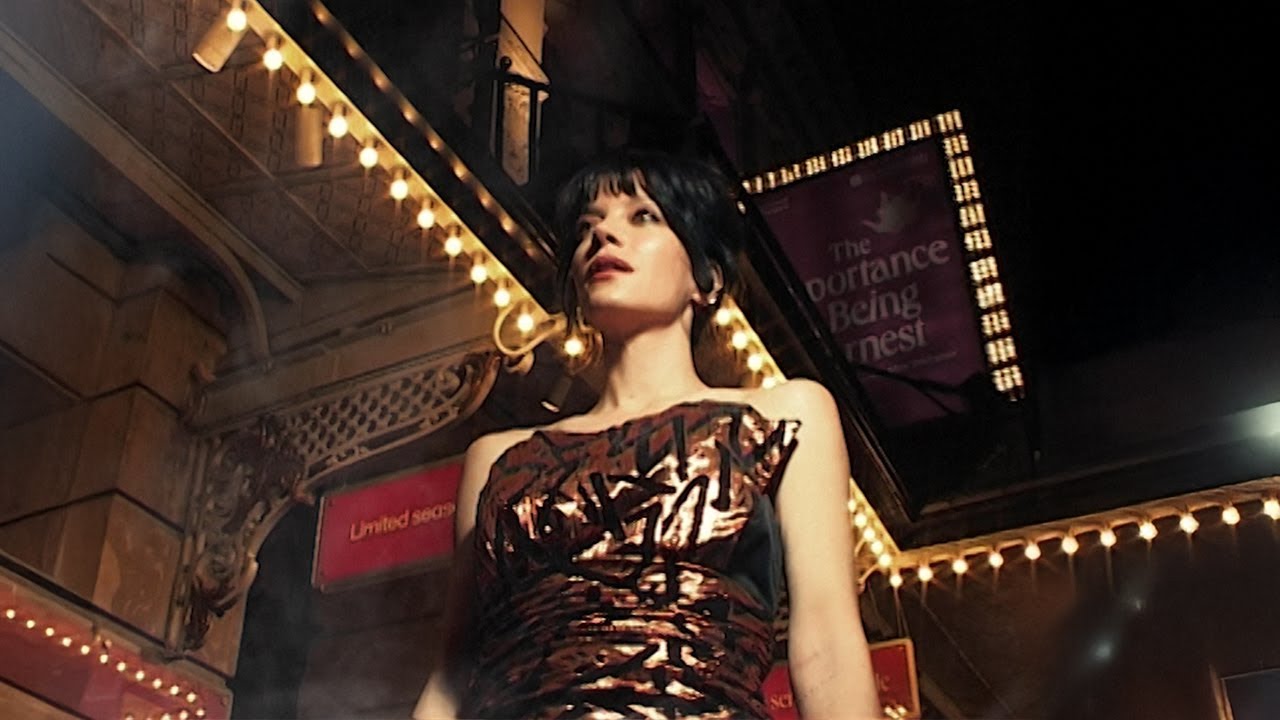
But it was last year’s West End Girl album that Blue executive produced for Lily Allen - which we explored in detail with Blue here - that has exposed May’s gifts to a wider array of people.
“The first feeling I had in the week or two after its release was like ‘woah, this feels very different to everything else’”, Blue tells us. “It took everything to a completely different dimension. Suddenly I was like ‘oh my god, I can do big pop records’. The only difference really though is that I got to work with a pop star. Lily is just a born pop star.”
More attention from the music industry understandably resulted, and while we can’t spill the beans on any specifics as yet, it’s fair to say that May’s diary is pretty much filled for the rest of the year.
“What I love about pop music is [the diversity of the sounds] - as long as the artist anchors it all, and you try and figure out what the overarching lyrical world is, and what the energy is. Lily’s album is a high-concept, chronological album but it doesn’t have to be that. But good albums should have a thread running through. You can pull stories from any part of your history - but the important thing is to talk at that moment about how that feels. How does it make you feel at this moment? It’s more compelling - it’s a record of time. Album cycles tend to last around three years. That’s a period of life.”
On whether he had a feeling that West End Girl was going to be special, Blue recalls that there was some trepidation as to whether some of the record’s themes were going to be palatable.
“The only commentary between myself and the record’s other producers and writers was, ‘Is this okay to be so bold lyrically?’ and, ‘Is this going to be ok for Lily?’ I suppose we were worried that it might not be taken in by people because it’s too crude perhaps. Lily first and foremost stuck to her guns. There were no punches pulled. And now everyone wants to do it.”

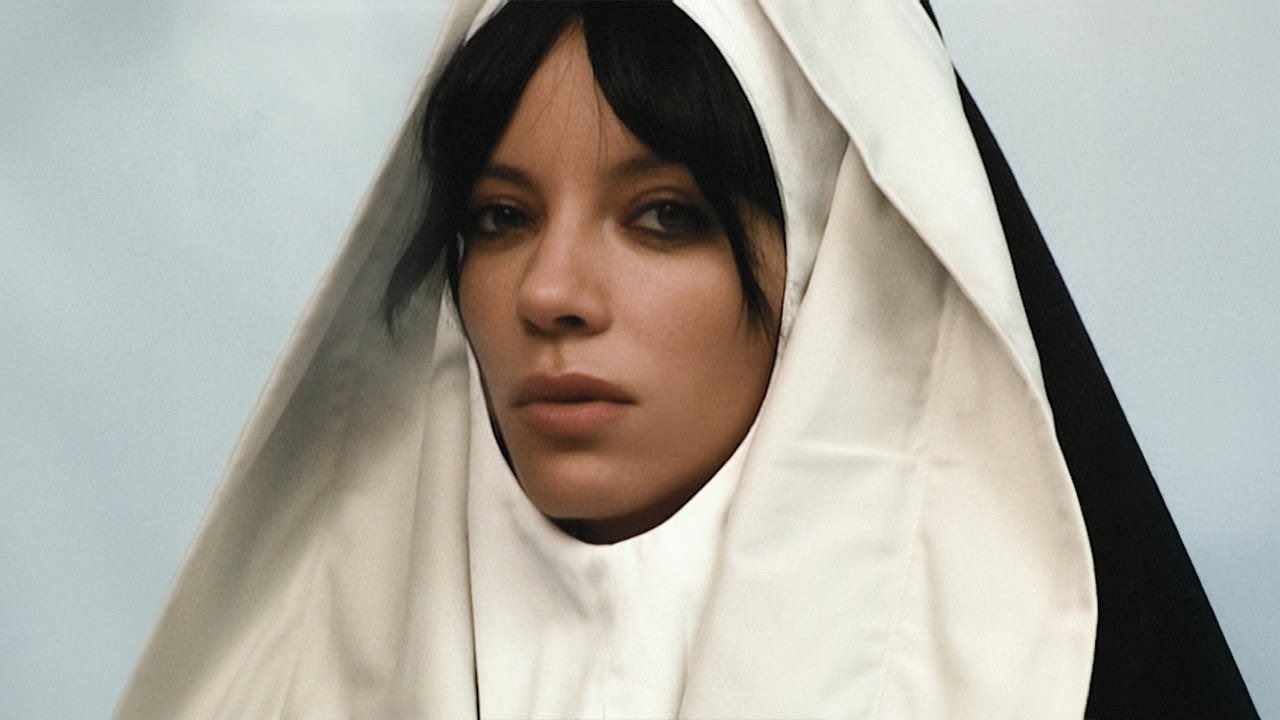
The album became a massive cultural talking point, detailing the breakdown of Allen’s marriage with actor David Harbour in lucid detail. It was also packed with sonically-captivating songs.
The record’s genre-defying cuts were co-written between Blue and a cohort of his closest creative compadres. These included co-executive producer Kito, songwriters Hayley Gene Penner, Chloe Angelides, and Violet Skies and additional producers Leroy Clampitt and Jason Evigan.
“We didn’t set out to do it, but Lily - as she did twenty years ago the first time around - gave everyone permission to tell their stories straight without having to dress it up in metaphors, which I’m into.”
We’re curious to learn what it was that prompted May’s move from London to Los Angeles, some six years ago. “Well, I was travelling out here a lot with work and seeing friends and it just got to the point where I was like ‘I love it here’”, explains Blue.
“Honestly, there was an emotional reason too,” he continues. “London is a great place to work and never see the light of day. I’d come over here and when I’d leave I’d feel like I was leaving home. So, it was more of a lifestyle move.”
May shoots down the idea that his decision to come to LA was in any way motivated by career-development.
“In a lot of ways it took a while before my career caught up!” says Blue. “I [mainly] continued to make British records. I’d fly back four or five times a year. I still feel like the musicians in London are better”, he states. “That’s kind of changed now because I’ve just made a lot of friends with a lot of Latino musicians and they’re fantastic. But, in terms of mainline session players, I don’t really have a great time in LA, everyone has got a main character syndrome.”
But Blue does feel that LA is something of a nexus point for a wealth of production talent.
“You would not believe the amount of hit records that come out of this canyon. There’s me and probably at least ten other people who have studios in their houses. LA is crazy, but it’s the best. It hasn’t got that London grit - and I have to make sure I retain that London approach to sonics. The sonics here can get a bit homogenised. But it’s an amazing place to make records.”
Blue leads us round his home studio setup, kindly allowing us to tinker with various instruments.
Between the two main rooms, May has compiled an assemblage of storied items and classic recording gear, with a city-overlooking balcony just out of the main vocal tracking area.

“I moved in here around eighteen months ago, it’ll be coming up to two years in June. I had another house on the other side of Hollywood, same idea. But this is the one. I will never let go of the house. I love this studio. It just works. It’s speed as well, you just want everything to be plugged in all the time, and be ready to go.”
The heart of Blue’s sonic playground is a trio of hardware synths, a 1974 Minimoog, an Oberheim Matrix-6 and a Korg Triton, all positioned to the left of Blue’s central workspace.
“There’s certain times when I might need certain sounds that these keyboards don’t have. But, honestly, the Korg Triton is such a hack. It’s got every sound on it - and it’s got such a specifically unreal, plastic sound. It just sounds so good on pop music. This edition specifically, has great strings. It’s just got this crazy sound - you can make it do crazy things. It’s got this [extreme] valve that emphasises each sound.”
Blue continues by telling us that the Oberheim can ‘just be anything’. “It’s got a great organ sound and the Minimoog is fantastic for bass.”

May also has a Wurlitzer and a Yamaha YC-25D stationed at the entrance to the vocal tracking area.
A 1930s nylon-string Hagström acoustic guitar proved integral to West End Girl, which May gracefully demonstrates.
“We wrote the songs Just Enough and Sleepwalking [with this guitar] super quick. In terms of the mix, there’s not much conversation around why we kept these tracks guitar-focused - you just do what is needed. In the way I approach stuff, you’re not poring over the details, ever. That moment of writing and recording [album standout] Pussy Palace was like two minutes within that process and I haven’t thought about it since then - I got the [chord sequence] then we moved on to writing the song. Leroy [Clampitt] would add some stuff and I would add some stuff on the Triton.”
So we can’t expect a little live rendition then? “I can’t even remember what key it’s in let alone the specific chords,” laughs May.
Blue elaborates further on the momentum-driven process he always attempts to instil in his collaborators. “Some songs pose more problems than others. But you just keep on going until it’s finished and you never let self-doubt come in,” says Blue. “You’re just improvising, and changing what’s happening with the people in the room, and the instruments in the room. You’re trying to keep a massively forward motion going all the time.”
This notion of forward motion is essential to Blue’s record-making philosophy. “When I say forward motion I don’t mean that it all has to be intense and adrenaline-fuelled. Sometimes the right thing to do is to just make a coffee and take the energy out of the room for a second.”
In Blue’s view, it’s the role of the musicians and creatives to absorb a narrative and respond. “Pussy Palace is a great example of this. Lily was telling us a story. Everyone in the room was just like ‘what is the feeling of this story?’ For me it was just this sinking feeling. We’ve all had that moment where suddenly our reality has completely flipped. It’s not thought processes so much, but through improvisation and intuition of finding that feeling. With that, it was the feeling of sinking, sinking, sinking…”
Blue explains how it then led to the song’s odd, chordal fluctuations that underpin its arrangement.
“There were words like ‘severe’ and ‘sinister’ in the air, and we were using those words to trigger off ideas. For Pussy Palace, I’d played with that Moog sound for quite a while - tuning into a chord [as discussed in our previous interview]. I always thought it was such a ‘porno/EDM’ sound that I’d never actually use it, but in that moment I said, ‘Hold on, I think this could work.”
“They might have been the first three notes I played, and then Chloe [Angelides] who was with us writing that day was like ‘Oh that’s great’. So in thirty seconds, we gained confidence in this thread. Then, what you hope is that - in a good environment - everyone in the room becomes piqued and switches on. Everyone’s got the technical ability to rise to the occasion. Then Leroy [Clampitt] is at the computer and I’m at the synth, and he just gets the drums going in two seconds.”
Production on Pussy Palace was completed in an astounding fifteen minutes. “There’s like tweaks and stuff over time, but no major tweaks. Every sound that you hear in Pussy Palace was done between fifteen or maybe twenty minutes. You don’t think about it too much. The lyrics were written in an hour max, and then we tracked the whole thing.
“The thing I try and avoid because I find it emotionally horrible and depressing and destabilising is [songs that are] slow and over-cooked and over-thought.”
For May - who admits that he doesn’t make music for himself - the process is all about feeding, and feeding off, the people in the room.
“The point I’m trying to make is that when making music, the result comes from the intense vibration you get into. I don’t mean to sound like a budget Rick Rubin, but it’s the momentum. And, of course, hopefully you’ve got a bunch of good gear around you, and a bunch of people who can play well and program well.”
“My process gets simpler and simpler and simpler. The better I get, the less I have to f**k around with anything.”
Gear Tour


