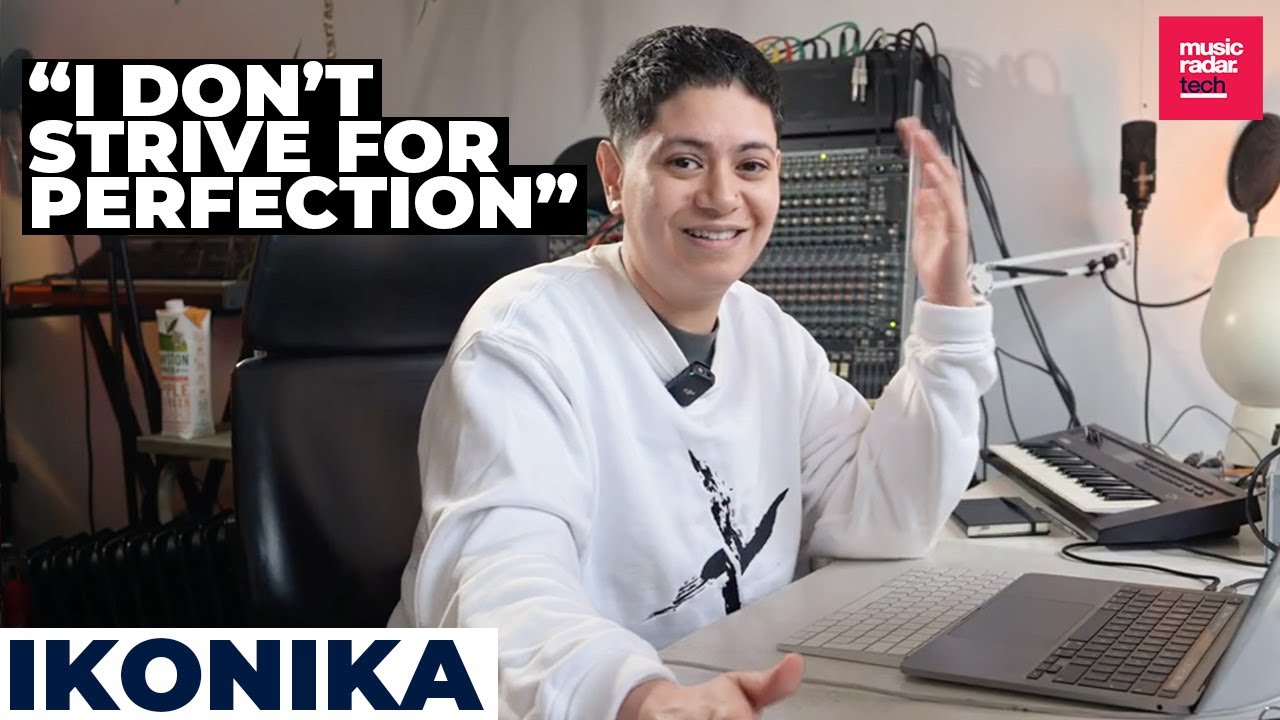
The career of London-based producer Ikonika (aka Sara Chen) has taken multiple twists and turns. From early dubstep releases on Hyperdub – the influential label that is home to the likes of Burial and Kode:9 – through tracks that have embraced elements of techno, grime, UK funky, gqom and amapiano.
Their latest release, Sad, is the boldest reinvention yet, seeing Ikonika step front and centre as a vocalist as well as a producer for an album that explores both their journey as a songwriter and their trans identity.
As Ikonika explains in our breakdown of album highlight Slow Burn (above), those different sides of Sad are inherently linked. The more complex, song focused structures of the tracks allowing Chen’s vocals to provide a narrative focal point.
“[Slow Burn] is very personal. It's about my transness,” they explain. “I'm a non binary person, and the track is kind of disguised as a poppy electronic track, but it goes through a certain transition towards the end.
“It kind of goes into a reprise and turns into a more dreamy, airy, fluid sort of piece of music. It uses my own vocals as well. The vocals are very airy, very fluid. They kind of meld or glue the track very well.”
We visited Ikonika in their London studio to talk about the album's creation, the challenges of working with vocals, and how the album translates to live performances.
How did you first get into music production?
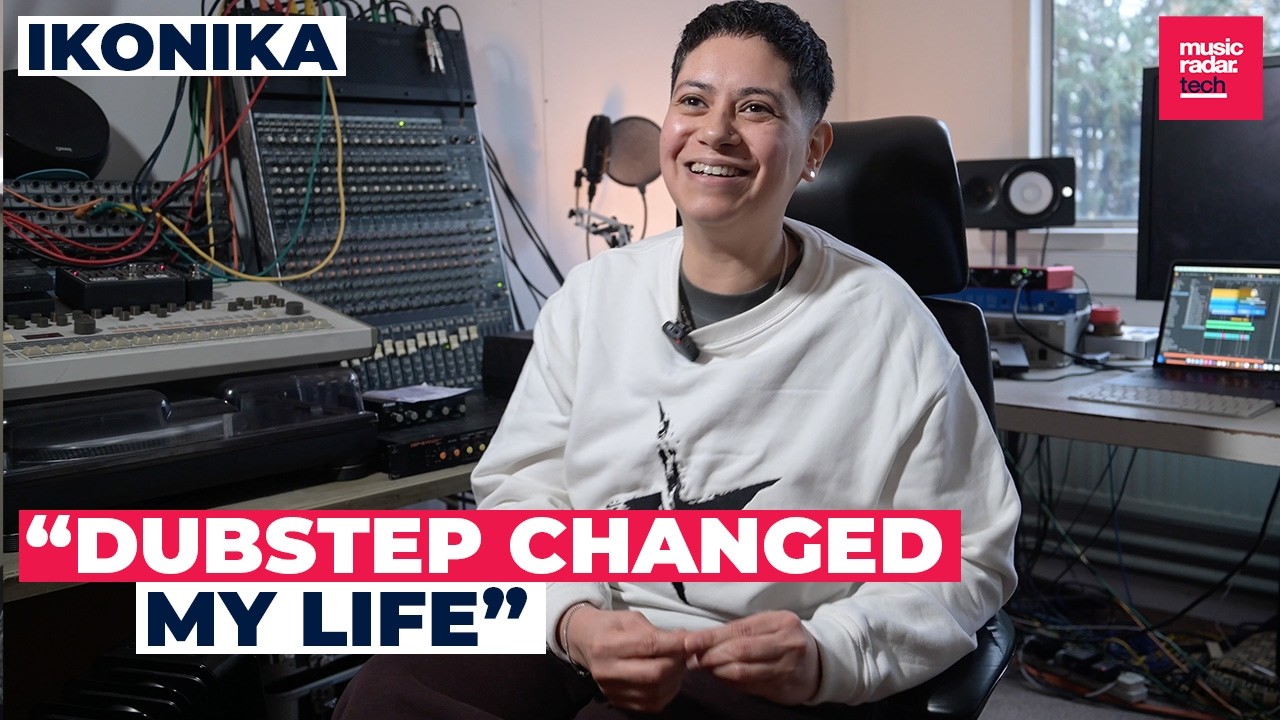
“I first got into making music after dubstep changed my life. I just wanted to make tracks that were really bassy – really lots of sub bass and not much to it. Also, I'm a big fan of '80s pop, so I always wanted to have synths.
"I learnt DJing around the same time as I was going out to dubstep nights. From there, I got into grime and UK funky, then I started retracing the roots of electronic music. I got into Chicago house, techno, juke and footwork, and a lot of sounds from South Africa. Things like kwaito and bacardi and now amapiano and gqom. They're big influences and constantly make me want to make music.”

What is it about those South African genres that appeals to you?
“I think the first real genre that caught my attention was gqom, just because it kind of sounded a bit like grime, in a really weird way. I think it has the same feeling as grime and UK funky mixed together – sort of housey grime kind of stuff.
“I think, just dynamically speaking, it just had that bass that reminded me of dubstep nights and going to clubs with really nice sound systems, like Plastic People.”
You have a fair amount of hardware in your studio, did you use that in creating the album?
“Sad was pretty much made on my laptop in Ableton. Since having a child, I've downsized – so that's why I'm just purely in the laptop. I'm kind of loving it at the moment, because it reminds me of when I was a bedroom producer.
"It's nice having things that simple again. But obviously it comes with certain challenges. For example, CPU load now that I'm recording vocals and there's 40 or 50 tracks in a song.
“It's made me think about access to things. There was a time when I was collecting synths and trying to use as much hardware as possible. That was really fun and it was such a good learning process – just understanding how it worked, also just the physicality of things, like, actually touching buttons and knobs. I love that. But you know that's quite complex in itself.
“It's maybe a bit weird to downgrade from all of that into a laptop, but I'm really enjoying it.
"The only thing I kind of dislike is CPU load and having to think of workarounds. If a soft synth is bugging out with all the plugins I'm using, or if I have a very wild, overloaded chain going on – how do I work around that? Is it going to stop my creativity? At what point does it get a bit too much and what am I going to do to remedy that?
“Those are the kind of challenges I'm facing. But yeah there are always like workarounds.”
Sad is your first album to include your own vocals – how did that come about?
“I started exploring my vocals back during Covid. I was in a different studio then, and we had lots of nice microphones, but I wasn't really getting any vocalists in. It just felt like a waste to not use those mics.
“So one day, I set one up and just started saying stuff into the mic. It was kind of like, just chants, ‘yeah’, ‘hey’, ‘ooh’, some breath, that kind of stuff. Then I started thinking maybe I could try singing. I just gave it a go and kind of went from there.
“I released an EP with Hyperdub called Bubble Up that had my vocals for the first time. And then a few other tracks came out, like Details that came out on Night Slugs.
“After that I was just making more and more tracks with my vocals. I had a handful of them, and I kind of felt like maybe these weren't singles or an EP, and that there was a bigger story to tell.
“So that's when I started thinking about an album, and that's how Sad came about. It's just this collection of vocals that I didn't think would be useful in the club. They weren't traditional songs for the club. They had elements of pop and R&B, so it just kind of felt right to place them in an album format.”
How much of a challenge has it been incorporating vocals into your productions?
“It was like a whole new thing for me. I learned through a lot YouTube videos, a lot of TikTok videos, just to see how people generally do it, because I didn't really know fully how to track vocals, how to engineer them.
“When I started to learn that kind of stuff, like what you traditionally do to process vocals, I realised I could do things quite differently. One of the big things for me is I'm not too precious about having a clean, flat, dry, perfect sounding vocal.
“I realised that the microphone can pick up so many different things. I'm really into that actually, and not just with my vocals. It's like, when I'm recording little clicks or little claps or little just breaths or air, I'm really into the way, like the microphone receives that and translates it into the computer.
“I'm thinking about that journey that the sound is making. I'm thinking about it more not in a technical sense, but more as a living, breathing sort of thing. That's what I'm really enjoying right now.”

Tell us about the contribution of Tice Cin on the final track…
“The last track of my album is called Make It Better, and it features my friend Tice Cin. She is a writer, a DJ and a general music person. She wrote a book called Keeping The House, She kind of spat some bars on the last track.
“It's funny, because actually it was supposed to be an intro, but then we kind of felt it would be better as an outro, because it concludes the album very well. She's been there since the beginning of this album, so she's seen how it's unfolded and the way it's grown and turned into this thing.
“She also helped me with understanding the narrative of the album from a writer's perspective. We chose a train as the vessel for the narrative. So it was just simple questions at first: if this album is a train, what kind of things happen on the train? What happens before you get on a train? What happens on the train? What happens when you get off the train?
“She basically said, that's how writers write. Maybe try having that writer's mindset when thinking about the album.”
How are you planning on performing the tracks from Sad live?
“When I started performing these tracks it was more of a hybrid DJ situation. I'd be running playback on the CDJs and it would be mixed like a DJ set. I'm still keeping to that core – because being a DJ, that's kind of all I know – but I’m now using Ableton and a Push 3.
"My voice is the instrument now. I have to look after myself."
“I've been running Push in standalone mode for a few shows, which I think is really nice, but it also gives me anxiety, because I don't really trust it.
“The live setup is very simple. It's just a Ableton Push 3 and a microphone. Like my production setup, everything is in-the-box. It sort of has the same kind of feel as a DJ set – there's no gaps in it, and it kind of journeys from the more of the sadder tracks of Sad and then gets a bit uplifting.
“It’s stem based, so there's room to mix in different clips from different songs and different percussion elements and loops.
“For me, it's more important to get the vocal across while at the same time keeping that club energy.
“I'm now thinking about vocal coaching. I'm thinking about how to warm up my voice. I'm thinking maybe not to have too many cigarettes, and maybe just ease off the Henny.
“I'm thinking of all these kinds of things, because my body, my voice is the instrument and is the performance. I have to look after myself. I have to look after my health. I can't get a cold, I can't get a cough, chest infection, anything like that. So it is rather different from a DJ set.
“I'm trying to not rely on something like Auto-Tune, because I feel like it can go kind of a bit wrong sometimes. That’s where the vocal coaching comes in. I want to just actually learn my songs and not be pitch perfect but, you know, there abouts.”
