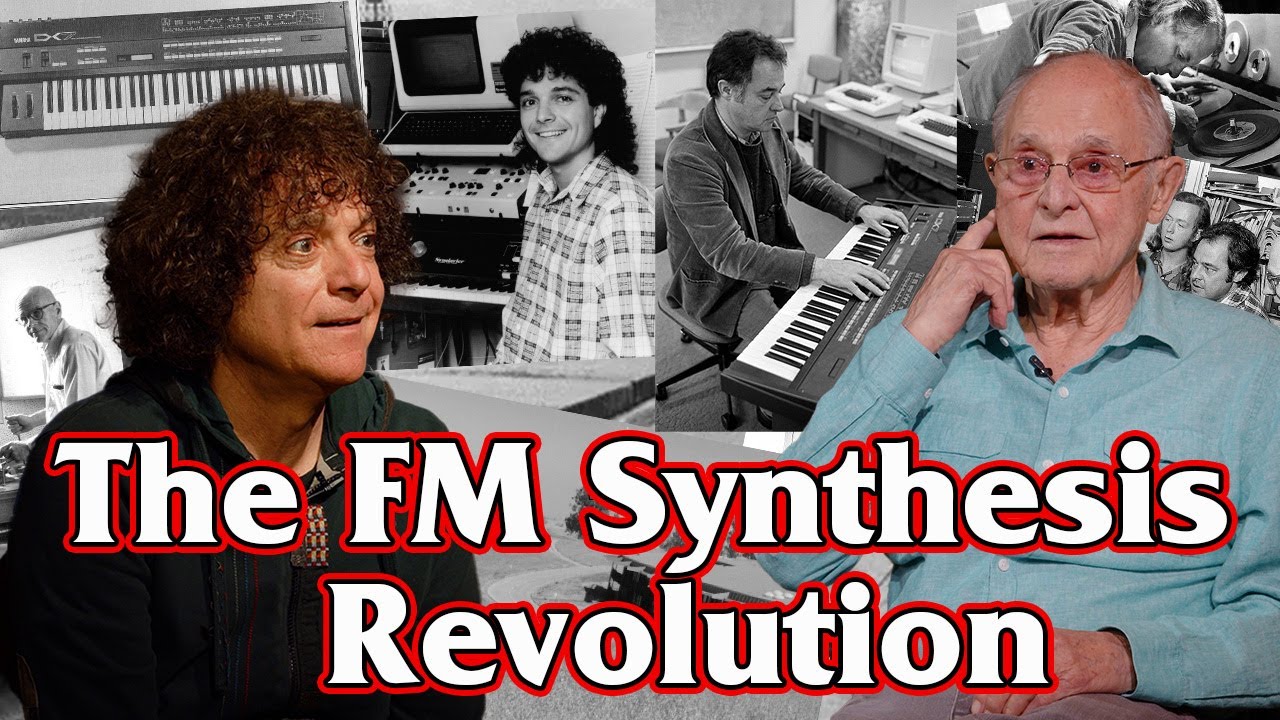
The list of winners at the Grammy Awards last weekend was unsurprisingly dominated by household names: Kendrick Lamar, Lady Gaga, Billie Eilish and The Cure, to name a few. But among this cast of superstars was another name that you may not recognize, belonging to someone equally influential: Dr. John Chowning.
Chowning is a composer, musician and professor that had a seismic impact on both the development of music technology and the sound of modern pop music, achievements that earned him a Technical Grammy Award at the Recording Academy's Special Merit Awards ceremony last weekend.
Chowning is best known as the inventor of frequency modulation (FM) synthesis, a technique he pioneered in 1967 while working at Stanford University. Though FM synthesis had previously been explored in the analogue domain, Chowning was the first to implement the technique in a digital context, leading to the development of technology that powered scores of game-changing instruments, most notably the Yamaha DX7.
Born in New Jersey, Chowning graduated from Ohio's Wittenberg University in 1959 before studying music composition with French composer Nadia Boulanger in Paris. He went on to study at Stanford University, earning a Doctor of Musical Arts in 1966 before founding the Center for Computer Research in Music and Acoustics at Stanford in 1975.
Chowning's discovery of FM synthesis arrived almost by accident. While experimenting at Stanford's Artificial Intelligence Laboratory, Chowning paired up two digital sine wave oscillators, one modulating the pitch of the other to produce vibrato.
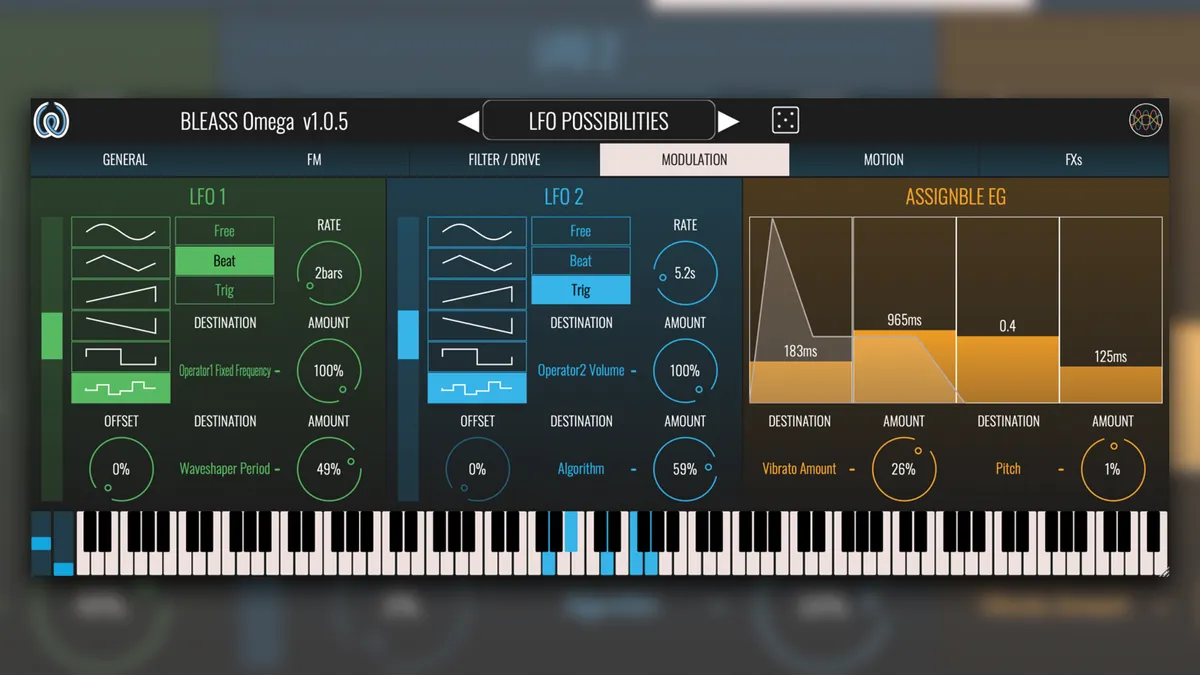
How to use FM synthesis to design sounds you'll actually use in your music
Curious about what might happen if he increased the rate of modulation into audio-rate territory, Chowning discovered that the effect transformed the timbre of a sound in unexpected ways, producing the glassy, bright and tonally complex sounds we now associate with FM. Unlike the subtractive synthesis that was employed in early analogue synthesizers, which shaped timbre by filtering out harmonics from a rich waveform, basic FM synthesis builds complex waveforms by using one oscillator (the modulator) to modulate the frequency of another (the carrier).
Over the next few years, Chowning progressively refined the technique, exploring how different frequency relationships and depths of modulation between multiple oscillators could produce new timbres and textures. He discovered that FM could be used to create all kinds of sounds: synthetic brass and electric pianos, percussive, transient-rich sounds and inharmonic bell-like tones, among many others.
Chowning's patent for FM synthesis belonged to Stanford University, who licensed the technology to Japanese musical instrument manufacturer Yamaha a few years later. Building on Chowning's discovery, Yamaha developed phase modulation synthesis, a different form of FM that was more stable and economical to implement in early digital hardware, but produced an identical sound.
The company developed several prototype instruments based on this idea, such as the F70 organ and GS1 keyboard, but it wasn't until Yamaha released the DX7 in 1983 that FM truly caught on.
Despite quickly earning a reputation as frustratingly difficult to program, the versatile, reliable and highly affordable DX7 became one of history's best-selling synths, its preset sounds popping up in countless '80s hits. Such was its popularity that in 1986, the instrument could be heard in almost half of the songs in the US Billboard Hot 100. As musician and producer Anthony Marinelli put it in a recent interview with Chowning, FM became "the sound palette for a whole new generation".
Yamaha continued to develop the technology that Chowning had pioneered throughout the remainder of the '80s with new DX models and innovative synths like the TX81Z, but when their patent expired in the mid-'90s, FM became free for anyone to use. This opened the door to widespread adoption in both hardware and software, as FM synthesis evolved from a Yamaha calling card to a core technique in digital sound design powering countless modern instruments.