
Music’s power to affect our emotions is one of its most essential qualities, but also one of its most beguiling mysteries. Just how do melodies lift (or lower) our mood? and why is it that certain chord progressions somehow lasso our feelings and drag them in-step? Whatever the reason, listening to music is unquestionably the quickest way to dredge up half-faded memories and bring them back the forefront of our minds.
One of the most poignant illustrations of music’s special relationship to nostalgia occurs during Danny Boyle’s 2017 sequel to his 1996 classic film, Trainspotting.
The sequel, set twenty years on from the first, explores the consequences of the heroin-fuelled hedonism and life choices depicted in the iconic original.
In one of its most touching moments, one of the series’ beloved characters, Spud, looks upon Edinburgh’s Calton Street Bridge and suddenly flashes back to his youth - a memory of he and his old friend (Ewan McGregor’s Renton) in the mid-90s, gleefully running toward it to escape the pursuing security guards of a shop they’d just stolen from.
It’s a touching scene, but it’s really the soundtrack’s evocative, slow deployment of three haunting chords that makes us actually feel the gut-punch of Spud’s unexpected time-slip ourselves.
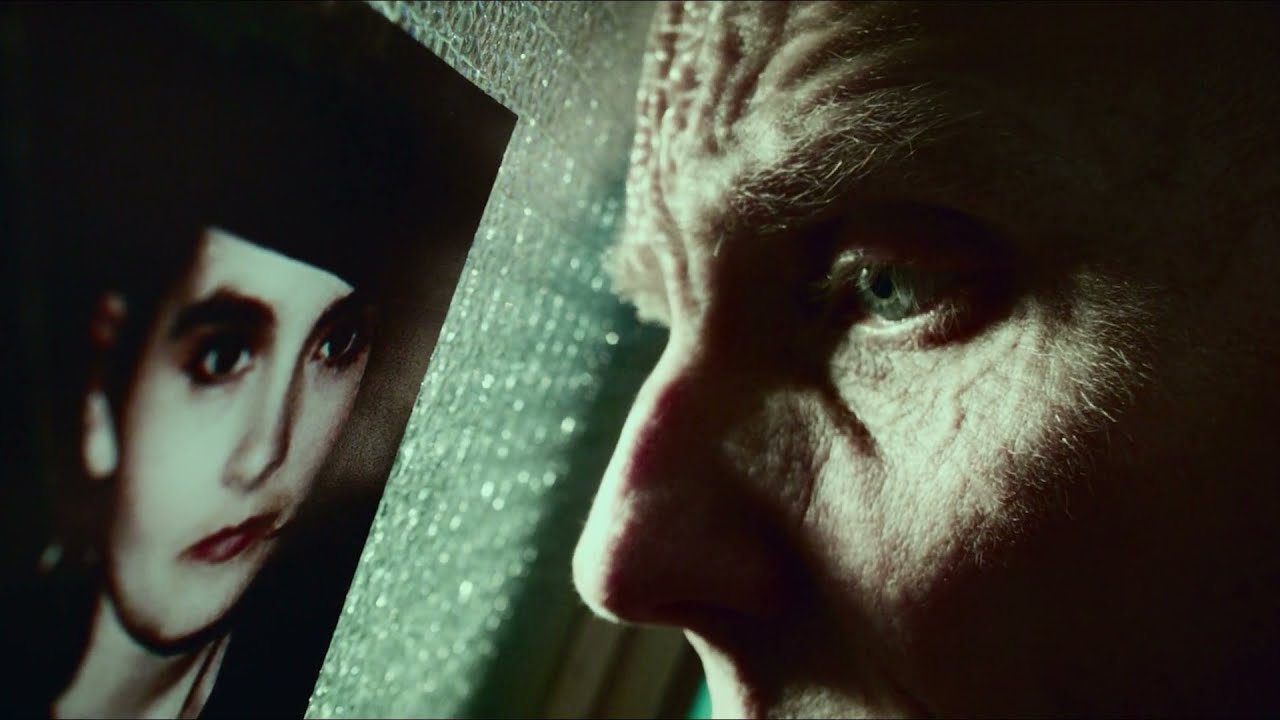
These stirring chords painfully re-interpret a track that became synonymous with the original film and its characters. We’re talking of course, about the exhilarating, bliss-triggering Born Slippy (Nuxx) - Underworld’s era-defining signature.
Although the version most of us know is this ‘Nuxx’ (allegedly an acronym for ‘New Underworld RemiXX) arrangement, the title ‘Born Slippy’ was previously attributed to a completely different track. Now largely forgotten in the wake of Nuxx’s success, that first version of Born Slippy is now something of a curio.
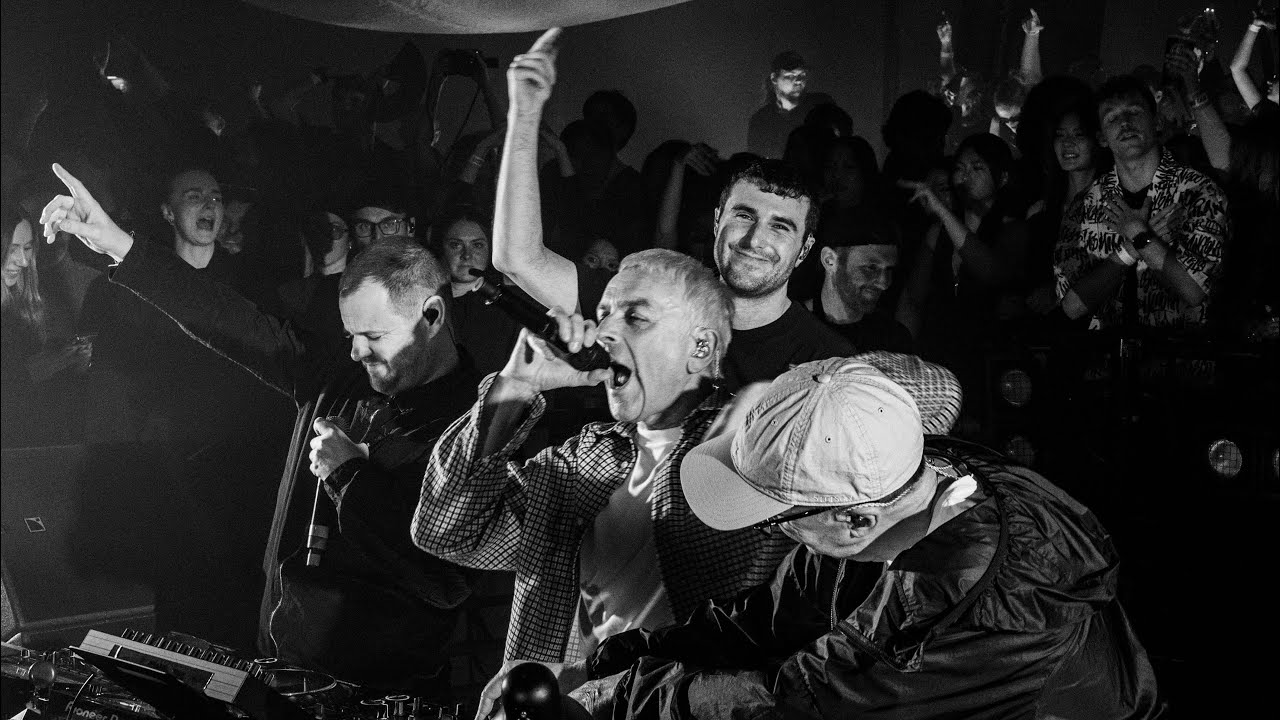
The ongoing multi-generational appeal of Born Slippy (Nuxx) shows no signs of slowing, and was recently spotlighted when Underworld’s two central figures, Karl Hyde and Rick Smith, dropped the track during a live collaboration with Fred Again (and the Streets' Mike Skinner) at Alexandra Palace earlier this year.
Its transcendental delayed chords elicited screams of excitement from the crowd - many of whom weren’t even born during the track’s heyday.
The song’s lyric, a stream-of-consciousness depiction of the inner-state of a drink and drug-fuelled hedonist, has often been misunderstood as a sort of celebratory summons to lose oneself in the moment. For its chief lyricist, Karl Hyde, the song marked a personal realisation that his lifestyle needed to change.
“The lyrics are quite ironic. At first it was kind of upsetting that it was used like a 'lager anthem', which was the antithesis of the way it was written,” Hyde told the BBC. “It was a piece of irony.”
Karl and Rick’s journey to creating Born Slippy (Nuxx) began way back in the late 1970s, when the pair met whilst studying in Cardiff.
“The first time I met Rick was in the corridor of my flat in Cardiff,” Karl told The Independent. “His mate was in the band I was in, and he came to repair our amplifier. As it turned out, it was full of knives and forks, which was why it didn't work. I remember that expression on his face, that bemused look of ‘You're an idiot,’ which he still often has.”

Shortly afterwards, and in need of a keyboard player, Karl sought out the elusive musical polymath to join him in his new musical endeavours. Together, Karl and Rick started a new band, dubbed the Screen Gemz.
Working together throughout the the 1980s, Hyde and Smith’s relationship deepened, evolving into a synth-pop outfit named Freur. Impressing the right people, they were soon signed to CBS Records for a three-year stint.
Smith’s fascination with synths led him dig deeper into the production domain. “[Rick] developed into an excellent producer and emerged from behind the scenes,” Hyde recalled in an interview with Self-Titled
But Smith and Hyde’s life as Freur would reach a fateful end after being dropped by CBS shortly ahead of the release of their second LP.
Unbowed, Rick and Karl resolved to continue in a new guise…
“Fortunately, we had just finished the music for a movie based on a Clive Barker book called Underworld when they dropped us,” Hyde told Self-Titled. “We thought that was a much better name than Freur.”
The original shape of the first (five-piece) version of Underworld was rooted in what Rick Smith later described to Billboard as ‘funk-rock, power-pop, indie’ and was ‘not dance-oriented at all.’
Despite being signed to Sire Records in 1988 and releasing two albums in quick succession, this wheels soon came off this first incarnation of Underworld in 1990.
In retrospect, Karl later surmised that this was the best thing that could have happened to the two young creatives.
“We’d subvert what we naturally did to fit an idea of what was going to be successful in the charts, and we just weren’t very good at it,” Karl told The Guardian. “We realised we were a band trapped in the body of another band. We were denying what we were."
With a not inconsiderable debt accrued from heavy investment in the failed first Underworld project, Hyde briefly embarked on session work in the US, before joining his former creative partner in relocating to Romford, East London.
Upon rejoining Rick, Karl was surprised to find that in the interim, his musical accomplice had been exploring new frontiers of sound with a 17-year old DJ prodigy named Darren Emerson.
"Karl came back to find me, this teenage lad, sitting in his studio, working with his partner," Darren said in a 1994 interview with Melody Maker "I'm sure he thought, 'What the f**k's going on? Who is this f*****g guy?' Nah, I'm just joking. It wasn't really like that."
"But it was!" Karl interjected in the same interview. "It was exactly like that. I loved the stuff you guys were doing together, you'd made some great dance tracks, but I had no idea how I was going to fit in with it.”
Together, the three worked out a new genre-agnostic future, and Underworld would be reborn. This time, it would be driven by the DIY-ethos of the club scene. Darren would remain Underworld's third member until the end of the 1990s.

“In England there was a whole new scene where people were making music, pressing vinyl - gigs could happen in a warehouse without the support of the record industry, without all the rules and criteria that we’d had to try and fit in for years,” Rick told Billboard. “The freedom of that, allied with the power of seeing what happens when people are connected by rhythm, it was transforming.”
After a salvo of single releases, this revitalised version of Underworld released a hugely impressive first album. Dubnobasswithmyheadman was released in 1994. An ultra-creative, idea-suffused melding of instruments, style and vibes. Its nine tracks clearly marked Underworld as new, chief players in the blossoming mainstream dance music scene. It was met with widespread acclaim from the critical cognoscenti.
“This breathtaking hybrid marks the moment that club culture finally comes of age and beckons to everyone” judged a breathless Melody Maker.
Underworld were finally on the radar of the taste-makers, but, unexpectedly, it would be the B-side to the album’s follow-up single Born Slippy that would launch the pair into the centre of popular culture.
A pulsing techno instrumental, the original ‘Born Slippy’ (named for a greyhound Hyde and Smith had recently won money betting on) was the group’s first release following their debut LP. But the 'Nuxx' version was no straightforward remix of this original track - it was an entirely different beast altogether.
There’s very little that links it with the more straightforward techno of the A-side, which was built around skittering breakbeats, blurry synth arps and an acidic bassline. Those looking for the basis of the Nuxx version’s iconic chord sequence and energetic lead vocal will be disappointed, though it still has its charms…
On the flip side of this original single was the track we now know and love, Born Slippy (Nuxx).
Karl's distorted, punky vocal delivered a fragmented montage of moments and inner feelings, penned after a particularly intense night out during a bleak period of his life when alcoholism had taken a firm hold.
“We used to go out drinking in Soho and I ended up in the Ship on Wardour Street,” Hyde relayed to The Guardian. “All the lyrics were written on that night. A drunk sees the world in fragments and I wanted to recreate that.”
Drive boy, dog boy, dirty, numb angel boy
In the doorway boy, she was a lipstick boy
She was a beautiful boy and tears boy
And all in your inner space boy
You had hand girls boy and steel boy
You had chemicals boy, I've grown so close to you, boy
Hyde’s lyric mirrored his internal monologue, responding to the substance-and-alcohol-enhanced stimulus of the night whilst the repeated references to ‘boy’ pointed to Karl's avoidance of responsibility.
“I think men are boys. Most of us haven't grown up, you know, most of us are still struggling with taking responsibility,” Karl told the BBC. “It's like, 'I don't want responsibility tonight, tonight I want to lose control' ... And so, it's ‘boy’ again.”
Bringing his scattershot lyric to the studio, Hyde was keen to record it. Rick rustled up the unrelenting pound of Nuxx’s central beat to order, mainly using a Roland TR-909. It matched the frenzy of Hyde’s vocal delivery, which was processed using a Roland VP-330 vocoder to add its fiery crunch. It was then drenched in reverb and delay.
“The vocals were done in one take. When I lost my place, I'd repeat the same line; that's why it goes, ‘lager, lager, lager, lager’. The first time we played it live, people raised their lager cans and I was horrified because I was still deep into alcoholism. It was never meant to be a drinking anthem; it was a cry for help. Now I don't mind,” Karl relayed to The Guardian.
The pair tracked more vocals than were eventually used, keeping the tape running to capture Hyde fully subsuming himself into the performance. Smith looped the beat continuously.
“Though the bones of the groove were there, the heart of it, when we did that first version, there was no structure,” Smith told Vice. “[There were] no chords. No 3D journey to the rhythm. It was he and I in writing, ranting mode.”
A few months later, Rick returned to the high-octane demo, and began to mould it into something that would soon come to not just be the outfit's key cut, but would define the entire age.
Smith landed upon a euphoric yet melancholic series of chords - Eb, Dm7 and Bb/D. This chordal motif was channeled through a chorus and reverb-soaked patch designed on Rick’s Waldorf Microwave, output via a delay in dotted 8ths. It resulted in an enormous sound.

This chordal motif ensconced the chaos of Hyde’s delirious night in a softening layer that, in Karl’s retrospective view, was a musical expression of his friend offering out a hand of support.
“I struggled with alcoholism for many years, and the impact on [Rick] must have been huge,” Karl told The Independent. “He was the first person to say, ‘Karl, do you think you've got a drink problem?’ I remember feeling outraged at the time. But the fact I respected him so much meant what he said kept going round my head. That was enough for me to entertain the idea of giving up.”
Smith’s chords would sandwich the raw an unfiltered intensity of the track in a plateau of calm, the very calm that its writer was searching for.
It made for a thrilling dynamic ride, too.
“Never underestimate how much it helps that my partner takes a positive view on the world. He grew up in a church - no wonder those fantastic chords at the beginning and end of Born Slippy are his. They came out of church. He doesn’t hear the dark in what I do. What is fascinating is that he sees what I do. It’s not just a two-dimensional, myopic view of the world. It’s a new, multi-dimensional perspective,” Hyde told Consequence.

Initially buried on the B-side of original Born Slippy. It wasn’t until Danny Boyle - then in search for fierce club-cuts for his new film project, Trainspotting - heard Born Slippy (Nuxx) that the song’s future was determined.
“I'd just heard Underworld's album dubnobasswithmyheadman and was in HMV on Oxford Street when I saw [the single] Born Slippy," Boyle told the BBC. "I bought it and took it home and [after playing the (Nuxx) version on the B-side] that was the moment: 'That's the end of the film!’”
It was the start of a beautiful friendship, as Hyde and Smith would strike up a close relationship with Boyle, which would later result in the Mancunian director appointing the pair as musical directors for the London 2012 Olympics' opening ceremony.
Trainspotting explored the dark side of hedonism and heroin addiction in Edinburgh, and deployed Born Slippy (Nuxx) during its bittersweet finale.
At first, however, the pair were reluctant to authorise its use, fearful of their music (and dance culture more broadly) being associated with the weight of the film's shocking, self-destructive themes. But viewing just fifteen minutes of Boyle’s superb piece of work changed their minds.
“Danny was wise and said ‘Come in and see a bit of the film.’ We saw about 15 minutes and then was completely, ‘You can do what you want mate. Have what you want.’ I was really struck by his sensitivity,” Rick told Vice.

Despite its depth and nuance in exploring the reality of heroin addiction and the aftermath of excess, the high energy of Trainspotting (and its ultra-cool soundtrack) became a vital mirror of 1990s club culture. With its success, the brilliance of Born Slippy (Nuxx) was subsequently absorbed by millions.
In the wake of this renewed post-Trainspotting popularity, the song was promptly re-released on July 1st 1996. This time, Born Slippy reached number #2 in the UK charts.
Oddly, by following their own off-beat creative drive as Underworld Mk2, the three had somehow landed at the very pinnacle of British popular culture.
“I couldn’t believe it! It just seemed so out of context. ‘This song, on breakfast radio?!’ It was such a shock,” Smith told Vice. “What?! When did the world change that this belongs here?’ Mad. It didn’t make sense, and not in an unpleasant way. I thought, music is moving, culture is moving, it’s spreading.”
Now thirty years on, and Born Slippy (Nuxx) remains not only a floor-filling club staple, but a perfect encapsulation of both the highs and lows of hedonism, the ugly and the beautiful and the hellish and the heavenly.
“It’s been a remarkable piece of music for us," Smith told Vice. "It feels like it almost came from somewhere else.”
