


It’s incredible to think that just six and a half years after the Beatles’ first single, Love Me Do, had peaked at a modest 17 in the UK chart, the band that went on to shake the foundations of popular culture were trying to find the right words to say goodbye.
The Fab Four’s final year had kicked off in a flurry of activity, with the writing and recording of the Let it Be LP documented in real-time by director Michael Lindsay-Hogg, throughout January 1969.
Beginning at Twickenham Studios before relocating to the Apple Corps studios at 3 Savile Row, the events of that frosty month would become the stuff of legend.
Although intended to be a quite innovative, fly-on-the-wall insight into the songwriting process of the world’s favourite band, which would culminate in a triumphant return to the stage, Lindsay-Hogg’s final edit of the film depicted the Beatles as a band fast running out of road. Their slow demise was seemingly inevitable, or so the footage that made up the spirit-crushing 1970 docu-movie, Let it Be, suggested.
But once the rushes and archive material were finally exhumed, examined and polished-up to produce Peter Jackson’s expansive, eight-hour labour of love, Get Back in 2021, it was clear the unbearable atmosphere of animosity had been heavily overstated.
The established perception of non-stop bickering through that timeframe was pretty wide of the mark. However, it wasn't all smiles and japes either. Yes, the signs of the band’s inevitable dissolution were absolutely there, but the tension was counter-balanced by an obvious mutual respect, which the original film omitted.
These four (still young) men who’d shared a decade of closeness had an unshakeable bond, and a musical synergy that was unrivalled.

“It takes a lot to live with four people over and over for years and years, which is what we did,” John Lennon reflected in 1970 (and quoted in the Beatles Anthology). “And we’d call each other every name under the sun. We got to blows. We’d been through the mill together for more than 10 years.”
The biggest driver of the band's looming split was the clear fact that each member had grown into a distinct creative entity. Lennon and Harrison in particular wanted to pursue their own visions without interference from the others. But, despite containing some truly magnificent Beatles songs, the scrappy Let it Be would be an unworthy final statement for a band who'd meant so much.
It couldn't end this way, surely?
The Beatles’ legendary producer George Martin agreed…
“Let it Be was such an unhappy record, even though there was some great songs on it,” Martin said in The Beatles Anthology. “I really thought that was the end of the Beatles. I thought I would never work with them again. I thought what a shame to go out like that. So I was quite surprised when Paul rang me up and said ‘We’re going to make another record, would you like to produce it?’ My immediate answer was, ‘Only if you let me produce it the way we used to’.”
This ‘one last record’ gambit was risky. The then still unreleased Let It Be had not panned out as devised, who was to say another attempt would be any different? This time however, the Beatles' knew it was their final shot. Which goes some way to explaining just why Abbey Road sits among the greatest albums of all time.
If you’re reading this, you already know that, of course. Bursting with innovation (including an early use of the Moog) and musical adventurousness, Abbey Road would sport some Beatles all-timers; Something, Because, Come Together, Here Comes the Sun… and yes, erm, there’s Maxwell’s Silver Hammer too.
While Abbey Road’s first half consisted of six standalone songs, the second side was largely dominated by a sequence of songs that were smushed together into a flowing medley. This final machine gun spray of colours gave lie to the idea that the band were struggling with a dearth of ideas.
Often considered a part of this final medley - but sequenced as a standalone sub-suite (and still regularly performed as such by Paul McCartney as a concert-closing crescendo) - the three-act conclusion of Abbey Road - Golden Slumbers, Carry That Weight and The End - was, and is, the ultimate swan song.
It’s quite odd, then, to learn that this whole movement actually started out as three quite different pieces.
Perhaps the most beautiful moment on Abbey Road (and I'd argue, their entire catalogue), Golden Slumbers came to Paul when visiting his father’s home, Rembrandt, in Cheshire, near Liverpool. Money couldn't buy Paul love, but it certainly came in handy when purchasing this house for his dad back in 1964.
Curiously rifling through the sheet music collection of the very parent who’d first steered him into music as a child, McCartney pulled out a musical nursery rhyme compendium. In it, he discovered a piece with an eye-catching lyric, entitled ‘Cradle Song’.
At first, Paul didn't realise that the charming lullaby was close to 400 years old (370 to be exact). It had been originally penned by Thomas Dekker way back in 1599, and published as part of his 1603 play Patient Grissel. The piano arrangement, however, had been applied to the poem much later in the 19th Century.
Falling in love with the sweet lyric (and being unable to read sheet music) McCartney came up with his own chord sequence and melody, and used these dusty, forgotten words (now long out of copyright) as the basis for a brand new song.
In 2021’s The Lyrics, McCartney reflected on his motivation to pilfer the poem, and the notion of taking an element from a much older song and creating something new in general, as being tantamount to what would be later regarded as sampling.
The original lyric read;
Golden slumbers kiss your eyes,
Smiles awake you when you rise
Sleep, pretty wantons; do not cry,
And I will sing a lullaby
Rock them, rock them, lullaby
“I liked the words so much. I thought it was very restful, a very beautiful lullaby, but I couldn't read the melody, not being able to read music,” Paul said in Paul McCartney: Many Years From Now. “So I just took the words and wrote my own music. I didn't know at the time it was four hundred years old.”
Paul added the emotive opening lyric ‘Once there was a way, to get back homeward. Once there was a way, to get back home’. With its overt reference to ‘getting back’ home, it’s easy to make a connection to the then in-progress Let It Be sessions, and that project’s pointed ‘returning to our roots’ theme (the songs Two of Us and Get Back especially).
“When I wrote the song, I hadn't been back home to Liverpool for a long time. But now I was at my dad's house, which wasn't quite home because it was a house I'd bought him when I got some money,” Paul said in his 2021 book, The Lyrics. “But it was still Liverpool, and it was 'homeward.' So I added, 'Once there was a way to get back homeward, Once there was a way to get back home.' The song turned out to be quite soulful, and I think that's what attracted me to those lyrics in the first place - that notion of consoling a baby or reading kids a bedtime story."
Paul can be seen playing the early version of Golden Slumbers to an assembled huddle of band members and personnel in the first instalment of Get Back. But, as time was short on the project, the question of just what to do with this pleasant little ditty would have to wait.
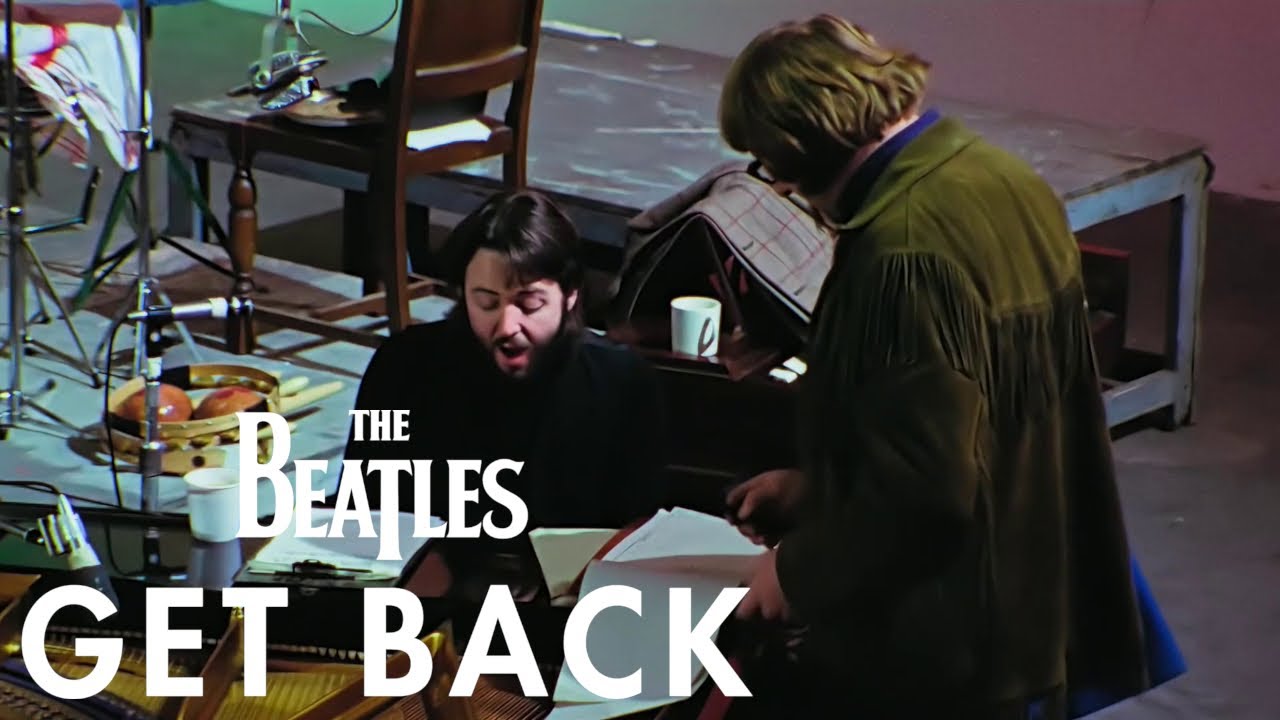
Similarly, the suite’s second act, Carry That Weight, was also a holdover from the Let It Be sessions. Another Paul-penned song, Carry That Weight was designed as a lightweight character-piece to be fronted by Ringo. A spiritual successor to the previous year’s Don’t Pass Me By in its jaunty tone, and 1965's Act Naturally in its comedic, story-based structure, the original idea was explained by Paul to Ringo at Twickenham (as can be seen later in the above Get Back clip).
“See, that could be a verse about ‘got in trouble with the wife, got drunk’ and so and so,” Paul briefed Starr on the song's original concept. “‘Then ‘I woke up the next morning with a weight upon my head, and I found out, it was my head’ - they’re just normal kind of troubles that everyone has.”
In its new context, as the penultimate track on the Beatles’ final album, the titular ‘weight’ referred to in the song would feel much more profound than Paul had originally intended.
It’s hard not to read the final version’s jubilant, four-way singalong as a knowing admission that the legacy of having once been in the world’s most important band would be a cross that each member would have to shoulder for the rest of their lives.
Boy, you're gonna carry that weight
Carry that weight a long time
Boy, you're gonna carry that weight
Carry that weight a long time
And then, of course, came the Beatles’ final song.
Originally dubbed ‘Ending’ the song that would become The End was ostensibly built around a range of instrumental solos from each member, which drove headlong towards one final, gleaming assurance, before closing the book on the Beatles forever.
Tying together the threads that lead back through All You Need is Love, Hey Jude, She Loves You, I Want to Hold Your Hand… and all the way to Love Me Do, the song canonised the overriding theme of the Beatles’ entire songbook: The importance of love.
And in the end
The love you take
Is equal to the love you make
"I wanted it to end with a little meaningful couplet, so I followed the Bard [William Shakespeare] and wrote a couplet,” McCartney cheekily admitted in Paul McCartney: Many Years From Now.
Whether intentional or not, this Shakespearian allusion felt like connective tissue between the Beatles’ story and that of the ruff-sporting bane of many an English Literature students' life…
Hundreds of years prior, Shakespeare’s status had, in a way, mirrored the Beatles’ own. Penning plays for a mass market audience, yet layering his work with nuance and timeless resonance that would be unpicked for centuries to come. They had both created art that would go on to touch the lives of millions, both in their own time, and in the far future.

The recording of these final tracks began surprisingly early in the Abbey Road recording sessions, on the second day of the album's recording sessions proper in fact (July 2nd 1969 - although some initial recording had sporadically been going on since February).
Golden Slumbers and the trimmed version of Carry That Weight were the first to be recorded, and had already been compacted together to make one long song. As the down-on-his luck verse of the latter was never fully finished (and wouldn't really fit in its new context) a bridge section filled out the arrangement by returning to the central motif and verse structure of earlier Abbey Road medley opener, You Never Give Me Your Money. This neatly hooked-up this final mini-suite back on to the overarching 16-minute medley which had started with that song.
“Each track could have stood on its own,” The late, great Beatle-engineer Geoff Emerick told us back in our 2014 interview. “A concept started to come from Paul to tie the songs together, which helped to make the numbers seamless and unified. The same thing held true for Golden Slumbers and Carry That Weight: everybody was firmly on board with unifying the songs - well, except for John, who had to be talked into it. He didn't want to do another 'concept album' like Sgt Pepper."

Lennon’s skepticism could be easily put to one side when it came to these initial recording days, however, as he wasn’t there. Lennon was enduring an unenviable five-day stint in hospital following a nasty car crash in Scotland.
Without their former leader, Paul, George and Ringo tracked 15 separate takes (although some were aborted) with Harrison providing bass on a Fender VI baritone guitar while Paul played piano. It was takes 13 and 15 that ended up being the ones that would be fused into the final studio recording, with McCartney’s extraordinarily soulful lead vocal performance of Golden Slumbers captured later that month.
Paul’s Golden Slumbers’ vocal has since become the subject of numerous (fairly funny, to be fair) comedy skits on TikTok and Instagram, most making fun of Paul’s sudden lurch from the softly delivered introduction of the lullaby, into a deep-throated roar during the line ‘Smiles, AWAKE you when you rise’.
As with Oh! Darling on Abbey Road’s first side, this was a conscious nod to his foundational, bluesy influences (Little Richard, Fats Domino, etc) and, you could say, served as something of a ‘vocal solo’ - underlining the range that Paul could now stretch to.
Fully recovered from his accident (and after receiving 17 facial stitches), John returned to the studio on July 23rd just in time to cut The End, which was devised around final flourish solos from each Beatle.
Even the drum solo-shy Ringo gave it his all - taping the only drum solo he’d ever done throughout the Beatles’ entire recording history. But it wasn’t easy to get him to play ball…
"And then, of course, we get to the famous parts of The End - the drum solo and the three-way guitar solos,” Geoff Emerick told us back in 2014. “The thing that always amused me was how much persuasion it took to get Ringo to play that solo. Usually, you have to try to talk drummers out of doing solos! [laughs] He didn't want to do it, but everybody said, 'No, no, it'll be fantastic!' So he gave in - and turned in a bloody marvellous performance!
"It took a while to get right,” Geoff continued on Starr’s spotlight moment, "and I think Paul helped with some ideas, but it's fantastic. I always want to hear more - that's how good it is. It's so musical, it's not just a drummer going off."

According to an interview, cited in Andy Babiuk’s extremely useful tome, The Beatles Recording Gear (although our copy is falling to bits at this stage…), the nervous Ringo actually decided to just nab the shape of his solo from Iron Butterfly’s In-A-Gadda-Da-Vida.
“We played London back in ’71,” Iron Butterfly drummer Ian Bushy told Babiuk, “and Ringo and Paul came to see us. Ringo sent up his man backstage and invited me out to a private club called Tramps. We had dinner and were up all night. He told me that he kind of copped my solo for their song The End on Abbey Road. And I just thought that was cool. It was the biggest compliment I could ever get.”

As Geoff told us, exactly what the guitar-toting other Beatles were actually going to play was left to chance, and relied on their hard-forged musical instincts.
“Everybody said, 'Yes! Definitely' - well, except for George, who was a little apprehensive at first. But he saw how excited John and Paul were so he went along with it. Truthfully, I think they rather liked the idea of playing together, not really trying to outdo one another per se, but engaging in some real musical bonding,” recalled Emerick.
Atop a previously captured back-and-forth chordal shuffle, the three men agreed to stand together for their final bow.
"Yoko was about to go into the studio with John - this was commonplace by now - and he actually told her, 'No, not now. Let me just do this. It'll just take a minute.' That surprised me a bit. Maybe he felt like he was returning to his roots with the boys - who knows?
"The order was Paul first, then George, then John, and they went back and forth. They ran down their ideas a few times and before you knew it, they were ready to go. Their amps were lined up together and we recorded their parts on one track."

To cut their respective solos, most sources agree that Paul was armed with his Epiphone Casino, George his red Gibson ‘Lucy’ Les Paul and John his sanded Epiphone Casino that he’d famously played atop Savile Row a few months prior.
Emerick explained in his book, Here There and Everywhere, how he approached capturing these distinct tones; “While they were practicing, I took great care to craft a different, distinctive sound for each Beatle, so it would be apparent to the listener that it was three individuals playing and not just one person taking an extended solo. They were each playing a different model guitar through a different type of amplifier, so it wasn't all that difficult to achieve. I had Mal (Evans) line the three amps up in a row - there was no need for a great deal of separation because they were all going to be recorded on a single track. Because there was little overlap between each two-bar solo, I knew that I could balance the levels afterward simply by moving one fader.”
On the final track, the order of players ran as Paul, George then John for three two-bar cycles. McCartney’s initial solo was typically wiry, and somewhat reminiscent of his lead parts on Drive My Car and Taxman, while Harrison’s fluent Les Paul flourish leapt out in a triumphant bend, Lennon’s brutish, quick fire hammer-on, pull-off part, meanwhile, evoked his ferocity. Their characters defined, the exchange continued. At this point it was rare for the three to be spontaneously playing together. Lost in the joy of creation, smiles abounded.
Emerick was overawed at what he witnessed;
"You could really see the joy in their faces as they played; it was like they were teenagers again. One take was all we needed. The musical telepathy between them was mind-boggling,” Geoff told us.

For the final coda of The End, a lonely, insistent piano note called for attention, before McCartney delivered his Shakespeare-inspired summation of the Beatles’ legend. Following this, a lead guitar line coiled itself around some utterly spellbinding, ascending vocal harmonies as strings swelled.
For us Beatle obsessives, this moment is the very sound of a band transcending human form - elevating themselves into their rightful place as a permanent place of the cultural firmament.
Even Lennon, who’d been cynical about the whole concept of a medley - and would later bemoan what he viewed as overwrought orchestra - was on-board with the final statement of The End… although he’d forget exactly how it went when speaking to David Sheff for Playboy in 1980, shortly before his untimely death.
“On [The End]. He had a line in it [sings] ‘And in the end, the love you get is equal to the love you give [sic],’ which is a very cosmic, philosophical line. Which again proves that if he [Paul] wants to, he can think.”
The three-part finale was cemented by the aforementioned orchestral overdubs, which came via a 30-piece orchestra. Paul felt it was needed to emphasise the importance of the suite. Across Abbey Road’s Studio One and Two, George Martin and the team recorded 12 violins, four violas, four cellos, string bass, four horns, three trumpets, trombone and a bass trombone.
The final result was everything that Paul had hoped - a fitting, and happy, finish to the Beatles' recording story.
But, even as the final notes of The End faded, the Beatles’ had one more surprise up their sleeve…
The surprise was an unexpected fragment of a song called Her Majesty, a somewhat comical love letter to the Queen which had been taped by McCartney with his Martin D-28 acoustic guitar on July 2nd as a prospective bridging piece that would slot in earlier during the Abbey Road medley.
However, not liking how the track sounded when placed between its original bedfellows (Mean Mr Mustard and Polythene Pam) McCartney instructed it to be jettisoned.
However, serendipity (or the hand of fate) intervened. Second engineer John Kurlander had been specifically instructed not to destroy anything the Beatles had put their name to. So John, not knowing how to file the discarded song, stitched the take of Your Majesty to the end of the final album’s master - for safe keeping purposes - after 20 seconds of leader tape.
Kurlander left clear instructions for mastering engineer Malcolm Davies, to not include the 23 second Her Majesty part when finalising the release press of the album. But Davies was operating under a similar strict zero-disposal policy.
And so, in a slightly Python-esque deference to studio bureaucracy, Davies cut the whole thing to lacquer. Her Majesty and all.
When they heard the final album, with Her Majesty tacked onto the end (along with a jarring crash of the last chord of Mustard), the band were besotted by this cheeky show-stealing moment. It deliciously undercut the heavyweight scope of The End suite.
And so, fate dictated that Abbey Road couldn't truly end until the man who'd persevered in pushing the Beatles to create their closing statement, had received one final curtain call.
Opting to keep the title off the track listing on the back of the album, Her Majesty stakes a claim as the earliest hidden track in music history. A final first to add to their already impressive list of groundbreaking moments.
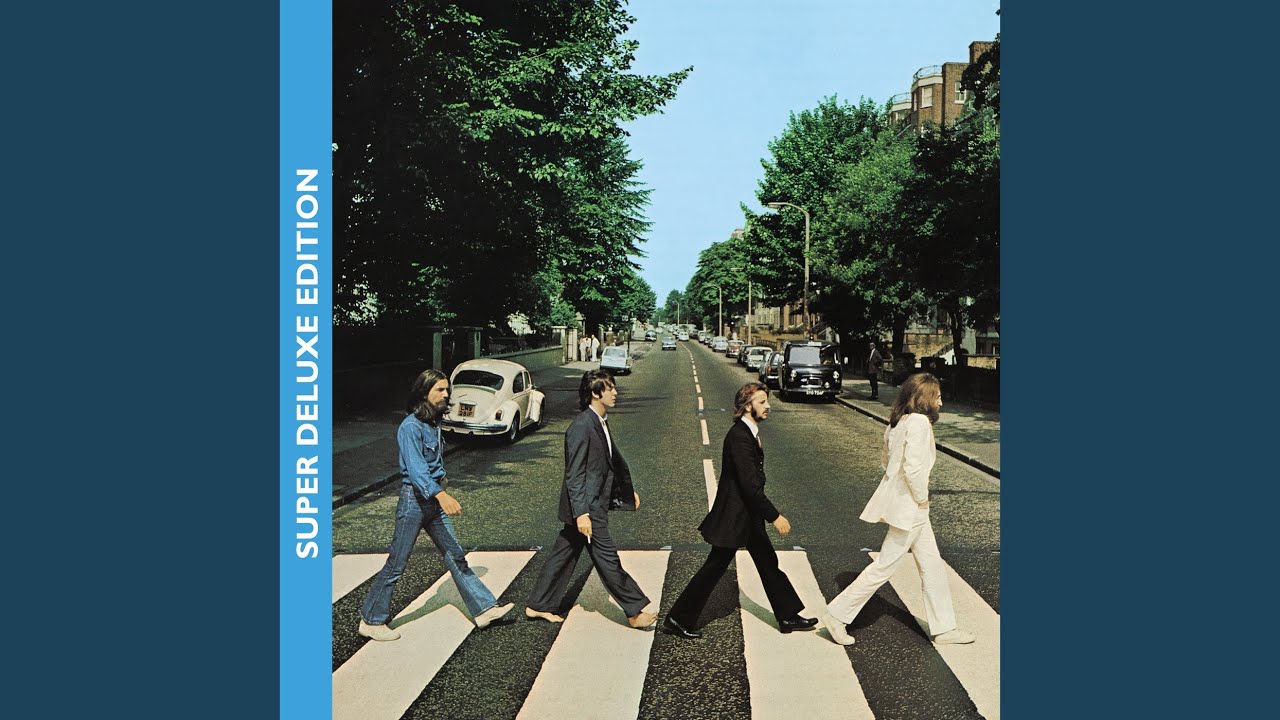
Abbey Road called time on The Beatles' story, But, as individuals, the four continued to thrive.
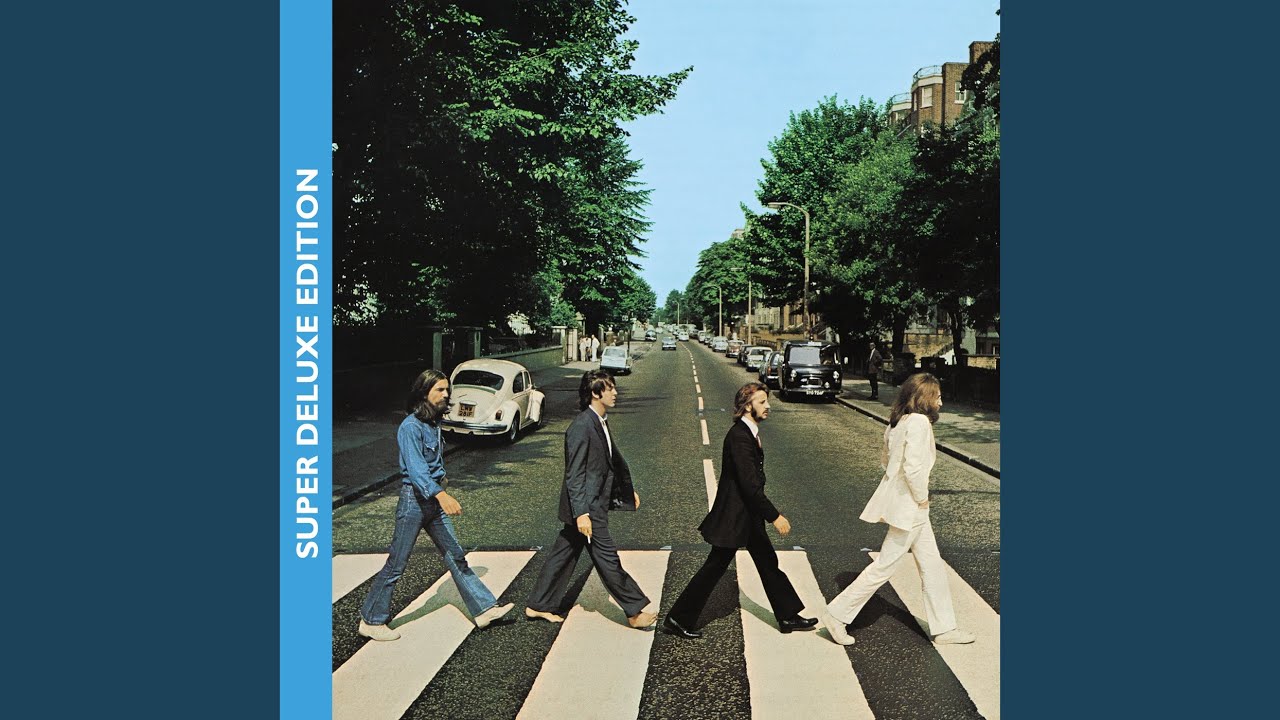
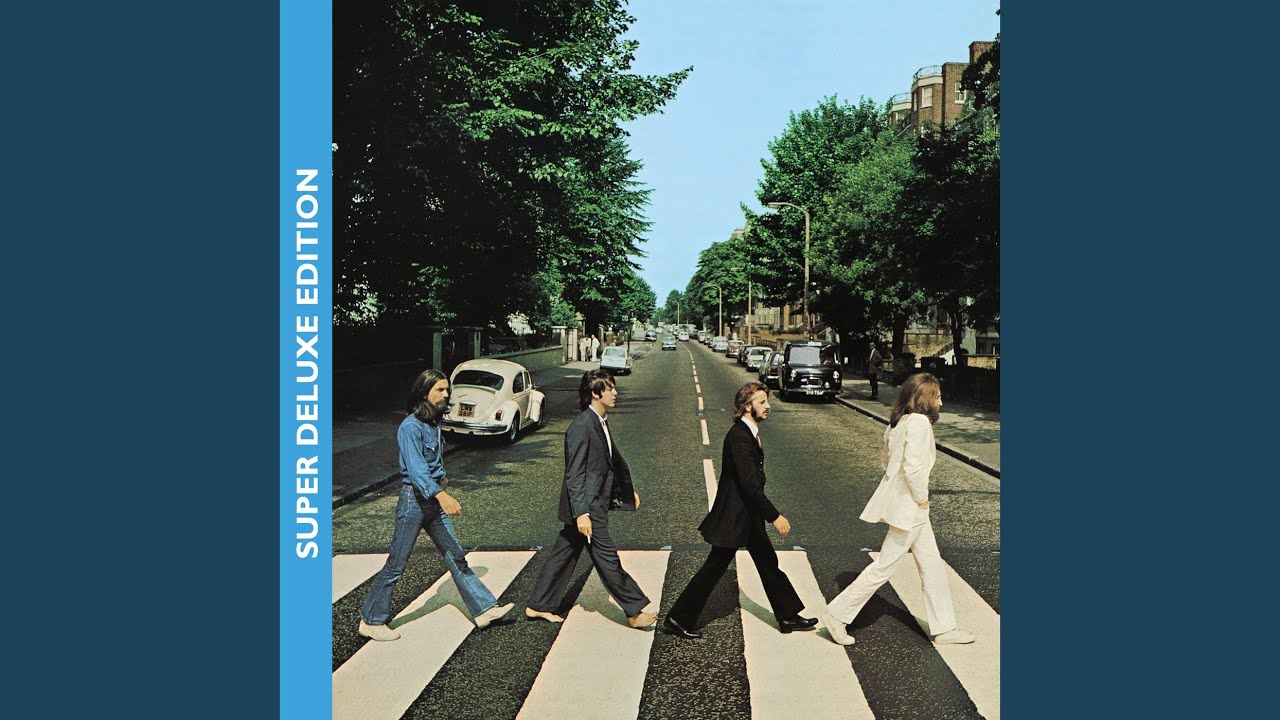
As visually represented on its iconic zebra crossing-walk cover, by the conclusion of Abbey Road each member of the band was now somebody far different from who they were when they first walked through the doors of EMI Recording Studios.
The uniformity of their earlier besuited, mop-topped era felt like it was lifetimes ago. Now, these ex-Beatles strode out of Abbey Road as individuals, walking onward, out into their futures.
But, in their own way, they’d each have to carry the weight of being a former fourth of the world's greatest band, for a long time.

