


As a teenager living in New York City in the ’60s, Paul Stanley saw many legendary performers on stage – from the greatest rock bands to the stars of soul and blues. But there was one show above all others that had a profound effect on his life.
In a 2019 interview with Outlaw magazine, Stanley discussed his early years and they key influences that shaped Kiss, the band in which he found fame and fortune in the ’70s.
He began by describing how he first fell in love with music.
Born Stanley Bert Eisen in Manhattan in 1952, he suffered from microtia, which resulted in his right ear being misshapen, rendering him partially deaf, and making him a target for bullying in school.
But he loved music, and despite his condition he found he could sing and play guitar. This was all he needed to transform his life.
Stanley told Outlaw: “I’ve loved music from the time I was five years old. I was fortunate that my parents educated me in music, whether it was classical or opera or show tunes… and somehow I found my way into rock ’n’ roll.
“I dreamed of being a teenager, because all these songs seemed to portray this magical life of romance and high school dances and teenagers in love. I watched Dick Clark’s American Bandstand and saw everyone from Eddie Cochran to the Elegants to Dion & The Belmonts. So I was hooked from then.”
In February 1964, just a year before Stanley became a teenager, he was one of 70 million Americans watching The Beatles making their first appearance on the Ed Sullivan Show.
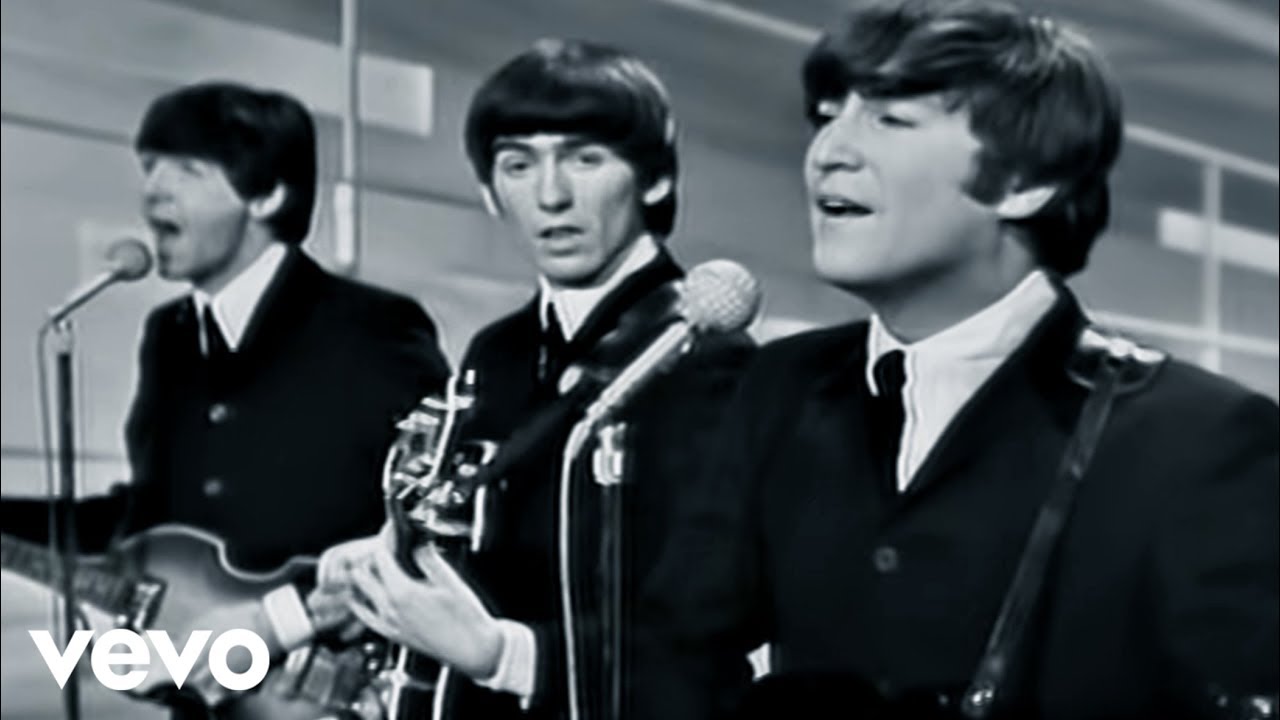
This was a defining moment for The Beatles, and also a defining moment for the young Paul Stanley.
“That was really an epiphany for me,” he said. “I remember I was completely enchanted and blown away by The Beatles’ energy, the urgency and the camaraderie between them, and of course what they looked like.
“And in that moment, this chubby little kid with a deformed ear looked at that TV and all of a sudden I went, ‘I can do that!’
“It never meant that I could be The Beatles, but something inside me said, ‘I can touch that nerve, I can connect to people.’
“Now, that’s a little absurd for a kid who neither had many friends nor was very social, nor was the best looking kid on the block, but The Beatles showed me what I wanted to do. I wanted to make music. I wanted to perform.”
The Beatles turned Paul Stanley into a committed Anglophile.
He said: “I followed all the great bands of the first British Invasion, as we called it. I stayed up all night listening to The Beatles, The Searchers, The Dave Clark Five, the Stones, The Animals.”
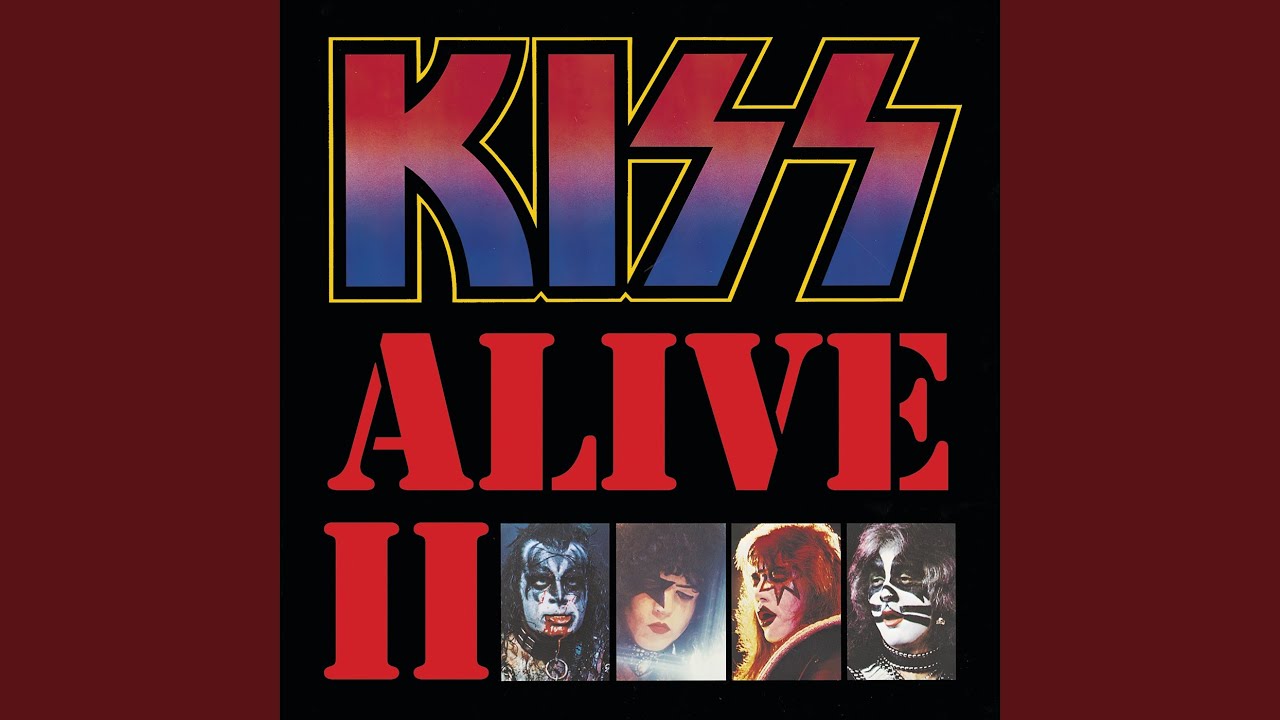
The second Kiss live album, Alive II, included a cover of The Dave Clark Five's 1964 hit Any Way You Want It.
Stanley said of his teenage obsession: “I started going deeper, at least in terms of the British scene. I would go once a week to an international newsstand in Greenwich Village and pick up The Melody Maker, NME and Sounds, and read about all these bands that really didn’t mean anything in America but sure as hell looked great. I became a big fan of The Move and The Pretty Things…”
He told Outlaw about some of the great shows he witnessed as a teenager.
“Oh my. I was fortunate enough to see Otis Redding when I was fifteen. I saw The Temptations, I saw John Lee Hooker…”
And there was one show in particular that shook him to his core.
He recalled: “The pivotal thing for me that really opened my eyes to the enormity of what I wanted to do was seeing Led Zeppelin in August of ’69, when I was seventeen. I was speechless to see that kind of God-given ability, and it was humbling to know that I would never achieve that. You never forget something like that.”
![Led Zeppelin - Babe I'm Gonna Leave You (Danmarks Radio 1969) [Official Video] - YouTube](https://img.youtube.com/vi/wO6bRjcyQN8/maxresdefault.jpg)
He added: “We don’t necessarily reach the heights that those who inspire us have reached, but I knew I should aim for it. You don’t know how good you can be, but everybody wins when you do your best.”
Fortunately, when Paul Stanley was in his late teens he met another young man in New York City who shared his musical sensibilities and his aspirations. Like Stanley, he was from a Jewish family. His name was Gene Klein, although he was born Chaim Witz and would subsequently take the name Gene Simmons.
Stanley joined Simmons’ group Rainbow, later renamed Wicked Lester. Having signed to Epic Records, the band made one album which remained unreleased. In 1972 their contract with Epic was terminated.
But in the wake of that defeat, Stanley and Simmons stuck together. In 1973 they formed Kiss with lead guitarist Ace Frehley and drummer Peter Criss. And with their outlandish image, like superheroes straight out of a Marvel comic book, they became one of the biggest bands in the world.
As Stanley stated to Outlaw: “From the start, I always thought of Kiss as a rock band, not a metal band.”
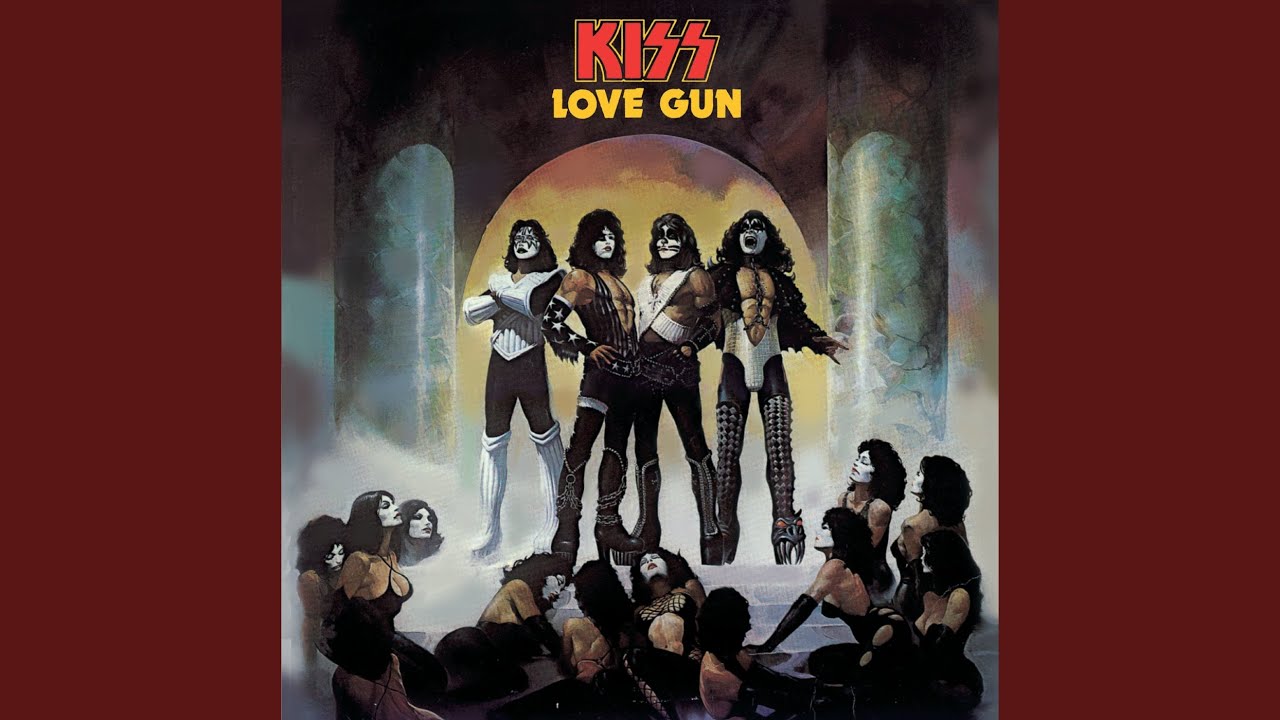
Certainly, in the early Kiss albums from the 1970s there is evidence of a wide range of influences, and the 1977 album Love Gun ended with a version of The Crystals’ 1963 hit Then He Kissed Me (retitled Then She Kissed Me). The song was written by Brill Building legends Jeff Barry and Ellie Greenwich with producer Phil Spector.
Stanley said of the Kiss approach: “We’ve always written tunes. We don’t jam. We don’t play twenty-minute songs about slaying dragons or anything of that sort.
“Our songs have always had intros and verses and choruses and bridges – the things that made all the greats what they were.
“Where were The Beatles coming from? They were coming from Motown, Little Richard, Chuck Berry and The Everly Brothers, and also the Brill Building – Carole King, Gerry Goffin, Barry Mann and Cynthia Weill, Jeff Barry and Ellie Greenwich… So really, in all of that you’ve got the roots of Kiss.”
