


It’s been announced that Sonny Rollins, saxophone colossus and one of the giants of 20th century jazz has died. He was 95.
His passing was announced on his website yesterday (May 25) with “deep sorrow and profound love”, together with a quote from the man himself, from 2009, reflecting on mortality: “I think when the creative person ends, he continues in the next existence. I’m a person who believes this life isn’t the be-all and end-all of everything. A spiritual person doesn’t feel like that.”
Rollins was among the last living links to the bebop era, a collaborator with the likes of Miles Davis, John Coltrane and Thelonious Monk. Born Walter Theodore Rollins in 1930, he was nicknamed Sonny by his grandmother and was already playing professionally in the late 40s. His rise to prominence did contain a few bumps in the road though. He was a heroin addict in his early 20s, and in 1950 spent time in prison for an armed robbery to feed his habit. However, on getting clean, his career went into overdrive. Between 1956 and 1958 he released fifteen albums, including the landmark set Saxophone Colossus.
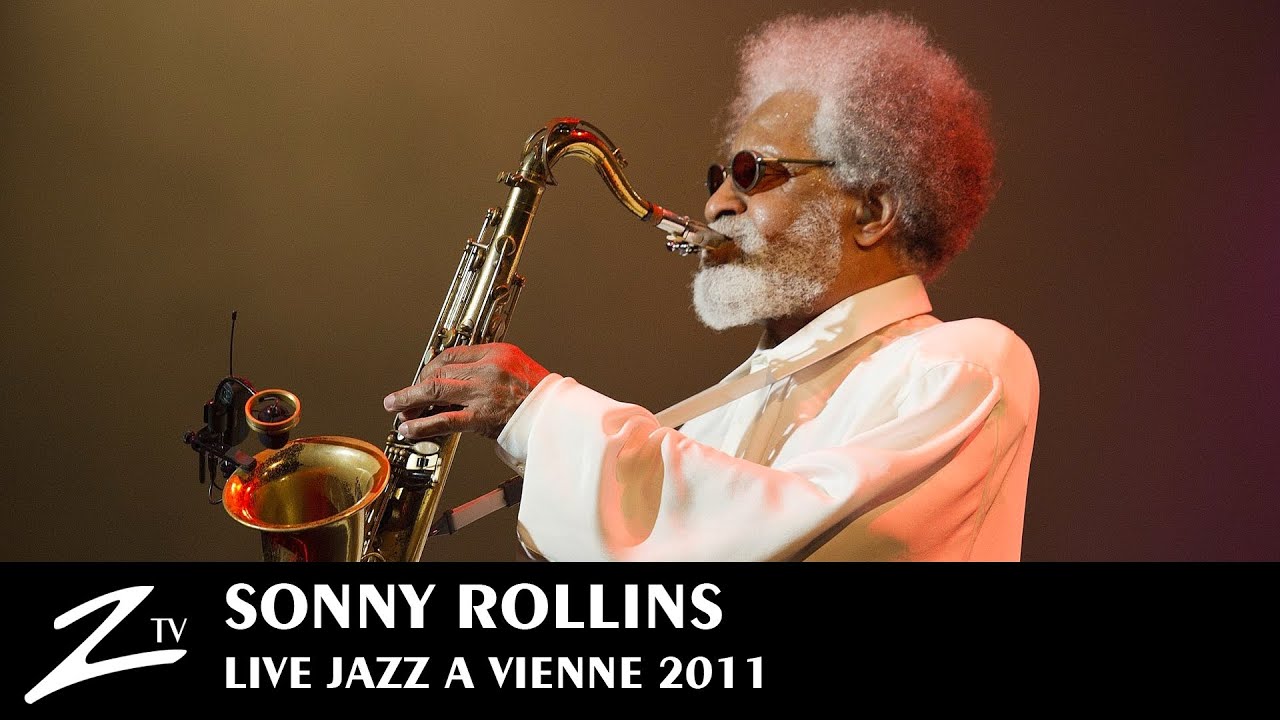
He was never a musician to rest on his laurels. From 1959, Rollins took a break from recording and performing, and decided instead to practice - in public - daily, on the pedestrian walkway of the Williamsburg Bridge; a sabbatical of sorts that inspired his 1962 album The Bridge.
Jazz as an artform is founded on improvisation and Rollins excelled in it, becoming known for his lengthy solos. In an interview with PBS, he once said that he always went on stage with his mind blank other than the structure of the piece: "Improvising on it, that I leave completely to the forces. Sometimes I'm surprised by what comes out."
During the 1970s and 1980s, his music diversified, drawing in influences from funk, calypso, pop and R n’ B, and he guested on the Rolling Stones' 1981 album Tattoo You. He was awarded a lifetime achievement Grammy award in 2004 and continued to perform until 2014, when he was diagnosed with the lung disease pulmonary fibrosis.
For a man like Rollins, retirement must have been hard to take. Even as late as 2013, he was insisting he still had more to achieve: “People say, ‘Sonny, take it easy, lean back. Your place is secure. You’re the great Sonny Rollins; you’ve got it made.’ I hear that and I think, ‘Well, screw Sonny Rollins. Where I want to go is beyond Sonny Rollins. Way beyond.’”
