
Singer Paul Rodgers and drummer Simon Kirke were in two great bands together – first Free and then Bad Company. But when the latter band broke up in the early ’80s, it happened after Rodgers punched Kirke during the making of a terrible album.
In new interviews with MOJO magazine, Rodgers and Kirke – the two surviving founder members of Bad Company – tell the story of the band’s rise, fall and resurrection.
It’s a story that begins with the demise of Free due to the erratic nature of guitarist Paul Kossoff, whose addiction to hard drugs eventually led to his death in 1976 at the age of 25.
Free enjoyed considerable success in the early ’70s with a string of acclaimed albums and three hit singles in My Brother Jake, Wishing Well and the famous anthem All Right Now.
But by 1973 Free had split for the second and final time, and within a year the debut Bad Company album was launched.
As Rodgers recalls to MOJO: “After Free, we wanted a band that was really sharp and together. I don’t know if Bad Company finished what Free started. But without Free there wouldn’t have been a Bad Company.”
Joining Rodgers and Kirke in Bad Company were guitarist Mick Ralphs and bassist Raymond ‘Boz’ Burrell.
Ralphs had struck up a friendship with Rodgers back in 1971. At that time, with Free temporarily disbanded, Rodgers was fronting a trio named Peace. Ralphs was a member of Mott The Hoople, a band that would achieve a major breakthrough in 1972 with the hit song All The Young Dudes, written by David Bowie.
On a UK tour with Peace serving as Mott’s opening act, Rodgers and Ralphs bonded over a love of vintage soul music. The pair reconnected after Free split and Ralphs left Mott.
“When we started writing together,” Rodgers says, “that songwriting turned us into a band.”
Once Kirke was on board, there was a brief period when they considered bringing Paul Kossoff into the group. That idea was quickly abandoned when it became clear that Kossoff couldn’t get his act together.
Boz Burrell was the final piece of the jigsaw. Previously a member of progressive rock pioneers King Crimson, Burrell loved to play jazz, but easily adapted to Bad Company’s blues-based hard rock style.
Peter Grant, the fearsome figure handling the affairs of Led Zeppelin, was enlisted as co-manager of Bad Company and signed the new supergroup to Zeppelin’s vanity label Swan Song.
As Rodgers recalls: “Peter said, ‘You take care of the music, I’ll look after everything else.’”
Bad Company’s self-titled debut album was a sleeper hit that eventually climbed to No 1 on the US Billboard 200 in 1974.
The album’s opening track and lead single Can’t Get Enough was a Mick Ralphs composition that had been rejected by Mott The Hoople. The song’s lean power and swagger defined the band’s sound, as did Rodgers’ soulful voice.
At Rodgers’ suggestion, Bad Company also reworked Ralphs’ song Ready For Love, which had been included on Mott’s All The Young Dudes album.
Rodgers, meanwhile, provided the band’s moody signature song Bad Company.
The group’s second album Straight Shooter was another big seller. The single Feel Like Makin’ Love – co-written by Rodgers and Ralphs – was a top 10 hit in America.
The third album Run With The Pack opened with Live For The Music, a powerful hard rock track from Ralphs, and included a number of Rodgers’ finest songs – the epic title track, Love Me Somebody, Do Right By Your Woman and Silver, Blue & Gold.
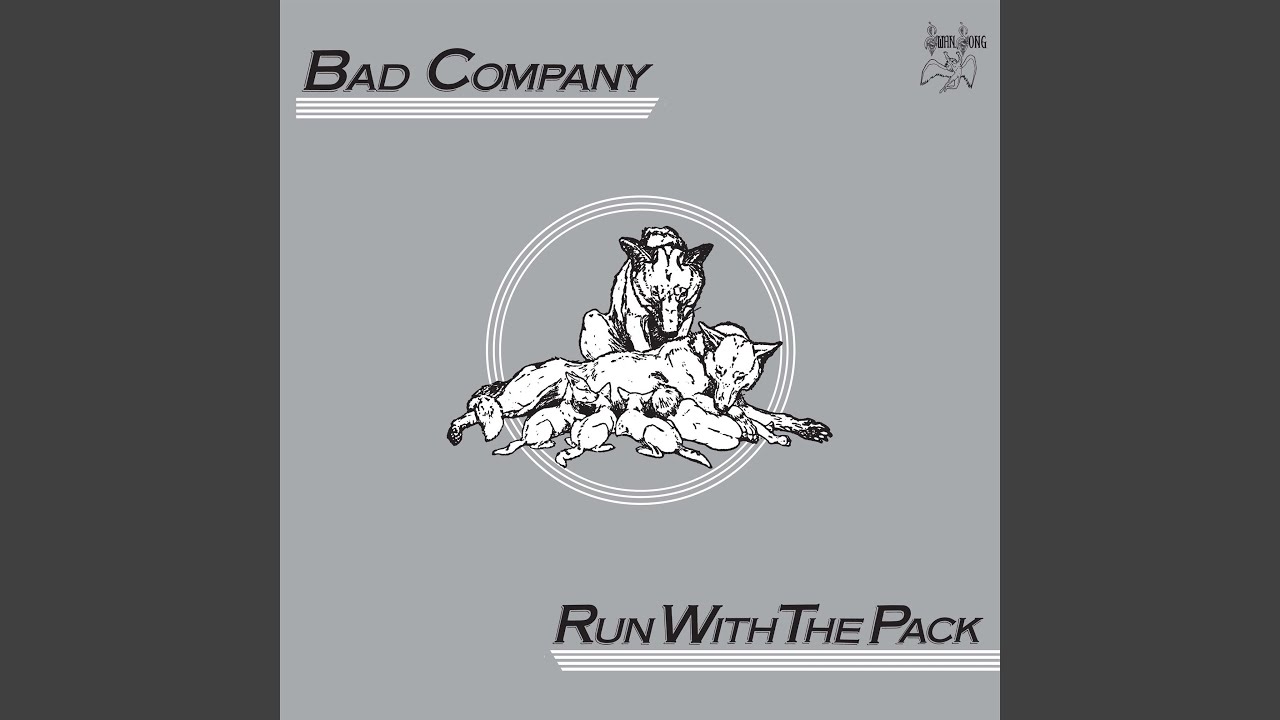
But that was the last truly great Bad Company record. And after two weaker efforts in Burnin’ Sky (1977) and Desolation Angels (1979), tensions between Rodgers and Boz Burrell came to a head during the recording of the 1982 album Rough Diamonds at Ridge Farm Studios in Surrey.
As Simon Kirke recalls: “Boz was growing as a musician and would make suggestions. But it came as a complete shock to me and Mick when they came to blows. Judging by Paul’s language, he seemed to think Boz was trying to become the leader of the band, when nothing could have been further from the truth.”
The confrontation was also witnessed by Phil Carlo, the head of the band’s road crew, who tells MOJO: “I remember the fracas. Simon stood in the middle and said to Rodgers, ‘If you want to hit anyone, hit me’ – so he did.”
When the Rough Diamonds duly bombed, Paul Rodgers called time on Bad Company and promptly made a solo record – pointedly titled Cut Loose.

Rodgers later joined forces with Led Zeppelin guitarist Jimmy Page in another supergroup, The Firm, who made two albums in the mid-1980s.
At the same time, Mick Ralphs and Simon Kirke relaunched Bad Company with singer Brian Howe, formerly a member of guitarist Ted Nugent’s band.
Boz Burrell kept a lower profile, working on and off with fellow veterans such as Roger Chapman of Family and Jon Lord of Deep Purple.
In 1999, the original Bad Company line-up reunited and toured successfully. In 2004, Rodgers made a surprise move – joining Brian May and Roger Taylor to perform as Queen + Paul Rodgers, a collaboration that lasted for five years.
Sadly, Bad Company’s induction into the Rock And Roll Hall of Fame in November 2025 came too late for Mick Ralphs, who died in June of that year, and Boz Burrell, who passed away in 2006.
In fact, Simon Kirke was the only member of the band in attendance for the Hall of Fame ceremony, with Paul Rodgers absent due to ill health.
But that honour was well earned. In that golden era from 1974 to 1979, Bad Company laid down some of the greatest rock songs of all time.
