
Making a huge splash at the outset of the decade with the resonant heartbreak of Is It Just Me?, singer/songwriter Emily Burns’ career has subsequently taken an unexpected twist.
Previously signed to the likes of big majors (Island Records) and independents such as SO Recordings, Burns has now elected to become fully label-free, and embark upon a new path as a self-sustaining artist. She's navigating the turbulence of the modern music landscape without the apparatus of the industry behind her. A daunting prospect.
Beloved by her devotees for her sharp and diaristic lyricism and irresistible hooks, the appeal of the Scotland-born Burns' work has been borne out by the aforementioned single’s 150 million streams, and upwards of 340,000 regular monthly Spotify listeners.
But on the heels of her debut album Die Happy in 2024, Burns realised that being beholden to a label's direction was preventing her from being able to fully grow as an artist.
Now operating on her own, Emily has put out the vibrant singles Woodwork and the recent nostalgia-tinged 1999, which have established her brighter, poppier direction - albeit still fuelled by her trademark upfront lyrics.
Based in London, we caught up with Emily, and her producer, Jacob Attwooll, to talk through the trials and tribulations of going it alone in the industry in 2026. We're keen to find out how Emily balances the mechanics of self-releasing with a clearly still-enduring love for the purity of songwriting.
MusicRadar: Firstly we should talk about your latest single 1999. It’s a fantastic track that summons up the idea of escaping back to a breezy, stress-free youth. Can you talk us through what it was that spurred you to write this song?
Emily Burns: “That is the general gist of it. So the actual story of what happened is we were kind of in a session. Jacob and I have been writing together for, gosh, a very long time, years and years. A lot of the stuff I've released is written with Jacob, and most of the time we'll have a really productive day. But there was just this one day that we were slogging away. We couldn't really get anything, and we were a bit frustrated by the end of the day.
“We just started having this conversation about how hard adulting is, and how difficult things feel living in London. Everything feels like a slog. You've got to [manage] income and outcome, because as soon as money comes in, it goes out again.
“We were just kind of ranting at each other, and then we had an idea. We just had this idea of setting ourselves a timer - and giving ourselves 30 minutes to rant at each other, and this song just kind of came out of that 30 minutes.
“So, it's just a bit of a vent to be honest about adulthood, trying to get by, and the stresses that come with everyday life.”
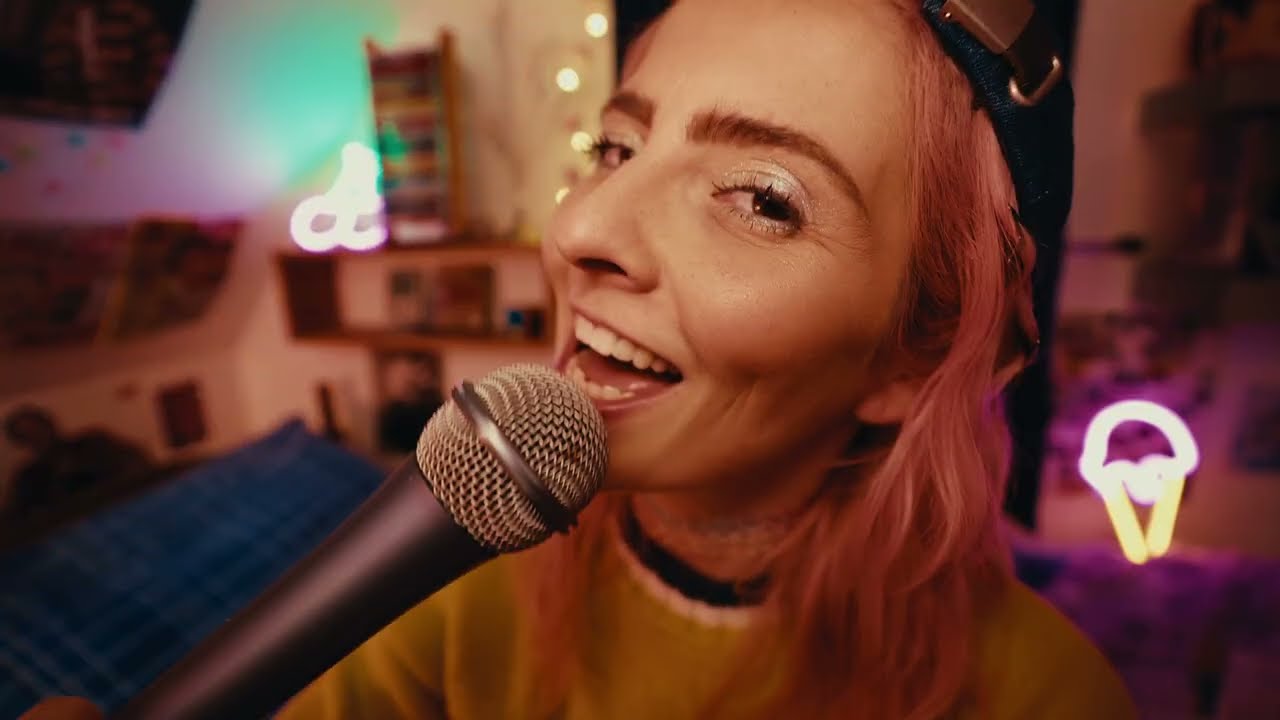
Jacob Attwooll: “There was also the thinking back to being a kid, and how much more optimistic we were. Just having less responsibilities - and all that stuff. Feeling that excitement, especially in the music industry when we first started in it, when it was just excitement. There was no business behind it, you know?
“We just enjoyed listening and making music, and so we were trying to capture that feeling. And I really don't think it would have happened if we hadn't done that 30 minute [rant] challenge.
"We’d never really done anything like that before, but a friend of mine was telling me that she does it a lot with her producer if they're stuck. And so we tried it, and yeah, I also think the idea of just committing to things very quickly, rather than overthinking the vibe, or like the lyrics and stuff, got us to a good place. We pretty much wrote the whole thing in 30 minutes. I'm glad we did that.”
MR: So that process was quite different to your typical workflow? How do things normally work when making new music?
EB: “Yeah normally we’ll go in and and I’ll say to Jacob ‘I’ve been thinking about this, I’d quite like to write a song about this’ sort of thing, sometimes it’s something that’s happened with a family member or a friend and I just want to sort of talk about it in song form. There’s generally always a vibe.
“Jacob's amazing at listening to those thoughts and creating a bit of a story out of what we've talked about. So I would say, at least on my end, it always starts with a lyrical concept and the general gist of lyrics before any music. Jacob is great at just being like, ‘Here's a sick bass line'. It always just blows my mind, the way his brain [operates].
“I think some people ‘feel’ in music. I feel like Jacob has that. I know he could explain it better than that, but that's the general thing for me. So we normally always have a bit of an idea first. But with 1999 it just was completely out of the blue, from that 30 minutes and it just happened so fast. At the end of it, we were like ‘This is actually really cool - I'd love to release this’.”

MR: The arrangement has a light energy that really does emphasise that theme. Did that arrangement come quickly to you Jacob, when producing the track?
JA: “Yeah, I think [during that 30 minutes] I probably started with the drums - I guess the whole idea was just to create something very quickly, with like a simple groove, a simple bass line, some guitar flourishes - something quite basic, so that we could get to writing quickly.
“But the track ended up being quite similar to how we had it on the day, just filled out with extra synths and stuff, because it felt like we captured the energy of the concept, keeping it playful and fun - that was a big part of what we wanted to do.
"Sometimes you really overthink some of those decisions, production-wise. But I think with 1999, because of the time we [committed] ‘Let's do that - cool, right, next, bass - ok, that’s great, next’. We ended up just really liking the song.
“If you can limit yourself to a few plugins and say, one synth as well, I think that can be really helpful. When I started producing, I only had a few sounds, and actually think it was probably easier. You just have these things that you have to learn how to use. It’s a bit more overwhelming now.”
MR: When did you guys start working together?
EB: “I think our first session was in maybe 2018 - I can't believe that that's eight years ago. I was put in touch with Jacob by a publisher that I was working with at the time. I had never come across Jacob and Jacob had never come across me.
"You know when you just meet someone and you are like, ‘You're brilliant’. Not even just on a musical level, just on a level of a person. I was like, ‘Wow, you're just such a wonderful person’.
“I just felt such a connection with Jacob and it's been the same ever since. I've worked with many, many different producers, but Jacob is someone that I know I can always come back to, write a great song with, and and just have a great time with, generally. It’s been eight years, but every time we come in together, it’s exciting, fresh and fun.”
JA: “I feel exactly the same way. Emily is one of my favourite people to work with - I think we just understand how we work together. There's never any kind of pressure on the day. Sometimes, you can go into a session, and it feels like - especially if you don't really know the person - there’s often a pressure to sort of prove your worth. It feels like there's a pressure to get something really good. Often that like means that you probably don't get it. That’s not the best environment to cultivate something collaborative and good.
“But whereas with Emily, yeah, it's just, it's no pressure. We both understand how we work and what we do well, and if we're not feeling it. It’s really easy, isn't it? Even if we don't get something, we still feel that we had a really great day and it was productive.”

EB: “ There’s no shame with us. If we're writing something and we’re halfway through a song, I can say ‘I’m never going to release this - so shall we just scrap it and start something else?’ Whereas, with a lot of people, I will grind through to the end of the day just because I'm bit shy or a bit embarrassed or feel a bit awkward about it, and then it feels like a bit of a waste of everyone's time.
“I’ll come out of the day and feel like I don't love the song and I didn't love the process of making it, so I'm not going to ever want to put that out.
"With Jay, we’ll often, sometimes around halfway through a day, be like, ‘This isn't really good enough, is it?’ And we'll so we'll just bin it and start something else, which I love.”
MR: This year you’ve emerged as a fully independent artist after previously releasing via major labels. Can you talk us through what lay behind the decision to go independent?
EB: “Since I started releasing music, I've been with record labels. So, yeah, when I started working with Jay, I was on a small indie at the time - who were amazing - but things kind of scaled up and escalated and [when I started] streaming, things started rolling.
“I was then assigned to a major label, and I was with them for a while, but that was through the lockdown pandemic period - that didn't necessarily go to plan, and then again, I fell out of that label situation and straight into another situation. It’s a bit like being a serial relationship person!
“I can't fault the last label I was working with - SO Recordings. They are a wonderful team, wonderful people and really, really nice. They made me feel very comfortable.
“But on [any label] everything is on their timeline. I felt very restricted in the sense of what I could put out and when I could put it out.
“My partner, Grace is the most supportive, wonderful, incredible partner. For a long time, she sort of said, ‘You've got all these amazing songs. Why are we not able to put them out? Is frustrating’. That made me start thinking about it.
“I thought if there was a way that I could get these songs out, and do it fully independently, then I should. So, I came into 2026 thinking ‘Let's just give this a go.’
"I'm giving this absolutely everything, and I'm funnelling everything I have into it. It’s perhaps wild and perhaps stupid, but, I feel like I'm giving myself the absolute best opportunity to be heard. I'm putting the music out that I want to put out in the timeline that I want to do it.
“I’m releasing a track every five weeks, and that has just never happened before, because there's always been limitations. Sometimes it’s because there’s other artists on the label who are releasing that week, so we can't do it then, for example.
“I'm really enjoying being in this place where it's just me and Grace and Jacob and a tiny handful of people who are helping just make this happen, and it's exciting. It feels like there's more resting on it, because it's all down to me.”
MR: We hear a lot of artists now advocating for self-releasing, and for the various tools you can use to monitor audiences and manage your own marketing and release schedules. Do you think when you were signed there was more pressure to adhere to a certain template - and fit into a certain kind of niche?
EB: “For sure. I put a song out in 2019 called Is It Just Me? And that song streamed really, really well. It still does stream really well. I'm really grateful, and I'm so fortunate that I have that - but that put me in a little bit of a box of like, ‘Okay, you are now sad girl with a piano'. That's what it felt like. I feel like I was definitely being steered in a direction of only releasing songs in that world.”
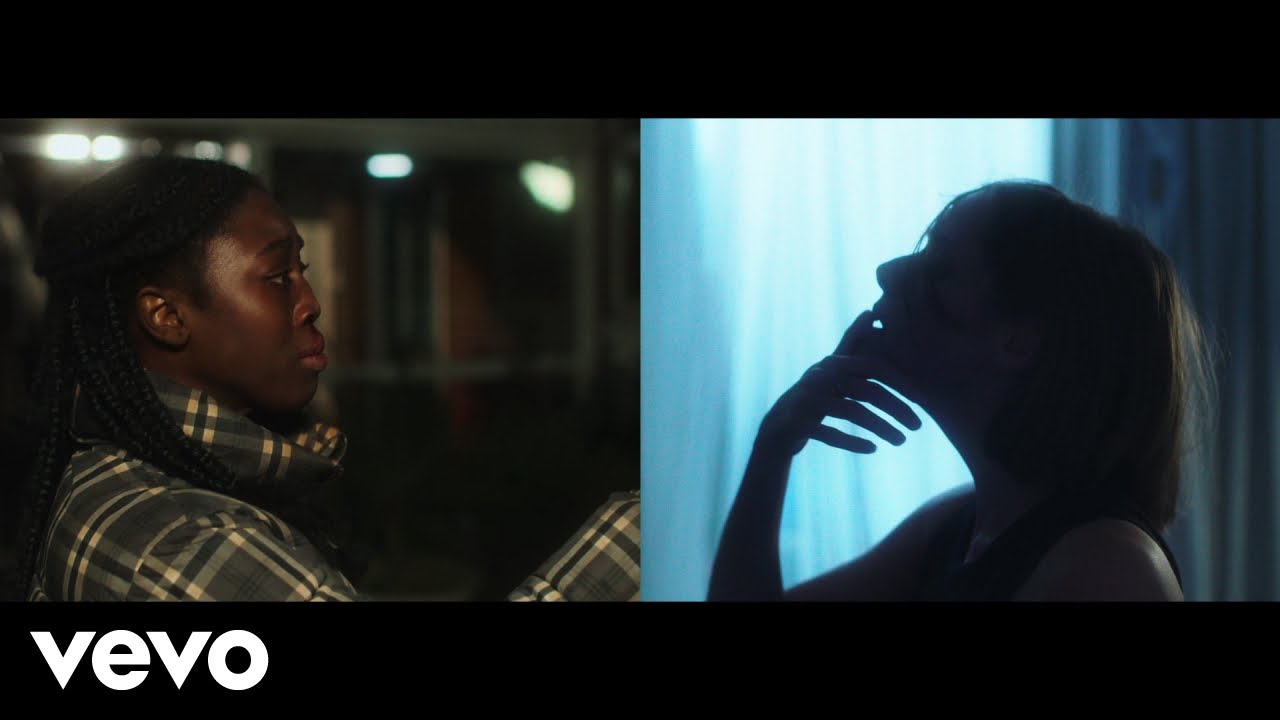
“With my new stuff - 1999 and the stuff that I'm about to release - it's in such a different world. I love pop music, it’s exciting to me. I love music that just makes you want to dance and feel something, but don’t get me wrong, I love the ballads as well.
“I've always just been desperate to show people more of this side of me. I wasn't really allowed to do that when I was on record labels, because they saw success in that one song, and they thought, ‘We've got to replicate that’
“I know I can have that with one of these songs. So I'm just gonna give it go and do it myself.”
MR: Woodwork was the single you ‘came back’ with as an independent artist. Lyrically that seemed to be a rejection of the trappings of fame - and the stress of other people that want to latch on to your success but have no time for you personally. I know you worked with George Glew on the sound of that one, and it’s incredibly interesting from a production standpoint, with odd beats and weird guitar sounds. It’s as far from ‘sad girl with a piano’ as you can get! Was that an active statement when making the song? Let’s be as different as possible?
EB: “I wouldn't say it was like, ‘God, okay, I need to do the exact opposite’ but I do think when something's just been cooped up for way too long, and then the doors open and you are just like, ‘Ahhh’ It was expressing myself in a completely new way.
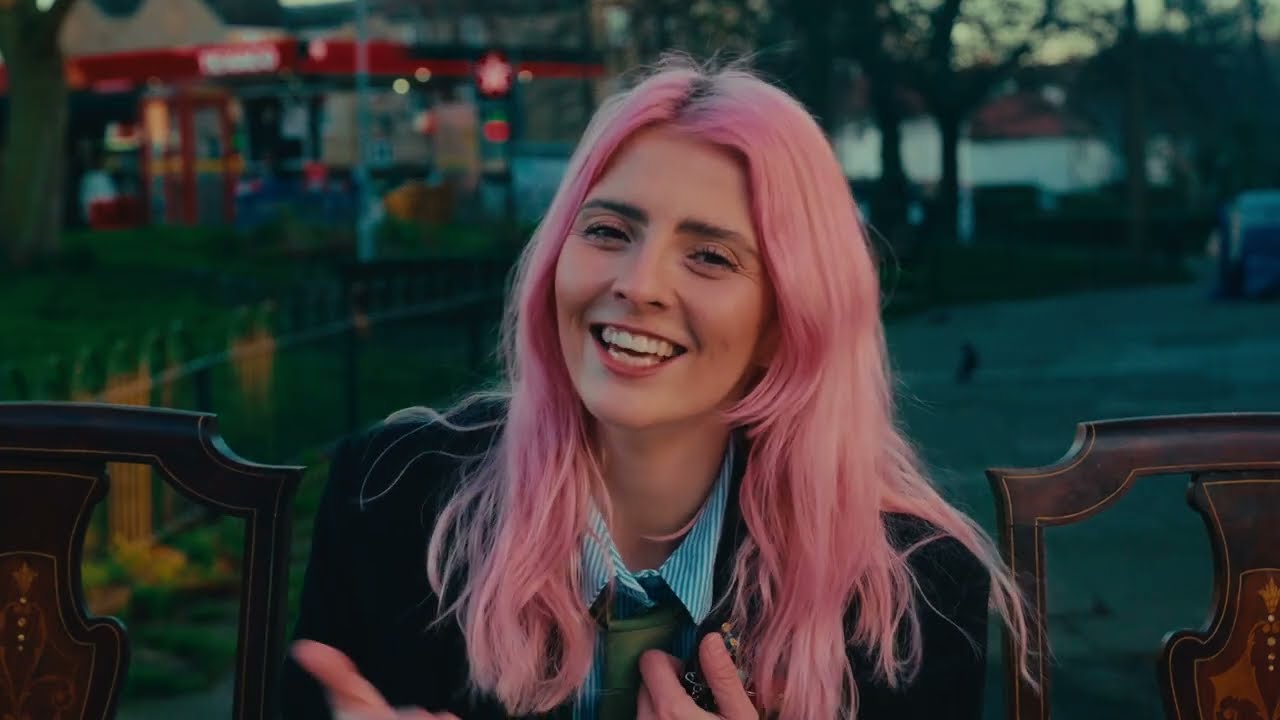
“But you’ll hear that across this whole project. The next few songs that are coming out as well, there's a lot of, like, weird, janky guitars and weird drum sounds. There's a lot of just different energy in it - and that was just really exciting to me. It was like, ‘Okay, I'm independent. Let's just do this’. So, yeah, I guess it was a little bit of conscious thought.”
MR: And these new songs - are they ones you’ve worked on together with Jacob?
EB: “We did 1999 together, and then there's another one we're putting out called Miss You Till the Morning which was also with Jacob. Jacob is not only doing the production side of things, he's also filming all the music videos. He’s an incredible director and cinematographer. Everything he does in that space is so exciting as well.”
MR: Can you take us right back to the beginning of your journey, Emily, what was it that made you want to start making music?
EB: “I grew up in a really musical household, my brother, from a really early age, played guitar, and my dad was always in pub bands. Sometimes he would bring me down when I was like, the age of eight or nine to get up and sing a song.
“I just got a real bug for performing. I’ve always loved writing, I’d been writing poetry and stories from a very young age. I guess I just loved both of those things so much that I thought, ‘How can I combine it?’
“So I discovered songwriting, and was amazed that I could turn a story into music. It was so unbelievable. I wrote my first song at age 11 or 12. It was really bad, but it just went from there. I wasn't really that interested in the sort of theory of music. I was more sitting there trying to learn how to play pop songs on the guitar. By the age of 14, I was making demos and sending them to local radio stations, It just sort of spread from there.”

MR: Did the raw, diaristic tone of your lyrics develop organically, or was that something that was there from the outset?
EB: “That was always really key for me - [my songs] have to be honest, because I never felt like writing something that didn't feel true to me. I was never going to want to perform it. That was a definite conscious decision to have this diaristic vibe in my songs. I wanted everything to be true, authentic and raw.
“I hope that's what people can connect to and relate to. People will hear the song, and they'll be like, ‘Oh, I've been through that, and I've never really heard anybody say it like that before’, and that's why I've been really lucky. I've had a lot of messages from people when I've put stuff out that have said stuff like ‘I’m so glad you put this out, because fully explains what I'm going through right now’. It’s such a special thing - to hear from someone else who is going through the same thing that you are.”
MR: How do you typically record your ideas? Emily, do you have a home studio, and do you work on demos on your own first?
EB: “You should see the voice notes section on my phone - it’s horrific! I'm constantly having little thoughts, even just a little lyric idea, and I’m feeding them into my phone quietly all the time.
“I always start with a lyrical idea, or sometimes a little melody, and I’ll just sing it into my phone. I'm capable of putting things down at home - recording a guitar or a piano idea and recording a nice vocal over it, but nothing to the level that I would ever dream of releasing.
“I need Jacob, and I need to get in a room with someone who fully understands how to make something sound nice, because it's not my strong point at all.”
MR: So you have a studio that you work out of Jacob?
JA: “Yes, in Finsbury Park. Just to add to what Emily was saying - it’s sort of the perfect scenario for me as a as a producer and a writer when she comes in with an idea that’s authentic, and, you know, actually about her life or something that she's going through. I’ve got something immediately to build from and work with.
"Sometimes you can go into a session [with another artist] and nobody has any ideas, and you're just sort of sat around - trying to find something to inspire you.”
MR: Going back to Is It Just Me?, that song has racked up some really impressive streaming numbers. Over 150 million on Spotify and I think it was over 2 million on YouTube for the video. Why do you think that song, out of all your tracks, has taken on this life of its own?
EB: “Part of it was the time I released it [right on the eve of the 2020 Covid pandemic, Ed], and the way people were feeling during that time, which is something that I try and actually quite consciously think about now - when I'm going to put music out.
“[When the song started getting streamed in early 2020] everyone was in quite a dark headspace, during a global pandemic. I think that maybe contributed to its success. What I hear from other people when they write to me about that song is that they like how honest and unafraid of just being vulnerable it is.
“I think a lot of people maybe needed to hear that around that time, like someone being that open and that vulnerable. There was a lot of heartbreak and loss. Some people have told me that the song didn't resonate with them in a heartbreak way, it resonated with them in a ‘they've lost somebody’ way.
“I think it's just a really heartbreaking song. I personally like when I hear a song that hits me in a way like that, I will just sit with it on repeat for like, a very long time.
“Another thing is that I noticed people really liked dancing to it, doing sort of interpretive dances. Then that sort of side of things blew up a little bit on TikTok.
“Some really big choreographers in the states started using that song in their classes, and then filming it, which would go out to millions of people. So yeah, it was a handful of things that contributed to iit doing what it did. I'm very grateful.”

MR: Obviously there are many pros of being an independent artist, But I suppose the thing that dissuades people is the fact that you have to do so much in terms of managing yourself and creating ‘viral’ content, marketing yourself, monitoring audiences, that sort of thing. Is that something you do yourself? Do you think about those sort of things day to day?
EB: “Yeah, I absolutely do. One thing I will say is that I was doing that also when I was on a label anyway. The industry's definitely changed in the last few years, since the introduction of TikTok.
“It does feel like a lot of labels and A&Rs just went, ‘Okay, well, it's in your hands now’. So I knew that I’ve got to just completely promote and market myself. Not only have you got to go and come up with the concept - write the song, bring everything together, do the video and get everything ready for release - you've then also got to be the one that's completely marketing it yourself as well. TikTok’s a free tool, and it's amazing that it is. There's moments where things you can put up absolutely blow up. I think that's incredible,
“But, it’s tricky to navigate. To answer your question, yeah, I'm like, I'm fully on it. I'm posting all the time then monitoring what posts are doing well and what I should maybe do more of and where people are following me from and trying to use all that information to make my next decisions.”
MR: it's great that artists have access to these kinds of tools now, because they used to be entirely the dominion of labels. But I guess it's one of the downsides of democratisation, that everyone has to become head of their own marketing department. It gets you away from the thing you want to be doing right? Writing songs?
EB: “There is nothing for me in the world that is better than sitting down with somebody and pouring your heart out and writing a song, and then by the end of the day, hearing the song. It still blows my mind that you can do that and go from having no song and by the end of the day, there's a song.
“The process of songwriting is just the most beautiful thing, and I'm so lucky that I get to do it. It's an absolute joy. But then there’s also the feeling of getting up on stage.
“I remember the first time I played any kind of headline gig in London, it was at the Sebright Arms - a 150 capacity venue. I just did not expect what happened when I came out on stage. I started singing my first song, and everyone in the room sang it word for word, and I was like, ‘What? What is this? I'm getting goosebumps now just telling you this story. That was a whole new experience for me, and the excitement that you get from knowing that other people are listening to your songs and learning the lyrics - it's a crazy, crazy thing. So that is an absolute joy as well.”
MR: So you mentioned that the new songs that are coming up soon, are you heading towards a new album?
EB: “I haven't exactly called it an album yet, more a collection of songs. I've just put two out and I've got four more coming. Every five weeks I'm putting one out which will take me to September.
"Then I'm planning to do some shows around that time. I'd love to be able to put a new album out with all of this music but it does feel a little dependent on how the music goes.

