


SYNTH WEEK 2026:One of music’s most dynamic keyboardists, Geoff Downes has built a career spanning pop, prog and everything in between. From humble beginnings in Stockport (UK), he moved to London in the 1970s, trawling Melody Maker ads in search of opportunities before crossing paths with future collaborator Trevor Horn.
Together, they formed the short-lived disco outfit Chromium, but it was their next move that changed everything.
Embracing emerging synth technology, they reinvented themselves as the Buggles and created the futuristic hit Video Killed the Radio Star - a song that didn’t just top charts worldwide, but launched MTV itself.
Never one to stand still, Downes’ next move was to step into progressive rock, joining Yes alongside Horn before co-founding the supergroup Asia. There, he helped craft arena-filling hits such as Heat of the Moment and chart-topping albums, proving his rare ability to fuse technical brilliance with mass appeal.
Still active today, Downes has co-written tracks for the forthcoming Yes album Aurora and will take part in the band’s Fragile tour now rescheduled for May 2027.
Once holding a world record for having 28 keyboards onstage, the effusive synthesist remains an enduring force behind the keys.
We were happy to get some time with Downes to discuss this storied career.

MusicRadar: How did growing up with a church organist father and a pianist mother influence your interest in early keyboard technology?
Geoff Downes: “Music was all around me at the time, including church choirs. I used to turn the pages for my dad, so I learned to read music and stuff like that. It showed me my future in a lot of ways in that I think I was destined to be a musician. Neither of my brothers or my sister pursued careers in music, but I was the youngest and felt I had an onus to take that on board and do it. To be honest, I never really wanted to do anything else.”
MR: Did your education at Leeds College of Music shape your interest in electronic instruments?
GD: “By studying classical music and organ until the age of about 12 or 13, I saw that a different type of music could be investigated. I got into bands when I was in my early teens, playing a very small Vox Jaguar organ and got my first Hammond organ as a birthday present when I was 16, so I was certainly moving into the world of technology and looking to develop that.
“Leeds was a very radical course at the time. It was focused more on jazz and modern music, so instead of studying Bach and Beethoven, I was studying Herbie Hancock and Chick Corea. I was in a big band and remember one of the lecturers getting out what would now be a very old EMS VCS3 synthesiser that had pins you could plug in and route the signal through. He told me, ‘This thing makes some pretty interesting noises,’ and that really started me off.
“Time and a Word from Yes was my go-to album, and by the time Fragile came out I loved what Rick Wakeman was doing and was really into Keith Emerson, and The Nice. Those guys, specifically, had a big effect on me because I realised that you didn't have to be sitting in the corner playing the piano, you could be extroverted and play keyboards in front of lots of people. At the time, keyboard-oriented bands like Procol Harum, Barclay James Harvest and Genesis were also using keyboards in a very technological way, and they really inspired me to go ahead and get involved.”
MR: What did you think of Kraftwerk when they came along?
GD: “They were one of the groups that really inspired Trevor Horn to get into the studio and use synthesizers as a source rather than something you just twiddle. That's really how Trevor and I started out with the Buggles, because we realised that we could actually build the music around simulated musical instruments and become pioneers in that field if we turned synthesizers into pop records.
“I had a string machine, which I used to try and play like a string player would and put it through a Minimoog. Then I tried to use what I learned from music college. For example, I knew that if I went and bought a trumpet I couldn't go below B flat, so I had some knowledge about arranging musical instruments that I could translate onto synthesizers.”
MR: Did you meet Trevor quite quickly upon arriving in London in your 20s?
GD: “In those days, a jobbing musician in London would use a bible called Melody Maker and look through the ‘Musicians Wanted’ column. It was full of ‘keyboard player wanted’ or ‘drummer wanted’ and the band Wizzard put an ad up, but although I went to lots of rehearsals it didn't work out that well.
“I kept answering ads and the first gig I did was actually a theatre tour with [novelty act] the Wombles as a musical director. It was only a six or seven-piece band, but that got me on my way. Then I saw an ad that said ‘keyboard player wanted for chart act’ and thought that sounded quite interesting. So I called up and Trevor answered the phone and said he’s auditioning for keyboard players in a rehearsal studio. I turned up at the studio with my Minimoog and Trevor seemed really impressed and said, ‘You've got the gig!’
“We toured with Tina Charles for a bit and then Tina went off and had babies so Trevor and I thought let's carry on. We started getting production work - ten quid here and there for cleaning up people's crappy demos - and I was doing commercials at the time too, so Trevor was pulling me in on his productions and I was pulling him in on these crappy jingles.
“That gave us a lot of experience in the studio, so when Trevor, myself and Bruce Woolley started writing together we felt that instead of putting all our efforts into cleaning up other people's stuff, why not do something ourselves? That's really how the Buggles came about.”

MR: Before you started the Buggles, you actually created a disco band called Chromium with Trevor, Anne Dudley and a certain Hans Zimmer. How did that mutate into The Buggles?
GD: “We were at the tail end of the disco period with the Buggles and made the Chromium album in ‘77 shortly after Tina had stopped touring. It was one of the first things that Trevor and I did, and that's how I got to meet Hans who was doing synth programming. I bumped into him in the studio and got him to do some sounds for me.
“Hans had a real knack for getting great noises out of synthesizers, which, again, fascinated me. Chromium never really got off the ground. By that time, the disco era had been defined by bands like Earth, Wind & Fire and God knows who else. Trevor and I had been working with Tina's producer Biddu - who was known as the king of disco in the UK, so the album was a stepping stone, but it didn't deter us. If anything, it inspired us to do more.”
MR: The first Buggles single, Video Killed the Radio Star, eventually reached No. 1 in September 1979, but the first electronic pop number one, Are ‘Friends’ Electric? had already arrived in June. Was that encouraging?
GD: “The first Buggles album came out at the beginning of 1980, but as you correctly said, Video Killed the Radio Star came out in September 1979 and went up the charts very, very quickly. There was other stuff around, like M’s Pop Musik, and I remember doing all these weird European TV shows where they used to just fly everybody out, so Gary Numan would be on the same plane as AC/DC.
“You’d do the show and then come back the following day, or even the same day, and Video Killed the Radio Star was charting all over Europe by then and number one in all the countries. In many ways, it slowed us down a bit because we had all the songs pretty much written but couldn't get in the studio until we’d got rid of all this TV work.”
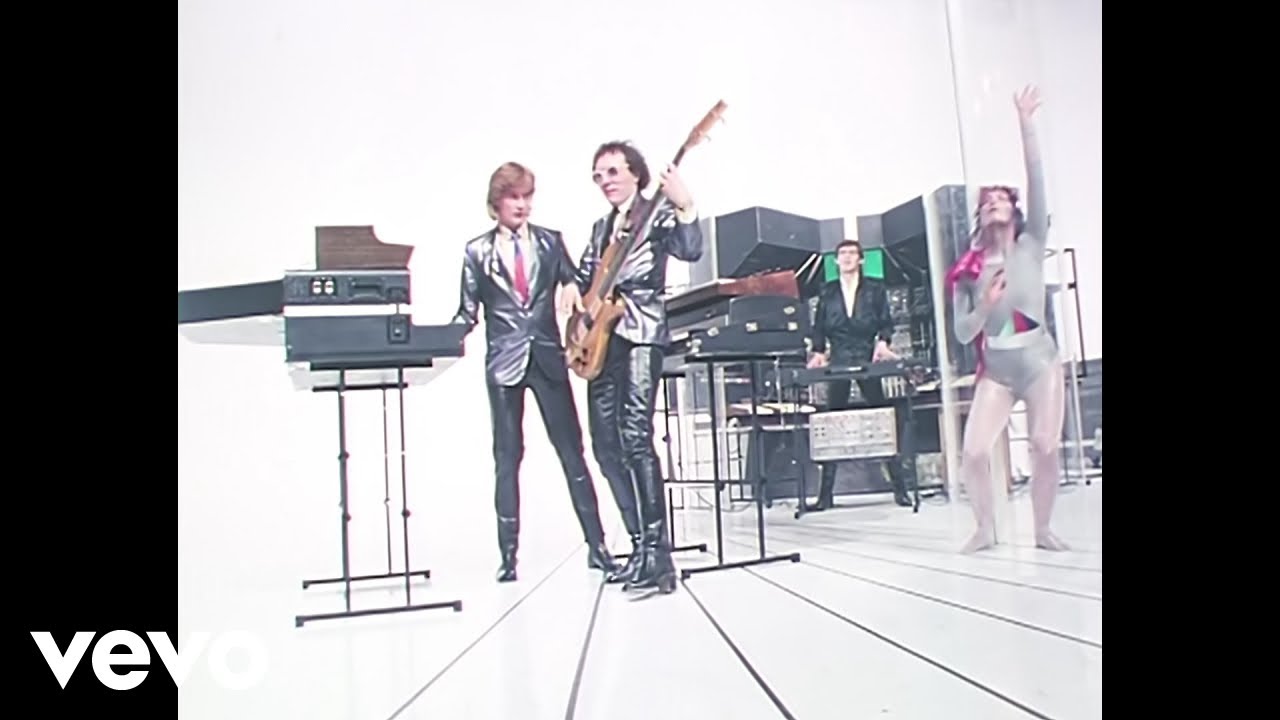
MR: Just when the Buggles had achieved commercial success, you and Trevor joined the prog rock band Yes. Would it be fair to say that you were uncomfortable being in the spotlight?
GD: “We both felt pop music had a very high rejection factor once you'd had the big hit. Some people achieve it, but Trevor and I weren’t pop star material - we were just a couple of studio guys, so it was slightly difficult for us. The connection with Yes was really due to having the same management. They were a three-piece rehearsing in one studio and we were rehearsing in another and Chris Squire told us that he really liked The Age of Plastic album and thought it would be nice for Yes to have some material along those lines.
“They'd been doing the big stadiums and making great big 20-minute epics, but as far as I could make out they were looking for another direction. At the time, we had this song called I Am a Camera and they thought we could do something with that. It wasn't like, ‘Right, you’ve got the job’, we just morphed into Yes. I was using a lot of technology at the time - even more than Rick Wakeman - so it was a meeting of minds, and from my standpoint it felt like we were propelling Yes into a different era.
“Trevor and I weren't particularly popular with a lot of the die-hard Yes fans - they saw us as a couple of pop guys coming in and desecrating their beloved music, but a lot of those fans now say that Drama was one of their favourite Yes albums, so I think we did something right.
“The next album, 90125, put Yes very much in ‘80s MTV mode, and we’d already enjoyed that kind of thing with Asia, which was a total transition into the ‘80s. One of the reasons Asia looked to me was because they knew I could put a more modern slant on things, but I was very privileged to work with such amazing musicians.”

MR: Yes were already very well-established when you joined them. Did that give you a much bigger budget to work with - and more access to synthesizers?
GD: “I started buying synthesizers like an addiction because I loved the different sounds they made from the Hammond organ right up to the first sampling keyboard, which was the Fairlight CMI. I used it quite extensively on the Drama album in 1980 when there were only about three or four in the whole country. I know Peter Gabriel had one, Steve Winwood, and that was about it.
“I remember my manager saying to me, ‘You must be f****g crazy paying 13 and a half grand for that.” I said, “Yeah, but it makes some very interesting noises - it’s like a digital Mellotron.” But it was a fantastic instrument that I really started to use when we were doing the second Buggles album.
“When I was at music college, I loved being in a big band and knew all about instrumentation, so I started to use Fairlight samples to create a kind of fake orchestra. That’s what the Buggles was all about really, technology taking credit for the symphony. When you think about Video Killed the Radio Star and what we have now with AI and robots creating music, Trevor actually wrote a very portentous lyric.”
MR: You’ve said that the Yes album Drama is the one you're most proud of. Why do you hold it in such high esteem?
GD: “Because it was the one that propelled me into the world of being a keyboard player in a known band and we worked really hard on that album. Everybody pushed themselves to the absolute limit to make it great and it was the first time that I had an opportunity to do that in a band context. I'm very proud of the first Buggles album too, because it’s a very well-produced, clean and interesting album.”
MR: When you joined Asia in around 1981, it’s said that you held the world record for having 28 keyboards in your touring rig. Looking back, was that an indulgence?
GD: “It was part indulgence, but I wanted to look the part and I could get different noises out of every one, which justified having them because I didn’t have to dial through and search for sounds. I had two Hammond organs, which sounded quite different to each other, the Fairlight, the Mellotron and lots of other keyboards that all made different noises.
“People can say it was overkill, but it felt like I was creating a wall of sound with synthesizers, which was very much my style - and, to some degree, still is today because I love experimenting with keyboards, plugins and virtual synthesizers and combining all that stuff together to create something unique.”

MR: What challenges did having so many keyboards on stage represent?
GD: “There'd be all sorts going wrong, but I had two guys setting up the whole thing. The most terrifying gig was when I played Madison Square Garden with Yes and my Fairlight went down. It was a bit embarrassing for a guy that went from working in the studio to suddenly playing in front of 20,000 people, but we had a boffin on the road with us and he managed to fix the problem by getting this tiny little resistor that only cost about 10 cents.”
MR: You helped Kate Bush maximise the Fairlight during the making of her 1982 album The Dreaming. What do you remember about those sessions?
GD: “Kate was unbelievable. There was so much music coming out of her when she sat down at the piano and she had amazing attention to detail. She saw me recording at Townhouse Studios, popped her head in, saw the Fairlight and said ‘What's that? Can you come and play on my album?’ I think it was one Sunday morning - stupidly early for rock and roll, but Kate had this track called Sat in Your Lap and wanted to add some of the brass sounds that I’d shown her on the Fairlight. A few months later, I’d heard she’d got one herself because she was so impressed by how it all worked."
MR: Were you equally excited by the more reliable digital synths and the advent of MIDI in the early ‘80s?
GD: “There were some very interesting synths coming out at the time. When the E-mu sampler was released, a lot of people got onto the sample bandwagon. It just exploded, really. There was so much research and development going on in music through companies like Sequential Circuits and Hans was the first guy in London to have a Prophet-5. That was my favourite because it was the first polyphonic synth that you could put your own sound in and record into the memory.
“I expanded my collection because all these instruments that were coming on the scene were really fascinating. Having said that, I never really moved away from playing the piano because that was the thing I grew up on alongside the Mellotron, Minimoog and other classic keyboards. I didn't like the Yamaha DX7 because I didn't really like the programming aspect of it. For some reason, Hans was a very good exponent on it - he could get amazing sounds out of it.
“As we moved towards the end of the ‘80s, the all-singing, all-dancing workstations started coming out. They sounded pretty cheesy because the sample rate was very narrow, but that's when I started to think about combining analogue with digital using MIDI, which was very much the norm. Having said that, the guy who designed the five-pin DIN plug should be shot - it has to be the worst medium ever for fiddling around at the back of a synthesizer.”

MR: Was it around this time that you started The New Dance Orchestra, and did you have a fully equipped home studio by that point?
GD: “No I didn't, actually. I spent quite a lot of time in rehearsal rooms and had 30 or 40 keyboards in one room all spread out. That's really how The New Dance Orchestra thing came about, because I'd been using all these instruments orchestrally and thought why not do something myself and experiment with all these different sounds? The whole foundation of that was built around the Synclavier because you could send out multiple MIDI channels to all the different keyboards.
“I needed to have a pretty big mixer because of all the stereo pads that were coming in, but it was more about experimentation than anything else and I tried to feature every keyboard at some point just to see what came out. If I do another album, it’ll probably be along the same lines as The Light Program.”
MR: You rejoined Yes in 2011 after 30 years. With technology having changed so much, was it like putting an old glove back on or a somewhat different experience?
GD: “Trevor came back as the producer, which I think is one of the reasons why they asked me back, and we rejigged some songs that Yes wanted to work on back in the early days - one from the album Fly From Here that we'd performed back in 1980 and Chris [Squire], in particular, thought we could redo. It was almost like walking back in time, but it all felt very natural, particularly with Trevor being there.”
MR: Were you cautious about adopting new instruments or changing the identity of a band that had a very well-established sound?
GD: “I was conscious about that because Yes has been through so many different chapters since I've been in the band, but they always seem to sound like Yes because Chris and Alan’s rhythm section is very much at the root of the music. As long as you have that element, it’s always going to sound like Yes whatever I do, and of course Steve’s guitar style is very important. Because we have the classic line-up, it’s been a lot easier to step into it again.”
MR: In May 2027, you’ll be embarking on the Fragile tour - a tribute to the 1971 album of the same name. Why revisit that LP in particular?
GD: “We’d done some of it before, but not that much. Obviously, Roundabout and Heart of the Sunrise are two key tracks, but not much of the other stuff was covered, so we looked back and thought that if we're going to do an entire album then Fragile is probably the one we should look at.
“It's probably the first one that people view as having the classic Yes line-up or was the start of a classic period for Yes. From my own standpoint, when I was at music college one of the guys who was living in our flat in Leeds used to play it non-stop. He’d play one side, turn it over, play the other side, have a spliff and do the same thing for the rest of the day, so that album is very much ingrained into my psyche.”

MR: What technologies do you expect to be using onstage?
GD: “It's very helpful to have a lot of the virtual synths, so I’ll use computers to re-create those sounds, but I’ve still got an arsenal of vintage keyboards onstage - not 28, we’re talking about 10 probably, but they still give me that go-to thing where if I want a piano I've got a keyboard there with a piano or Hammond organ sound. I've also got a Minimoog and polysynths that I can grab, so it's a mixture of having classical-sounding and classic rock-sounding instruments with some unusual stuff also coming through.”
MR: At this point, are the keyboards like old friends?
GD: “Sound-wise, the piano is obviously the thing that I always turn to because that’s never going to go away and any keyboard player will tell you that the piano is the source of it all. In terms of all the keyboards I've had, I've not got attached to them in that same loving way. They've been workhorses as much as anything - they’re like a car, they get you from A to B!”
Yes’s 24th studio album Aurora will be released on 12 June via InsideOutMusic/Sony Music. To pre-order, click here