


Upon joining Japan in 1975, Richard Barbieri had an interest in keyboards but little idea of how to programme one. Within a few years, however, he’d become integral to the band’s transformation from glam rock outsiders to one of the era’s most influential electronic acts.
Alongside his bandmates and frontman David Sylvian, Barbieri redefined the role of synthesisers in art-pop on albums such as Quiet Life, Gentlemen Take Polaroids and the classic Tin Drum.
Yet just as Japan reached their peak, Barbieri found himself a spectator to the group’s premature demise.
The following decade proved challenging: despite recording with Steve Jansen as The Dolphin Brothers and briefly reforming Japan under the name Rain Tree Crow, a lasting place in the industry remained elusive until he joined Steven Wilson’s genre-defying progressive rock band Porcupine Tree in the early ’90s.
Influenced by innovators such as Brian Eno and Erik Satie, Barbieri has also developed a distinctive solo career, with albums rooted in texture, restraint and mood rather than virtuosity.
Lauded for his pioneering synth work in the late ’70s, he continues to explore immersive soundscapes on his latest solo project, Hauntings, crafting a deeply cinematic world where memory, nostalgia and imagination intertwine.
We caught up with Richard to explore how the various strands of his career have led him to the summit of creative fulfilment.
MusicRadar: Japan weren’t initially keyboard-led. How did that evolve after you joined in the mid-’70s?
Richard Barbieri: “When you start a band at school, it's usually a case of who picks up what instrument first. I don't know why I was drawn to playing keyboards, but after buying a cheap organ and a Crumar electric piano, it quickly became apparent that I didn't have any knowledge, technique or musical theory.
“The rest of the guys were already beginning to establish themselves on their own instruments, but I was falling behind a bit. Fortunately, when I got into synthesizers that all changed because I found that it didn't have to be about technique, it could be about sound, processing and working in a different way. That's when I started to get my own voice in the band.”

MR: What was your first introduction to synths at the time?
RB: “My first introduction was a Minimoog. The band was still making demos and hadn't made the first album yet, so our manager hired one in and the idea was that I’d try something on that. It was kind of chimp-like messing around with all the controls and making wacky sounds - totally abstract really, but the guys were encouraging. The machines were just there, so I thought it would be the best route to finding my place in the band.”
MR: What was the first synth to really capture your imagination?
RB: “The first synth I purchased was a Micromoog, which is kind of like the Minimoog’s little brother. It was quite powerful, even though it only had one oscillator, but you could get a doubling effect and it had a lot of options for routing. I could quickly get arpeggiated patterns and then go to classic lead sounds or drones, so that and the Wurlitzer electric piano was my setup for the first Japan album. The Wurlitzer was brilliant, actually, because I used it with a Roland Space Echo and started building more atmospheric things.”
MR: Within a few years Japan had become a very different band. As the primary keyboard player, how influential were you in moving towards a more synth-based approach?
RB: “For the Quiet Life album we all changed in different ways, but you’re right that it was a massive change from the previous albums. By now I was using the Roland System 700 with an Oberheim sequencer, so a lot of the tracks were sequenced, which almost became a click track for Steve Jansen’s drum patterns.
“We were right there with the technology of the time. I still had the Wurlitzer, but also used a Solina string synth, so we were really starting to create quite lush and interesting textures. Quiet Life was also the first album where we could actually spend time layering things. Previous to that we’d just go in the studio and have six hours to do all the overdubs, so we never got to layer anything.”

MR: Did you jam stuff together or were you more precise in how you shaped sounds?
RB: “We were more precise, but what I remember most about Tin Drum is that the sessions were very intense. We were constantly programming, looking for the right sounds and I was working with David Sylvian quite closely to create 'question and answer' patterns.
“I also started working more with Steve because I programmed a lot of percussion sounds on the synths, but being a drummer and having good timing meant it was obviously better for him to play them manually. That process allowed me to tweak as he was playing so I could hear whether something was working within a track. Tin Drum had a colder, more emotionless kind of atmosphere, but it had quite an original sound.”
MR: After Japan split, you did a couple of side projects and some production work, but releases were quite scarce. Was that an uncertain period for you?
RB: “Steve and I found ourselves in the same sort of situation. Obviously it was no problem for David to continue with the record label and go straight into a solo career, and Mick Karn was also offered a solo deal with Virgin, but Steve and I were a bit out in the cold.
“We did a few different things around that time - we toured with a Japanese band led by Masami Tsuchiya and went to Tokyo in 1984 to record an ambient soundtrack called Other Worlds in a Small Room for one of the Apollo missions. It had no rhythm as such and was nearly exclusively made on the Prophet-5.
“After that, there was another period of not really knowing what to do, so we started The Dolphin Brothers, which in retrospect was a bit of a mistake. We thought we should get back on a record label and do something really commercial with vocals, but although Virgin signed us and there are a couple of tracks I really like, it's very much of its time and I don't like hearing myself on it. Very soon after that we did David’s In Praise of Shamans tour, and some years later the Rain Tree Crow project.”
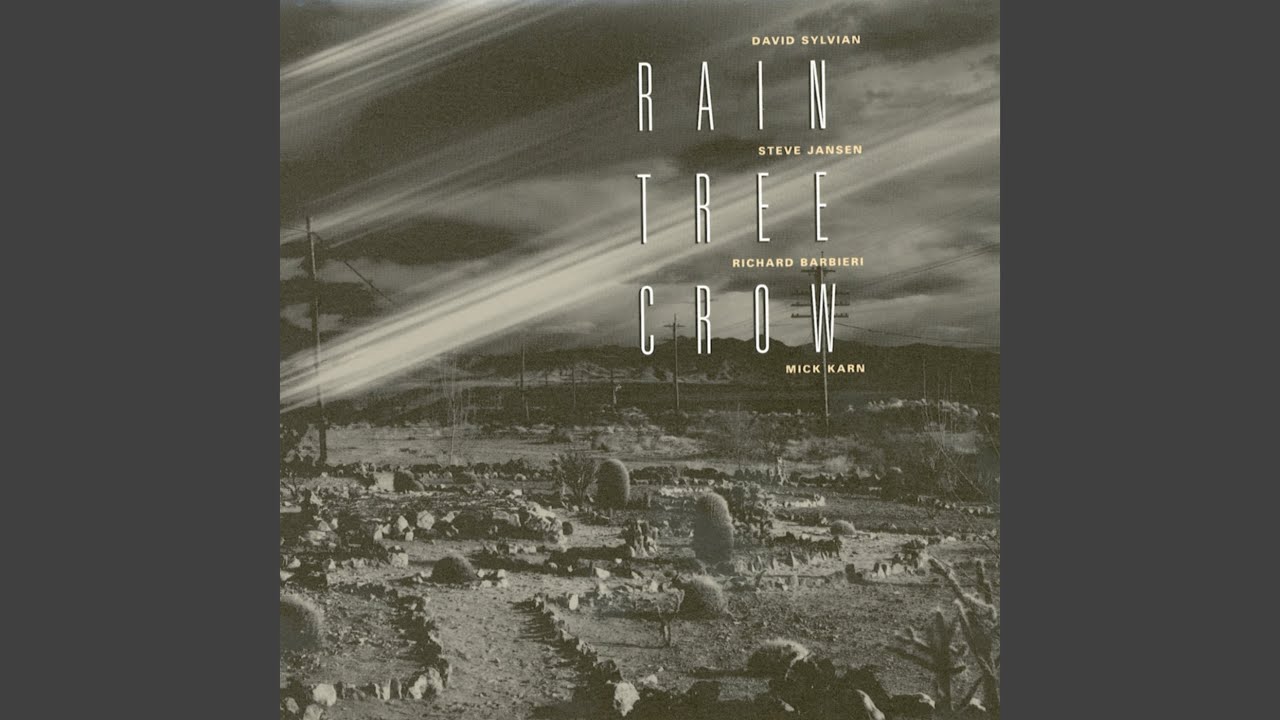
MR: Rain Tree Crow is a beautiful album, and you were no doubt using a whole different suite of technologies by that point?
RB: “We decided to go into studios and improvise, so there weren’t any set songs or demos and that in itself was different. My relationship with David continued with us working closely together with the keyboards and spending a lot of time working on a different sound. We were using digital keyboards more, so we both had Roland D-50s, I had an Ensoniq VFX and David had a Korg M1 or Wavestation alongside the Prophet and System 700.
“The idea was to make the synths sound quite earthy and organic and we didn’t actually want any synth-like sounds on it. I guess Rain Tree Crow turned into this sort of natural-sounding album - there was no artifice, it just sounded like a band in the studio playing together.”
MR: A lot has been written about how the project ended in animosity. Was that overplayed?
RB: “I’m not sure if I worked with David again after that, so there was a bit of fallout - even between the brothers. The recording sessions were really enjoyable, but all of the old problems resurfaced. We were all getting along great, but things started to change when we were nearing the end. We’d basically used up what was already a massive budget and needed more time and money for mixing.
“It got to the point where three of us were tempted by Virgin to try calling the project Japan and took that to a certain level to see if we could. Of course, that was going back on what we'd already agreed with David, so he was well within his rights to be a bit pissed off and had enough money to pay for the mixing. The rest of us couldn’t find any other way of buying our way back into the project, so we were kind of banished really. In the end, Steve Nye and David did a great job with the mixing and it sounded great, so it wasn't really a problem.”
MR: At that point, were you actively looking to join another band to get a bit of security?
RB: “I started working with a band called No-Man, which was the project of Steven Wilson and Tim Bowness. Through that, I discovered that Steven had a side-project called Porcupine Tree, but it certainly didn't offer me any security. Believe me, joining a band doesn’t offer that [laughs], but we had a shared love of certain music and he wanted me to play electronics, so that reignited my enthusiasm, having been a bit jaded by all the fallouts over the years.
“At first, Porcupine Tree was that whole thing of playing to two people and a dog in a pub - it took so long to gradually build an audience, but a few years ago we found ourselves playing sold-out arenas with number one albums and Grammy nominations. It's been very satisfying to get to that point, but being in music has always been a struggle.”
MR: Coming right up to date, is the title of your latest solo LP Hauntings introspective or are you projecting?
RB: “It's both really, but then ‘Hauntings’ is a very flexible word. In my case, I found myself revisiting memories that keep recurring - in effect, going back to my own haunts. It just seemed to fit with a concept I had about lingering memories that are always there and nostalgia for things that didn't happen. I tried to visualise that and put it into music, and funnily enough a lot of it is Victorian.
“There's a track called 1890, which is all just sound design really. There's no musicality to it or any kind of structure, I just wanted to create a sound world that would create a picture of this place that I go to.
“It starts off with the chimes of Big Ben, which are original chimes from an 1890 recording on wax cylinder, then I added recordings of a thunderstorm and some old radio broadcasts and the whole thing started to take shape.”

MR: The bassline on the opening track Snakes and Ladders immediately stands out because it could be Mick Karn playing. It’s actually Percy Jones, but we understand Mick was highly influenced by him?
RB: “They're very different players, but they both play fretless bass and have a very strong voice within any musical setting and the capability to come up with lead lines where the bass becomes the thing. It does sound like Mick, but only in so far as Percy was influenced by Jaco Pastorius.
“I’ve worked with Percy for quite a while because he was a bit of a hero of mine due to his contributions to some of Brian Eno’s early albums and Phil Collins’ Brand X side project.
“Working with him was great. He's been on a couple of tracks on most of my albums, but because he plays with such personality I usually empty the track out afterwards because he's playing all kinds of harmonics, chords and counter-melodies. For me, working with other people is the most exciting and enjoyable part of making music.”
MR: You’re still using the System 700 and once said that it covers all the bases. What makes it such a workhorse?
RB: “I was probably exaggerating a bit when I said that because it’s only got about three oscillators and one LFO, but what's amazing about it is that it has such a beautiful sound. It’s hard to describe, but the filters are lovely and smooth and it sounds like it's from another world. I kind of learned everything on this synth, so I’ve become very good at programming it quickly and understanding how sound is made.
“I could program a gong or a chime and within 40 seconds change it to resemble a trumpet or brass sound. The only problem is that even when I write down the markings, it never sounds the same again. It’s a bit like the introduction to Japan’s Ghosts because I could never quite recreate that sound either. It's the one just before the drone comes in - a quite complex moving sound with the first three notes coming from the OB-X.”

MR: Now that you've mentioned Ghosts, what made the quirky sound in the middle section when the track flatlines?
RB: “The R2-D2 sound? That's David on the Prophet. There's a kind of modulation going on with a pitch-shifting effect. He programmed up some amazing sounds on Tin Drum because he's a great programmer. I once saw a comedy thing based on some new romantic band where they're all living in this flat and the doorbell chime is from the first three notes of Ghosts [laughs]. I thought that was a nice touch.”

MR: In recent years you’ve been testing some newer hardware, such as the SOLAR 42. What can you tell us about that?
RB: “The brand is Eltamusic and it's called an ambient drone machine, which obviously gives you the capacity to create these lovely drones. It’s designed by these Ukrainian guys, but they make it in Latvia with Russian parts. You have four sections for drones and each one has five oscillators so you can tune up chords for each section and play them using the buttons.
“You can play chord progressions while playing a melody on the touch keyboard and there are two frequency modulation sections for weird effects, plus all these little cards that you can put in. It also reacts to light, so if you want to go into that mode it will change the pitch modulation due to your lighting conditions. It has a five-step sequencer, which is always going to create some interesting polyrhythms.”

MR: What about the Nonlinear Labs C15?
RB: “That's made by a company in Berlin by the former managing director of Native Instruments. They came to a Porcupine Tree show and asked if I'd come to their offices and have a listen. It's digital and everything comes from two sine waves, but just like the frequency modulation on the Yamaha DX7 allows you to create these amazing textures, sounds and variations, the C15 goes way beyond that.
“You can quickly see how sounds are changing and how one thing affects another, and it gives you the ability to put the whole thing back through the filter, which is mind-blowing really. You can very quickly get sounds that are very extreme, so you’ve got to really focus on what you're doing, but it can create some of the most beautiful analogue textures and tones. It's more for keyboardists who want to be really expressive.”
MR: What are you using on the software side?
RB: “I still record using Reason, but you can get any VST to work with it now. I’ll use a lot of the Arturia stuff if I want an emulation of a CS-80, Wurlitzer or Mellotron, and I also discovered a good company called Crow Hill who incorporate movement into samples depending on the combination of notes you use, how long you hold a note or how quickly you play it. It's quite natural-sounding, so I use that a lot for controlling string part movements and glissandos.
“I love sampling and this album is as much about samples as it is about synths. There’s a really good site called Freesound where you can use sounds under a Creative Commons license if you credit the person. I used the spoken voice of a girl on the track Artificial Obsession. Initially, it was this cute little love poem thing, but when I started stretching the voice and affecting it, it took on this creepy Twin Peaks vibe. To me, it ended up sounding like an AI girlfriend that's become obsessive.”

MR: Do you see AI as creepy technology?
RB: “At the moment, I think it's great. I use it as a system tool, so sometimes I'll put in a melody just to see what it sends back. It's very interesting to put things into AI as long as you can decide how far away it goes from your ideas. Obviously, that’s in the very near term, but in 40 or 50 years I don't think humans will actually understand the world that we live in. AI will only take prompts from AI, so why would it take prompts from a lesser intelligence?
“I think we're just going to be the same as our pets, flowers or vegetables. We’ll be part of the ecosystem, but won't really understand how the world works - just like your dog doesn't really know what you do when you go out. We’ll probably be provided for and looked after, because why would anything intelligent make something worse? But I’d love to go forward and take a peek.”
MR: Would you swap fame and the deadline limitations you had with Japan for the luxury you now have of being able to spend as much time as you want making music?
RB: “I’m really happy at the moment because it’s finally got to a situation where everything’s fallen into place. Porcupine Tree has got to the same level that I did with Japan, but I'm in control of everything and making the money I’m supposed to make. We pushed the boat out and did our last tour in real luxury without being in each other's pockets.
“It's kind of the perfect ending really. Japan was part of the zeitgeist - we were on the BBC, in the tabloid newspapers and part of culture - so we'll always be part of that thing. Porcupine Tree goes under the radar, so although we play to more people than Japan ever did, we can still live our own lives. At the height of Japan, you could rarely walk down the street without being recognised.”

MR: Are you still in touch with Steve and David?
RB: “I can't remember how long it’s been since I saw David, but I see Steve all the time. We're hopefully planning to do something early next year, but I played snooker with him only a couple of days ago.”
The new Richard Barbieri album, Hauntings, is out April 10 on Kscope.