
Just like George Lucas, Rush had their heads in “a galaxy, far, far away” in 1976 as they put together a sci-fi epic that would change their lives.
But while Lucas turned the clock back to a distant past, the Canadian prog-trio were imagining a dystopian future in the year 2112. All roads led to Megadon.
At that stage of their career, Rush badly needed a hit. They needed something, anything – some gift from the cosmos to reverse their fortunes. And in 2112 they had something.
Its predecessor, 1975’s Caress Of Steel, was an audacious statement of intent. Rush’s progressive mores were coming to the fore – not least on The Fountain of Lamneth, which occupied the entirety of Side B.
In hindsight, the critical consensus says that Caress Of Steel was the sound of Rush stretching their wings musically and flying a little too close to the sun. They had the ambition but hadn’t quite shed their influences and become themselves. These things take time.
The touring cycle brought forth the unedifying prospect of total failure, though not without a little gallows humour. Rush called it the ‘Down the Tubes Tour’ and even had it printed on the passes.
Guitarist Alex Lifeson admits he was considering strapping on his tool belt and becoming a regular working man again.
“That was a very difficult tour. We were already extremely in debt, and it was just getting worse and worse,” said Lifeson, speaking to Guitar World in 2013. “The crowds were getting smaller and there didn’t seem to be much interest in the album at the time. Everybody around was concerned about what the future was going to be. So there was a lot of reflection. I thought, Well, you know, I guess I could be a plumber again if I had to…”
But that is not how this story ends. Rush had ideas and they were letting them cook night after night on tour, writing whenever they could.
Drummer and chief lyricist Neil Peart always had something stirring in his brilliant mind, and as the tour rolled on, the songs rolled out – the concept for 2112 was taking shape. And the concept was pretty far out.
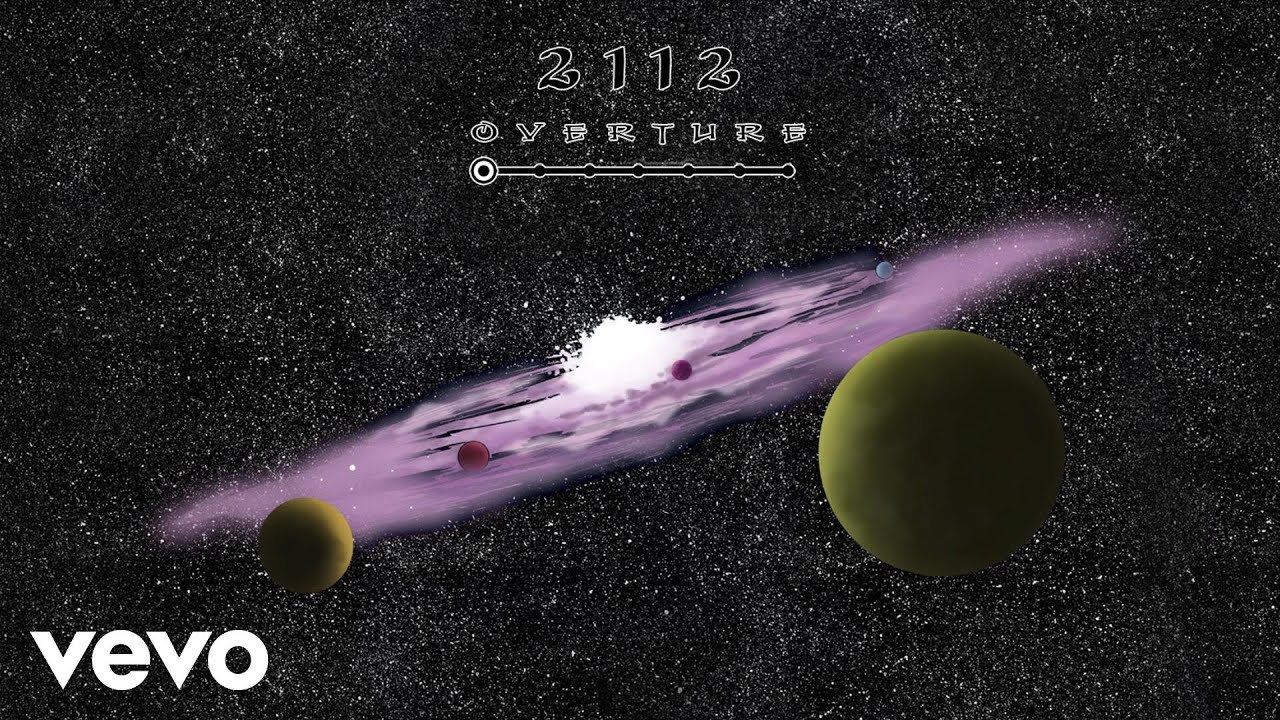
Peart had been reading a lot of Ayn Rand. With its neo-Dark Ages theme, Rand’s 1938 novella, Anthem, seemed to have catalysed something brilliant in his mind.
“As the record was coming together we all truly were very excited about it,” Lifeson told Guitar World. “I don’t know if we thought we had quite what we ended up with, but we did feel it was something special.”
The 20-minute title track, partitioned into seven movements, imagines a dystopian future that had been roiled by interplanetary warfare.
The Red Star of the Solar Federation now rules a union of planets, and by the time you stick the needle down on the album there is peace under the iron grip of totalitarian rule. The Priests of the Temples of Syrinx rule every aspect of life in the city of Megadon. All art is created by the temple.
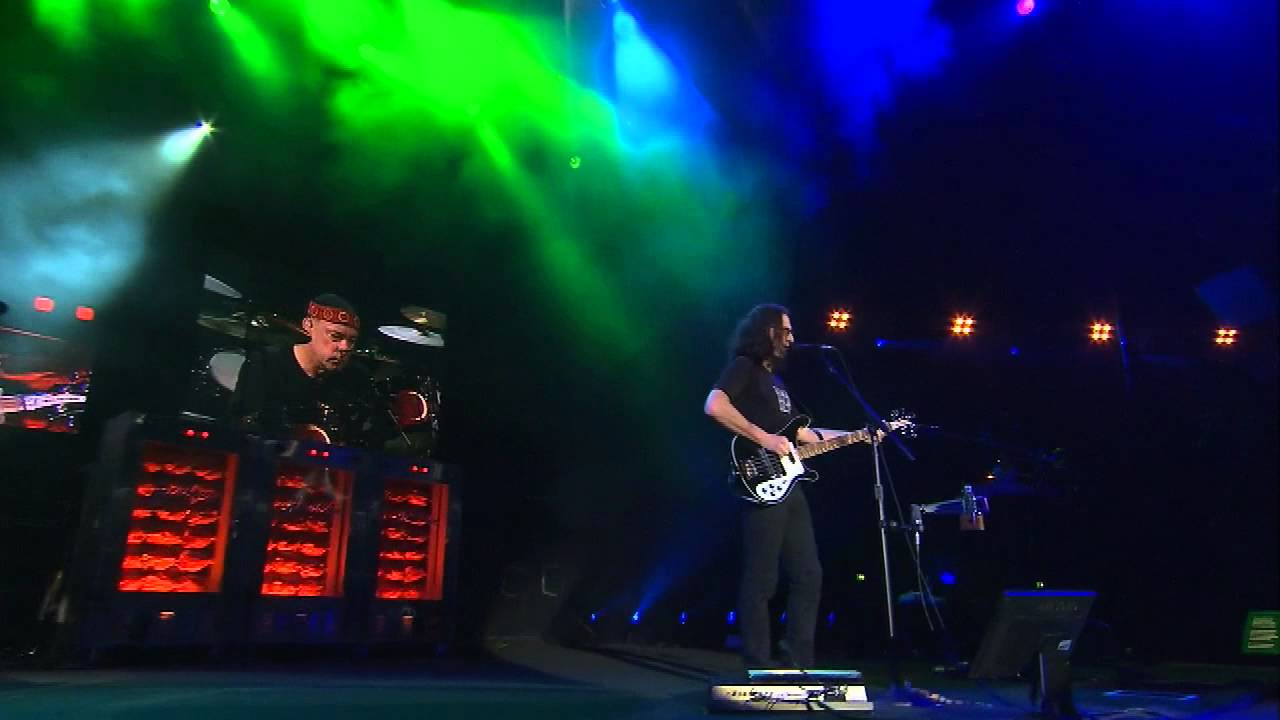
The story’s anonymous hero is about to make a discovery that changes all that. Speaking to MusicRadar in 2016, bassist/frontman Geddy Lee explained how the narrative – and the music – flowed, once the Overture, the last piece of music to be written, welcomed us into this world.
“The Temples Of Syrinx sets the scene, because 2112 is about a totalitarian society that controls everything about your life, including the music that you hear,” said Lee. “It manufactures it all, so that’s what we wanted to say with this track. It sets up the hierarchy in this futuristic world that we’ve arrived in.
“Discovery is where the hero of the story finds a device in a cave. It’s a guitar, but he doesn’t know it because they don’t exist in his time period. So he picks it up and realises that it’s a device that can make music and create sounds. Previous to that point, everything he’d ever heard had been provided to him by the people that run his world.”
And this is just three songs/movements in...
“And the meek shall inherit the earth”

News that Rush were making a high-concept prog record was not received with the popping of champagne corks at the record label. It was widely reported that the band’s long-time producer Terry “Broon” Brown and their manager, Ray Danniels, were engaged in the urgent business of managing expectations as the record was being made.
We told the record company people to back off. They didn’t understand that record. They didn’t understand Caress Of Steel
Geddy Lee
Fast-forward 50 years and Geddy Lee is sitting in a London hotel with MusicRadar and laughing at the memory.
“We told the record company people to back off,” says Lee. “They didn’t understand that record. They didn’t understand Caress Of Steel, but Caress Of Steel didn’t break through because it was ultimately a record of experiments, not all successful. We managed somehow to correct that with 2112, and make a more cohesive, powerful statement.”
It says a lot of Rush’s confidence in themselves and the material that they doubled-down on those experiments. This was just the kind of creative derring-do that generations of Rush fans were weaned on. The record company sat back and waited. What else could they do? “And so they said, ‘Well, we don’t know what it is you’re doing, but just fucking keep doing it!” says Lee.
It didn’t take long. The album was written over six months on the road, workshopped at soundchecks, and so by the time they entered the studio they were well prepared. The songs were all but done. There was no time to waste. There was no money to waste. The album was all but done in a month, much of it recorded live in the room.

Lifeson’s main guitar was his Gibson ES-335 but he had borrowed a Fender Stratocaster and a Gibson Hummingbird for the sessions. Amps were his usual complement of Marshall heads plus a Fender Twin. He had a Tom Oberheim-designed Maestro Phase Shifter, an Echoplex tape echo, and a Dunlop Cry Baby wah pedal. All classic Rush gear.
There was a weird kind of Stanislavski method to the madness – can actually hear Lifeson tuning up his Strat at the beginning of Discovery, just as the anonymous hero of 2112 finds his guitar in the story.
Lee played his 4001 Rickenbacker bass guitar through Ampeg or Sunn amps. Hugh Syme provided the cover art; he also played on the record, too. Syme operated the ARP Odyssey synthesizer on the title track, and returned to play Mellotron on Side B’s Tears.
“This song marked the first time we used a Mellotron,” said Lee. “The gentleman that does all our album covers is called Hugh Syme, and it’s actually him playing Mellotron here.
“Tears is a romantic ballad to give the album even more variety and depth. Mellotrons are very unique-sounding; they sound sorta electric, but also kinda stringy, they have this real resin-y sound to them, which is very cool and unique to that period.”
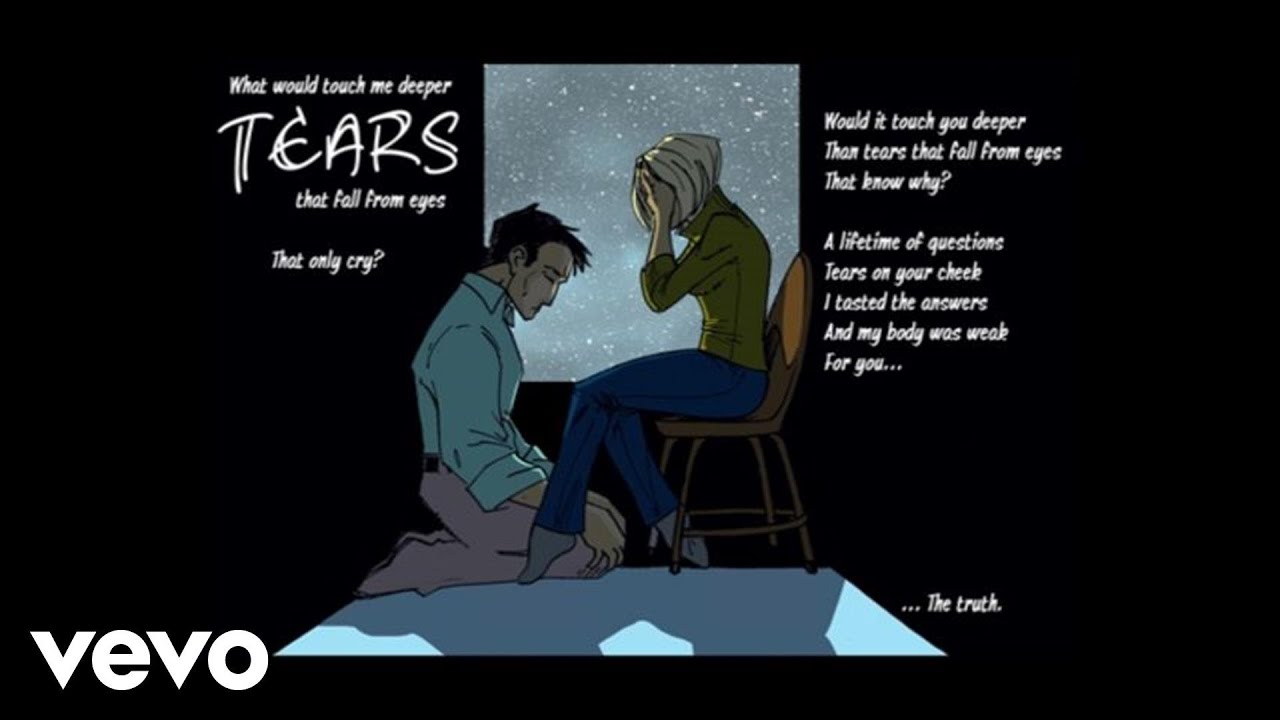
With Side A housing 2112, Rush put together five tracks for Side B, all with a very different vibe. “We made it so you’d flip the record over and then you’ve got five individual songs that are stand-alone,” recalled Lee. “Back in the day of vinyl, it was very normal to have a different experience on side two.”
Passage To Bangkok kicks it off with a paean to smoking pot, written as a “travelogue” to the various terroirs of marijuana cultivation across the world. “It’s sort of comic relief in that sense,” said Lee. “All kinds of places get mentioned – the first stop is in Bogota in Colombia then you’re in Bangkok, Thailand.”
It could also be taken as a commentary on the writing and recording process. Rush were no strangers to the leaf. Speaking to Rolling Stone in 2016, Lifeson testified to its inspirational properties in the studio. Rush were having the time of their lives making the record.
“When we worked on Discovery, I think it was honey oil [marijuana] that was around at the time, so that was a wonderful inspiration,” said Lifeson. “And I do remember working late nights ’til six or seven in the morning with our feet up on the console and suddenly all of us waking up to the flapping of the reel going around and around on the tape machine. It was just the feeling of being in a wonderful place.”
The Twilight Zone came together late. They had room for one more song and wrote it in the studio as a tribute to the TV show. Apart from Lessons, which was written completely by Lifeson, and Tears, written by Lee, all the lyrics came from Peart’s notebook and it is a heroic achievement of world-building with rock music.
2112 inspired many to follow in Rush’s footsteps. Dream Theater’s John Petrucci was one of them.
“Beyond his incredible drumming, there’s Neil Peart as a lyricist. I would say he’s been the biggest influence on me in that respect,” he told MusicRadar in 2019. “The way the tale evolves is astonishing, using the guitar as an actual part of the story – that really drew me in. To this day, 2112 is one of the greatest albums I’ve ever heard.”

How Lifeson plays guitar was also not lost on Petrucci. He has studied it closely, and like all responsible artists has borrowed/stolen where appropriate.
“I love Alex’s choices, the way he plays power chords with open strings on top,” said Petrucci. “And when you combine that with the way he uses the chorus effect – to this day, I apply all of this information to my own style.”
If there is a secret to Rush’s sound it can surely be found on 2112. It could be the rosetta stone for understanding everything; how they transform a rock song into a work of sci-fi theatre; how play what Steve Vai likes to call “high-information music” and yet present it as digestible and human, shifting through styles as though you’ve turned the dial on the radio.
The band themselves were a little split on where 2112 stands in their catalogue. Peart thought Moving Pictures was the album on which Rush truly found their sound. Lifeson could see that, but argued 2112 was the one
“Really for me it was on 2112 that I felt that we were becoming us,” he told Guitarist in 2010. “Our influences were less obvious and we were thinking in our own terms.”

Would Lee change anything about it now? He’s not sure.
I would get lost in this album. I wanted to know what they were talking about. ‘Who’s this guy? What’s happening?’
John Petrucci
“If I was gonna change anything in 2112, I would change some of the, y’know, the whole record goes up and down and up and down,” he says. “I maybe wouldn’t have so many down, and more ups, but other than that, it’s kind of a fool’s errand to try to reimagine a record that was made so long ago.”
It was written, recorded and released 50 years ago and yet 2112 retains its fizz. It is animated by the electric possibilities of a band just hitting its straps, the weight of a bleak future imagined, and the release after you turn the record over.
Great recordings have a strange magic; they store the energy from the room like a battery. They build a world that the audience will return to in search of answers.
“Rush are my biggest influence and favourite band,” said Petrucci. “Just the idea of this concept album, of a story being told and songs as vehicles to tell the story – it’s unbelievable. I would get lost in this album. I wanted to know what they were talking about. ‘Who’s this guy? What’s happening?’ It took you to another world.”
And it got Rush back in the game; 2112 was proof of concept that their musical adventurism applied to Peart’s novelistic lyrics could reach a wider audience. It took them to another level, laying the foundations for the experiments in synthesizers to come.
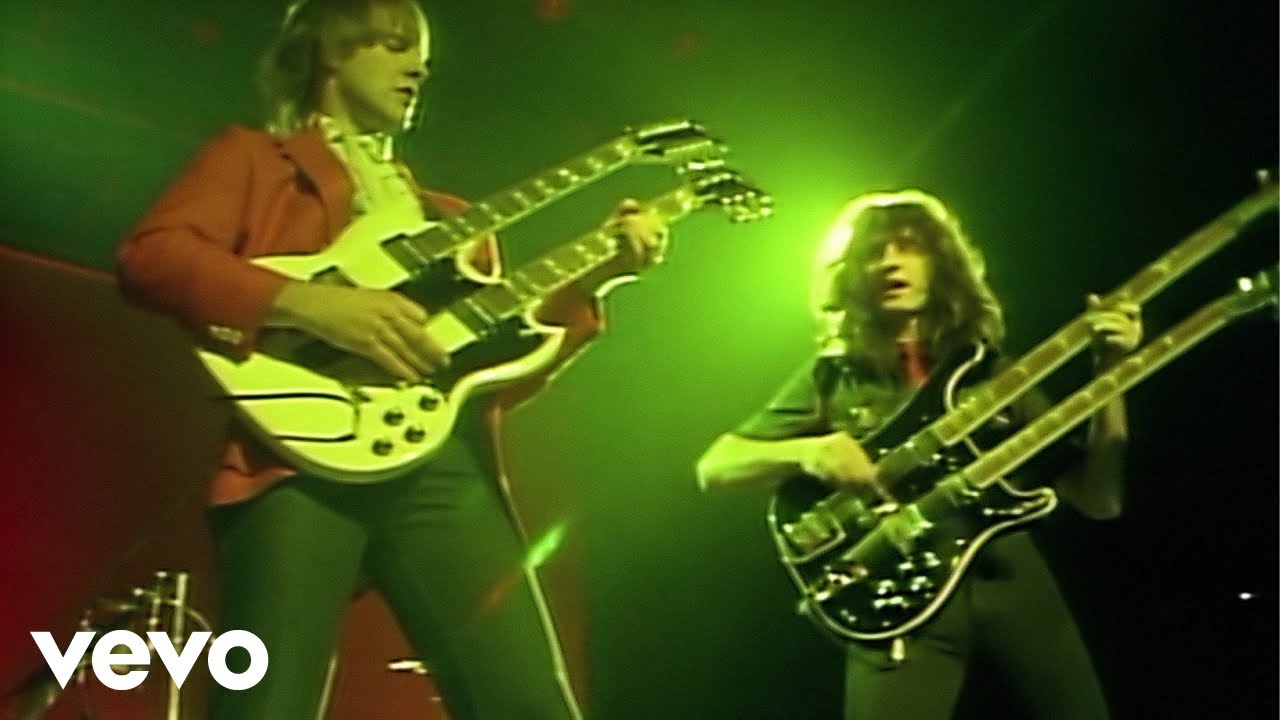
From Megadon, Rush beat a path to Xanadu, road high upon Lifeson’s fever dream en route to La Villa Strangiato.
There would not be Rush, a long history of Rush, without that record, so I owe sort of everything to it
Having proved the record label wrong, Rush would have the confidence to dream bigger, to close 1977’s A Farewell To Kings with sci-fi epic that is concluded on the opening track to 1978’s Hemispheres. Tune in for the next thrilling instalment…
Rush’s concepts would become too big for one record. Prog legend status was unlocked.
This was what 2112 did for them – multi-album storytelling arcs, freedom, longevity. Attention all planets of the Solar Federation, Rush have assumed control, and there was no letting go.
“There would not be Rush, a long history of Rush, without that record, so I owe sort of everything to it,” says Lee. “It was the record that changed our lives. It was the record that gave us, won us freedom of creative expression, or, shall I say, reinforced our right to creative freedom.”
