
Across popular music's winding history, there have been many acts who decided to make a fan-provoking left-turn. Dylan going electric, the Bee Gees embracing disco, David Bowie ditching the mullet and platforms to become a besuited soul-boy. The list goes on.
Many of these, at the time shocking, changes were later reappraised as being pretty astute moves; fearless creatives making new music on their terms - and pulling the rest of the world along for the ride. Whether they were ready for it or not.
But Radiohead’s seemingly abrupt transition from angst-ridden, chart-bothering indie-proggers to Warp-adjacent electronic experimentalists still remains a tough pill for some to swallow.
Even now in 2026, some Radiohead traditionalists find the transition from 1997’s OK Computer to 2000’s Kid A baffling - the moment when their once favourite band became something else entirely. With the rockier elements now just one part of a blended soup of synthetic and expanded instrumentation. Some felt betrayed.
And some still do. As evidenced by the Spectator's review of Radiohead’s O2 residency last year, Radiohead’s experimentalist evolution isn't for everybody.
But for those who took the plunge and went with the band on their journey, Kid A's rewards were vast. The album opened the door on just what Radiohead could be, beginning a captivatingly left-field new chapter for the Oxford-hailing quintet
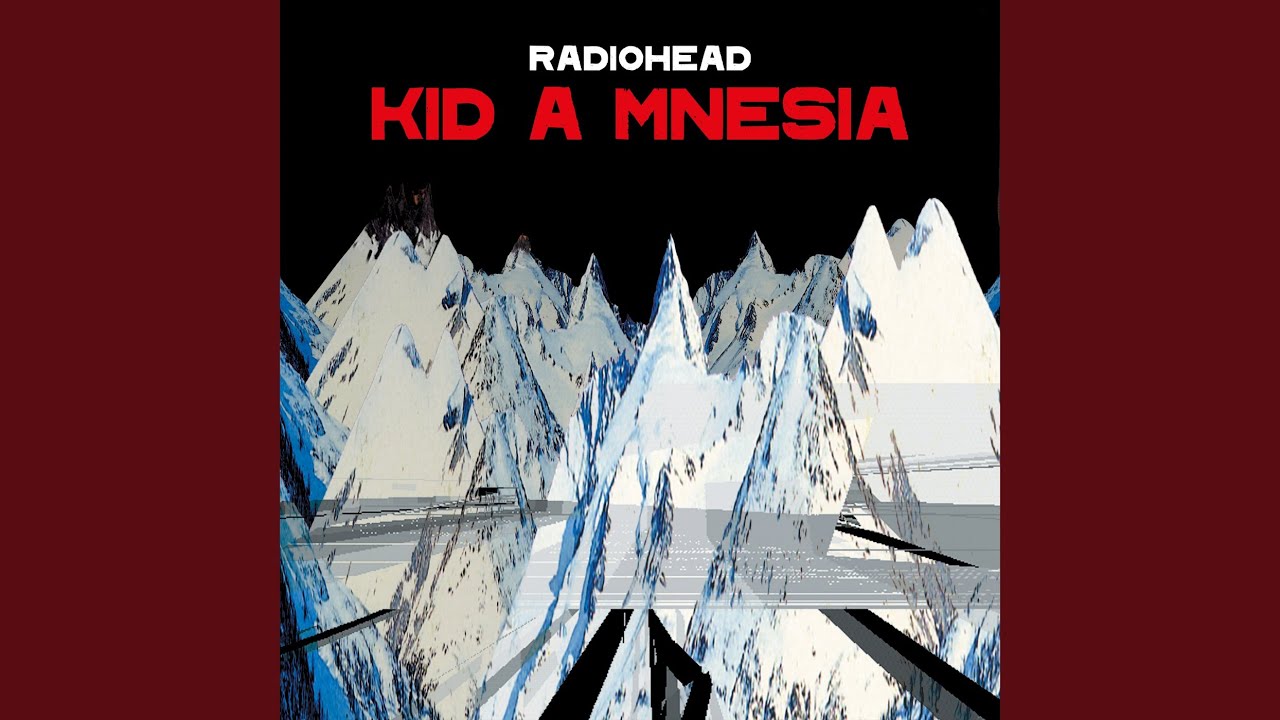
Released on October 2nd 2000, the record stretched, shattered and splintered all previous notions of what Radiohead were, with its best moments colliding genres with delirious abandon.
From the devilish free jazz menace of the The National Anthem to the hysterical modular-hewn Idioteque and the unnerving transhuman vocal that intones its way through the title track, Kid A wasn’t how anybody expected the band to follow-up on the critical veneration of OK Computer.
Although, as many fans will point out, the seeds of the band's left-field turn were already being sown amid some of Computer's more ambitious moments, it was still largely rooted in guitars and graspable melody.
But Radiohead’s experimentalist-chapter really began with the writing of Kid A’s first track. A pulsing grasp for serenity that was called Everything In Its Right Place.
Writing and shaping Everything… marked the moment when the band’s central creative force, Thom Yorke, realised that Radiohead’s future lay on stranger tides.
In a 2001 interview with Rolling Stone, Yorke recalled that the song’s starting point was triggered by a bout of depression that hit suddenly, following a show at the NEC Arena in Birmingham (UK).
Having been on the road for seven-and-a-half months, an exhausted Yorke was beginning to crack; "I came off at the end of that show, sat in the dressing room and couldn't speak. I actually couldn't speak,” Thom told Rolling Stone. “People were saying, 'You all right?' I knew people were speaking to me. But I couldn't hear them. And I couldn't talk. I'd just so had enough. And I was bored with saying I'd had enough. I was beyond that.”
As evidenced in the legendarily downbeat documentary Meeting People Is Easy, the nearly year-long OK Computer tour was tough on every member. But for Thom the stress was particularly corrosive. It was sapping not only his interest in OK Computer, but also his entire attitude towards guitar music in general.
It extended to his own listening too. Yorke replaced his previously guitar-leaning interests with a new passion for all things electronic, particularly the roster of Warp Records.
Aphex Twin, Squarepusher, Boards of Canada and Autechre were filling Yorke’s ears with new possibilities. “It was refreshing because the music was all structures and had no human voices on it,” Thom told Q Magazine at the time. “But I felt as emotional about it as I’d ever felt about guitar music. I’d completely had it with melody, I just wanted rhythm. All melodies to me were pure embarrassment.”

In isolation at a newly-bought home in Cornwall, Thom took a well-earned breather from heading the world’s most critically acclaimed band.
When he wasn't sketching landscapes and roaming the cliffs listening to Aphex, Yorke began to timidly trial new ideas on a freshly purchased Yamaha grand piano - the only instrument in the house.
Not a particularly versatile pianist at that point, Yorke gleefully came at the instrument from a non-musicological angle. Avoiding the obvious, Yorke's head swam with the off-the-wall attitudes of IDM's boundary-pushers.
During the first week, Thom ended up clanking out the song that would ultimately signal a sea change for what Radiohead could be; Everything In Its Right Place.
“That and [Pyramid Song from 2001’s Amnesiac] were both written in the same week - the week I bought a piano,” Thom told Mojo. “The chords I'm playing involve lots of black notes. You think you're being really clever playing them but they're really simple."
Yorke’s new track was deliberately ambiguous from a theoretical point of view, with its central motif transitioning between three chords - C, Dbmaj 7 and Eb6.
The tonal centre of Everything… is difficult for some musos to agree on. It’s generally assumed to be in the key of C, with the chord of Dbmaj 7 lent from the C phrygian minor mode, although an extra F chord briefly appears during the verse section, adding to the uncertainty.
The order of the chords alters throughout Yorke’s arrangement, but never deviates far from the central cycle.

Although not the norm, these chords certainly felt different for Thom. Inverting and throbbing, the new music implied a breadth akin to the sensation of gazing over a precipice down into a wilderness of unchartered territory.
Everything In Its Right Place became one of the few solid ideas that Yorke had for the band’s then-untitled fourth album.
Yorke reconvened with his bandmates, Jonny and Colin Greenwood, Ed O'Brien and Philip Selway, all of whom were also eager to explore new songwriting approaches.
Radiohead worked at a variety of studios spanning Paris, Copenhagen, Gloucestershire and Oxfordshire to work-up new ideas with a slew of electronic and vintage instruments, modular synths and modern gadgets.
But these free-flowing, deadline-free sessions became fraught with tension as conventional guitar sounds and live drums became increasingly sidelined in favour of weirder avenues.
Being one of the more structured ideas, Everything In Its Right Place was trialled with a variety of full-band arrangements - but a wall was repeatedly hit. It didn't really feel like Ed O’Brien’s contributions on rhythm guitar and Phillip Selway’s live kit were adding to the song.
Producer Nigel Godrich was underwhelmed; "[Nigel] didn't think much of Everything In Its Right Place when he heard it, he didn't think it was going to be any good,” bassist Colin Greenwood told KCRW.
Unimpressed with the lack of obvious hook, Godrich considered that perhaps Thom's new idea needed to be tackled in a different way. Perhaps, by emphasising the music's essential oddness.
So, while recording at a mansion in Batsford Park in Gloucestershire, Godrich did what any good producer would do. He sent everyone but Thom home, locked the doors, and brought in a Prophet-5.
Working through the night, Godrich and Yorke re-built the track on the Sequential Circuits’ synth monolith, backing it up with a Crumar DP-80.
Although landing on a sound that harked back to a Fender Rhodes, it was these synths that became the bedrock of a new electronic arrangement.
Routing the output into Pro Tools, Godrich painstakingly scrubbed and manipulated the waveforms to accentuate the synth’s swell and creatively modulate the EQ. Using a DAW in this expressive, experimental way was pretty forward-thinking for 1999. “He made all these mad sounds that no-one had done before and it was amazing,” said Colin Greenwood in an interview with KCRW.

On the Prophet-5, the pair landed on the song's trickling four-note opening riff, which seemed to unpack itself into the central chordal structure elegantly.
The widening colour palette of the arrangement mirrored Yorke’s lyric-writing, which had become unmoored from traditional structure.
“Thom always used to just carry notebooks with him everywhere we went,” Nigel Godrich relayed to Interview Magazine. “We’d be eating, and he writes stuff down all the time. For Everything In Its Right Place it was just me and him in a room, and he’s like, ‘Yesterday I woke up sucking a lemon… Oh, I can’t say that.’ And I’m like, ‘Yes, you can. That’s great.’”
This particular lemon line was, as Thom later admitted, a call back to the bleak mental state that hit him during the OK Computer tour, which Yorke felt was manifested across his face in a sort of contorted frustration.
As he explained to Rolling Stone; “In England ‘sucking a lemon’ refers to the face you pull because a lemon is so tart. That's the face I had for three years."
As Rolling Stone neatly articulated during their 2001 interview, the line was also a memento of the ‘mute, vengeful paralysis he felt in Birmingham which stayed with Yorke deep into the strange recording of Radiohead’s [Kid A]’.
“Lots of people say that song is gibberish. It’s not. It's totally about that,” Yorke confirmed to Rolling Stone.

The lemon line, then, is seemingly pivotal in understanding Everything In Its Right Place's meaning - with its titular phrase repeated like a mantra, emerging from a stormy ocean of ghostly, robotic Yorke vocal fragments which congeal around the arrangement.
Using Pro Tools, Godrich pitch-shifted, delayed, reversed and effect-daubed these surrounding vocals into a hazy sonic fog. Live this was later achieved by Jonny Greenwood manipulating Yorke’s vocals via a Korg Kaoss Pad.
The central mantra orbits the two bridges (or, non-verse sections, at any rate) which allude to Yorke’s mental disquiet, with the aforementioned lemon line being the first. The second, a more pointed admission of mental unease.
There are two colours in my head
There are two colours in my head
What, what is that you tried to say?
What, what was that you tried to say?
When spotlighting these particular lyrics (with the added context of Thom’s quotes on his breakdown) it's hard to not make a link to Yorke’s recollection of his lack of ability to understand others after the Birmingham show, (“I knew people were speaking to me. But I couldn't hear them. And I couldn't talk").
But, as Thom explained to Juice Magazine (as archived on the superb Radiohead archive site, Citizen Insane), it was also a broader comment on human connection in a world where everyone’s motives are suspect; “I didn't trust people at all, not even the people closest to me for ages and ages, and that means you really have nothing to hold onto. Everything In Its Right Place is about that. You're trying to fit into the right place and the right box so you can connect."

Everything In Its Right Place had blossomed into a scintillating, synth-driven tour-de-force.
Upon hearing it the following day, O’Brien, Selway and the Greenwoods were amazed, but also somewhat struck by how little there was for them to do, as the track was basically done.
“It forced the issue, immediately!,” Ed O’Brien recalled in an interview with XFM. “[I was] genuinely sort of delighted that you'd been working for six months on this record and something great has come out of it - and you haven't contributed to it, is a really liberating feeling.”
But as Ed also stated, the track laid down the gauntlet of just what the album could be, “It definitely sets the tone of it. It's the key to this record. Everything In Its Right Place, I think it's really tense, and actually, in its own way, really emotional. But it doesn't have the obvious, huge crescendos that have existed on previous tracks and records of ours."
“Everything In Its Right Place was important because, unlike with OK Computer, our last record, we were happy to leave parts of it empty,” Jonny Greenwood told KCRW. “I think in the past we've been too scared to leave sounds exposed or to have too much space around them, and we've been guilty of layering on top of what's a very good song or a very good sound, and hiding it, camouflaging it, in case it's not good enough, and Everything In Its Right Place was one of the first songs that we actually realised is great, even though it's so sparse, so that was a very important song, and it also dictated how we sequenced the record, because we knew it had to be the first song, and everything just followed after it.”
Everything In Its Right Place was the sound of Yorke transforming his turbulent mental health into creative fuel. Discarding the instruments, attitudes and expectations that were stifling him, Thom crafted a meditation on modern anxiety. A fusion of the age-old mysticism of mantra with an embrace of new technology and futurism. Fittingly released at the outset of a daunting new millennium, it mirrored humanity's trepidatious first-steps into an era of profound change.
For Radiohead, the door was open, and Everyhing In Its Right Place's gravitational pull soon pulled Kid A's other key tracks into shape. Morning Bell, Idioteque, Optimistic, In Limbo… a tidal wave of new ideas and half-formed fragments soon found alignment.
Kid A was about to be born, to the chagrin of some no doubt, but to the utter and enduring joy of many, many more.
