


Some songs are impossible to keep down. Case in point: Linger, by the Cranberries, which has been popping up everywhere recently.
It’s been featured in the Disney+ Tv show Love Story. There’s a Spanish language remix of the song featuring the Mexican singer Bratty that’s doing the rounds. And Fetty Wap too has got in on the action – his recent album Zavier features a trap version of the song, retitled Fool For You.
There doesn’t seem to be a particular reason for this. the Cranberries were never particularly hip, even during their peak mid-'90s era, and the band have been defunct since Dolores O’Riordan’s tragic death in 2018. But Linger is indisputably a great song, full of longing, and rich with the sort of romantic disappointment and frustration we all recognise from our younger years.
It was one of the Limerick band’s earliest songs, dating back to their pre-Dolores days when they still had an appalling pun as their name: The Cranberry Saw Us. “We were terrible when we started,” admitted guitarist Noel Hogan to the Guardian in 2017. “I knew about five chords and four of them are probably in Linger.”
In mid-1990 the band’s singer Niall Quinn (no, not that one) left and the remaining group – Hogan, his brother Mike and drummer Fergal Lawler - were auditioning for a replacement. Noel gave one of the candidates, a young 18-year-old singer called Dolores O'Riordan, a cassette of Linger.

Talking to Rolling Stone in 2019, Lawler recalled: “The following week she came back, and she had lyrics written out and melodies and she sang along to what we were playing, and it was like, 'Oh, my God. She's great.'”
Those lyrics were the product of a recent episode in the young singer’s life when the possibility of love had been sadly thwarted. “It was inspired by a night I had at a club called Madonna’s,” she told the Guardian. “This guy asked me to dance and I thought he was lovely. Until then, I’d always thought that putting tongues in mouths was disgusting, but when he gave me my first proper kiss, I did indeed ‘have to let it linger’.
Everyone saw me being dumped, publicly, at the disco. Everything’s so dramatic when you’re 17, so I poured it into the song
Dolores O'Riordan
“I couldn’t wait to see him again. But at the next disco, he walked straight past me and asked my friend to dance. I was devastated. Everyone saw me being dumped, publicly, at the disco. Everything’s so dramatic when you’re 17, so I poured it into the song.”
Her lyrics for Linger meant she was in. O’Riordan’s arrival galvanised the others and soon the band – thankfully renamed the Cranberries at her suggestion – started gaining a reputation beyond Limerick.
They signed to Island Records in 1991. But initial sessions for their debut album with manager Pearse Gilmore acting as producer led the band up a blind alley. In fact, the initial version of Linger had a very different sound to it, as Noel Hogan explained to Sound On Sound in 2019.
"His vision was completely different. At the time there were a lot of these kind of shoegazing bands. The trend was to have the guitars incredibly loud, washed with so much reverb that you couldn't really kind of distinguish the notes, and then bury the vocal in there somewhere. And it wasn't really what we were about at all.”
It was at this point that Stephen Street was called into action. The band were all huge fans of The Smiths (who Street had worked with) and, having heard the album demo, the producer agreed to work with them at Windmill Studios in Dublin.
Street ironed out a number of problems in the band’s demo. He switched Noel Hogan’s flange-enhanced intro over to an acoustic guitar so that it gently cushions listeners into the song. He also fixed the tempo of the drums. "Linger was an interesting one," Street told Sound On Sound in 2019. “It's a slow song, but it's got a drum pattern that's pit-pattering away throughout, like a drum‑roll type thing. So it was quite unusual in a certain respect. We wanted it to be pretty consistent, so this was one of the tracks where we did record to a click track.
"We really wanted to focus on getting the tempo right. Because it's one of those songs that if it's too fast, because of that drum pattern, it can really sound like it's kind of tripping over itself. Or if it's too slow, it can sound like it's walking through treacle. So we really played around with tempos until it felt like it was the right tempo for the feel."
After that he moved on to the guitars, which is where his experience with the Smiths was invaluable.
What I learnt really from working with Johnny Marr was layering parts for power
Stephen Street, Producer
"What I learnt really from working with Johnny Marr was layering parts for power," he explained. "Rather than just playing every single beat in the bar and making it very, very loud and pummelling through. Also, Noel at this point, he wasn't completely sure of every part he was going to play. So I was always saying to him, 'Look, I know it doesn't sound very full at the moment with just this one guitar part. But if we look at a different way of playing the chords, either by putting a capo on, or just working out a different inversion, with a different sound, and you perhaps not play on every single beat where the other part was, we might start getting a little bit of layered texture.’”
There was also some considerable layering when it came to Dolores O’Riordan’s vocals. “She would like to do maybe three or four takes," Noel Hogan remembered. "The backing vocals she would go through very quickly, 'cause she had an amazing ear for tuning. Then finally the last thing was her kind of soprano vocal that she would do. She would ad-lib that as she went along and she'd just say, 'Look, pick the best... just kind of chop and change it around.'"
But, as Street remembers it, it took a while for him to earn O’Riordan’s trust. "Dolores was a very shy girl at this point. I remember when we did the very, very first vocal sessions together on this record, she was wanting her boyfriend at the time to be there in the control room. I said, 'Look, it's not really how it works. Y'know, when you're working with me as a producer, you've got to trust my judgement, not your boyfriend's judgement as to whether the take is good or bad.'
"But, bit by bit, I managed to win her confidence. The magic happens then. You start doing the layering of a few bits and her doing her slightly operatic warbling in the background.”
It was around this time that the band recorded a session for John Peel. You can hear that it’s recognisably the song that was released a year later. The tempo rolls, the guitars have been worked out, and O’Riordan’s layered vocal is all in place.
Then came the strings, for which Street called up John Metcalfe and his outfit the Duke Quartet. "She (Dolores) had this line, but it was played on a very cheap little string synth that she had," says the producer. "I just said to John, 'Look, here's the line, can you arrange it properly for a string quartet?' But we actually ended up blending a little bit of the original line that Dolores played, and put lots of reverb on that, so it's just kind of there in the background. What you hear in the foreground more is the actual real strings."
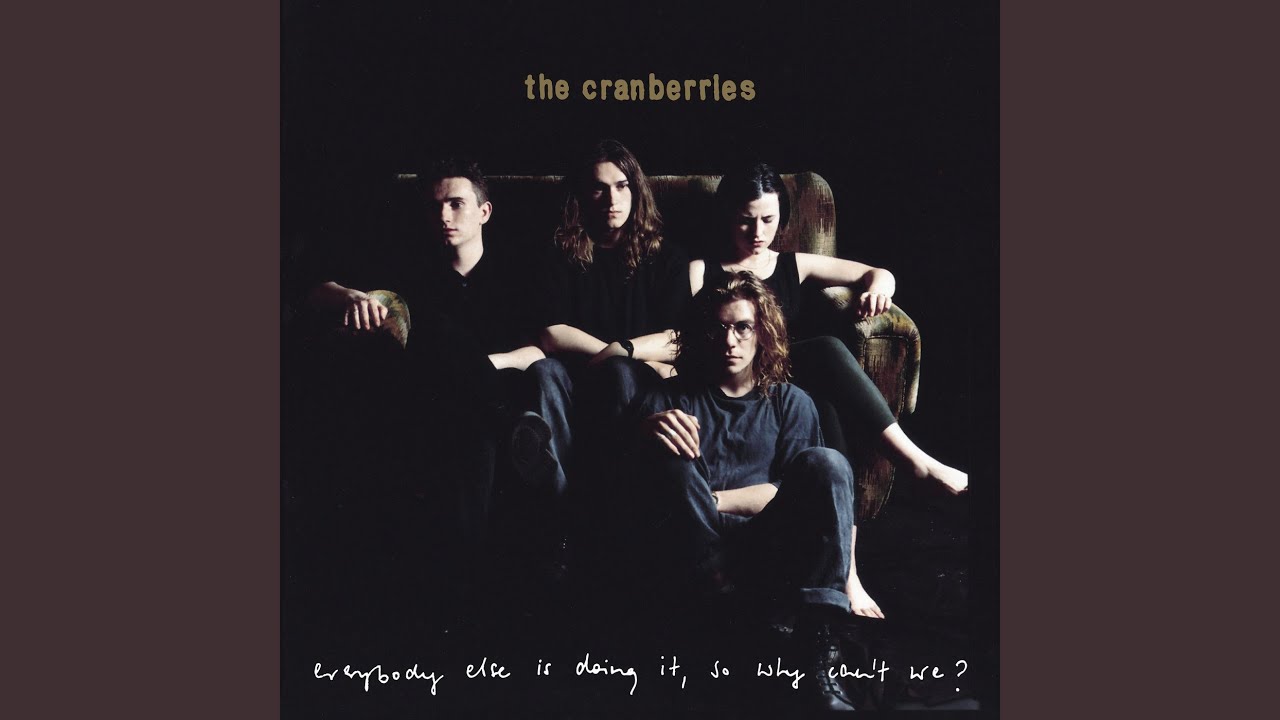
Linger and the band’s debut album, Everybody Else Is Doing It, So Why Can’t We?, were very far from overnight successes. The debut single Dreams had been released in October 1992 and did nothing. Linger followed the following February but still only drew a lukewarm response. Andrew Harrison in Select complimented its “lovely orchestra busying itself in the far distance and keeping the tune at arm’s length,” and mentioned The Sundays, a regular comparison point during the band’s early days. Meanwhile David Stubbs in Melody Maker dismissed it as a “fragile underwhelming acoustic thing with strings… Don’t all rush to the Virgin Megastore at once”.
But Linger didn’t need the approval of the UK music press. The Cranberries won people over by touring and building a following gradually, especially in the US. In the autumn of 1993 they bagged a support slot on Suede’s first American tour. Around this time the video for Linger was put on heavy rotation by MTV. The Cranberries found their set going down better than Suede’s (much to the chagrin of Brett Anderson and co) and eventually the running order was swapped.
Linger eventually made its way up to Number 8 on the Billboard chart, an incredible success for a jangly indie band who earlier in the year had looked as though they were destined for obscurity.
Their US success fed back to the other side of the Atlantic and Linger became the big hit it always should have been, reaching Number 14 in the UK and going Top 3 in their native Ireland in early 1994.
The band were benefitting from two separate trends. In the States, the initial grunge explosion had settled somewhat by late 1993, and punters were yearning for something a bit more thoughtful and feminine. Meanwhile, over in the UK, the first stirrings of Britpop were being felt, which opened up space for guitar groups of all stripes, especially those armed with melodic, accessible songs like Linger.

Its success kickstarted a transformative few years for the group. The Cranberries were among the most internationally successful alternative bands of the 1990s, depite the fact that their music didn’t fit easily into any of the decade-defining movements of that time. They split in 2003, but reformed six years later and released three more albums, before Dolores O’Riordan’s passing in January 2018.
And Linger, well, still lingers. The Cranberries have other signature tracks (Dreams and Zombie) but Linger is the one you’d have to have a stone heart not to warm to. It’s not just the cunning arrangement, O’Riordan’s wonderful vocals and its bittersweet melody. It’s the sound of a young woman opening up and allowing herself to be vulnerable.
She might be gone now, but Linger speaks to the uncertain, callow 18-year-old there is inside every one of us.
