


In September 1985, British band the Blow Monkeys, led by smooth-voiced, sharp-suited and floppy-fringed frontman, Dr. Robert, released the single Forbidden Fruit - a sophisticated and heavily-layered pop-soul track, with chiming guitar, horns, strings and female backing vocals.
It was a key song for the group, who were signed to the RCA label, and also featured band members Mick Anker (bass), Neville Henry (saxophone), and Tony Kiley (drums), as it saw them developing a lusher, more well-rounded and confident sound.
It was a natural progression from their 1984 critically-acclaimed debut album, Limping for a Generation, which was described in the band’s official biography as ‘an edgy mix of sinister post-punk, sensual glam rock and dramatic late ‘60s pop.’
Forbidden Fruit was released almost a year ahead of the album it came from (1986’s Animal Magic) but it wasn’t a hit, only reaching a paltry number 94 in the UK Singles Chart.
Speaking to the website Superdeluxeedition in 2023, Dr Robert (aka, Robert Howard) said: “Limping… got good reviews, it got us noticed and it got us on the circuit, but it wasn’t a hit album. Forbidden Fruit was the first single [from Animal Magic]. It crawled into the Top 75 [sic]. RCA was spending a little bit more money on us and giving us bigger budgets for videos, so I could feel that something was happening.”
What changed everything was the follow-up single, Digging Your Scene, released in February 1986. It was a classy and irresistible blend of infectious, slick and summery soul, jazz, funk and pop that peaked at number 12 in the UK Top 40, was a hit in America - 14 in the US Billboard Hot 100, and reached number 10 in New Zealand, 16 in Australia, and made the Top 30 in Germany.
But beneath the song’s electronic, ‘80s gated snare sound, and its smooth and shiny, saxophone-and-string-soaked surface, there was a dark undercurrent and pointed social commentary.
With lyrics like ‘Tell me why is it I'm digging your scene, I know I'll die, baby’, the track addressed the 1980s AIDS crisis, the associated stigma and the hate and prejudice directed towards victims. In particular, the oft-targeted gay community.
It was one of the first mainstream songs to tackle those issues.

In writing this retrospective, we spoke to Robert himself about his memories of making this song. He tells us that, “The lyrics were inspired by the gay scene and the clubs that me and my friends were going to, like Taboo and Heaven - although I wasn’t gay, I went there because that was my friendship group and it was a brilliant vibe. It coincided with the horror story of AIDS and the way it was being sold to the public by the government - it was awful.
“Donna Summer [allegedly, Ed] said it was ‘God’s revenge,’ although she retracted it later. That gave me the line in the song [‘It'll get you in the end. It's God's revenge’], but it kind of went under the radar, I don’t think anyone picked up on it at the time. It was quite easy to just take it as a love song, but I knew where it came from.”
The poignant line, ‘I just got your message baby, so sad to see you fade away’, is stark reference to people Robert knew who were suffering from the virus.
“I had friends who had AIDS, it was a death sentence, but the way it was being portrayed in the press was as if it was a plague. Princess Diana changed a lot of that,” Robert tells us.
The lyric, ‘Every day I walk alone and pray that God won't see me,’ is about those people who were ostracised for being gay.
“They were made to feel guilty, it was a dark period,” says Robert.
When he wrote the song, he had split up with his wife and was living in a basement flat in South London, on Nightingale Lane, near Clapham South Underground Station.
The musical inspiration for Digging Your Scene came from the sparse arrangement and the syncopated rhythm of Marvin Gaye’s 1982 electronic soul ballad, Sexual Healing, one of the first hits to use a Roland TR-808 drum machine and written when Gaye had relocated to Ostend in Belgium, during a period of self-imposed exile.
“I had the [Roland] Drumatix and the Bassmatix that went with it, they were quite hard to program. Sexual Healing had that kind of drum thing going on, so I copied the pattern and wrote the song over the top of it. That would’ve been around 1985,” says Robert.

“I watched a Marvin Gaye documentary where he’s playing darts in Ostend, that always appealed to me. It’s great, there’s footage of him rehearsing with that guy Deon [Estus], who played bass for Wham! Marvin is lying on the sofa, ad-libbing and it’s just amazing. He’s as far away from his comfort zone as he could possibly be, but I identified with it because of what I was going through.”
Robert was attracted to the simplicity of the drum machine groove on Sexual Healing and recorded a four-track home demo of Digging Your Scene for the rest of the band to hear.
“I did a demo using the drum machine, my arrangement was simple too because I couldn’t figure out how to program it!,” he says, adding: “I sold my Drumatix and Bassmatix years later because during Acid House they became really valuable.”
Digging Your Scene’s chords were written on an acoustic guitar.
“I had a horrible old Spanish guitar, the chords aren’t complex, but I was influenced by soul changes. That was definitely coming into my sphere of thinking during the Animal Magic time,” Dr Robert says.
“If you listen to What’s Going On or Let’s Get it On, and those early Al Green records on Hi Records, those chord progressions in Digging Your Scene are a classic soul thing. I’m thinking of Band of Gold or Midnight Train to Georgia, those mid-tempo songs.”
On the hit single version of Digging Your Scene, which was remixed and rerecorded in New York, there’s also a choppy and funky electric guitar. “We got a guy in called Ira Siegel, he played some of it and I played some of it,” says Robert.

“I was watching him, he was a proper New York funky dude, and he influenced the way I approached things for a while after that. He was using a Strat with an in-between pickup sound, which was funky and percussive. I had a guitar called a Harmony Rocket, it was awful and it never stayed in tune. In 1984, we did a whole tour supporting Lloyd Cole and my guitar was out of tune for the whole tour because it had a whammy bar. I fixed it, but I also used to play a Telecaster quite a lot.
"These days, it’s a Gibson 335 and I’ve got a Strat that I use quite a bit in the studio. I’m not a guitar geek - I’ve given guitars away. I don’t keep them - the only expensive thing I’ve got is a Fender Coranado bass. I played it on Paul Weller’s Changing Man and Stanley Road."
Robert continues, "I bought [the Coronado] on Denmark Street in 1987. It’s a semi-acoustic from 1967. Most proper bass players wouldn’t play it - but I’m not a proper bass player," Robert admits.
"When Paul Weller asked me to step in and play bass for him, I turned up to rehearsals with it, and his roadies looked at it and said: ‘Oh, mate, we’ve got one of Bruce Foxton’s Precisions in the back if you want to play it.’ I said, ‘No - don’t make me play that.’
“Paul walked in and said, ‘I like your bass,’ so they shut up,” Robert laughs.
For the Animal Magic album sessions in London, The Blow Monkeys worked in a small studio in Victoria called The Point, they also tracked at Solid Bond which was at Marble Arch and at Stanhope Place, which was the studio owned by Paul Weller that had formerly been the Philips Studios. There, many ‘60s pop acts, including the Walker Brothers and Dusty Springfield, had made records.
The strings for the album were recorded with producer Pete Wilson at Solid Bond. On the original version of Digging Your Scene, recorded in London, which finally saw the light of day in 2012, as a bonus track (the Pete Wilson Mix - on the deluxe 2CD Cherry Red reissue of Animal Magic) the orchestration is more prominent and lusher, the song is much more cinematic than the single version, and there’s less sax.
“You know more about it than I do, because I haven’t listened to that version in years,” says Robert, laughing.
He adds: “Pete Wilson’s string arrangements for Animal Magic were extraordinary, he did some beautiful stuff, but his strength wasn’t in getting the bass and drums, the low end, tight and funky. He was brilliant at the top line; he showed me little tricks, chords I might not have known, and he was very patient with me as a singer.”
Recording the original version of Digging Your Scene, Robert didn’t think it would work as a single, he figured it would remain just an album track.
“When we were doing it at that time, I don’t remember thinking ‘This is a single…’ I thought there were other things on the album that were more immediate, like Aeroplane City Lovesong, but that just shows you that I don’t know what I’m talking about half the time. It was Korda Marshall [at RCA], who had sort of become our A&R man who picked up on the potential for Digging Your Scene."

So, with that in mind, in 1985, Robert jetted off to New York on his own for two weeks to record a new, radio-friendly remix of the song at Arthur Baker’s Unique Studios. He didn’t end up working with the innovative hip-hop, electro and dance music producer, but, funnily enough, he did work with recording engineer and mixer, Michael Baker (no relation!)
“I did meet Arthur Baker and I had a look around the studio. I realised something was different - there were no instruments. It was wall-to-wall samplers and MIDI leads, and people with headphones, making bleeps,” he says.
“This mad guy walked in - he was wearing those ear protectors that people who drill in the street wear. That was Michael Baker, he was a nutter, but a great nutter! I worked with him and a German guy called Axel Kroll, who was a drum programmer, they introduced me to a new member of the band, the LinnDrum!
“Axel was also a brilliant drummer, he knew what he was doing because he had a special feel; he wasn’t robotic. Everyone said you needed that Hall & Oates snare drum sound to get the song played on the radio, so they added the LinnDrum, brought another guitarist in and cut the sax up.
"They had a bit of Neville’s sax and some by someone else, and they got some other backing vocalists in, who really elevated it. The whole thing was just so energetic, and it had that New York vibe. I was used to working in studios in England. It was a different atmosphere.”
He adds: “I also went to D&D Studios, which later became world-famous for hip-hop and the Beastie Boys. I tried to do a new vocal, but it didn’t work.
“When we went to D&D, the musicians came in to perform… they were in and out, and they had so much energy. It wasn’t drug-induced, it was just being in New York: bang! I was really excited by what was going on - the early hip-hop that was coming out of there at that time.
“It was a great time to be exposed to that music, which was groundbreaking. I seriously considered moving to New York, I had a look at a flat there. I just fed off the energy.”
Returning to London with the newly-remixed version of Digging Your Scene, Robert took it to the rest of the band: “I said to them, ‘The good news is that we’ve got a hit, but the bad news is that you’re not on it!'”
After their initial shock of being removed from the song, the other members of the group soon learned to love the new mix - especially when it broke the band on both sides of the Atlantic.
“I think it must’ve been quite difficult for them at first, but once they realised how it was going to change everything for us, they went, ‘Yeah’,” says Robert.
“The song was a life-changer for us. Suddenly we got on the Wogan show and it started to take off everywhere, including America. We did Dick Clark’s American Bandstand, we toured with Robert Palmer when he was number one with Addicted to Love. We did some gigs with the Psychedelic Furs, and we played quite a lot of gigs on our own,” Robert remembers.
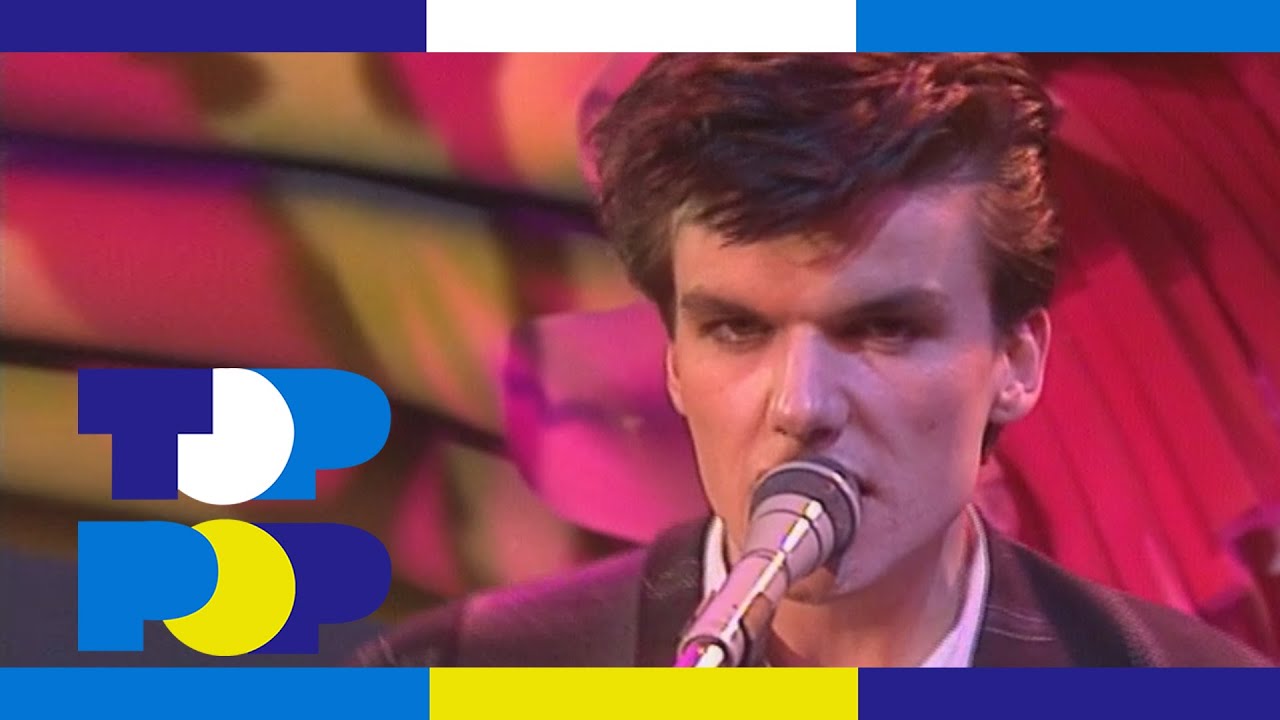
“After we did Top of the Pops, I went to a fish and chip shop in Brixton, and the girl behind the counter said, ‘Did you see that band on Top of the Pops last night?’ She was talking about us, I wanted to say, ‘That was me,’ but I didn’t - I just ordered some gherkins.”
More than 40 years since Digging Your Scene was released, the song's true meaning is now more widely understood.
“When we started putting out compilations and Best Of albums, more people started asking me what it was about and the penny dropped, but that was probably because I started talking about it more. I didn’t say anything at the time because I got swept up by suddenly being a pop star. Because the record company made me look like Morten Harket on the cover of Animal Magic, I took my eye off the ball because we were touring so much, we started to get teenyboppers coming to our gigs, who took one look at us playing live and thought, ‘Who the f**k are this lot?’
“Although Digging Your Scene was pop, we still had one foot in my obsession with bands like Laughing Clowns and The Birthday Party, and we were still playing songs from our first album, which the teenyboppers didn’t dig at all. The record sleeves encouraged a different perception to what we were, but the warning signs were there when we did the video for Forbidden Fruit. I turned up, there was a model there and someone said: ‘We want you to frolic on the beach.’ I was thinking, ‘hang on…’
“I’m not saying I didn’t go for it and enjoy it, but there were murmurs in the background at the record company, with people saying: ‘You could do a George Michael, go solo and be really big.’ This sounds egotistical, but because of the way I looked, they thought, ‘OK, we’ve got a pop star on our hands.’ But I was too spiky and not very good at doing the ‘happy, happy family of pop.'"

In the heavily rotated promo video for Digging Your Scene, a suited and booted, makeup-wearing Robert (with his razor-sharp cheekbones) and the band and some backing singers, perform the song on stage in a club, against a sparkly gold backdrop, to an audience of cocktail-supping punters.
The barman tosses Robert a guitar, which he catches and then throws away, and then said barman, and a waitress, join Robert, who has three costume changes, on stage for a dance routine. Robert also goes over to a table and sings the song to an ecstatic middle-aged woman, while gazing into her eyes, and even finds time to twirl a pink parasol.
“I don’t remember where we filmed the video, but I do remember thinking, ‘Oh, the budget’s gone up on this one… I think something’s happening,’” he recalls.
“I knew the barman and the waitress from the club scene, and I had to go to Pineapple Dance Studios to learn the dance routine. I thought, ‘This is new.’ I was just having fun really, at that point in my life, I was unattached. I had come out of my first relationship, and everything was taking off. I enjoyed camping it up for the cameras a bit.
“The video broke us in America. In those days, MTV would either give you a thumbs up or a thumbs down, but they went for it. So that, coinciding with the fact that college radio picked up on the song, meant that all of a sudden we had a hit in America, and it was taking off all around the world. I think the video had a lot to do with it doing well internationally, but, although the song didn’t do as well as It Doesn’t Have To Be This Way or Wait, it seems to be the one we’re best known for.”
In 2026, the Blow Monkeys are still touring regularly, including UK dates this year, to support 2025’s well-received studio album, Birdsong, which was recorded at Paul Weller's Black Barn Studios in Surrey.
Digging Your Scene remains a permanent fixture in their live set.

MusicRadar asks Robert how he feels when he performs the song these days and if it brings back memories of the friends he lost from AIDS in the ‘80s.
“I always try to connect with them," Robert reflects. "I try to find a place and put myself back into the lyric while I’m singing it, but you can’t do that every night. I just enjoy singing it. We’re able to get away with playing new stuff as well as older songs, and after 40 years, or whatever it is, that’s what I’m after. So, of course, I’m not going to not play Digging Your Scene. As long as we can express ourselves and keep putting records out, and enough people buy them, so we can make the next one. It’s great to see the excitement that people get.”
But does he have to change the key when he sings Digging Your Scene now?
“I haven’t changed the key, but I can’t hit the high bit in the chorus (Nev does that). Obviously, it’s more stripped-down now - it’s just the four of us. There are no strings or keyboards on it, but Nev plays the sax. When he’s not playing sax, it’s just a three-piece - it’s like a garage-soul version, which is cool. I’m down with that. I don’t need all the embellishments.”
When he’s played solo shows, Robert has stripped the song back even more, doing an acoustic version of it. “If the song stands up, you can do it many ways,” he says.
We ask Robert if he ever wonders what would’ve happened if he hadn’t got on that plane to New York in 1985?
“I would’ve carried on trying. The one thing I do have is stamina and determination. I wasn’t very good when we started out as a band. I knew people who were a lot better than me, but they couldn’t stick at it. A lot of it is to do with staying power. I was quite disciplined, I used to stay in and write songs. I never got hung up on drugs or drink, and I was always wanting to get better, so I stealthily stayed at it.
“When you get somewhere and you start getting reviewed, it’s a weird place to be,” Robert tells us.
“Getting criticised in public is a funny job. You’ve got to have a little bit of a thick skin and keep your eyes on the prize. I suppose that was my strength - as I carried on, I got better. I don’t think I would’ve given up easily, I would’ve kept going until a door opened.”
