
It’s the summer of 1995 (mid-August to be specific) and the UK is in the grip of a heatwave. On the news and in the press, the so-called, ‘Battle of Britpop’ is raging, with Oasis and Blur facing off for the coveted No.1 spot in the British charts.
Will it be the Mancunians’ Roll With It, or Albarn’s parodic class critique, Country House that Britain elects as its premier pop single? If you believe the media hype - this is the biggest rock and roll rivalry since the Beatles and the Rolling Stones back in the ‘60s.
The truth is that the pair of songs going head-to-head are two of the bands’ weakest singles. Roll With It is a third-rate, Status Quo-cribbing plodder, and Country House, although a better track, is essentially a jaunty and brassy Chas & Dave-leaning pub-piano knees-up.
Ironically, the most life-affirming anthem of that long, hot summer has already been a top ten hit back in March (peaking at #9) but, come August, and the Boo Radleys’ Wake Up Boo! is still being played on radio stations all over the country - particularly at breakfast time.
Opening with a big blast of soulful horns and powered by a Motown-style backbeat, driven by drummer, Rob Cieka, Wake Up Boo! was an irresistibly upbeat and infectious pop banger.
Led from the front by singer Simon ‘Sice’ Rowbottom, the song urged listeners to seize the day:
Wake up, it's a beautiful morning
The sun shining for your eyes
Wake up, it's so beautiful (wake up)
For what could be the very last time
Although seemingly tailor-made for mass appeal, the song had a fair bit going on under the bonnet. It was bolstered by its glorious, sun-drenched harmonies which came via high-pitched backing vocals. Then there’s a McCartney-like melodic bassline and some vibrant piano chords balancing out the pounding electric guitar.
Despite its obviously positive air, there is a melancholy at the heart of it. With lines like, ‘Summer's gone. Days spent with the grass and sun,’ and ‘You have to put the death in everything’, it’s a song that brilliantly captures the bittersweet transition from summer to autumn.
"It’s a very upbeat sounding song but it’s almost a lament, about grabbing the last of summer while you can," lead singer Sice told the Guardian in 2021.
We caught up with Sice to talk through the making of a song that is now firmly established as an essential indie anthem, and still the Boo Radleys’ most popular song.
“We’ve always liked to do what’s not expected and to go against the flow, so, when you have a big, bright pop song, there’s got to be that undercurrent of darkness,” Sice elaborates.

So, how did the Creation Records-signed shoegazers-turned-indie-pop-experimentalists end up with the most played song on UK radio in 1995?
Two years earlier, the band had garnered critical acclaim with their sprawling and ambitious masterpiece Giant Steps, their third album. The record embraced dub, jazz, noise-rock, jangly Byrds-esque guitars, layered Beach Boys harmonies and psychedelia.
Sice tells us how the band, which had first formed in Wallasey, near Liverpool, way back in 1988, approached the follow-up album, Wake Up!, from which their biggest hit single - penned by the band’s songwriter and guitarist, Martin Carr - came. It turns out the original idea was to make a record consisting of 12 outright pop songs.
“We always liked to keep ourselves interested, so, because Giant Steps had been sprawling and experimental, we didn’t want to do that again,’’ Sice explains. “So, we set ourselves the goal of making an album of 12 pop songs. We really loved albums by Duran Duran and the Human League, so we went about making an album like those, but I think we failed.’’
They certainly didn’t fail with Wake Up Boo!, which was sequenced as the album's opening cut. It was by far the album’s poppiest and most commercial moment, although the tuneful and horn-driven follow-up singles, Find The Answer Within and It’s Lulu, which reached 37 and 25 in the UK singles chart, respectively, are both similarly light-spirited.
Elsewhere on Wake Up! there are weirder trips like the bleary-eyed and paranoid Martin, Doom!, It’s Seven O’Clock and the raw tension of 4am Conversation, which was inspired by a late-night argument Martin had with his girlfriend.
However, these deviations from the original pop blueprint didn’t stop the album getting to number one in the UK chart, as people who loved Wake Up Boo! were eager to hear more from what they assumed was a feel-good band. No doubt some of them were left bemused when they got the record home and put it on their stereo…
“I think Martin set out with the discipline of doing an album of 12 pop songs and then couldn’t keep it going over the whole record,’ explains Sice.

“It’s quite a tough thing to do - we were a bit like the Beatles, where, once you write something, you just want it out there. You don’t think, ‘We’ll stay and work on this…’ So, I think the 12 pop songs idea got abandoned, we went in with what we had, and maybe Martin intended to write more in the studio, but it just never happened.’’
On how Wake Up Boo! came to be written, Sice told The Guardian in 2021 that it, "was probably born after a late-night, drunken conversation between Martin and [Creation Records boss] Alan McGee, with McGee saying: 'You’ve got to write something big and poppy and get on the radio.' Martin took that to heart.’"
Sice tells us: “There’s a song we did called Buffalo Bill [on the 1992 Boo! Forever EP] that’s about that night when Martin and McGee stayed up drinking. Martin probably felt a lot of pressure at that point. Creation was a big indie label, and we were a critically acclaimed band, but McGee’s position was that it doesn’t mean anything if you don’t have a hit.”
Speaking to The Guardian, Sice recalled how Martin once said that he wrote Wake Up Boo! while watching (British morning entertainment show) The Big Breakfast after a night on acid. “He was living his own life in Preston at the time, separate from the rest of us, so I wouldn’t know, but he definitely watched the Big Breakfast, so the story is entirely possible.’’
In an interview published on Tumblr for the On Making Music blog, Martin explained his thinking behind writing Wake Up Boo! saying: “We had done Giant Steps and we were a big, just-outside-the-Top-40, indie band and that wasn't enough for me. I wanted to be on Top of the Pops and be on Radio 1 all day and do something that my aunts and uncles and people I went to school with, and people I had worked with, would hear. I only wanted to do it once and then get back to doing what we were doing, but there is no going back from something like that. I didn't know that then.”

He added: “I wrote the chorus first, in a small crappy flat in Preston, and once I had that I worked really hard at the arrangement, harder than I've ever worked on a song. Conversely, I took no time at all on the lyrics. It beggars belief how useless they are. We did a version of it and decided between us and Creation that it wasn't right, which shows how seriously we were taking it. So, we did it again and we did it properly.”
Sice tells us that when Martin first played him Wake Up Boo! he wasn’t that impressed: “I was probably underwhelmed. I didn’t think, ‘this is a pop banger,’ because it wasn’t.
“On YouTube, there’s the original version - it starts with a trumpet line that’s not very interesting and a bit weedy. The melody was the same and it was a nice tune, but it was very like Giant Steps, and I think that was when the decision was made to do something very different with it.
“One of the big things about Wake Up Boo! is what Rob and Tim [Brown - the Boo's bassist] do. They brought that Motown backbeat, which was huge. It also reminds me of Move On Up [by Curtis Mayfield]. We’d worked with [trumpet player] Roddy Lorimer on Spaniard [from the 1992 Boo Radleys album, Everything’s Alright Forever], but we’d never worked with a brass section before. We put the call out and it was done very quickly.”
The first version of Wake Up Boo! was attempted at First Protocol Studios in North London, behind Holloway Road, which was where the Boo Radleys had made Giant Steps.
In a 2021 interview with The Guardian, Tim Brown recalled that, “The first I heard of Wake Up Boo! was on a hissy cassette from Martin. I listened to that, then tuned my guitar and came up with a bassline.
“I don’t remember us being too unhappy about the original version, but when we were mixing it in Peter Gabriel’s Real World Studios it sounded a bit underwhelming, considering how brilliant the song was.’’
Creation was similarly unimpressed, so much so that it paid for the band to relocate to the legendary Rockfield Studios in Monmouthshire, Wales - a residential recording setup where the likes of Queen, Black Sabbath, The Stone Roses and Oasis had made records.
“There was pressure from Creation to re-record it,” Tim told The Guardian. “When we were in Rockfield - another very expensive studio - Martin put on a Style Council B-side, which gave us the idea to change the rhythm. Rob and I worked out a Motown beat, which began the transformation.

“Then we made some calls and got in Tom Jones’s brass section, who had been recording in Cardiff, not all that far away. I was given the job of calling them to tell them we didn’t want any trombone. The guy on the phone said: ‘I am the trombone player’. It was comical, but they came down and were such top professionals that they had it done in half an hour.’’
Speaking to On Making Music, Martin said: “I wish I had written the brass parts down; I sent the players the track and vague instructions and was horrified when they turned up and played what to me sounded like the Jimmy Young theme tune. It was cheerful, which was not what I wanted at all, so I flattened as many of the notes as I could, but it was too late - we had run out of time.”
Sice shares with us his memories of working at Rockfield, saying: “It was amazing, mainly because of the history, and, at that time, Oasis had been recording there, so it also had a legendary status because of that.
“Part of the reason why we went to Rockfield is that when we went back to [First] Protocol [after Giant Steps] everyone knew we recorded there, and everyone knew we were a bit of a party band. So, what would happen is everyone would drop around.
“I remember being in London and getting no work done, because people would come down at six o'clock, sit around for a while and that would be it… If we were going to work, we needed to get away, so people couldn’t drop in. But the weird thing was when you're away in a residential studio, you start going slightly mad anyway, and you end up making your own entertainment.”
He adds: “The re-recording of Wake Up Boo! was done as part of the [Wake Up!] album - it wasn’t separate. I spent a lot of time recording the vocals on the first version of Wake Up Boo! and then I had to re-record them [at Rockfield].”
The band produced the sessions themselves in September and October 1994, with Andy Wilkinson on engineering duties, and assistance from Paul Read.
Al Clay, who’d worked with Pixies and Therapy?, was brought in to mix the album at the Church Studios in London, in November of that year.
“I don’t know where we got him from,” says Sice. “We’d often get recommendations from Creation. Part of the thinking was that he’d produce something that was quite clean sounding. Wake Up! needed to be clean, not like Giant Steps, which was mixed by Anjali Dutt. We realised that her sensibilities weren’t going to work on the next album.”

So, with the band finally locking down the single version of Wake Up Boo! did they now realise that they had a hit on their hands?
“I think we probably must’ve done, but I don’t remember it vividly,” says Sice. “I think maybe I’d stopped guessing by that point because we’d had so many false starts. I remember recording The Finest Kiss [1991 song on the Every Heaven EP] for Rough Trade, which was the poppiest thing we’d ever done, and thinking it would chart.
“We’d also had false starts with Lazarus and Barney (…and Me) [singles from Giant Steps]. I probably hoped Wake Up Boo! would do something, but I don’t think there were any great expectations, but there was a hope, I suppose.”
When the song was released on February 27th 1995 it picked up a massive amount of radio play and peaked at number nine in the UK Top 40 on 11 March.
Tim told The Guardian: “After it was a hit, we’d gone from making beautiful songs buried in sludge to suddenly being everywhere. We were on Top of the Pops. Chris Evans used Wake Up Boo! for a jingle on his Radio 1 show, [which changed the lyrics to] ‘Chris Evans on your radio …’ All sorts. I never expected that kind of success to last for ever, but they were amazing times. You just think: ‘Let’s enjoy it while we can.’”
On entering the mainstream pop world, Sice tells us: “Top of the Pops was glorious - it was a big thing. Stevie Wonder was on there at the same time as us, we passed him in the corridor. I was absolutely starstruck. I remember straight after Top of the Pops we had to get in a van at 10 o’clock and drive to Manchester because we were doing a breakfast TV show and had to get up at 4am.”
He adds: “At that point, it was the best of both worlds. We were indie darlings and critically acclaimed and then Wake Up Boo! took us into the mainstream, but it was too successful really - we weren’t cut out for it. We were fish out of water. We said we would do anything, but the reality was it wasn’t so great. We just weren’t those personalities. You have to be someone who enjoys being the centre of attention and the vacuousness that goes with it,” Sice remembers.
“When you come from the indie ghetto, your heroes are bands like the Velvet Underground. What would’ve happened if they’d been mainstream? Top of the Pops was wonderful the first time we did it, but when we did it again, it was a day of hanging around. That was when it changed my mind - one of the times we were on it, I saw Bon Jovi, and Jon Bon Jovi was loving it. I was thinking, ‘How many TV shows must you have done over the past 10 or 15 years and what does it take to still enjoy it?’
“I started to think that I had better things to do all day than hanging around the studio - it seemed like a big price to pay for being able to make music.”
For a song supposedly written after an acid trip comedown while watching the Big Breakfast, Wake Up Boo! tapped into the '90's triumphant zeitgeist perfectly, catapulting the Boo Radleys into the world of breakfast radio and TV shows and, rather neatly, in the summer of 1995, Sice and Martin actually ended up appearing as guests on the Big Breakfast. They performed a snatch of standalone single, From the Bench at Belvidere, alongside puppet duo Zig and Zag.
Wake Up Boo! bottled the optimistic and hopeful mood in the UK in the summer of 1995, as momentum gathered for the Labour Party, then riding high under new leader, Tony Blair. After years of Conservative rule by John Major, public opinion had shifted towards Labour’s new vision for a brighter future in Britain
“McGee’s disowned the song now, but he wanted New Labour to use it as their anthem instead of [D:Ream’s] Things Can Only Get Better,” Sice recollects.
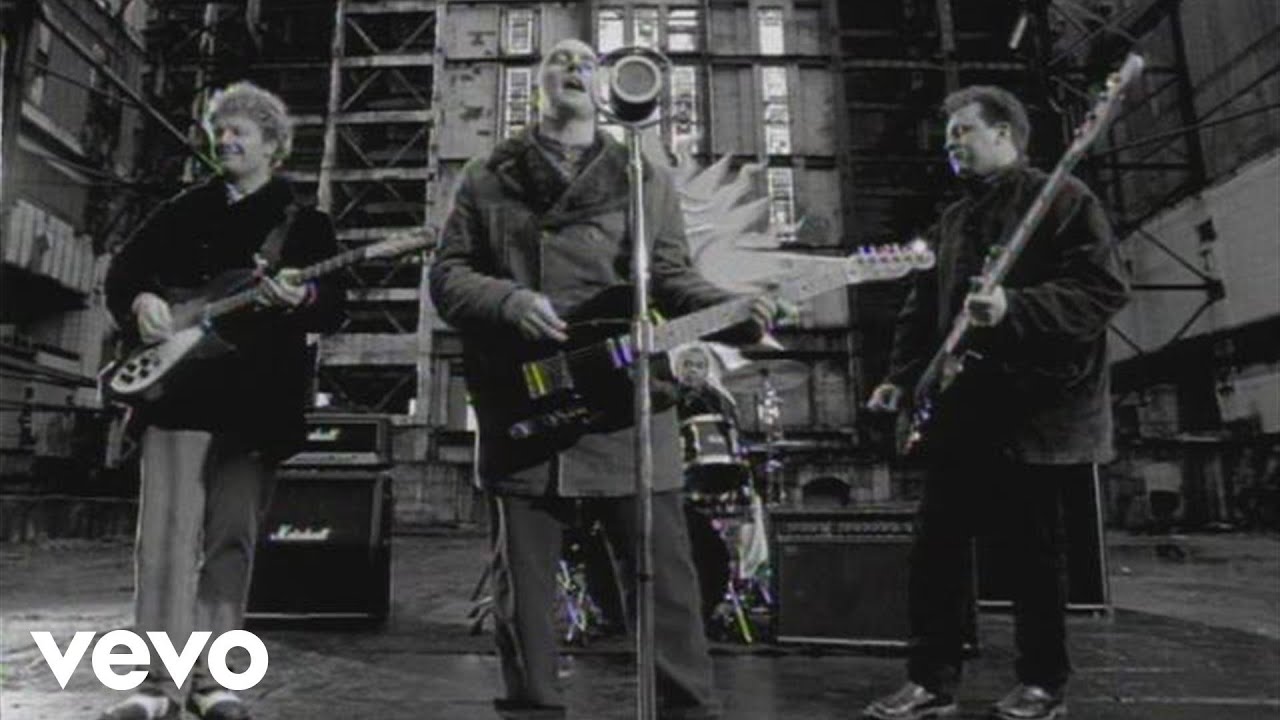
The promotional video for Wake Up Boo!, which has garnered millions of views on YouTube, was filmed at London’s Battersea Power Station. “It was freezing,” remembers Sice. “That was the ironic thing: ‘Wake up, it’s a beautiful morning,’ but it was the dead of winter and almost snowing. We should’ve done a summery video on a yacht!”
Although The Boo Radleys went on to make two more albums after Wake Up!, including 1996’s noisier and more experimental C’mon Kids, the band split up in early 1999. We wonder if Sice thinks that the runaway success of Wake Up Boo! might have actually sounded the death knell for the band?
“Yes I think it did. It’s weird, because I’m totally ambivalent towards it. Wake Up Boo! put us in a position that we wouldn’t have otherwise been in, had we not released it, we could’ve remained an indie band and sort of slunk into nothing. So, who knows? I’m not one for regrets. We made the decisions we made at that time because of the context we were in. I don’t have a problem with it.”
But the Boo Radleys’ story doesn’t end in 1999. Twenty-two years later, in 2021, the band reformed, albeit without Martin. Since their comeback, they’ve made three albums, capped by the just-released In Spite of Everything.
The group are currently touring the UK and Europe to support the new record. So, can we expect to hear Wake Up Boo! in the setlist?
“We play it in every show. People want to hear it - it’s a good song,’’ says Sice.

"The thing is because it didn’t come out until 1995 it wasn’t like it had been in our repertoire forever, we didn’t do a lot of touring in that time and we had split up by 1999, so we didn’t play it a lot, and we never got fed up with it. I’ve always felt it was just another song. It’s a cliché, but the thing about songs is that they’re like your children, if one’s more successful than the other, you don’t say, ‘Oh, I wish they weren’t successful…’ You just say, ‘I wish the other one could have a taste of it as well.’
"It sounds a bit arrogant, but I’ve always felt you don’t judge the Beatles by Maxwell’s Silver Hammer or Good Day Sunshine. Wake Up Boo! is a great throwaway pop song, but it was never meant to define who we are.
“Everyone knows the song, but not everyone knows who did it,” Sice tells us, “When I’m at the school gates with my kids, and I get talking to people and they say, ‘What do you do?’ and I say, ‘I used to be in the band the Boo Radleys,’ and they say, ‘I don’t know them…’ I say, ‘Just go home and put it into YouTube…’ And the next day, they say, ‘I know that song!’"
