


Matteo Mancuso’s 2023 debut album, The Journey, was a vindication. This showcase for the coltish Sicilian’s breath-taking fingerstyle approach to electric jazz-rock fusion justified all the hype that had been coming from the great and the good of guitar.
Tosin Abasi, Joe Bonamassa, Steve Vai et al knew what they were talking about when they were calling Mancuso “the future of guitar” – and that future had officially arrived.
But Mancuso was a little bored of the material by the time The Journey was released. Having put it together over a number of years, he had this feeling that he had outgrown it, that he had become a better musician. Next time it would be different.
Joining MusicRadar from his hotel room in Germany, Mancuso says he had a few goals when he was making its follow-up, Route 96. He wanted more compositional audacity, a more experimental flavour. He wanted it to sound more instinctual. And when he heard it being played back through the studio monitors he wanted to hear more of himself in it.
“It represents me way better compared to the first one,” says Mancuso. “The main difference was that I wanted compositions where the arrangement was a little bit more complex and advanced.
“The first album is a little bit more jazzy sounding. This one is more experimental. There’s jazz, for sure, in the sense that there’s always improvisation in it, and there’s a jazz vibe in everything because I have a strong jazz background – this will never fade in whatever I do. But the difference was that I was forcing myself to listen to music that was not guitar-oriented.”
There is nothing quite like trying to work out a horn or piano part on guitar for making you see the fingerboard anew. It’s humbling, too, the physical challenges making it feel somehow unnatural. But the chances are you want end up regurgitating something that you already heard some other guitarist do.
“We guitar players tend to listen too much to our colleagues,” says Mancuso. “And that’s great for learning the instrument because you are listening to your own instrument, and you are able to dissect it and learn faster. If you copy from saxophone or piano players, it can be a little bit more tricky, because it’s not your instrument, and you have to decode things in a different way.”
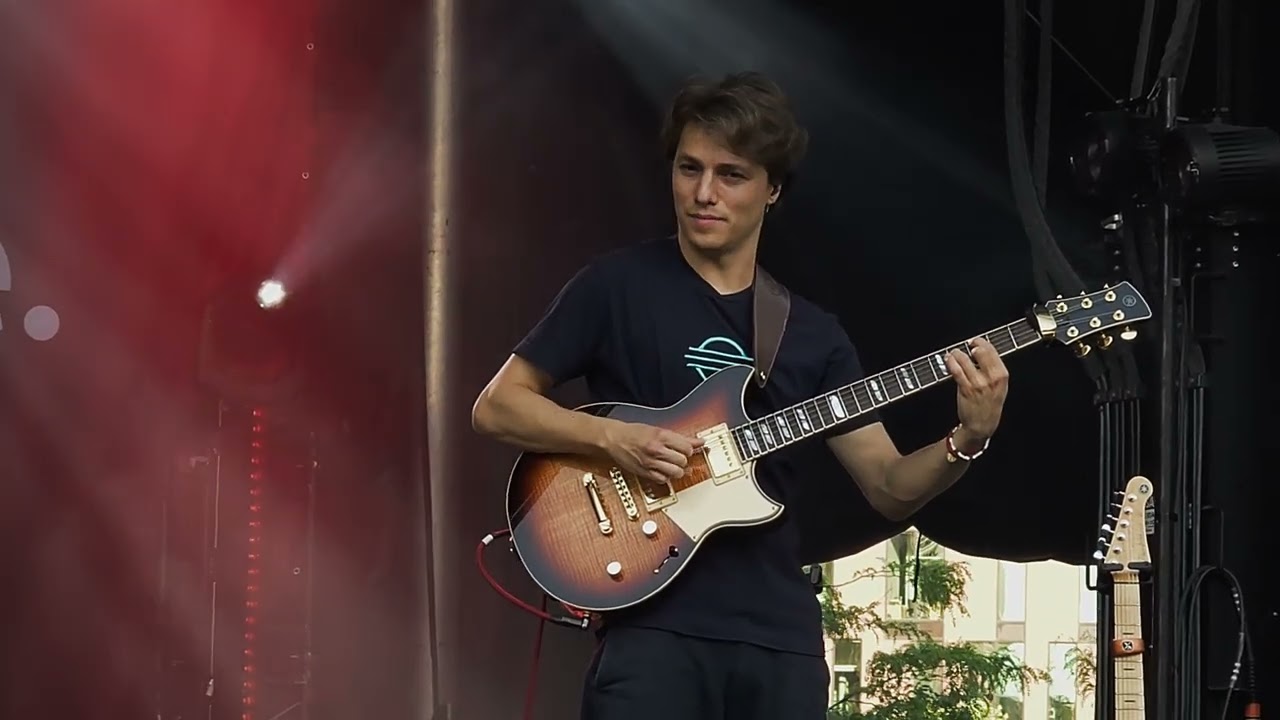
Even the way Mancuso addresses his instrument, his hybrid fingerstyle approach developed from two contrasting classical guitar techniques, feels uniquely radical. There is a growing cohort of high-profile players who are option for finger over pick, yet none do it like this, combining an appoggiato technique, his thumb resting on the pickup, with tocco libero, where he can pick with his thumb, too.
Mancuso uses the latter for three-note-per-string runs, ripping scalar phrases, while appoggiato allows him to execute string skips and arpeggios that would be physically impossible with a guitar pick.
“The advantage is you can build more unusual patterns for electric guitar because you can skip whatever string you want,” he told MusicRadar in 2023. “You can start a pattern from whichever string.”
Even the greats can’t believe what they are seeing. We asked Eric Johnson recently who was exciting him on guitar and with no hesitation he said Mancuso. Many argue he is the best guitar player in the world right now. We would not be of a mind to argue.
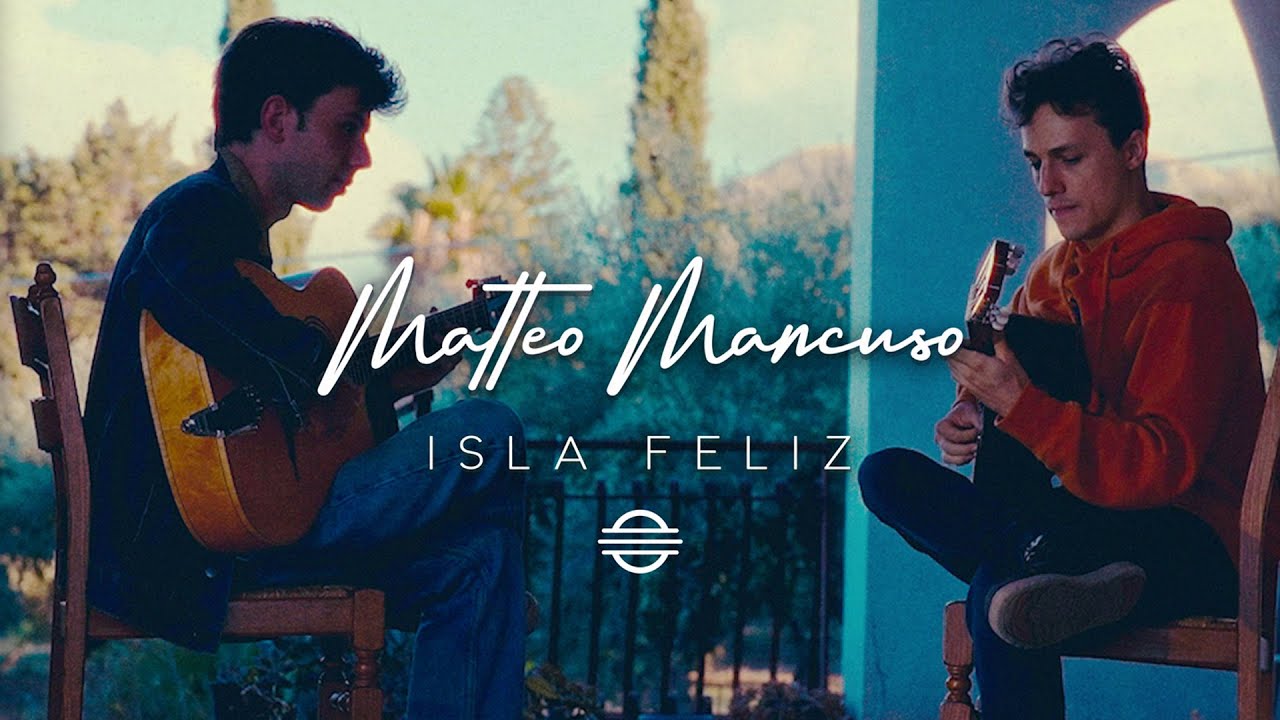
And Route 96 is the sound of Mancuso stretching out and testing himself, playing in the company of Steve Vai, who guests on Solar Wind, and modern-day Gypsy jazz maestro Antoine Boyer, who illuminates Isla Feliz with his own brand of genius, and following his musical curiosity over the horizon.
Here he tells us why we are living in a golden age of technical virtuosity, a fact to be celebrated, but explains why he hates the idea of the “guitar battle” and urges all of us to follow Steve Vai’s advice as a rule.
You have spoken before about being a big believer in listening to as many different styles as you can. How did that influence Route 96?
I was listening to a lot of different stuff, especially South American music, and I think it was great for my compositional skills because I was able to bring elements that were not there on the first album.
“I was listening to a lot of different stuff, especially South American music, and I think it was great for my compositional skills because I was able to bring elements that were not there on the first album.
“If you listen to Isla Feliz or Warm Sunset, they are very Latin-sounding, and that’s because I started listening to different things – even a lot more classical guitar. That’s something you can hear on the record.”
Absolutely, especially on a track like Fire And Harmony. That could be your signature track. It has everything that makes you sound like you.
“Thanks! Yeah, Fire And Harmony is the track with the most guitars on it, together with Solar Wind, with Steve Vai. These two are the tracks with the most guitars. Solar only has electric guitars, though. Fire and Harmony has an acoustic solo and acoustic guitars on it, plus all the electric ones. So I think it’s the more complex one.
“I borrowed a lot of elements from that world. I wanted an environment where I can play with acoustic and with electric as well, and I thought the chord progression of the theme was great to play on acoustic, and the final part was more suited for electric.”
How did it come together?
“It all started with a chord progression that I liked. Everything was in A, and then it started off with different chords. It’s always about experimenting with different stuff. I don’t have a plan when I start songs. It’s always following the flow.”
The three pillars of music are melody, harmony, and rhythm, if all three are hard, or complex, it will be hard for the listener to follow
And it starts simple. No matter how complex these arrangements get, there’s always something simple the listener can grab onto.
“That’s something I try to do with every song. If there's a complex element and a simple one at the same time, it is usually something that I like, musically speaking.
“The three pillars of music are melody, harmony, and rhythm, if all three are hard, or complex, it will be hard for the listener to follow. So if I have a simple melody, maybe I can have a complex arrangement behind, or I can have multiple elements behind that can add slowly to the song.
“Or maybe if I have a complex melody, I can add a simple harmony. It needs to be a complex element and a simple one at the same time, to have this kind of balance.”

How did your Steve Vai collaboration on Solar Wind come about?
“It all started at the Steve Vai Academy in Orlando, Florida, January 2024. That was the first time I met Steve in person. We played a lot there, almost every night. I was one of the teachers at the camp, and every night, there was a different teacher on the stage.
I wanted to have the most Steve Vai song possible on the record. That’s why I’m even playing some stuff that you'd associate with Steve
“The last night was the night when he told me that if I had something, like a song or something to work on, he would be happy to collaborate. So I immediately started to work on the song. In fact, Solar Wind was the first song I finished on the record. I believe it was ready on November 2024, I think. And he recorded his at the beginning of 2025, January or February 2025.”
And you wrote it with him in mind. Solar Wind was always going to be Steve’s song?
“Yeah, I knew from the start that this song was Steve’s song, so that’s why I wanted to have the most Steve Vai song possible on the record. That’s why I’m even playing some stuff that you'd associate with Steve. Some legato runs or some of the sounds that I used on that song in particular are very Steve Vai-sounding.
“I wanted to build an environment where Steve was comfortable to play on it. That was very important to me, because the solo section is – I don’t want to say strange but – it’s simple and complex at the same time, because he has odd-time signatures and chord changes going on, not too complex but still chord changes, and then it goes to 7/8 on the next section. But I knew that Steve was going to like it.”
That’s the secret to these collaborations. You have to write something in which both styles can express themselves in.
“Yeah, I didn’t want it to be the classic guitar battle. If you listen to the song, I don’t do any solos. I only do the main melody. I have just one fast run at the start of the song, but I didn’t want to solo over that song, because I didn’t want any comparison between me and Steve. I just wanted a song where Steve was playing, and that’s it. And it’s the same thing I did to Isla Feliz with Antoine. I didn’t want to have a comparison between me and him.
“That’s why I have a solo there on the electric guitar, and he’s playing acoustic. Because they are different instruments, you don’t have the comparison. I don’t want to do this kind of, like, guitar battle thing. It’s one thing that I really don’t like about the guitar world. And Solar Wind, for example, is already a great development, and it’s already a long song, so if I added another solo, maybe a solo of mine, it would really be too long.”

Now you have to work out how to play this song live?
“It’s a challenge. First of all, because you always have Steve’s solo in mind, and of course, when I have to play it live, I have to do Steve’s solo section. I don’t play exactly the same notes as Steve. I try to play something different every night, but that’s the challenge. I like to have these kinds of challenges, especially when I’m playing live. It’s good to always try to stretch and improvise over these sections.”
What did you learn from working with Steve and from being at that camp with him?
“Well, there was one thing that told me, I think it was at the end of the camp. It was ‘play what excites you the most about the instrument’. And it’s one thing that I always think about it, because guitar has so many ways you can play it.
“You can play like Tommy Emmanuel, you can play like Yngwie Malmsteen. You can play like Allan Holdsworth. There are so many different techniques. You have tapping legato. You have sweep. And that’s why it’s such a personal instrument. You project a lot of your personality into it because you can play in a really personalised way.
“One thing that Steve said to me, because we live in the internet era, where you have everything available, you have tons of inputs available, sometimes it’s better to just shut down everything, grab your guitar, and be alone, just you and your guitar, or your instrument, to really go into an introspective journey to really get to know what excites you the most about music and the guitar.”

That’s very much a process, isn’t it?
“That’s something I'm still working on because it’s hard to discover things on guitar. The more you play, the more you know about yourself, and not only as a musician, also as a human being. It’s always a journey to discover yourself at the best of your possibilities. The more you know yourself, the more your music will be personal and not derivative.”
Look at guitar culture now. Like you said, there is so much of it everywhere, and yet the electric guitar is still a young instrument as well. I still think that it’s full of secrets.
“There are so many things to discover. Look at what happened in the last 10 years. The technique level raised up so much. I think the technical level now is comparable to classical guitar players, where you have a lot more history behind it, a lot more books and technique that was discovered through time.
“Now we are getting close to that level where you have the technique, where you know every detail about the technique you need to use, you know how to hold the pick properly, you know how your left hand should be, how to tap things, picking – all that information is available now. So you have no excuses to have bad technique nowadays.”
Is there an aspect of your playing that frustrates you, that you would like to be better at?
“Oh yeah, of course, there are a lot of things I would like to improve! First of all, I always try to improve my vocabulary, try to come up with new licks. It’s always a challenging process because I have all my go-to licks that I always use. But sometimes I get bored, and so it’s challenging to expand your vocabulary. Sometimes it can be tricky.”
How do you avoid all the usual patterns? Allan Holdsworth went so far as to invent his own scales.
“That would be a great idea. Allan Holdsworth is one of my favourites, and he had such a wide vocabulary that he’s unpredictable when he improvises. That’s a big influence. And to me, it’s basically like speaking. Right now, I’m improvising in English, and my vocabulary in English is way smaller compared to my vocabulary in Italian. But I always try to deliver the message as good as I can!”
What's the first step in building that vocabulary?
“We need to go through this process of knowing the fretboard; that is essential in order to play the right notes, and then when we get through that we can slowly build our vocabulary. And that’s why guitar is a hard instrument to improvise on, because we have this visual thing that we need to understand.
“And we don’t use symmetrical tuning. We have this major third between the G and B string that screws everything up. Because we don’t have symmetrical tuning, sometimes it can be tricky to visualise things on guitar.
“We have to learn the same shape, or the same chord can have completely different shapes depending on the area of the neck you’re playing. It’s gonna be the same notes, but the shape is gonna be different, and that applies with scales, arpeggios, chords, everything. You need to learn the same thing on different areas of the fretboard.”

And then it's a question of being able to access these notes and chord voicings without even thinking.
“The music I like always needs to have an element of instinct in it. I always want to have an element of improvisation. Especially for instrumental music, it’s going to sound better if there are some parts that are improvised – because you can project your personality in it, and you are more free to experiment with whatever comes to your mind in that moment. It sounds way more alive.”
Antoine is such a great player. I wanted to have a proper Gypsy jazz player on the song. He was the perfect choice
Tell us about Antoine Boyer, who is a really fantastic guitar player. This is another great collaboration. His gypsy jazz style is really incredible.
“He’s an amazing player. Antoine is such a great player. I wanted to experiment with a song where I have acoustic, classical and electric at the same time, and I wanted to have them be the protagonist of the song in different parts of the song, and that’s why I called Antoine.
“I wanted to have a proper Gypsy jazz player on the song. He was the perfect choice, because of course he’s a Gypsy Jazz player, but he’s open-minded enough to play all different kinds of stuff, not only Django Reinhardt. Because there are a lot of Gypsy Jazz players that are incredible but they only play Django. Antoine is a really clever guy. He’s really curious about all kinds of music.
“He played an incredible solo on that song. Isla Feliz has Latin elements. There’s a Latin vibe to it, there is percussion, classical guitar, but at the same time, there’s the rock element that comes at the end of the song, and that’s kind of an odd combination, but I really like it because it’s something that happened almost by accident.
“At the start it was more like I wanted to do just an acoustic song, classical and acoustic, and then it came to my mind that, maybe, if I add electric, it would be more unique sounding. That’s why, right now, it is probably my favourite song on the album.”
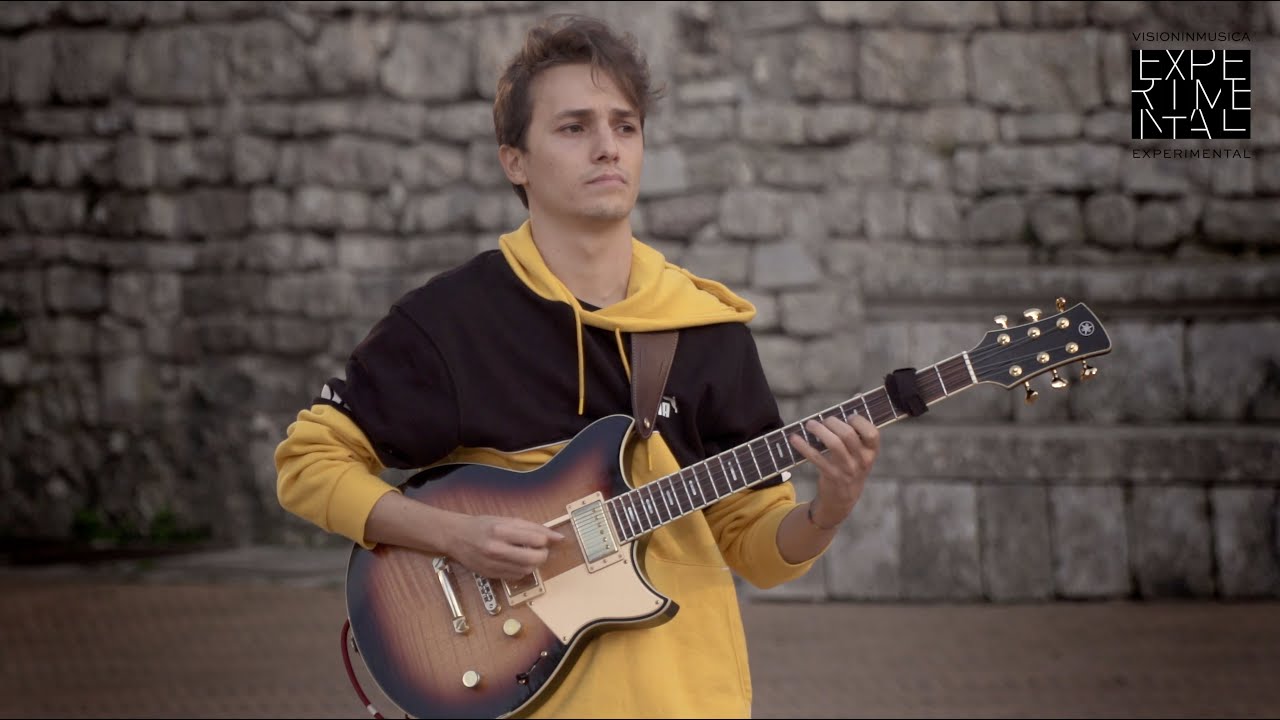
Did you get a chance to use the SA2200 on this record? Because I know you’ve been mixing up and using the Pacifica a bit more lately.
“I mostly used the Revstar and Pacifica on this album. I've used the semi-hollow but not on this record.”
Before you go, what is the benefit of recording at 96kHz? I know Steve said you should but can you hear the difference at that higher sample rate?
“Well, I will be completely honest with you, the reality is that I only switched to 96kHz because Steve told me to do it. And I never questioned it. I don't really hear that much of a difference, to be honest. Maybe the stereo image is a little wider, maybe it’s just a feeling. I don’t really know. The thing is that because Steve told me to do it, I just did it, because I wanted to record like Steve."
Well, if Steve Vai tells us to do something, we do it, right?
“Yeah, that’s my philosophy!"
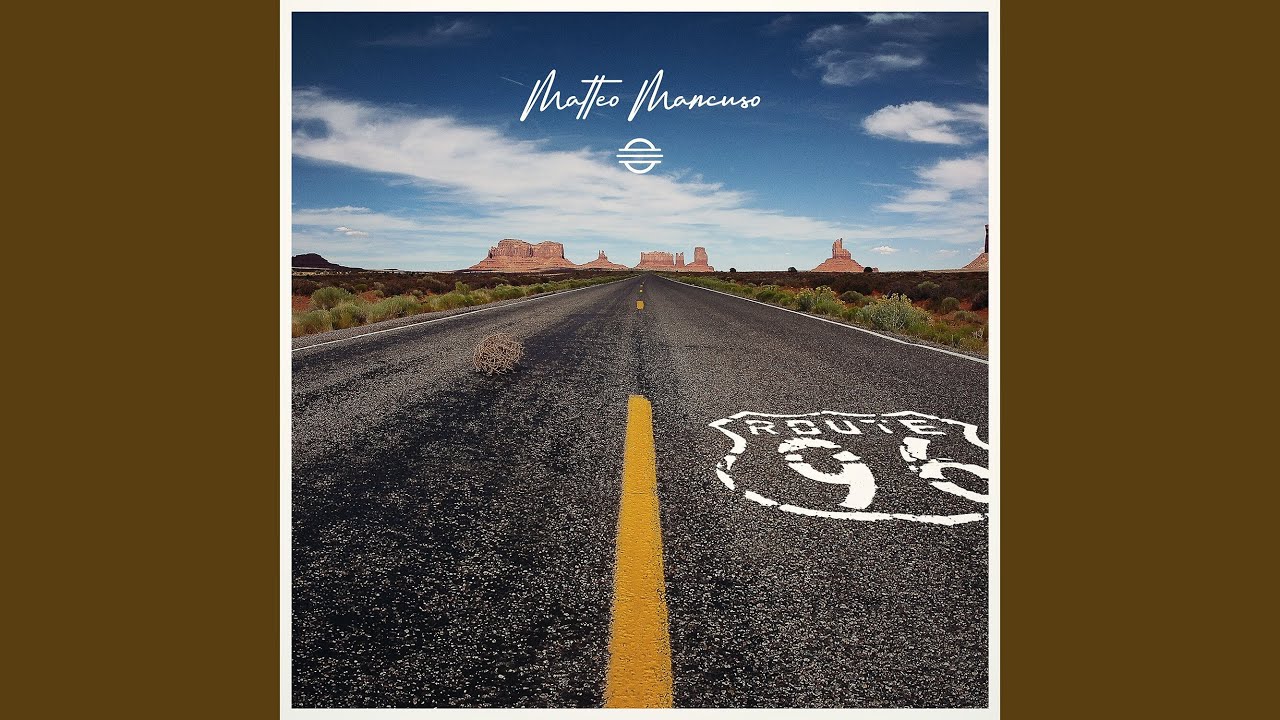
- Route 96 is out now via Music Theories.
