


We are not even half-way through 2026 yet so it’s a little early to be talking about the electric guitar tracks of the year, but if we could be so bold as to make a prediction, let’s just say that Matteo Mancuso’s Solar Wind, featuring Steve Vai, is going to be right up there by the year's end.
The opening track on Mancuso’s bravura sophomore album, Route 96 – a title that just so happens to be inspired by Vai – brings together two greats of the instrument, one who has been extending guitar’s musical possibilities ever since he joined Frank Zappa’s outfit in 1980, the other who is only just getting started, having released his debut just three years ago.
But then Mancuso is on some sort of elevated trajectory right now. He is blowing everyone’s mind; Tosin Abasi, Eric Johnson, Joe Bonamassa, and yes, Steve Vai, too, and the young Sicilian has jammed with the likes of jazz-fusion icon Al Di Meola and acoustic guitar virtuoso Tommy Emmanuel.
With Vai declaring that the evolution of guitar was safe in Mancuso’s hands, it was only a matter of time before they worked on something together. And, as Mancuso reveals, joining MusicRadar from his hotel room in Munich, it was initially Vai’s idea, and he pitched it to Mancuso when they were playing together at the 2024 Steve Vai Academy in Orlando, Florida.
“That was the first time I met Steve in person. We played a lot there. We played almost every night,” says Mancuso. “I was one of the teachers at the camp, and every night, there was a different teacher on the stage.”
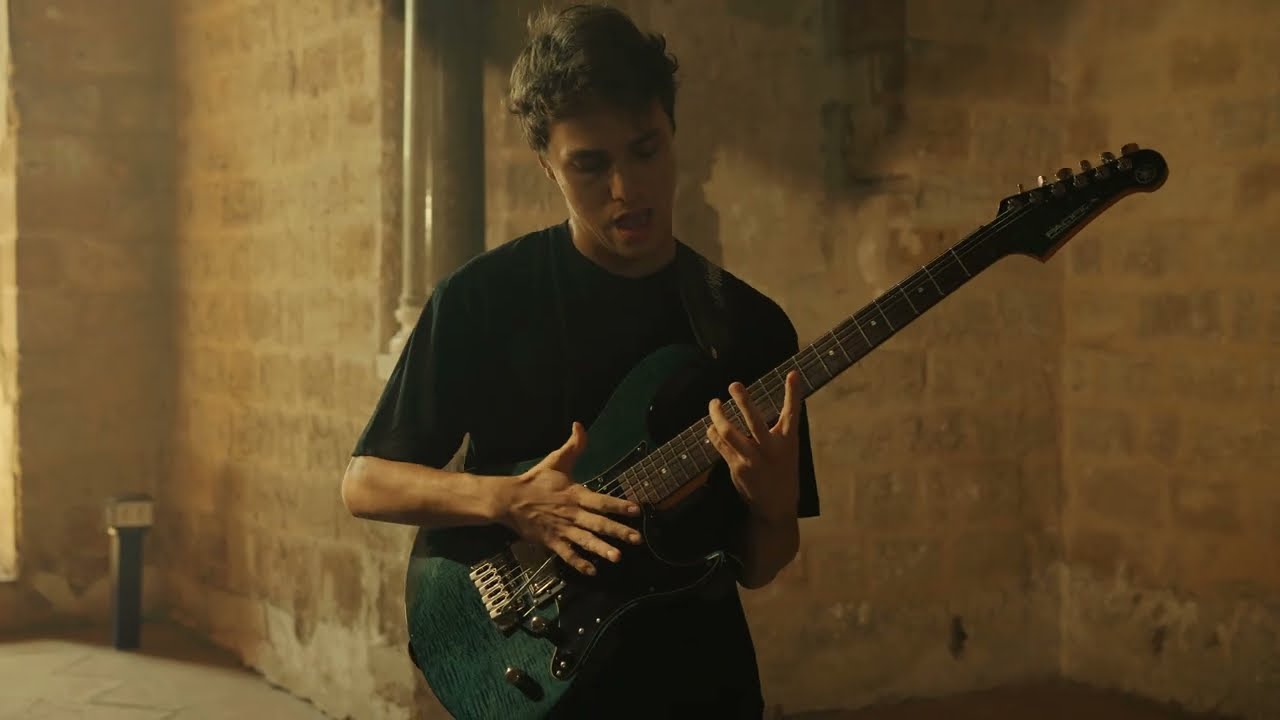
On the last night of the event, Vai had a proposal.
“He told me that if I had something, like a song or something to work on it, he will be happy to collaborate,” says Mancuso.
He did not. But there is nothing like the offer from one of instrumental guitar’s O.G. figureheads to inspire you to pick up the guitar.
I immediately started to work on the song. In fact, Solar Wind was the first song I finished on the record
“I immediately started to work on the song,” he says. “In fact, Solar Wind was the first song I finished on the record.”
By November, Mancuso had the music together and sent it to Vai. In the confines of the Harmony Hut, Vai tracked his parts remotely in the New Year 2025. Unlike his Polyphia collaboration, Ego Death, which Vai provided a solo for before Scott LePage and Tim Henson had actually finished the song, and ended up editing into place, this was all laid out just waiting for Vai. And Mancuso had left plenty of room for him to manoeuvre.
“I immediately knew from the start that this song was Steve’s song,” he says. “I wanted to have the most Steve Vai song possible on the record. That’s why even I’m playing some stuff that maybe you can associate with Steve, some legato runs or some of the sounds that I used on that song in particular are very like Steve Vai-sounding in a way. I wanted to build an environment where Steve was comfortable to play on it. And that was very important to me.”
Solar Wind is an exercise in restraint and audacity. It’s is the most Steve Vai tune Mancuso could have written, and yet it has his fingerprints all over, that leitmotif of always contrasting something super complex with something super simple, and vice versa.
And there is some sleight of hand with the time signature that makes if feel like the melody is being ferried atop a gust of electrons and protons, this great heliospheric phenomenon beyond our ken, a cosmic realm where Vai’s most at home.
“The solo section is… I don’t want to say strange, but it’s simple and complex at the same time,” says Mancuso. “Because he has odd-time signatures and chord changes going on, not too complex but still… then it goes to 7/8 on the next section. It was complex and simple in some ways but I knew that Steve was going to like it.”
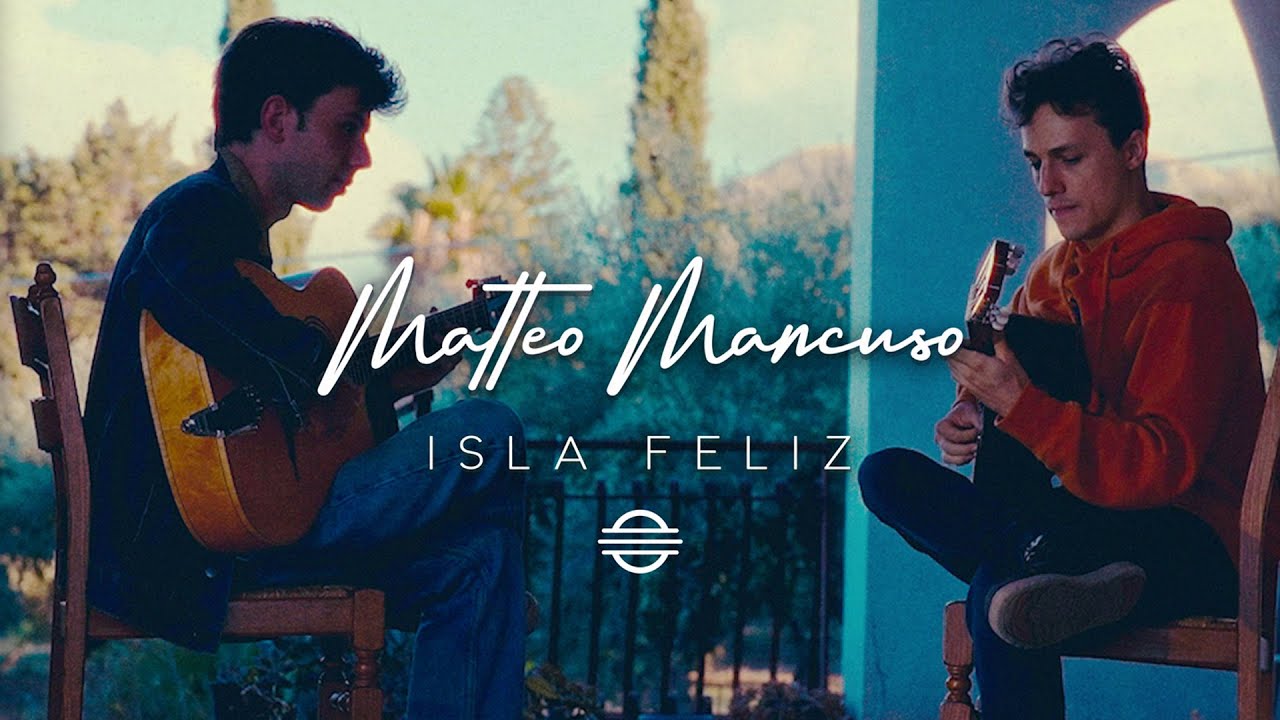
What you won’t hear is Mancuso cutting lose. Whenever he has a guest guitarist on the record, as on the Latin-inspired gypsy jazz freakout Isla Feliz on which Antoine Boyer plays with this preternatural speed and grace on the acoustic, Mancuso doesn’t want it to turn into this two-hander between soloists.

On Isla Feliz, he plays his lead guitar on electric to contrast Boyer’s fleet-fingered acoustic. There was no way Mancuso was soloing on Solar Wind.
“Yeah, I didn’t want it to be the classic guitar battle. And if you listen to the song, I don’t do any solos,” he says. “I only do the main melody; I have just one fast run at the start of the song, but I didn’t want to solo over that song, because I didn’t want any comparison between me and Steve. I just wanted a song where Steve was playing, and that’s it. I don’t want to do this guitar battle thing. It’s one thing that I really don’t like about the guitar world.”
Also, Mancuso is showing a little mercy to the audience. He didn’t want the arrangement outstaying its welcome.
“I think Solar Wind is already a great development, and it’s already a long song,” he says. “I added another solo, maybe a solo of mine, it will be really too long, so that’s why I kept it like that.”
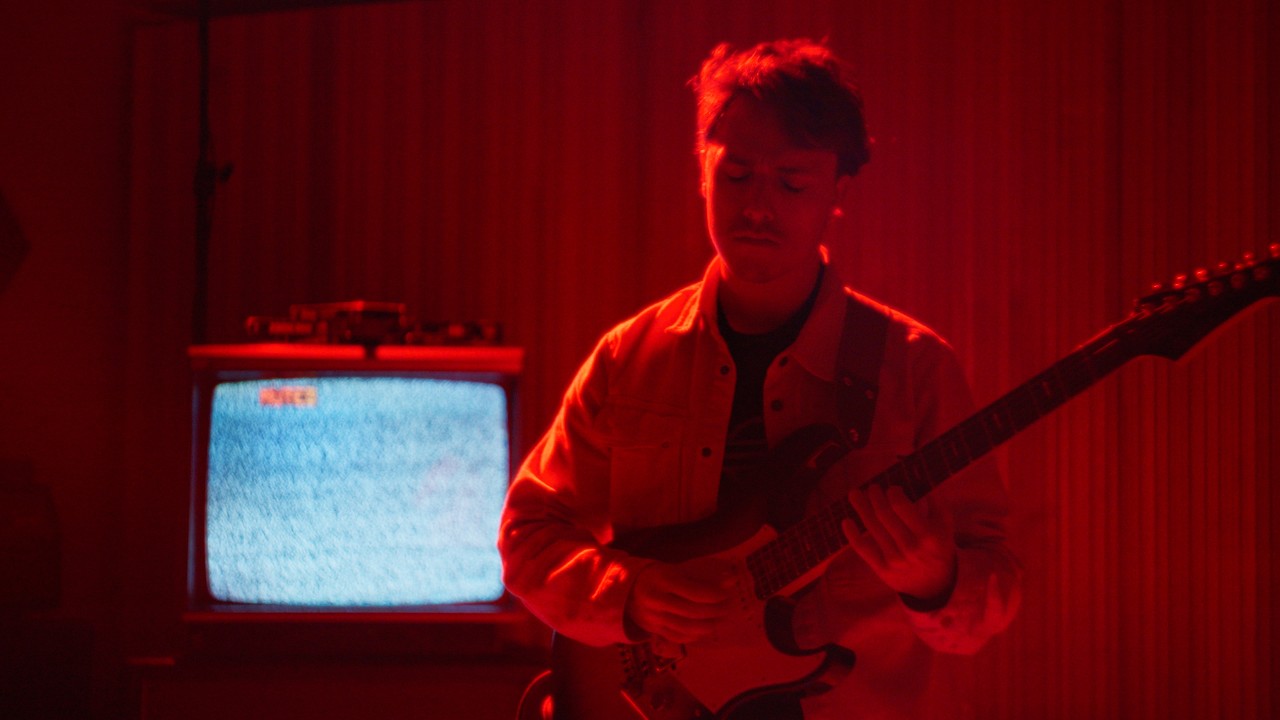
The challenge for Mancuso now is how to play Steve Vai’s parts live onstage with his trio. Because [spoiler warning] Solar Wind is in the setlist.
“Oh yeah, yeah, it’s a challenge,” says Mancuso. “First of all, because you always have Steve’s solo in mind, and of course when I have to play it live I have to do Steve’s solo section.”
Just don’t expect the same thing night after night. Mancuso comes from the jazz guitar school of fusion; he likes to leave some room for improv.
“I don’t play exactly the same notes as Steve,” he says. “I try to play something different every night. But that’s the challenge. I like to have these kinds of challenges, especially when I’m playing live. It’s always good to try to stretch and improvise over these sections.”

Time spent in the company of Vai is always an education. He might give you some rock history, share an old war story from his Frank Zappa days. He might give you a guitar playing tip. But he always gives you something.
Spending a few days in Florida with Vai taught Mancuso a valuable lesson.
“Well, there was one thing that told me at the end of the camp, and it was, ‘Play what excites you the most about the instrument.’ And it’s one thing that I always think about,” says Mancuso. “Because guitar has so many ways it can be played. You can play like Tommy Emmanuel. You can play like Yngwie Malmsteen. You can play like Allan Holdsworth.
“There are so many different techniques. You have tapping, legato. You have sweep [picking]. And that is why it’s such a personal instrument. You project a lot of your personality in it; you can play it in a really personalised way.”

And it wouldn’t be a conversation with Vai if there wasn’t a little philosophical wisdom being imparted, too, a way to think about life itself, the whole creative endeavour of making music. This might be the best advice we’ve heard all year.
It’s always a journey to try to discover yourself; the more you know yourself, the more your music will be personal and not derivative
“And another thing that Steve said to me, because we live in the internet era, where you have everything available, you have tons of inputs available, sometimes it’s better to just shut down everything, grab your guitar, and be alone,” says Mancuso. “Just you and your guitar, or your instrument, to go into an introspective journey to really know what excites you the most about music and guitar in general.
“That’s something I’m still working on because it’s a hard thing to discover things on guitar, and the more you play, the more you know about yourself, not only as a musician, also as a human being. It’s always a journey to try to discover yourself; the more you know yourself, the more your music will be personal and not derivative.”
Oh, and one more thing, if Route 96 sounds particularly hi-fi through your speakers, again, we’ve got Steve Vai to thank. It was Vai who told Mancuso to mix and master it in 96kHz (hence why it’s called Route 96).
Does it make a difference? The jury is out. Mancuso wasn’t going to argue with Vai, though.
“Well, I will be completely honest with you, but the reality is that I only switched to 96kHz because Steve told me to do it,” he says. “And I never questioned it. Like, okay, sometimes I really listen to things in 44, and I don’t really hear that much of a difference, to be honest. Maybe the stereo image is a little bit more wider, but… The thing is that because Steve told me to do it, I just did it, because I wanted to record like Steve.”
And if Steve Vai tells us to do something, well, we do it, right?
“Yeah! That’s my philosophy,” says Mancuso.
Route 96 is out now via Artone Label Group/Music Theories Recordings.
