


Here’s a scary thought. No matter who good you’ll get on guitar, you’ll never be satisfied. Take Eric Johnson.
Alongside Joe Satriani and Steve Vai, Johnson is of the original G3. He is the player who all-but redefined the guitar instrumental with Cliffs of Dover, and yet he is not altogether happy where his playing is at.
He’s having fun, sure. Johnson has been revisiting his catalogue, digging in for deep cuts as his Texaphonic Tour winds its way across the US, and will cross the Atlantic in July for his first UK dates in over 10 years. He's been writing, too. But he speaks with the quiet urgency of someone who has been wanting something, anything to take him to the next level – and has just had an epiphany of what he needs to do to get there.
And then again, maybe the thought of never being satisfied is not really that scary. One word that comes up over and over again as Johnson joins us over Zoom, is fun. The challenge that the guitar presents, at least as Johnson sees it – and perhaps we should all see it – is how to use it as this emancipatory tool for our creative ideas.
As Johnson explains here, in a conversation that covers career opportunities not taken (he chose not to audition for Peter Frampton), Dumble tube amps loved and lost, and others not so much loved, and his bone of contention with contemporary pop, our understanding of music theory, our pursuit of better technique, it’s all about feeling more free on the instrument. And he’s going to get there one way or another.
You said you want to get better, but what’s occupying your mind, what are the kinds of things that you need to improve upon?
“I’m trying to learn more about music, and learn more about harmony and playing through changes, and to that point, I think, lately, I’ve been trying to think, ‘Where could you go with guitar if you decided there were no limitations at all, like, if you threw away the playbook and just opened yourself up to what if.
“I’ve been thinking about that lately, and it’s interesting, ‘cos that kind of lends itself to being a little more free, and being liquid, and I think there’s always something you can infuse into what you do. It's almost like, in my case, I know I’m the one that’s limiting myself by what I decide I can do or what I can’t do. So if I throw that out and go, ‘Well, nobody’s governing this situation except for me, so what if you threw that away? What Where could you go.”
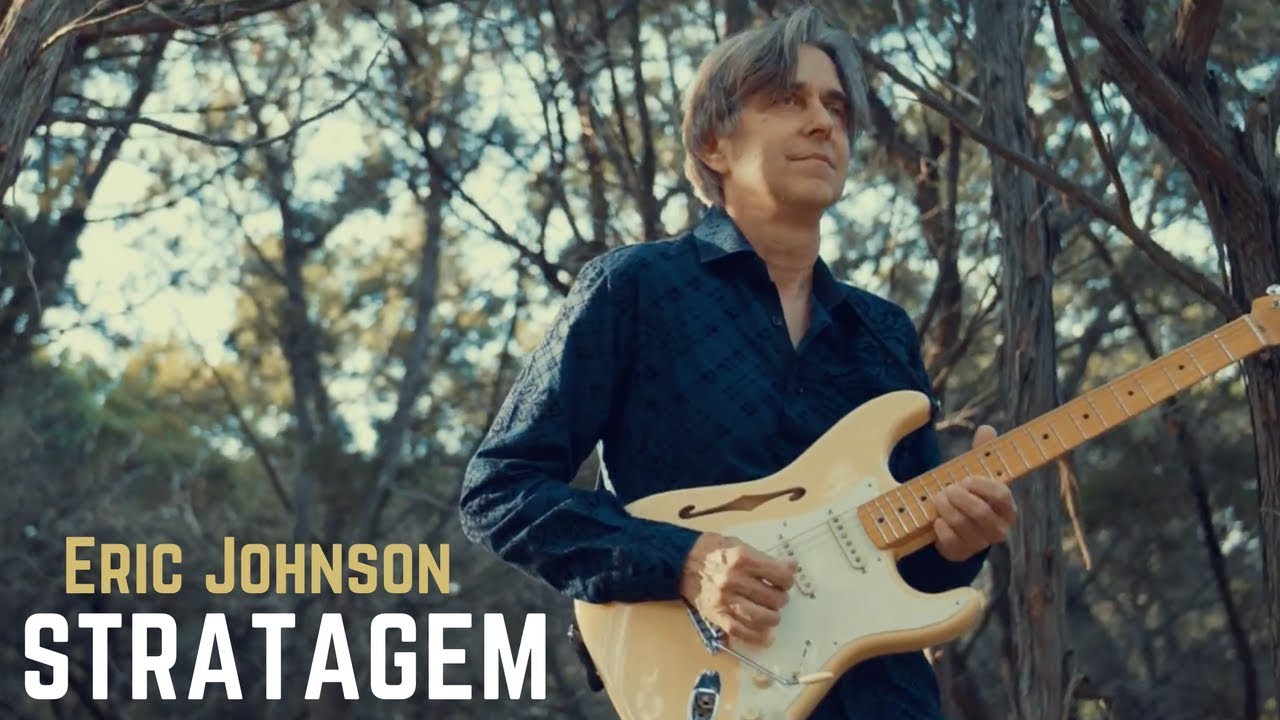
You pay a lot of attention to your picking, really examining who to pick something. I feel like that reminds us there are not shortcuts to that sort of intentionality. These things matter, and some say its perfectionism but maybe thoroughness would be more appropriate.
The way you first strike the pick, that’s the beginning of the whole thing. And you can’t underestimate that. That’s what begins the sound
“Well, yeah, I think that’s really well said. Sometimes there is no shortcut. And yeah, depending on the type of material you use for a pick, and the way you first strike the pick, that’s the beginning of the whole thing. And you can’t underestimate that. That’s what begins the sound. So, to me, the type of pick, the material – not so much the size, but the material – and the way you pick the note [matters].
“And to your point, it’s not necessarily a shortcut. There are other ways of picking, like in my case, the way I like to pick is, I’ve watched steel guitar players where they kind of bounce up and down on the guitar, and it’s not a very efficient way to pick, but to me it just sounds better, so I kind of try to stick with that.
“I think that happened with Wes Montgomery. He ended up just like in the way his thumb sounded, and he realised very early on that it was gonna be a harder journey to just effortlessly play this stuff. He figured out how to do it, and he is my favourite jazz guitarist of all time. But in his origin of intention, he remarked in articles, he said, ‘Yeah, it’s harder to play that way.’ But he just loved the way it sounded.”

You’ve reworked a lot of John Coltrane for guitar. What have you learned from that exercise?
I’m working on a a couple of jazz pieces right now. I want to rework them, to have them have their own kind of flair, because to me, that makes it fun, to put your own stamp on it.
“It’s something I keep going back to studying, ‘cos I’m not really very happy with where I am with that right now. I’d like to be more effortlessly able to play through changes, and play other scales and stuff to where I am more free – and it’s coming.
“It’s slow to come because I’m predominantly a rock player, but it’s important to me. It’s not necessarily my end destination to become yet another jazz guitarist. There’s plenty of people that do that better than me. But you just keep adding to your sonic repertoire, or your library or whatever – to counteract that kind of congealing of just staying in boxed patterns. That stuff that kind of limits ourselves. So I’m trying to learn more about that.”
And we’ll hear this live?
“We’re going to be doing some other standards on this next tour. We will in Europe as well. And I like to take them and rock them out a little bit, and I’m working on a a couple of jazz pieces right now.
“I want to rework them, to have them have their own kind of flair, because to me, that makes it fun, to put your own stamp on it. I’m enjoying learning more about that.”
It’s interesting you say you are a rock player. When we talk about you in the office, you’re a play anything kind of player. Do you see yourself as a rock player, though perhaps one with more adventurous tastes?
“Originally that was my thing, and it still is I mean, I’ve always played country guitar, too, like chicken pickin’ stuff. I love that – and folk guitar, finger picking acoustic. But I think the whole jazz thing of just freeing yourself up to play through changes more, and get out of just playing in patterns.
“And we all, everybody – even the great sax players – everybody plays in some kind of pattern, or some kind of mentality, or corridor of whatever they deemed is their ABCs. But I think that can just change, and you can quit limiting yourself, or just growing to where you’re freer.”

Is that question of music theory? It’s of course a question of dexterity because you have to execute the changes, and those jazz voicings are challenging, but is it more a question of really knowing the theory and being able to access the musical idea quicker?
“Yeah, absolutely! And then the question is: what is the theory? I mean, some people do it by the book, and some people do it by digesting the tonality of what they’re hearing when they play it. The half-step whole-step scale, stuff like that, which is kind of a passing chord thing – a lot of times going five to one or whatever.
“But to get where you’re real fluid at that [is the goal]. You can play through that because you’ve digested the way those notes sound, and they start making more sense to you. And then, through repetition, you’re able to see them quickly on the fretboard. It has to become like breathing, just like when we were originally learning all the blues licks.”

Where do you go to learn this stuff – who would teach Eric Johnson the guitar?
There's nothing new. Yeah, we record things different and we might put a fuzz tone on, but we’re not doing anything new
“Well, for me it’s mostly just listening to music more. The last couple of years, I’ve been trying to listen to the wealth of music that has come before us, like, a lot of swing music from the ‘40s. The first thing I noticed is that we’re not doing nothing new. There's nothing new. Yeah, we record things different and we might put a fuzz tone on, but we’re not doing anything new [laughs]. It’s all been done.
“Not only has it all been done, but there’s some players out there from many, many years ago that are like unbelievable, and then you add to the fact that these guys were unbelievable 24 hours a day, at any moment. They walked into a studio, first take or second take, and they did what we hearing on these records. It wasn’t like, ‘Oh, I gotta go piece my record together for six months.’
“It’s humbling to think of this stuff, this wealth that has supplied the richness that we have today. ‘Oh my God, look where this came from! It’s this huge ocean that came before.’ And it is kind of humbling but I am enjoying listening to that stuff because its a little left to centre of the guitar.
“It might not even be guitar, and then you take it and, ‘How can you do that on guitar?’ It gives you a fresh concept, and the more I listen to the tonality and the chord changes, the more it becomes where I start understanding what’s going on. I’m pretty slow, so it takes me a while.”
Same. That’s probably the only way our guitar playing could be compared! But you’re getting at something about the magic of that one-take era, Sun Studio, cutting a record in a day. Do modern musicians needs that jeopardy?
“Yeah. It certainly wouldn’t hurt anything that is being done. If you put more human emotion, and catching the moment of the interchange of people, and just their spirit; if it was impregnated more in any kind of modern music, the only thing that’s gonna do is make it better
“You listen to like the old Motown stuff; that had such a vibe, and that was pop music, and people danced, it was great, and you had these swing drummers. If you took away the swing drummer and put a drum machine on it, it just wouldn’t be the same.”

“And I don’t think you have to take anything away from modern pop music, ‘cos a lot of the chord changes and the melodies are very inventive. They’re very different than the pop music I grew up on. So why should it not have more?
“Why not have more magic and have, like, a swing drummer playing behind? He doesn’t have to play busy. He doesn’t have to be busy or obtrusive, but it’d have a human element added to that newfound digital perfection. It would only help. It would be a win-win, I think.”
If I had to name one thing about modern pop music that’s just keeping it from being a lot better, it’s the tragicness of how drummers have been reduced to nothing
It’s interesting because the centre of the pocket is a strange thing. When things are too on the 1, it’s almost like everybody’s pants got a little bit tighter as their dancing.
“If I had to name one thing about modern pop music that’s just keeping it from being a lot better, it’s the tragicness of how drummers have been reduced to nothing.
“And it’s just like, ‘Oh, let’s just have the beat. We’re just gonna have this superfluous, generic thing.’ And that’s sad because you can take that, you keep all those chord voicings and the vocals, and the songwriting of some modern pop song, and then just have some guy come back and play like a cool [beat], and I think it would be way, way better.”
This Texaphonic Tour, you are really digging into the catalogue. I see you’ve been playing All About You, which seems like it is in the set for the first time!?
“You know, I think it probably is! I’m not doing it on the next [leg]. I switched it out for some other songs. But it’s cool to do that stuff. I was doing it with a trio, and I don’t know if it was coming off because there are so many parts on the record. It was fun to do it.”
You must have had some offers to to join bands over the years that you might have turned down?
“Yeah, I have had offers from bands, years ago, not so much recently. But I did play with Cat Stevens and Carole King. But before that I got offered to play with Stanley Clarke, and there was a band called UK that Allan Holdsworth was in that I got asked to be a part of. Peter Frampton, I think, his band, I had an offer for that, but…”
Peter Frampton, when when was that?
“Oh, many, many years ago, back in maybe the early ‘80s. I think it was to come audition for his band.”

Do you feel that it might have been too restrictive being in a band?
“No, I think it actually would have been great. I was probably so headstrong about just practising all day long and doing my own thing… It probably would have been better if I had have done those things, actually!”
Better for the bank balance, for sure.
“Oh, yeah! [Laughs] That’s probably true.”
What will be in your rig for this this tour?
“Well, it’s interesting. I have two different rigs, and I want my regular big rig, I’d like to bring it, but I’m not sure that we can ship it over there, so I might end up just using this really small rig that sounds pretty good. It’s just a couple of old [Fender] Deluxe Reverbs with a pedalboard, and it actually works pretty well.
“But normally I would use a couple of Deluxes for stereo rhythm and a modified Bandmaster Reverb through a Marshall cabinet for dirty rhythm, and then a 50 or 100-watt Marshall through a 412 cabinet for lead.”
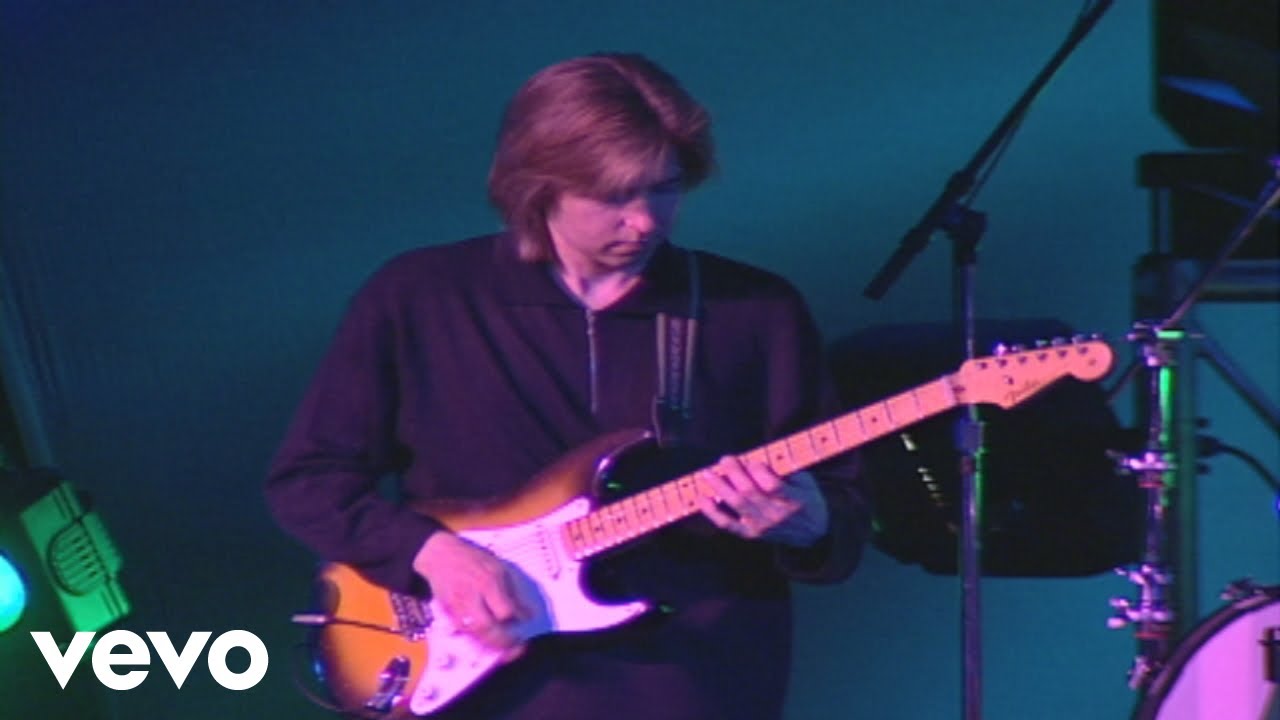
With a Deluxe, it’s pretty much a desert island amp, or at least an amp of last resort…
“Yeah, they’e pretty good. I probably could just rent some stuff over there but I have the two Deluxes and the pedalboard tweaked to where I just like it, and so I think, well, if I can’t take the whole big rig over there then maybe I’ll just take that small rig, put it all in one big case, and I might prefer to do that over just renting everything and not knowing what I’m gonna get.”
A few years ago, I noticed that the Dumble Manzamp preamp and Odyssey power amp you used in the mid ‘90s sold for $400,000. Could you tell us a bit about that rig?
“Yeah, that’s crazy. The [Dumble] Steel String Singer was the one I used the most, and then the Odyssey power amp I used a whole lot too, with the Steel String Singer. I’d use the Steel String Singer preamp into the Odyssey power amp. That was all used a whole lot.
“That Manzamp, I didn’t really use it that much. I owned it, but I liked the preamp in the Steel String Singer.”
What is it about the Dumble amps that make them special? There is obviously a lot of lore about them because most players will never play through one – but how did it make you feel as a player when you used them?
For a crunch rhythm sound, there’s just nothing that I have ever found that was as good as those, and a fuzz would sound real good through them, too
“Oh, they’re great. The Steel String Singer was just absolutely great. Extremely loud. I actually don’t play anywhere near as loud as I used to, but I went through a period where I was trying to play incredibly quiet, and [laughs] I just freaked out, and was I like, ‘Oh, I gotta get rid of this amp,’ which I wish I’d never had.
“That was a mistake. But obviously, but they’re very unique amplifiers. They are kind of like a Twin Reverb but with a lot more treble, and a lot more bass capability – and headroom. And then the reverb in them sounds beautiful. For a crunch rhythm sound, there’s just nothing that I have ever found that was as good as those, and a fuzz would sound real good through them, too.”
I wanted to talk about some of the tracks that have been on the setlist. April Come She Will has been an important one for you since 1984 Live Texas. How big was that Simon and Garfunkel acoustic folk influence on you?
“Oh, I love that stuff, yeah. James Taylor and Joni Mitchell, and Bert Jansch and Paul Simon, Crosby, Stills and Nash. I’m a real fan of all that kind of stuff.”
A lot of people might say Cliffs Of Dover is your signature track. Others might argue it’s Zap. But is there another track – maybe one you are looking forward to playing on this tour – that represents who you are as a player?
“I don’t know. What would it be? We are doing Friends, off of Tones; that’ll be fun. We haven’t done that in a long time. But I dunno, I like doing a smattering of all that stuff. Well, lately, I’ve been trying to write some blues-rock pieces that are just straight ahead, where I could just be really free and it can be almost all improvisation. That’s been fun. ”
And then, with all these pieces, you will give yourself room to improvise? The stage can sometimes be a great place to see how the track works.
“Correct, yeah. With Cliffs Of Dover right now, I’ve played it for years live before we ever even put it on a record. So it went through a lot of changes over the years, and had an opportunity to get tweaked and adjusted.”
- Eric Johnson’s Texaphonic UK Tour 2026 kicks off on 22 July in Wolverhampton. See Eric Johnson’s official site or The Gig Cartel for dates and tickets.
