
The sun is shining on Robben Ford, literally and figuratively. Joining us from Tuscany, the Californian guitar legend is bathed in the morning light, and in the afterglow from completing Two Shades Of Blue.
If Two Shades Of Blue was conceived as a tribute – to the late Jeff Beck, and to the tube amp guru whom Ford credits for helping him find his voice as a guitarist, Howard Alexander Dumble – it was also an opportunity to explore all kinds of things you can do with an electric guitar.
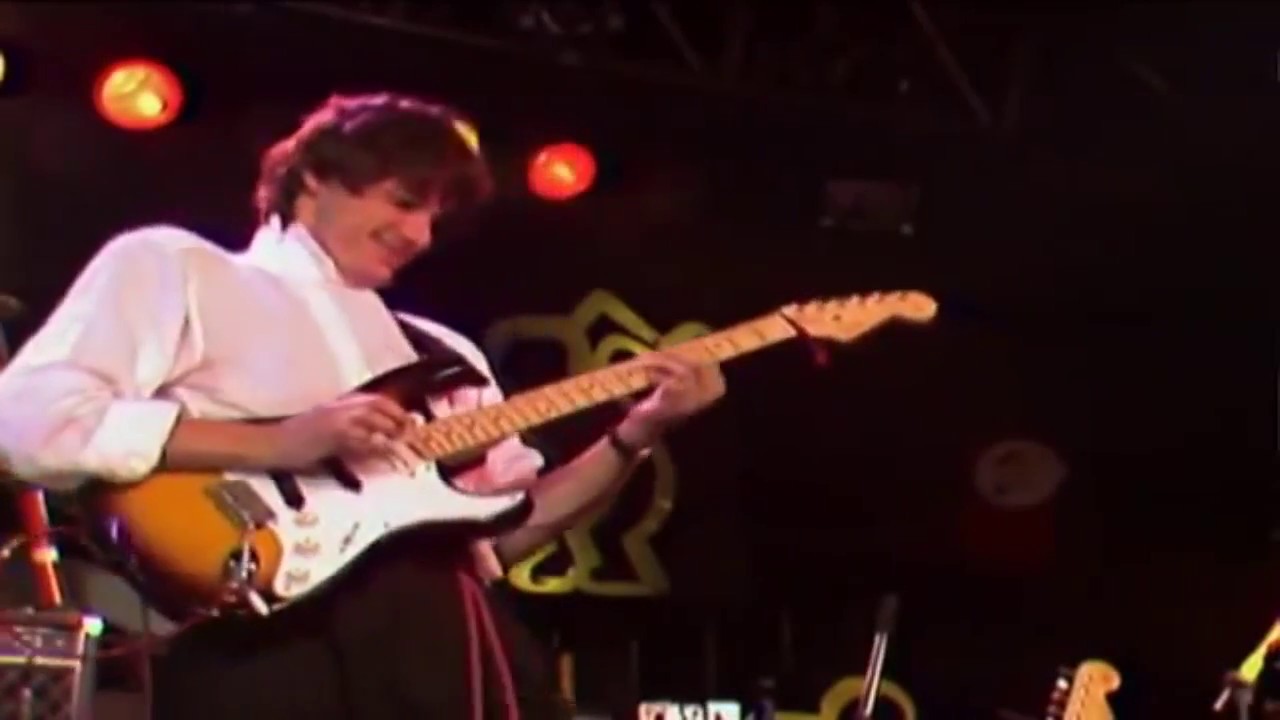
Ford admits he discovered Beck a little later in life. But he approached this project with a convert’s zeal, sourcing himself a Strat and discovering that having whammy bar really does make a difference. It made him see the guitar anew.
“I wanted to do something fresh,” says Ford. “I thought of the idea of doing a tribute to Jeff Beck and to Alexander Dumble, because both of them have passed. Jeff, of course, for the incredible guitarist that he was, and Alexander for creating… I would say he’s responsible for 50 per cent of my voice as a guitarist. This was an exciting idea and it was the way for me to learn to approach the guitar a different way because Jeff Beck was not an early influence on me.”
Ford had been moving around a bit. First to London, then to Paris. In all this moving he realised he hadn’t put anything new out in a while, and it was time. Beck’s loss was felt so heavily in the guitar community that it is hard to imagine any player of Ford’s experience who was not originally weaned on his talents, who either had those seminal Yardbirds recordings on full blast as a teenager, or had found themselves playing then rewinding Jeff Beck’s Guitar Shop just to get an idea of what he was up to.
“I actually came to appreciate him much later, and realised what an incredible guitarist he was,” explains Ford. “This was the thing that fuelled my creativity, a different way of writing, a different way of approaching the guitar.”
That is one of the great joys in music. There is always a discovery to be had. We might wonder how Ford missed out on Beck but let’s consider his CV. Ford has been hard at it since he was a teenager. He was soon picked up by Tom Scott for the LA Express and found himself playing with Joni Mitchell and George Harrison in his early twenties.
By the mid ‘80s he was in the Miles Davis band, and well, as he admits here, that kind of thing sets you up for life. With Miles Davis’ approval, what else do you need?
Well, for starters, he needed a Fender Stratocaster. After all, Two Shades Of Blue was going to be a tribute to Beck….

Thinking about Jeff Beck’s style, playing a Strat, how did that change your approach to guitar?
“Picking up a Stratocaster, just playing that instrument, definitely, you have to approach it differently – well, you don’t have to, but it’s an opportunity to approach the guitar in a different way.
“I mean, musically, conceptually, that was basically just inspired by Jeff. That was his approach. He did change quite a bit, too, but he was kind of rock and fusion to me, and the music that I liked of his was. But his use of the vibrato, his use of harmonics, his use of pedals, all of those things were just opening up a treasure chest of potential.
“I have to say potential, and I always say, you know, I can’t play like Jeff Beck, but I can pay tribute him. I could be inspired by him and then do what I would do with that inspiration, using a Stratocaster, pedals, a different approach to the guitar like that.”

Were there any techniques that you learned from that process?
‘Okay, harmonics on the guitar – this is new. Can I pull that off?’ And I’m happy to say, on the the album, I feel good about how far I got
“Yeah. It’s not original, plenty of people have done it too, but he just was the best at it; the use of the vibrato bar, for bends and for vibrato – and his use of harmonics. He was brilliant at the use of harmonics.
“This is something that I’ve not really studied very deeply – a little bit – but that is a whole other world that made me think of Jaco Pastorius and what he did with harmonics. So, like, ‘Okay, harmonics on the guitar – this is new. Can I pull that off?’ And I’m happy to say, on the the album, I feel good about how far I got. Certainly, as I say, I can’t play like Jeff Beck, but some of it rubbed off, and the use of the vibrato bar, and the use of harmonics in particular, and a little bit on the pedal side.”
What was on your pedalboard for the record?
“Okay, my overdrive boost from ThroBak, a Strymon Timeline delay – that one I’ve just been using forever. I love that thing. The booster from Jam, so that was like my kick-it-up-a-notch without distortion. I used a Silver Spring reverb from Mad Professor, and the Xotic Wah pedal, and a Mad Professor Electric Blue II chorus and tremolo.
“That’s when you hear that almost Leslie sound. It’s a tremolo/vibrato kind of sound. That’s the Mad Professor Electric Blue chorus. The Jeff Beck tribute aspect – the use of the Strat, and all those pedals live in the studio – that’s the last three songs on the record.”

The Fire Flute, The Light Fandango, and Feeling’s Mutual? How did you approach them?
“Those were live in the studio, plugged in, pedalboard going, so things like Jealous Guy, that was a different story.”
There’s a real sense of something improvisational happening on those tracks there.
“Well, it is live! And that is something, 95 per cent of the time, I try to do, record the band live in the room, and we did. [Laughs] Those three songs in particular, there was a structure that we were playing to, and a melody. The Fire Flute and Feeling’s Mutual, both have pretty strong melodies but there’s also a lot of chordal rhythmic things going on. And, yeah! There’s a strong line in The Light Fandango, but, yes, there’s a ton of improvisation.
And once again, it is live – you’re not hearing overdubs.”
It’s hard, borderline impossible to fake that sort of energy, isn’t it?
“Impossible!”
Because the volume, the air moving about the room…
“It feeds the energy big time, yeah.”
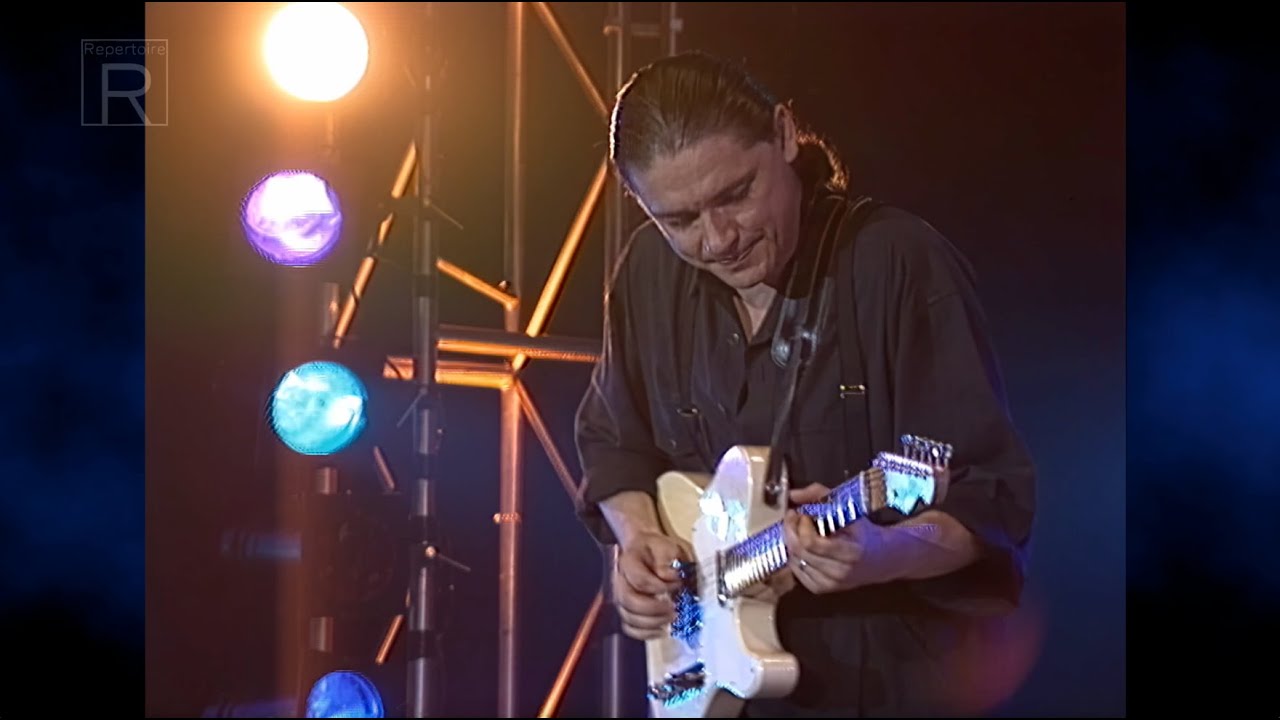
Is that when the Dumble comes into its own? It has this sort of tamed animalism. It’s like riding a badly tempered horse.
I couldn’t use it on the record as much as I had wanted to because it’s just too loud
“Well, first of all, it can’t be tamed. [Laughs] And it has to be wide open, and I couldn’t use it on the record as much as I had wanted to because it’s just too loud. And, in particular, all those songs – the Jeff Beck Tribute songs – were done with the Little Walter 59, with a 2x12 cabinet. The Dumble, I had left it in the UK.
“I came back to the UK. I only got three songs out of those sessions in the US that I was really happy with, and those are the three we’ve been talking about, so I had to go back into the studio, and I wanted to record my British group, and it turned out to be a good thing, vocals were included in the album – that was not the original intention. This was my blues band and approached. much more from that angle, Jealous Guy is one of those pieces of music. And the Dumble is loud!”
It sounds loud even on the record!
“Let me tell you, there’s only a few places where you hear it because the Telecaster was entirely a recorded with a Dumble-modified Deluxe Reverb. That’s a big-time first for me, man. To use that small of an amp, but because it was modified by Alexander Dumble, it gave me what I needed and it actually worked out. That was a mind-blower for me. First time ever.”
But we hear the Dumble in the solo of Make My Own Weather?
“So the Dumble was used only when I was playing the ’52 Les Paul, and that would be on the riffing and solo of Make My Own Weather, the riffing and solo on Black Night, and the melody on Two Shades Of Blue. That’s the only place I was able to use the Dumble.”
But it really announces it itself, especially on that opening track… I mean, it really does make its own weather!
“It’s the first thing you hear, ’52 Les Paul through the Dumble.”
Your tones on this record are really something. I mean, I love how you turn Jealous Guy into this sort of 21st-century blues jams. It’s one of the great post-Beatles solo tracks. Can you talk a little bit about approaching that?
“I originally heard this song by Donnie Hathaway and didn’t even know it was a John Lennon song. I wasn’t really listening to those Lennon records when they came out.
I was into a whole ‘nother thing by that time, you know, kind of away from the Beatles. And so I heard it from Donnie Hathaway and just always liked it. It stuck with me, and we were living in Paris for a year after leaving the US, I woke up one morning and the song was just in my head.”

“It would occasionally kind of haunt me, for whatever reason! But I was like, ‘I wonder if I could do something with this?’ So I sat down in the living room and started working on it, and the arrangement came together pretty quickly. There are a couple of gentlemen I work with in France quite a bit, especially when I was living there, the Honnet Brothers. Dave Honnet is a drummer, and Anthony Honnet plays the B3 organ.
“They’re great, and they became very good friends. We had a few gigs, and I said, ‘Let’s try this thing.’ And it just worked out great. In fact, I think the first time we did it, we opened some shows for Eric Clapton in Italy, three shows, and I may have played it before then but that might have been the maiden voyage for that song. Every time we play this song, people go nuts, ‘cos they’re so surprised.”
It does haunt you, and as a musician you have two choices, express it or expel it.
“Mm-hmm. Right!”
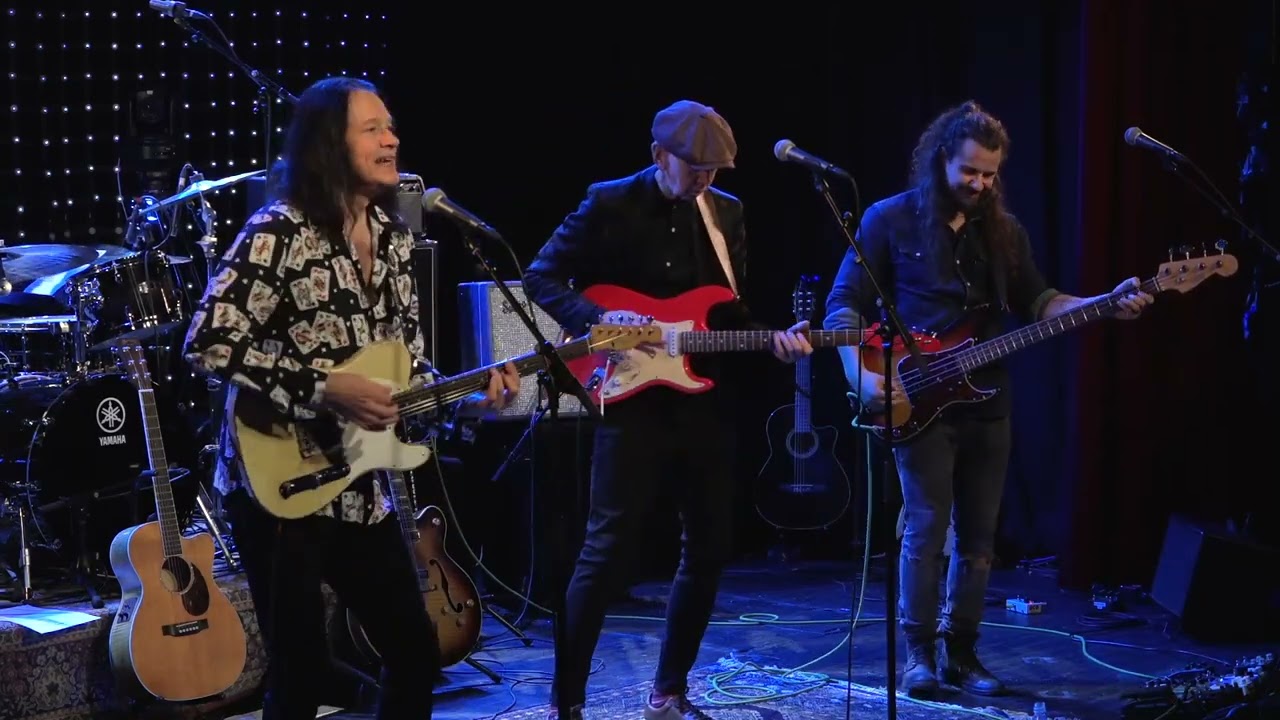
We have to ask you about some of those seminal experiences you had with LA Express. What was it like working with George Harrison?
“Well, in those days… I was 22! [Laughs] Twenty-two years old, you don’t know [anything], and I’m from a small town, and had only in the last couple of years [moved]. I had spent two years with Jimmy Witherspoon, and that was in LA, and so being exposed to the city [laughs], all of that, really, I was very green, and when I first met him I was just speechless.
“But when we started playing, he gave no direction, he liked the way I played, and I would just be myself. It wasn’t difficult to do. There was nothing that made me feel uptight or insecure.”
When you get down to it, musicians are musicians; they are collaborators.
“Yeah, the best of them are.”
It’s not always like that?
“Yeah, I heard quite the opposite, for instance, about Frank Zappa – and his music was impossible to play, and yet people could play it. I was even called for it, to audition. But that was a long time ago, man, 1977, and I just, pfft! I said, ‘Nah!’”

Why?
“Because I just couldn’t do it, and I knew I couldn’t do it. And it wasn’t anything that I really wanted to do anyway; it wasn’t my type of music, and, once again, it was beyond me, written music, and just really ridiculously difficult. And he would just lean on you about it.
“I’d heard this from people who worked for him. But anyway! Back to your point, all of the people I’ve worked with, I’ve been fortunate. It’s incredible! I’ve worked with so many different people. I’ve never worked for someone who made me feel bad, or uncomfortable.”
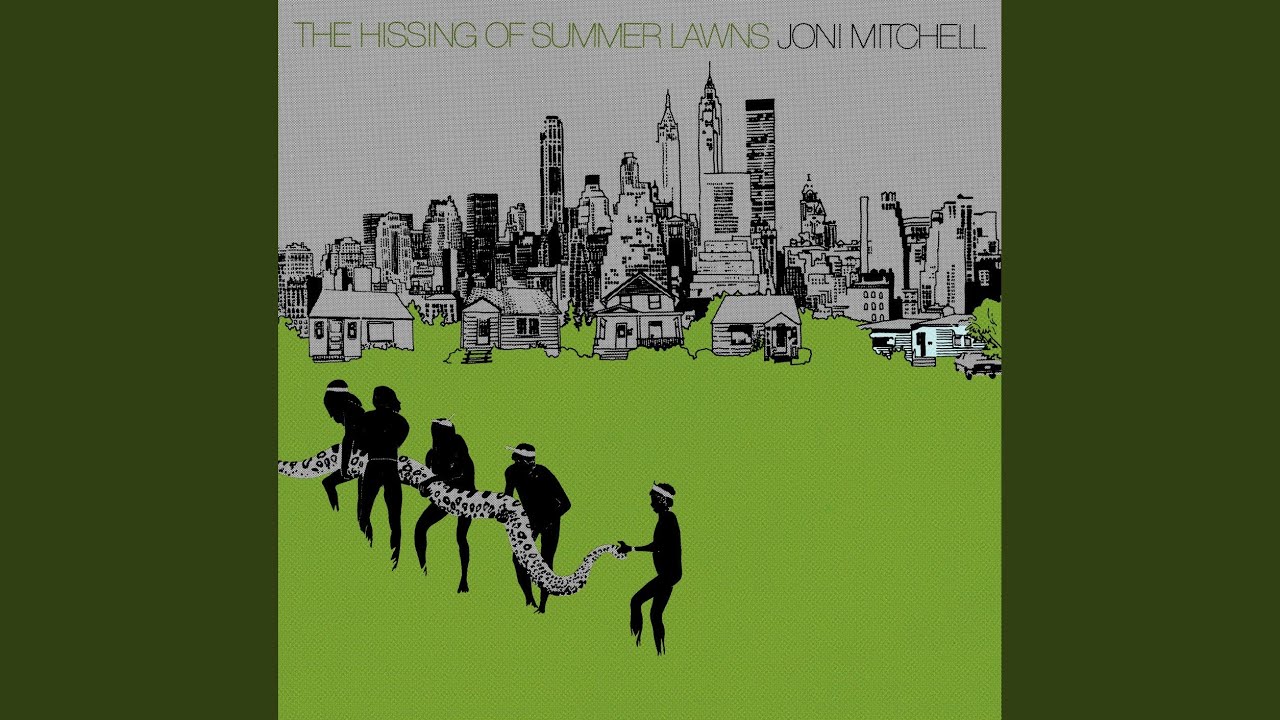
Like Joni Mitchell. Tell us about The Hissing Of Summer Lawns. That must have been an incredible experience, because you had already worked with her on the tour…
“I had done the Court And Spark tour. The Miles Of Aisles record had come out and all that, so she’s back in the studio to do The Hissing Of Summer Lawns. I played on four songs on that record. First of all, she was always the easiest person in the world to be around, to work for, never uptight or heated, or quick!
“I’m like lightning in the studio. I’m, like, bouncing around, you know. [Ford’s girlfriend] Kelly used that term ‘You move like lightning!’ [Laughs] I am very energetic. I’ve calmed down a bit. But, in any case, she was just lovely.”
And she produced the record too. What was it like tracking with her?
I go into the booth and she says, ‘Could you maybe just, like, plug directly into the console?’ I said, ‘Oh, Joan, that’s gonna sound terrible. Guitar into the—you need an amp, man! You need some tubes vibrating
“I was doing guitar overdubs. I was out there and they were behind the the glass in the control room. I’m out in the recording room with an amplifier and a guitar, and headphones, and playing, and it’s just not working for her. ‘Right,’ she says, ‘Come on in, Robben.’ You know, always nice. ‘Come on in, Robben.’
“So I go into the booth and she says, ‘Could you maybe just, like, plug directly into the console?’ I said, ‘Oh, Joan, that’s gonna sound terrible. Guitar into the—you need an amp, man! You need some tubes vibrating. You need some air!
“She goes, ‘Would you just try it?’ [Laughs] ‘Sure!’ I was plugged into a [Maestro FZ-1] Fuzz-Tone directly into the console. Never done that before, man, and I would never do it again – well, I might, having had that experience, because that’s the sound that you hear on In France They Kiss On Main Street. And it worked. And she loved it! She was really happy with it.”
And you worked with her again, right?
“It was the Don Juan’s Reckless Daughter album. I recorded three or four tracks with her. They didn’t wind up on the record, and they weren’t meant as songs; they were actually just blues jams, like, literally, blues – 12 bars, go! And that was with Jaco Pastorius and John Guerin was on drums.
“They were playing this slow blues kind of thing, and she goes, ‘Robben?’ I was playing acoustic guitar. She says, ‘could you tune the guitar, like, way down?’ I’m like, ‘Oh, Joan, no way!’ The strings are gonna be falling off. It’s gonna sound terrible.’ ‘But would you just try it?’ ‘Okay’ [Laughs] So, from E to C, that’s a long way.
“But, of course, it was on one of her guitars and it had heavy strings on it, so there was something there of substance, and it just created this incredibly deep, big, blues sounding mood. So that’s what it was like working with Joan. I mean it was wonderful working for her.”
Not easy to listen to. Not easy to make
“Both were the case.”
And throughout the whole time I knew that he liked me, and he would call me on the phone. ‘Robben, what you doing!?’ And I’m like, ‘Miles Davis is calling me… to chat!
Yeah, but it makes for a brilliant recording. Before you go, you played with Miles Davis. What did you take from that experience?
“Well, let me say this. What I took away from the experience of playing with Miles was a tremendous, or I should say big boost to my self-confidence. Because I just was myself. I realised that after being terrified on the first show with him, I had to come to grips with that.
“I wasn’t gonna go out there and be afraid. There’s just no point in doing it. You’re not gonna do a good job. He won’t be happy. You won’t be happy. So I just really cleared the decks of my emotions that way, and I went out there and, the second show, you know!? Just, ‘All right! I’ve been here forever. This is my gig!’ And he dug it.
“And throughout the whole time I knew that he liked me, and he would call me on the phone. ‘Robben, what you doing!?’ And I’m like, ‘Miles Davis is calling me… to chat! [Laughs] You know? So I left that gig feeling like a sense of confidence that I hadn’t really known before. I think, ‘He likes me, I’m good. I don’t even care what anybody else thinks.’”
- Two Shades Of Blue is out now via Artone/Provogue.
