


40 miles due north-west of the twin Minnesota cities of Minneapolis and St Paul, near the city of Hanover, lies a 100-acre farm tucked away on the banks of the Crow River amid rolling fields and dense hardwood forest.
This is the property co-owned since 1974 by Bob Dylan and his younger brother David Zimmerman and it’s the place where Dylan wrote much of his seminal album Blood On The Tracks (1975).
It is also where, in the winter of 1995-96, Dylan penned his 30th studio album Time Out Of Mind, after becoming snowbound as blizzards engulfed Minnesota during one of the state’s most brutal winters in living memory.
Time Out Of Mind is widely regarded as a masterpiece, one of Dylan’s finest albums, and it was the first album of new, original songs he had created since the poorly-received Under A Red Sky in 1990.
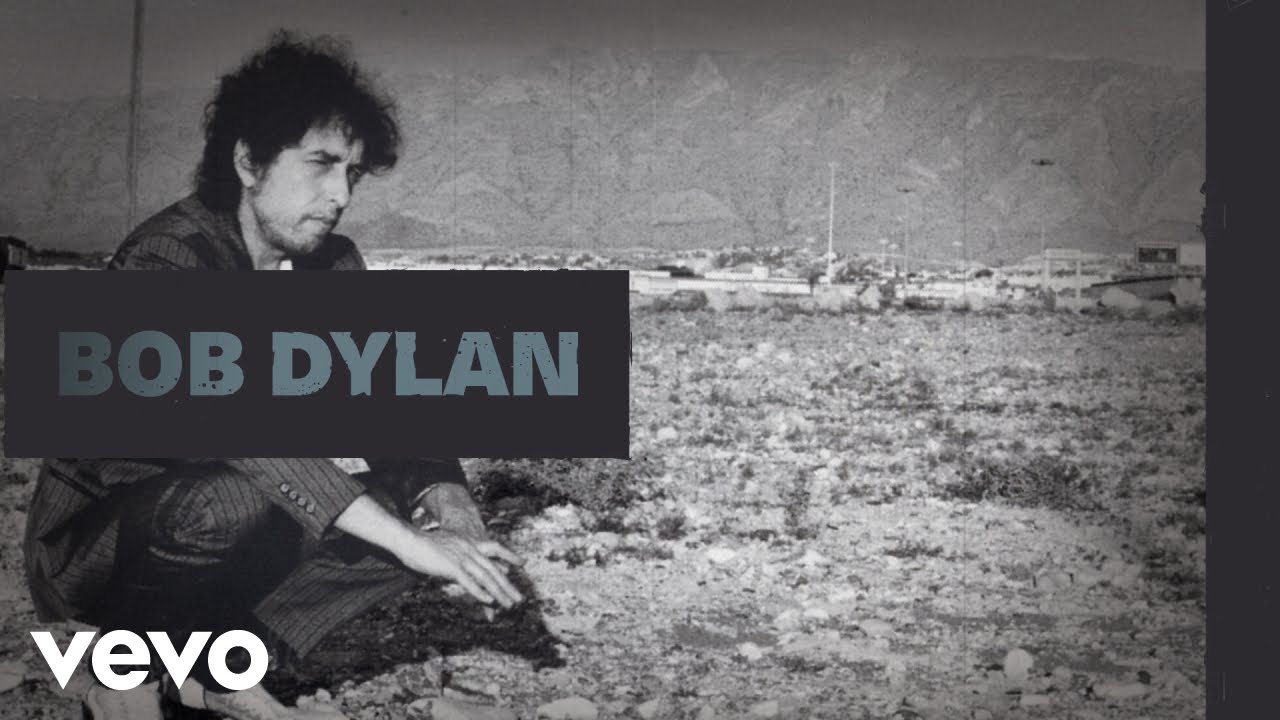
For Dylan, the creation of Time Out Of Mind came against a backdrop of writer’s block and personal exhaustion.
He reportedly listened to the storms whirling around him and worked after what little sun there was sank in the winter sky. His writing returned, with a darker, more reflective edge.
Themes of mortality, lost love and regret pervaded his lyrics and the new songs exuded a far more sombre and bluesy edge.
Nowhere was this more evident than on the lead single from the album, Not Dark Yet, a world-weary meditation on ageing and mortality. It’s a deeply moving song. It is also arguably the album’s bleakest and most hauntingly beautiful centrepiece.
In many ways, Time Out Of Mind was the album that saved Bob Dylan and made him artistically vital and relevant once more.
Armed with the new songs, Dylan set about looking for a producer to help him record his next album. He settled on Daniel Lanois, who had produced Dylan’s 1989 album Oh Mercy.

Lanois reportedly said that Dylan contacted him after hearing his production work on Emmylou Harris’s 1995 album Wrecking Ball. Dylan seemingly wanted a darker, more cinematic texture and a modern sound, but one that was rooted in old American music.
In late summer 1996, Dylan and Lanois met to discuss the album in a New York hotel room at the southern edge of Central Park. Dylan allegedly read from a ream of lovelorn lyrics he had written while snowbound on his Minnesota farm.
Dylan wanted the sound of Time Out Of Mind to be influenced by the haunting atmosphere of early blues artists such as Charley Patton and Little Walter. He advised Lanois to study these artists’ recordings to prepare for the sessions.
But from the outset of Time Out Of Mind sessions, Dylan and Lanois’ creative relationship was fraught.
Lanois allegedly wanted to push the music into a polyrhythmic, atmospheric space, which caused significant frustration for Dylan who was aiming for simplicity.
“I got so frustrated in the studio that I didn’t really dimensionalise the songs,” said Dylan of the Time Out Of Mind album in a 2001 interview with Rolling Stone. “I feel there was a sameness to the rhythms. It was more like that swampy, voodoo thing that Lanois is so good at. I just wish I’d been able to get more of a legitimate rhythm-oriented sense into it.”
In preparation for the sessions, Lanois arranged demo recordings and the album’s engineer Mark Howard converted a 1940s theatre called Teatro, in Oxnard, California, into a studio. In September and October 1996, Dylan recorded demos – and Not Dark Yet was one of the first songs to be recorded.
“Not Dark Yet had a radically different feel in the demo we did, that I loved and still miss,” Lanois told writer Joe Jackson of The Irish Times in October 1997. “It was quicker and more stripped-down and then, in the studio, he changed it into a civil war ballad.”
Criteria Studios in Miami, Florida, was the facility chosen for the actual recording of the Time Out Of Mind album, and sessions took place in January and February 1997.
Not Dark Yet would go through numerous permutations and changes of key. As ever, Dylan kept the musicians on their toes.
“The musicians barely knew the songs and were trying to make their way through, without hitting the wrong chords,” recalled Daniel Lanois in The Irish Times. “But there’s always going to be a sense of discovery with Bob because at the last second, without warning and as the ‘record’ button is pressed, he’ll change the key and the time signature! Then musicians will just look at themselves and dribble in and often Bob will say, ‘That’s it’. That’s happened in at least half the tracks on this album.”
Lanois used numerous musicians on Not Dark Yet to realise his sonic vision for the track.
Two drummers, Jim Keltner and Brian Blade, provide the heavy, haunting rhythm, while Tony Garnier’s bass undulates gracefully beneath the song’s stately 126 bpm tempo. Augie Meyers’ Hammond B3 organ adds a ghostly resonance and Cindy Cashdollar contributes shivering slide guitar. Jim Dickinson also plays keyboards, while guitarists Bucky Baxter and Robert Britt bolster the guitar parts laid down by Lanois and Dylan.
Lanois reportedly used his modified 1953 Les Paul Goldtop to create the album’s swampy, atmospheric tones, tracking the guitar through small combo amps and cranking the volume to achieve the heavy, resonant chord beds.
There’s a dreamlike ambience to the whole mix, a densely atmospheric soundscape in which Lanois positions Dylan’s lyrics within a murky, cinematic framework.
Lyrically, it is direct. On Not Dark Yet, Dylan veers away from cryptic lyrical imagery, opting instead for a raw confession of his own mortality, while pondering the loss of love. “Well, my sense of humanity has gone down the drain,” he sings at the start of the second verse. “Behind every beautiful thing, there's been some kind of pain.”
There’s also a sense of regret as he addresses the reality of ageing and the inevitable end. “There’s not even room enough to be anywhere,” he sings on the chorus, “It’s not dark yet, but it’s gettin’ there.”

In reviews of this album, Lanois was criticised for burying Dylan’s voice in effects, but on Not Dark Yet, it seems to suit the sense of emotional dislocation and fragility.
Dylan’s vocal performance on the song was widely praised. “Dylan delivers one of his best vocal performances on the album, touched with sincerity and resignation," wrote Philippe Margotin and Jean-Michel Guesdon in their book Bob Dylan All The Songs: The Story Behind Every Track,
But one of the great strengths of Not Dark Yet is its sense of edginess and unease, which is due in part to Dylan’s commitment to keeping the musicians guessing.
“Part of the magic of Time Out Of Mind is the hesitancy of the band,” wrote Thom Donovan in a piece published on the American Songwriter website in April 2024, “one chord away from crashing into each other.”
Not Dark Yet was released as the lead single from the Time Out Of Mind album on 25 August 1997. It was acclaimed by critics.
Writing in Time magazine, Gilbert Cruz concluded that Not Dark Yet was “a moving end-of-life song written and sung by an ageing artist who has somehow managed to remain vital”.
In 2015, Rolling Stone ranked the song No 50 in its list of The 100 Greatest Bob Dylan Songs, noting that Dylan sang the lyric in “the weary and weathered voice of a man facing the twilight of his life”.
A 2021 article in The Guardian included Not Dark Yet in a list of “80 Bob Dylan songs everyone should know”.
In the years that followed its release, different versions of the song emerged, such as the highly praised Version 1, an alternative studio take recorded at Criteria Studios on 11 January 1997. This and other alternative takes are included in the Dylan compilation album The Bootleg Series Vol.17 Fragments – Time Out Of Mind Sessions.
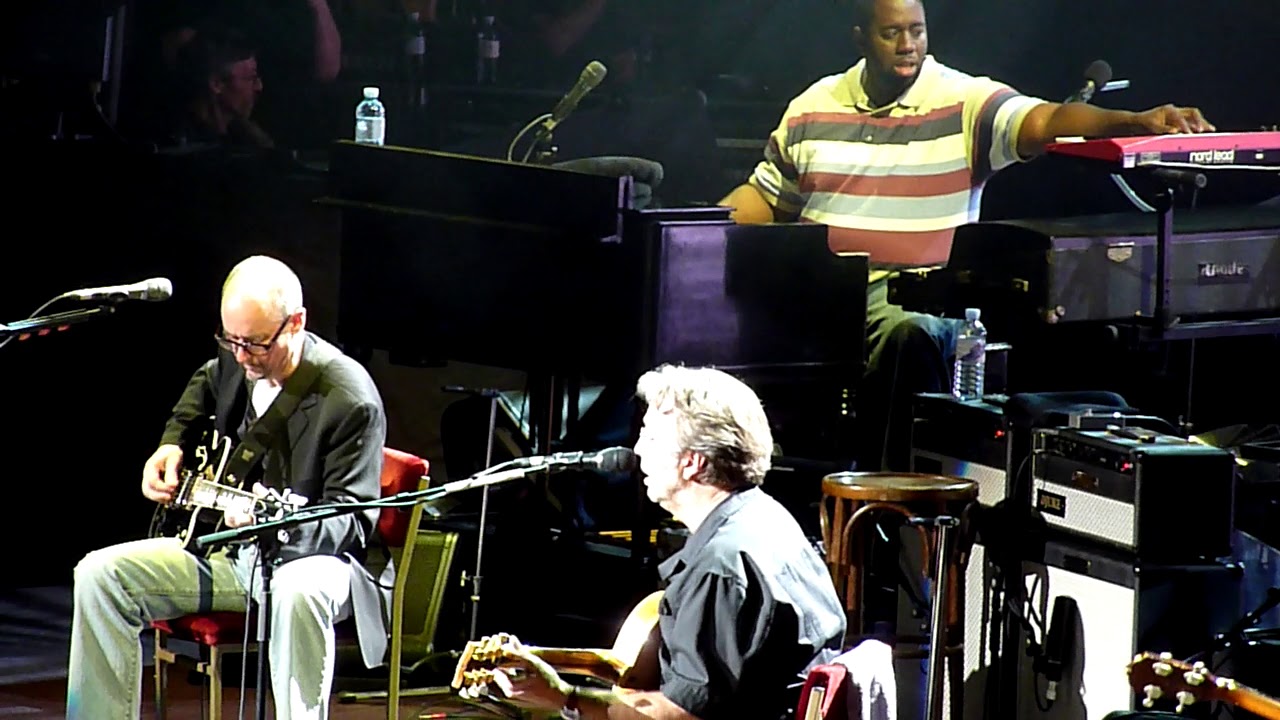
Not Dark Yet would go on to become a staple of Dylan’s live set and was covered by numerous artists, such as Eric Clapton, Lucinda Williams, Robyn Hitchcock and Julie Felix. The song also featured prominently in numerous TV and film soundtracks.
For Dylan, Not Dark Yet and the album from which it came did not reflect the vision he had for it, and throughout the recording he and Lanois were pulling in different directions.
But the album and its lead single spearheaded Dylan’s late career renaissance.
In his 2010 autobiography Soul Mining: A Musical Life, Lanois acknowledged that the Time Out Of Mind sessions were fraught. “I felt a darkness spreading like an ether,” he wrote about one particularly frustrating moment during the sessions.
But in an interview with Rolling Stone in 2010, Lanois said he remained happy with how the whole album had turned out.
“I was rooting for Bob and I really wanted to have a hit for him that would return him to visibility,” he says. “As it turns out we got the Grammy for Album Of The Year, so maybe that was our destination.”
