


It was the last track recorded for the Doors’ final album with Jim Morrison and indeed the last track the singer cut before his untimely death in July 1971. With its cool jazz influence and use of sound effects, Riders On The Storm was quite unlike anything the band had written before.
It could, under more auspicious circumstances, have opened up new musical tributaries for them. Instead, it served as their elegantly poised swansong.
The Doors had endured a difficult 1970. Recording Morrison Hotel had been a torturous experience for both band and producer Paul Rothchild; they had had the Miami obscenity trial in September, and Morrison’s condition continued to worsen throughout the year. Now an alcoholic, he had ballooned in weight and, with a full beard, looked a decade older than his 27 years.

A tour at the end of the year had been nothing short of disastrous. Only two dates in Dallas had been completed and at the third in New Orleans, Morrison had had some sort of on-stage breakdown. Clearly drunk, he forgot lyrics and midway through Light My Fire smashed his mic stand through the stage. It splintered, the singer walked off stage and the show ended early. It would be his final live performance.
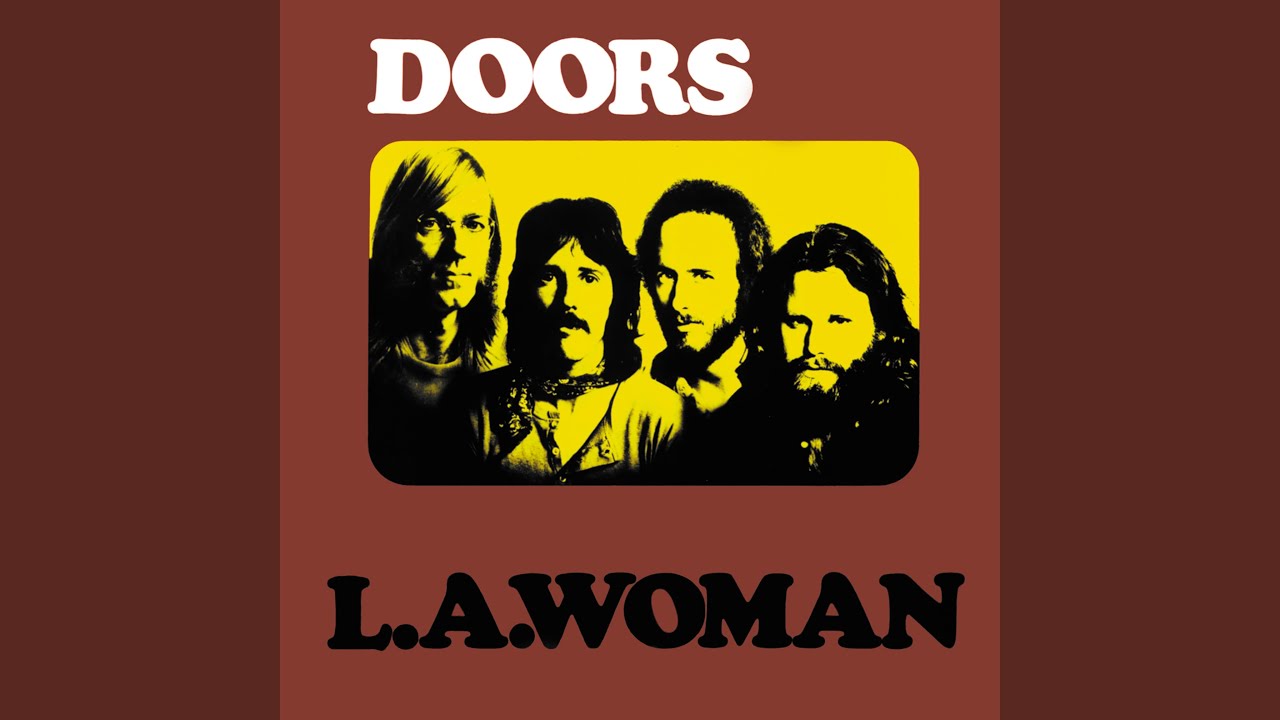
But despite this, there were still times when Morrison could be engaged and creative, and remarkably, in spite of the New Orleans incident, the band were pressing ahead with a new album: what would become LA Woman.
Riders On The Storm began when the band were jamming in their rehearsal studio in November 1970. “Robby(Krieger) and Jim were playing, jamming something out of Ghost Riders In The Sky,” Ray Manzarek said in an interview with Uncut in 2007.
This was a cowboy song, originally written by Stan Jones back in 1948, which has been recorded by everyone from Frankie Laine to Johnny Cash to The Shadows. You hear a trace of the source material in Krieger’s guitar refrain after Morrison sings the opening lines.
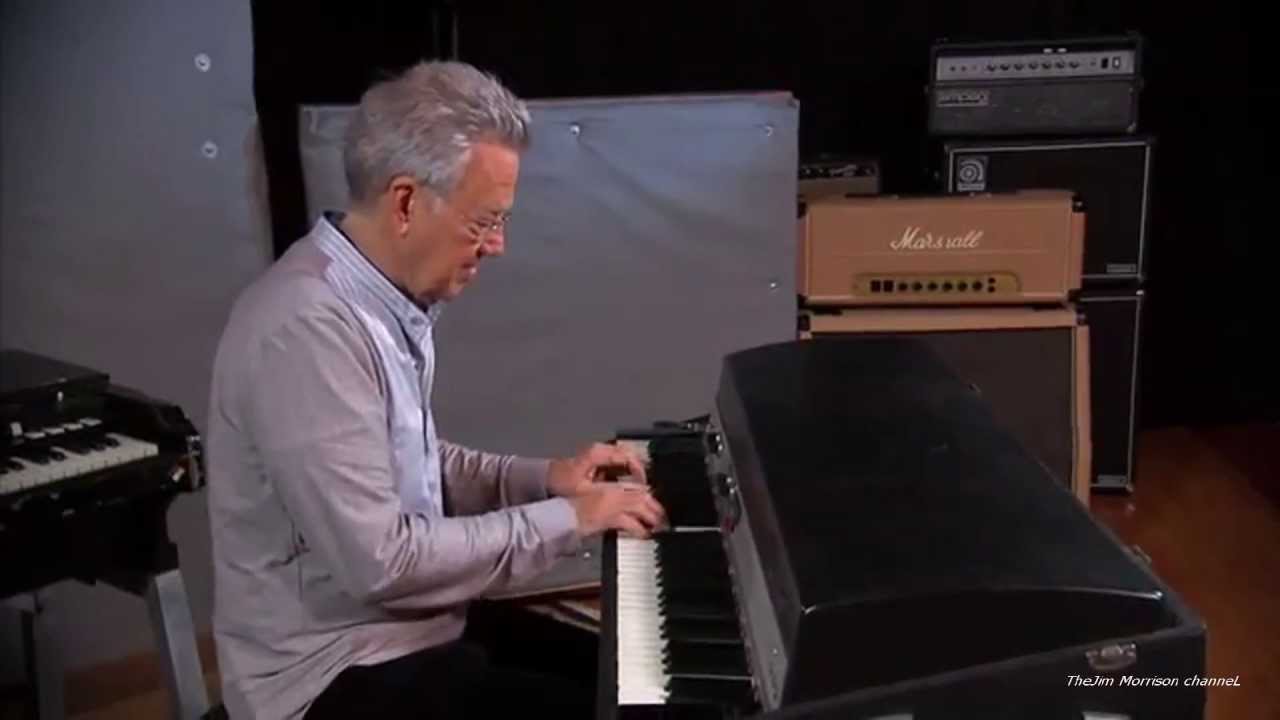
Meanwhile, the bassline and piano part came from Manzarek. “The jazzy style was my idea. Jim already had the story about a killer hitchhiker on the road. Serial killers are all the rage now, but in America they go back to Billy The Kid. In essence, it was a very filmic song about a serial killer – way ahead of his time in 1970.”
It seems that Morrison had lifted the title phrase from the poet Hart Crane who’d written Delicate Riders On The Storm. The serial killer theme came either from Manson killings (which were still very much on people’s minds in 1970) or the case of Billy Cook, a hitchhiker who had killed six people in the early 1950s.
Then there was HWY, the experimental film that Morrison had made the previous year. “He adapted the song from his script for the movie HWY,” said Manzarek. “It was about a hitchhiker, a killer who hijacks a blue Mustang in Joshua Tree desert. Jim was obsessed with HWY which he made with a bunch of his UCLA cronies.”
“An insane killer, a lunatic, he’s going to do something bad. Give him a ride, why don’t you? But when the end comes you realise Jim’s singing a beautiful, romantic song: ‘Girl you gotta love your man/Take him by the hand/Make him understand/The world on you depends/Our life will never end…’ He was singing that for Pam (Courson, his partner).”
But one person was not impressed by the band’s new excursion into smoky jazz. Producer Paul Rothchild dismissed the embryonic track as “cocktail music”, which riled the Doors into action. The band elected to self-produce the new album, with the assistance of Bruce Botnick as engineer.
“Rothchild was gone, which is one reason why we had so much fun,” Robbie Krieger said of the LA Woman sessions to Guitar World in 1994. “The warden was gone.”
In contrast to the regime under Rothchild when they would spend hours on a drum sound, LA Woman was recorded fast. “We adapted our rehearsal room, bringing in a portable board, a kind of forerunner of today’s ProTools set-up,” Krieger told Uncut. “We were comfortable there, plus there were two titty bars next door. It was the fastest time we recorded anything after the first album, all recorded live between the four of us, very few takes, Jim in the bathroom, with the door off. Not stoned, not drunk. Unless he was drunk, he was great to work with. Jim’s concentration level was low, but he was focused the whole time.”
With the help of bassist Jerry Scheff and guitarist Marc Benno the basic tracks for LA Woman were completed in just six days spread out between December 1970 and January 1971.
"We were going for a much rawer sound – the spontaneous Zen moment. Two weeks, man" Manzarek told Mojo in 1995. “The songs were all together. LA Woman just fucking exploded in the recording studio, with Jerry Scheff and Marc Benno. God, did we capture it! We smoked a joint and locked in."
A liberated band found even tricky obstacles like the bass part on Riders On The Storm surmountable, as the keyboard player recalled. “I sang it to Jerry Scheff, and he said, 'That's really hard to play,' and I said, 'No, no, no – look, it's easy, a little easy triad.' He said, 'Yeah, that's the way it lays out on the keyboard, but watch what I have to do on the bass.' And when he started to play that bass line, man, it was just spooky. That song became itself in the recording studio."
Morrison cut his vocals later in January and then at the mixing session, inspired by a suggestion of Densmore’s, added a whispered layer underneath the main vocal. “I had this idea,” the drummer told Uncut in 2007, “which I suggested to Bruce Botnick, that Jim went back in and did another vocal that was just whispered, and it’s really subliminal. Unless you know it’s there, you don’t hear it.”
The finishing touch was the addition of the thunder and rain effects. “We all thought of the idea for the sound effects,” Bruce Botnick recalled in 2007, “and Jim was the one who first said it out loud: ‘Wouldn’t it be cool to add rain and thunder?’ I used the Elektra sound effects recordings and, as we were mixing, I just pressed the button. Serendipity worked so that all the thunder came in at all the right places. It took you somewhere. It was like a mini movie in our heads.”
That mixing session was the last time all four Doors would be in the studio together. By the time LA Woman came out in April, Morrison had left for Paris. “Almost as if he had a premonition. Certainly when he sang that vocal, he knew that he was going to Paris,” said Manzarek in an interview for the 2012 documentary Mr Mojo Rising – The Story Of LA Woman. “He hadn’t told anybody before we did this vocal, but he knew.”
It’s impossible to know whether Morrison could have recovered from the state he was in in mid 1971. Whatever, after his death that July, Riders On The Storm – which had by then already been issued as a single - became the epitaph, not just for him and The Doors, but perhaps for a whole era in rock.
The singer had become the latest countercultural icon, after Brian Jones, Janis Joplin and Syd Barrett, to destroy themselves. With Jimi Hendrix gone too, and the Beatles now irrevocably split, the possibilities of 1966/67 suddenly seemed very distant indeed. There could be no doubt now that the 60s dream – whatever that phrase meant – was over.
In such a context, Riders On The Storm, with Morrison’s stately vocal, Krieger’s twangy guitar and Manzarek’s eerie piano figure, seemingly traipsing on and on into eternity, was perfect in its exquisite desolation. The band had once promised transcendence – to break on through to the other side – but found the road had led nowhere.
Though it’s a song that encapsulated its era, Riders has returned to the charts a number of times, in 1976 and later when The Doors film was released in 1991. Covers have been thin on the ground, although the British singer Annabel Lamb took a new wave-ish (and surprisingly faithful) version into the UK charts in 1983. Perhaps the original, with the four Doors locked in, each contributing an unforgettable part, just casts too long a shadow.
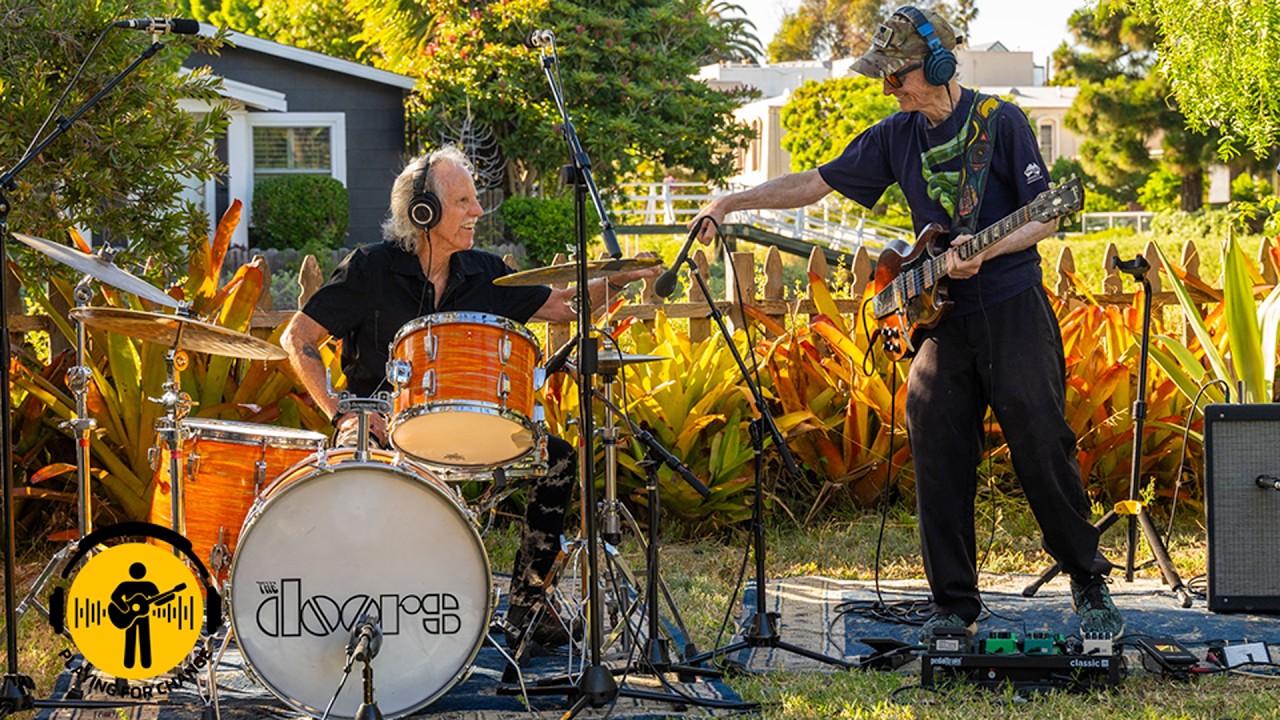
The two surviving Doors – Krieger and Densmore – recently came together to play a version of the song with a disparate bunch of musicians as part of Playing For Change’s annual Songs Around The World project. Among the names that took part were Lukas Nelson, Rami Jaffee and Don Was, who played bass on the track:
“Much has been said about the poetic side of the Doors,” said Was. “However, I can also testify to the depth of their swing and the swagger of their pocket. John and Robby’s groove is the secret sauce of their success.”
The 81-year-old Densmore has pretty much retired now, but Krieger is still performing and recording - he released a new album as recently as 2024. The guitarist celebrates his 80th birthday this coming Saturday (March 28) with a gig at – where else? – the Whisky A Go Go in Los Angeles. And it’s a fair bet that among the many Doors classics he’ll play is Riders On The Storm, the band’s haunting, and haunted, final masterpiece.
