A lot of the many negative reviews of Michael, the new Michael Jackson biopic, have criticised it for shying away from depicting any of the more controversial aspects of the singer’s life. However, it’s also reported to make scant mention of the British songwriter who played a significant part in turning him into the biggest pop star the world has ever seen – Rod Temperton.
Perhaps, though, this is how Temperton would have wanted it. Throughout his career and right up to his death, in 2016, he was nicknamed ‘the invisible man’, such was his reluctance to be in the limelight.
A new audio documentary from BBC Radio Lincolnshire, though, seeks to bring Temperton’s achievements out of the shadows. Specifically, it details how he came to the attention of Jackson and his producer, Quincy Jones.
Temperton first made his mark as part of funk-disco outfit Heatwave, who were formed in London in 1975. Guitarist Roy Carter joined a short while later, and he remembers Temperton having a slightly unlikely musical hero.
“I think, If he hadn’t joined Heatwave, he’d have joined The Carpenters,” he remembers. “He said Karen Carpenter was his absolute favourite artist.”
Carter believes that Temperton learned a lot from listening to The Carpenters, and applied that knowledge to the songs he was writing for Heatwave.
"We'd all sit round a piano and he would do the best he could to sing them to us," he says. "He could sing harmonies, because that's what he liked to do, but he's not a lead singer. So, he'd be in the background, he'd be playing these songs, and we'd go, ‘What chord is that?’ So I'd have to convert what he was playing on the piano into guitar chords."
Heatwave’s big breakthrough came with 1977’s Boogie Nights, which became an international hit. And one of the people paying attention, suggests Carter, was a young Michael Jackson.
“Michael heard Heatwave and said, ‘I’d like that sound,’” he says.
At the time, Heatwave were being produced by Barry Blue, and he says he was the one who answered the phone when Quincy Jones, who was also a fan, called the studio and asked to speak to Temperton.
“There was a call that came into the studio and I picked it up: 'Can I speak to Rod Temperton please?' I said to Rod, 'There's a call for you here'. And he goes, 'Who? Quincy?'”
Temperton wasn’t convinced.
"He said an eff word and put the phone down, because he thought someone was winding him up,” Barry Blue remembers. “And the call came back and it was actually Quincy Jones calling Rod to say, ‘I love the songs you’ve written. Would you come over to LA and work on a project with me?’ He didn’t tell Rod what the project was – he said, just come over and I’ll fill you in.”
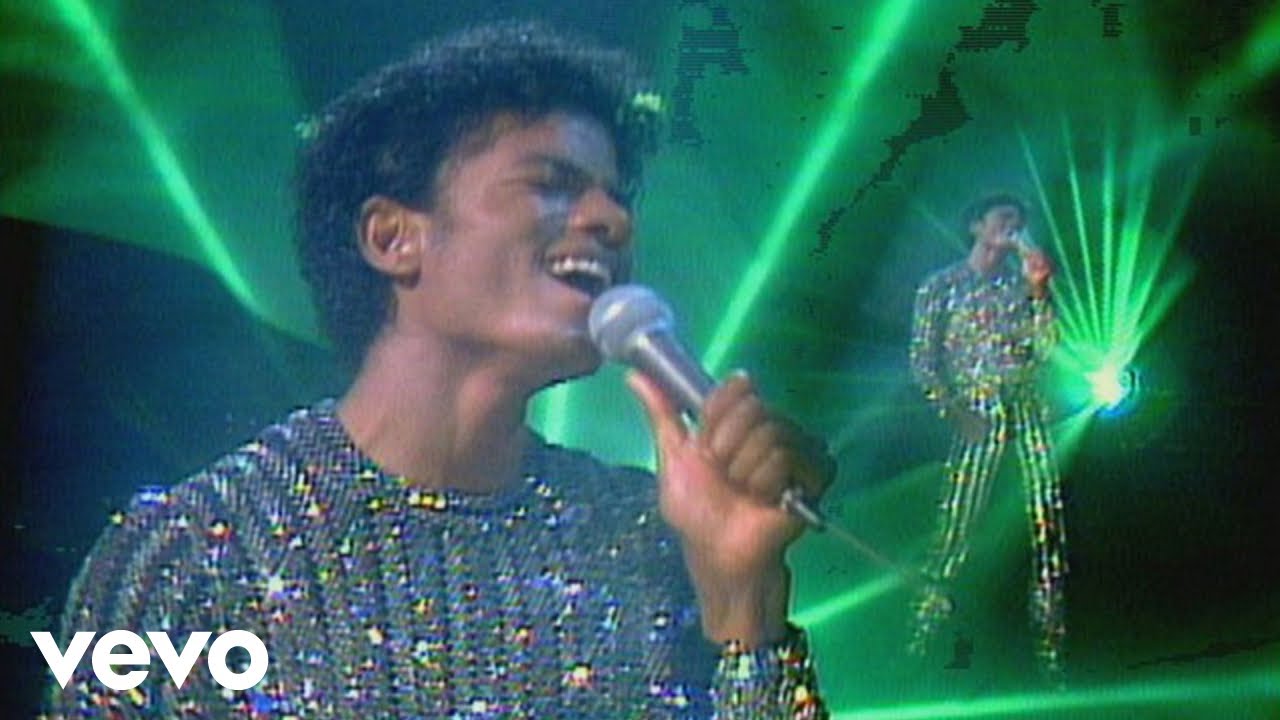
That project turned out to be Off The Wall, Michael Jackson’s 1979 breakthrough solo album and the first that Jones had produced. Temperton would later say that he submitted three potential songs for the record – Rock With You, Off The Wall and Burn This Disco Out – on the assumption that one would be selected and the other two rejected, but when he asked Jones and Jackson which one they wanted they said they’d like them all.
According to Roy Carter, Temperton workshopped some of these songs with Heatwave first. “We started rehearsing more songs that Rod would come up with,” he says, citing Rock With You as an example.
“He said, ‘No, that’s not a Heatwave song,’ so he gave it to Michael,” he recalls. “I’ve got the demo on cassette in my basement somewhere.”
Things went so well for Temperton in LA that, soon enough, he felt like he wanted to leave Heatwave behind. Discussing the making of Off The Wall, he would later say: “By the time it was over, Quincy and I had become such close buddies that he said, ‘I want you to work on everything I’m doing.’”
The pair went on to have more hits outside of the Jackson bubble – George Benson’s Give Me The Night and Stomp! by The Brothers Johnson were notable examples – and he also got to write a song, Lovelines, for his hero Karen Carpenter’s one and only solo album.
Temperton’s crowning moment, though, came with Thriller, the next Michael Jackson album and the one that would go on to become the biggest-selling in history. He wrote not only the title track, but also Baby Be Mine and The Lady in My Life, cementing his place in pop history.