
The Pretenders’ Back On the Chain Gang is one of the great pop-rock songs of the early ’80s – but while it feels upbeat in terms of its key and tempo, its lyrics tell a different story.
Written by singer and guitarist Chrissie Hynde, Back On the Chain Gang was first released in 1982 as a standalone single before appearing on the band’s third full-length, Learning To Crawl, in 1984.
Hynde’s lyrics chronicled her turbulent relationship with Ray Davies of The Kinks. The song was recorded when she was three months pregnant with their daughter. The relationship came to an end in the months that followed the single’s release.
However, the words Hynde sang in Back On the Chain Gang were also written in tribute to late Pretenders lead guitarist James Honeyman-Scott, who died of a drug overdose at the age of 25 in June 1982.
Honeyman-Scott’s death came two days after the group had fired bassist Pete Farndon for drug issues, and Farndon would also pass away from an overdose not long after his dismissal.
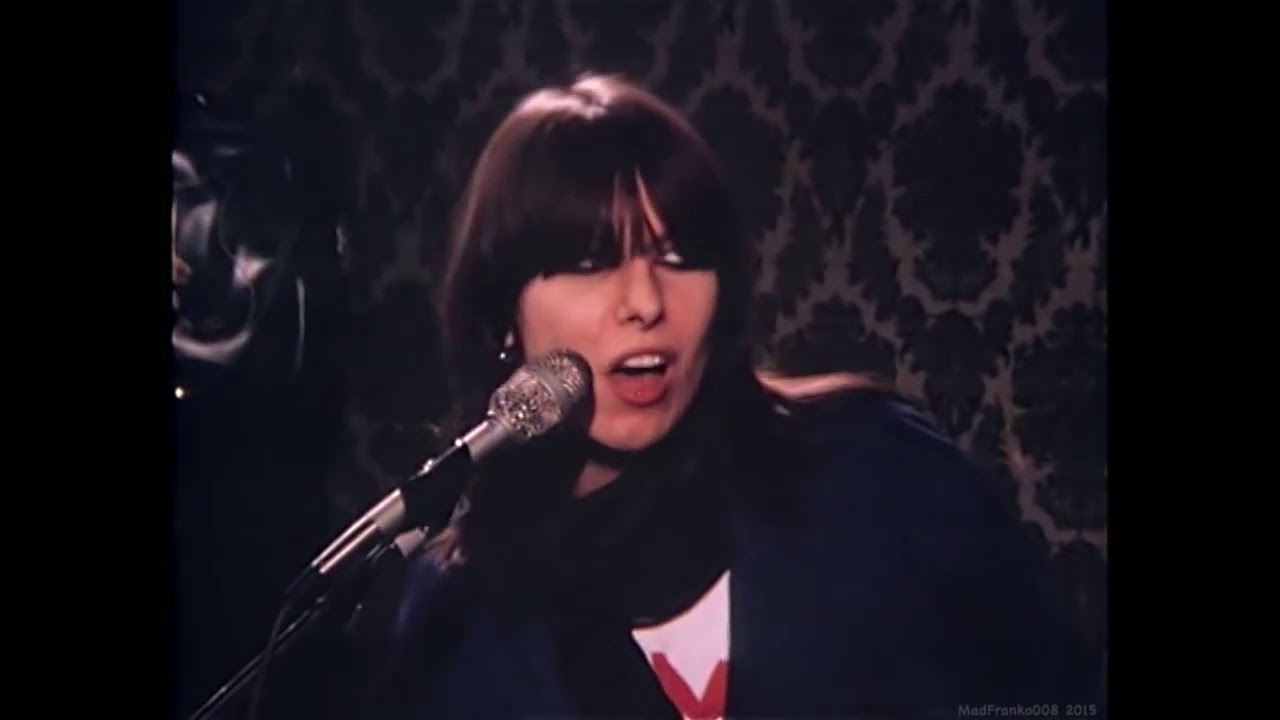
Back On the Chain Gang was recorded at AIR Studios in London with Hynde and drummer Martin Chambers, the last of the original Pretenders quartet.
The new musicians hired for the Chris Thomas-produced sessions included lead guitarist Billy Bremner of Rockpile, guitarist Robbie McIntosh (who would go on to play for Roger Daltrey, Paul McCartney and John Mayer) and bassist Tony Butler from Big Country.
Chambers revealed in 1983 how Back On the Chain Gang had been rehearsed with Honeyman-Scott and looked like “it would make a pretty good single”.
This was confirmed by Hynde when she spoke to Blue Railroad.
“That was a song I was writing and I had shown Jimmy Scott some of the chords,” she said. “I was working on this song which he liked, and then he died, and it turned into more of a tribute to him.”
In another interview with In The Studio, Hynde explained: “Jimmy was a big admirer of Billy Bremner… when we had to record Back On the Chain Gang – well, I knew that Billy and Robbie [McIntosh] were who Jimmy would have wanted to get in, so I didn’t need to think about it.”
For the session at AIR Studios, which took place in July 1982 – a month after Scott’s tragic passing – the band were arranged close together as if it was a live performance. Hynde then recorded her vocals later when the other musicians had left.
Studio assistant Jeremy Allom was responsible for the metallic sounds, where he captured the noise from various metal pieces being banged together including the 11kg weights the studio used as ballast for large boom stands.
The main chords to the song are very simple, built around open position shapes for D, A and G, with the introduction of an Emin for the chorus.
Two minutes in, right after the guitar solo, there is a minor shift where the D shapes are turned into Dmin by bringing the third interval down half a step.

When asked about her approach, Hynde once compared songwriting to decorating a flat with a low budget, explaining how limitations can inspire creativity.
“If you have unlimited recourses, sometimes there’s just too many choices. It’s all about hunger, isn’t it? When you really want something badly, you’ll get it. When you’re satiated and you’ve had too much, there’s not much creative possibility, is there?”
She continued: “I learned two chords and I loved singing. So you can get a lot of melodies, and the least chords the more melodic possibilities you have.
“If you’ve got seven chords, you’re stuck with those chords. James Brown, some of his best songs, were just one chord. It would have sounded odd if you played a second chord.”
And while she did voice her frustrations with not being a better guitar player, she was comfortable enough to admit: “I am a rhythm guitar player and that’s what I always wanted to be… ever since I heard a James Brown I wanted to play rhythm guitar.”
The solo in Back On The Chain Gang was performed by Bremner in one take and is built around the D shape found on the fifth and seventh frets starting on the A-string.
Back On The Chain Gang ended up being one of the group’s best-selling singles, staying at No 5 in the US charts for three consecutive weeks as well as breaking into the top 20 in the UK, Australia, Canada and New Zealand.
10 years after the song was released, in an interview with Guitar World, George Harrison claimed that Back On The Chain gang had taken inspiration from The Beatles’ song I Want To Tell You.

“That’s an E7 with an F on top, and I’m really proud of that because I invented that chord,” Harrison commented. “There’s only been one other song, to my knowledge, where somebody copped that chord – Chrissie Hynde and The Pretenders on Back On The Chain Gang.”
In a 2009 interview with Guitar World where readers sent in their questions, Hynde was asked about open chords and other techniques that defined her band’s sound.
“Oh, I didn’t even know there were open chords,” she downplayed. “I guess strong rhythm and having players better than me around me characterises The Pretenders’ sound. It’s not really about who’s the best at what. It’s about who does the job.”
