


“The pop songs like Boys Don’t Cry are naive to the point of insanity,” said The Cure’s unfailingly sardonic singer/guitarist Robert Smith of the band’s early fan-favourite.
First released in the UK as a stand-alone single in 1979, this cult classic quickly became one of by The Cure’s most famous compositions. It would also serve as the title track for the American version of their debut album, renamed with a different track listing the following year.
Spanning just two and a half minutes, the song was written by original members Smith, Michael Dempsey and Lol Tolhurst, and was produced by Chris Parry, founder of Fiction Records.
The label was started after Parry’s time at Polydor in A&R. Dismayed at how his requests to sign the Sex Pistols and The Clash had been rejected, he then decided to take matters into his own hands.
The music mogul had been impressed by The Cure’s 1978 demo tape, particularly the early versions of Boys Don’t Cry and 10:15 Saturday Night, so he contacted the band and secured them as his first signing. Parry would also manage the group over the next decade and help them establish them as one of the biggest bands in the world.
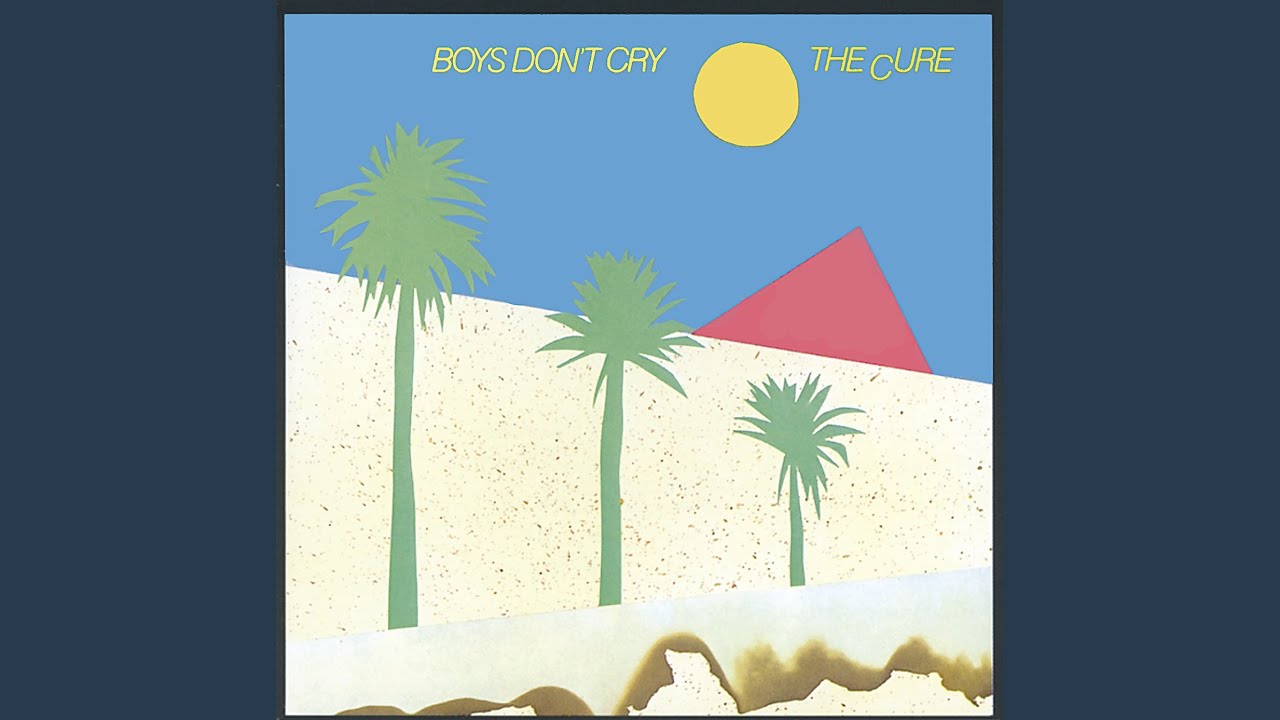
The song’s lyrics tell the story of a man trying to win back the love of his life having “said too much, been too unkind”. Instead of being honest about his feelings, however, he feels compelled to “laugh about it, cover it all up with lies” as a way of “hiding the tears in my eyes”.
The lyrics were born out of Smith’s frustration with being expected to conform to an outdated view on masculinity, hence the title of the song.
“When I was growing up, there was peer pressure on you to conform to be a certain way,” The Cure frontman told Rolling Stone in 2019. “And as an English boy at the time, you’re encouraged not to show your emotion to any degree.”
This is something Smith struggled with and decided to challenge head-on via the medium of music.
“I couldn’t help but show my emotions when I was younger,” he added. “I never found it awkward showing my emotions. I couldn’t really continue without showing my emotions – you’d have to be a pretty boring singer to do that.”
He continued: “So I kind of made a big thing about it. I thought, ‘Well, it’s part of my nature to rail against being told not to do something.’”
The chord sequence in Boys Don’t Cry originates from the A major scale – moving up from A through to Bmin, C#min and D before coming back down quickly ahead of the turnaround.
The pre-chorus is even simpler, pivoting between the C#min and Bmin shapes, before returning to the original progression.
There is also another section based around E and F#min shapes higher up the neck as Smith sings “Misjudged your limit, I pushed you too far, I took you for granted, I thought that you needed me more, oh no”.
The single-note melody played over the top of the main movement is also from the A Major scale, recorded using Smith’s Fender Jazzmaster. The instrument was fitted with a pickup from his entry level Woolworth’s Top 20 electric guitar, bought that same year for £20.
“I took the Top 20 in to record our first album, along with a little WEM combo amp,” he told Guitar Player in 1992. “Chris Parry, who was paying for the record, said, ‘You can’t use that!’”
It was a performance by Elvis Costello on Top Of The Pops that inspired Smith to then invest in a Fender Jazzmaster.
Smith recalled: “We went out and bought a Fender Jazzmaster, and I immediately had the Top 20 pickup installed in it. That really upset Chris. I played the entire [debut] Three Imaginary Boys album through a Top 20 pickup. It’s a brilliant guitar, though I actually bought it because of how it looked.”
The instrument was refinished several times through the following decade and remained Smith’s go-to guitar for classic goth-era albums like Seventeen Seconds, Faith and Pornography.
A music video for Boys Don’t Cry was made in 1986 to promote the New Voice New Mix re-recording and featured three children miming the song, with the shadows of Smith, Dempsey and Tolhurst looming behind them.
![The Cure - Boys Don't Cry (Official Music Video) [HD] - YouTube](https://img.youtube.com/vi/9GkVhgIeGJQ/maxresdefault.jpg)
The track has featured in many films and television shows over the years, including The Wedding Singer, 50 First Dates, Starter For 10 and How I Met Your Mother.
Though the original release wasn’t particularly successful for a future setlist staple, Boys Don’t Cry became The Cure’s first song to pass one billion streams on Spotify at the beginning of this year, enjoying a new lease of life through viral TikTok videos.
Speaking to Rolling Stone magazine in 2000, Smith downplayed the track’s brilliance, but agreed he was nonetheless proud of how this and other early Cure came out.
He admitted: “Considering the age I was and the fact that I had done nothing apart from go to school – no real life experience, everything was taken from books – some of them are pretty good.”
